

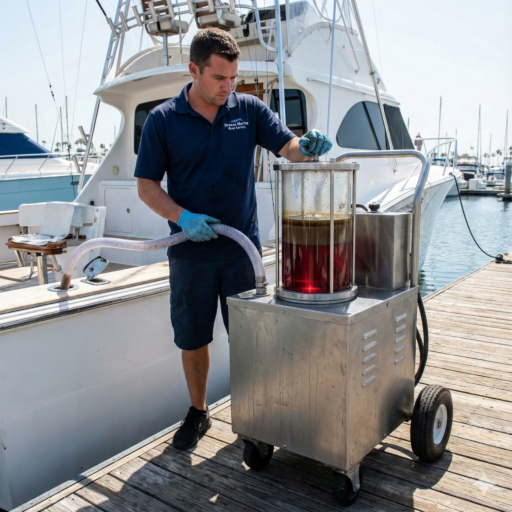
Diesel engines tolerate a lot, but not dirty fuel. Water, sludge and microbial growth in the tank are among the most common reasons a healthy diesel starts losing power, clogging filters or stopping, often in rough water when sediment gets stirred up. A diesel fuel polisher cleans the fuel you already have by circulating it through water separation and fine filtration and back into the tank. This guide explains how fuel polishing works, how to tell your tank needs it and how to keep the fuel clean afterwards.
Where contamination comes from
- Condensation: a partly empty tank breathes through its vent as temperatures change, and moisture condenses on the tank walls.
- Leaks: worn deck-fill O-rings, loose caps and poorly routed vents can let rain and spray into the tank.
- Bad fuel: occasionally water or debris arrives with the fuel itself.
- Age: diesel slowly oxidizes in storage and can form gums and sediment, and fuel blended with biodiesel can hold more water.
What is diesel bug?
Where water collects at the bottom of a diesel tank, bacteria and fungi grow at the boundary between water and fuel. This microbial growth, usually called diesel bug, forms dark slime and sludge that clogs filters and can produce acidic by-products that attack tank surfaces. Warm weather and fuel that sits unused for months give it the best conditions. Once it is established, topping up with fresh fuel does not fix it; the water, sludge and contaminated fuel have to be dealt with.
Signs of water in diesel and diesel bug
- Water or black slime in the fuel water separator bowl.
- Primary filters clogging much sooner than normal.
- Loss of power at higher RPM, surging or stalling, especially in a seaway.
- Dark, cloudy or foul-smelling fuel in a sample drawn from the bottom of the tank.
How a diesel fuel polisher works
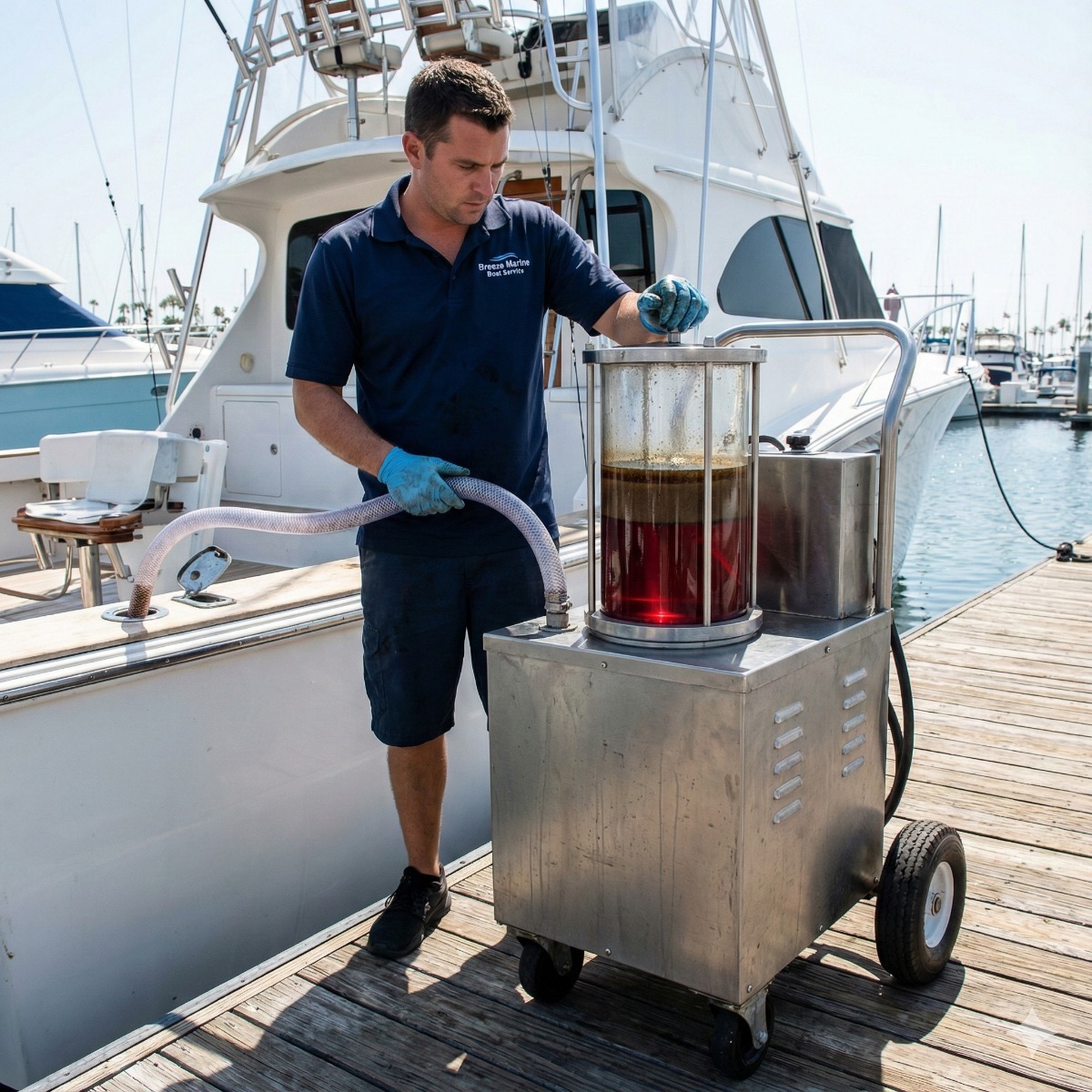
The principle is the same whether the unit is portable or installed. Fuel is drawn from the bottom of the tank, passed through a stage that separates water and heavy solids, then through progressively finer filters, and returned to the tank. Running this closed kidney loop for several passes cleans the fuel gradually, and returning the fuel with some force helps lift sediment off the tank floor so it can be caught.
A mobile service brings a larger pump and filter set to the boat, reaches the bottom of the tank through the sending unit or an inspection port and cycles the whole tank. Our fuel polishing and filtration service works this way, with water separation followed by filtration that steps down from 30 to 10 to 2 microns, and the same rig handles gasoline and diesel.
Onboard polisher or fuel polishing service?
| Installed onboard polisher | Mobile fuel polishing service | |
|---|---|---|
| How it runs | A small pump and filter circulate the tank on a timer or by switch | A larger portable rig is brought to the boat for the job |
| Best for | Keeping clean fuel clean on boats with large tanks or long idle periods | Cleaning a tank that already has water, sludge or diesel bug |
| Limits | Slow on a badly contaminated tank, and its filters need changing | A one-time clean, so prevention still matters afterwards |
An installed polisher adds a layer of fuel filtration between services, but it does not replace the primary filter and separator that protect the engine every time it runs.
Fuel polishing vs fuel tank cleaning
To fuel polish a tank is to clean the fuel and to stir up and capture loose sediment. It cannot remove every deposit. Heavy sludge stuck to the tank floor, a damaged tank or fuel that has badly degraded may need more, such as pumping the tank out or opening it for fuel tank cleaning through an access port. Old gasoline is a different case: when ethanol gasoline phase separates, the water and ethanol layer at the bottom has to be pumped out, and badly contaminated fuel may need to be removed altogether, which is why we also offer mobile fuel pump-out and disposal.
Keeping diesel clean after polishing
- Drain water from the fuel water separator bowl regularly, and change elements at the interval in your engine manual.
- Check the deck-fill cap O-ring and the tank vent so rain and spray cannot get in.
- Many owners keep tanks fairly full during long idle periods to reduce the air space where condensation forms; check your boat builder's guidance.
- If you use a biocide or stabilizer, dose it exactly as the product label says. A biocide alone does not remove dead sludge, so filtration still matters.
- Buy fuel from busy fuel docks and avoid refueling in heavy rain.
Frequently asked questions: diesel fuel polisher
How often should diesel fuel be polished?
There is no single interval. Boats that sit for long periods, have large tanks or have had water in the fuel benefit from more frequent checks. Let the separator bowl and filter condition guide you, and consider polishing before a long trip or after buying a boat with an unknown history.
Will polishing get rid of diesel bug for good?
Polishing removes the water, sludge and particles the growth lives in, and a biocide treatment helps kill what remains. If water keeps getting into the tank afterwards, it can come back.
Do I still need a fuel water separator?
Yes. Polishing cleans the tank at one point in time, while a primary fuel water separator protects the engine every hour it runs. Our article on why every boat needs a fuel water separator explains how they work.
If your filters are clogging or the separator bowl shows water or slime, contact us with the fuel type, the approximate tank size and how long the boat has been sitting. You can read more about our fuel polishing and micro-filtration service before you book.