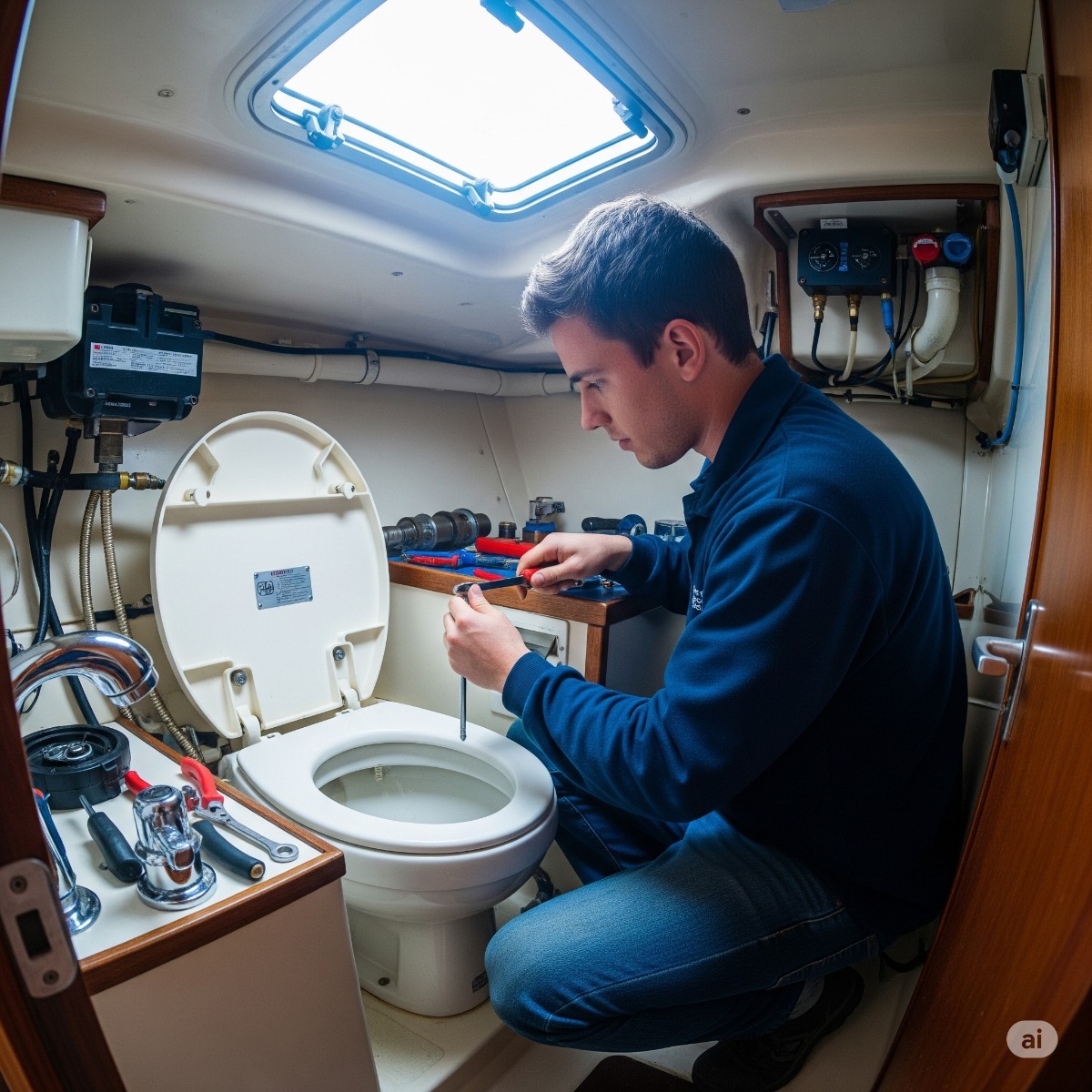
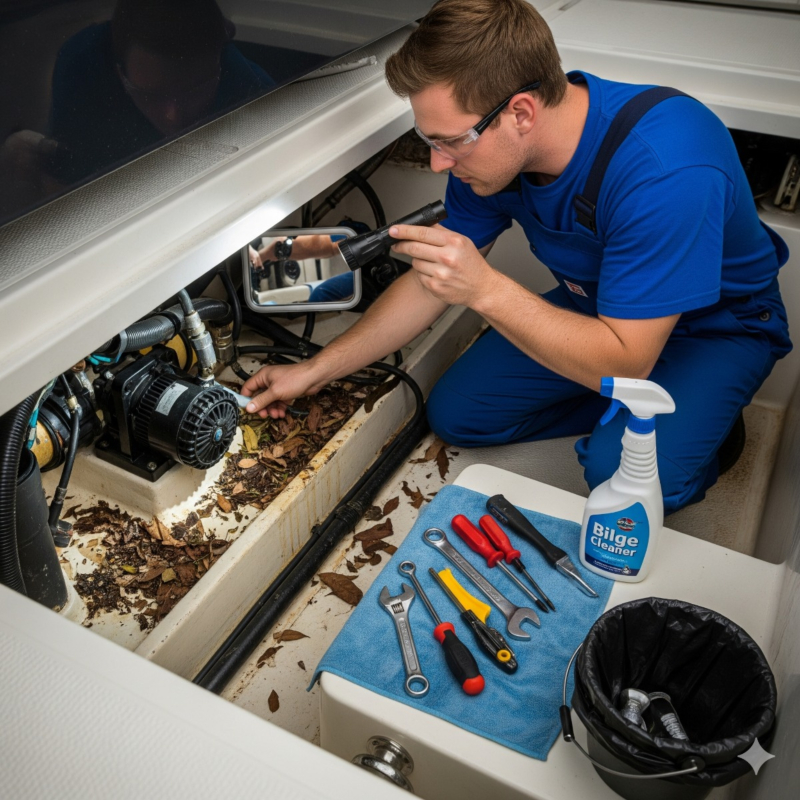

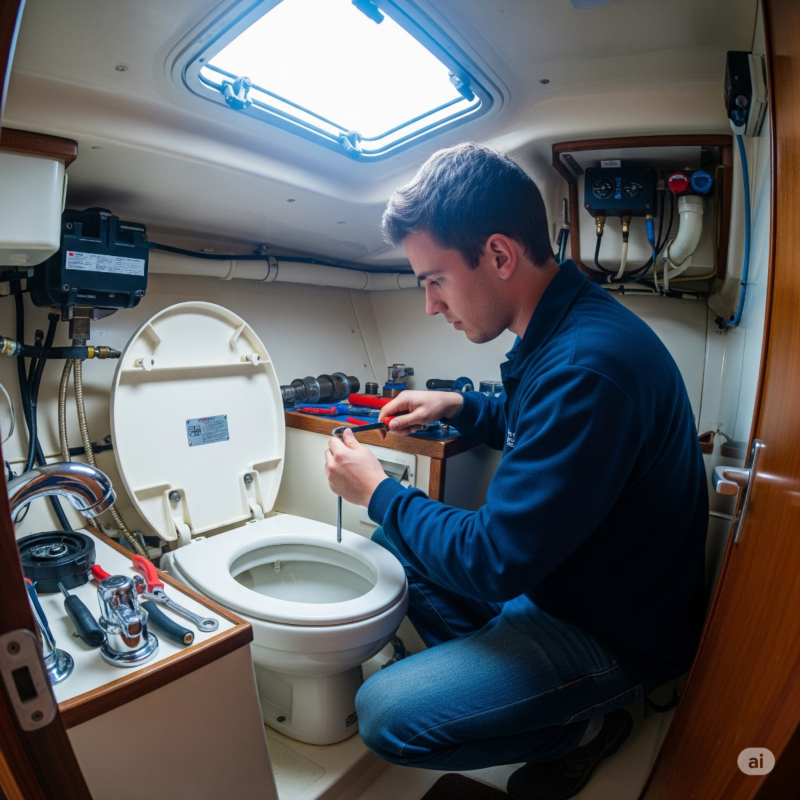
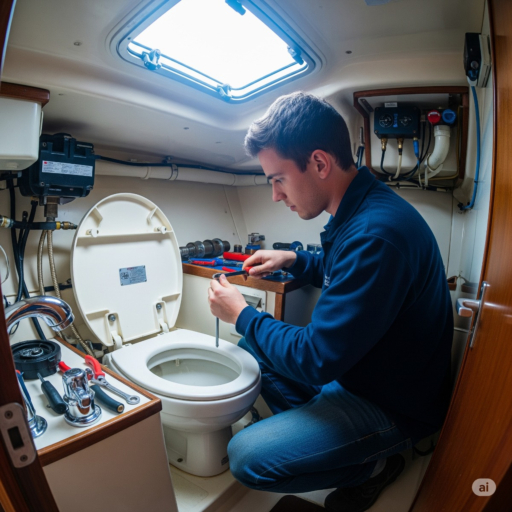
Few things end a day on the water faster than a head that will not flush. The good news is that most problems with a boat toilet come from a short list of causes, and many of them can be narrowed down before you pick up a tool. This guide walks through how marine heads work, what the common symptoms usually mean, what you can safely check yourself and when it makes sense to hand the job to a technician.
How a Marine Head Works
A household toilet relies on gravity and a large volume of water. On a boat there is no such luxury, so the head uses a pump. A manual head has a hand pump that pulls flush water in through a seacock or from a freshwater line and pushes waste out through the discharge side. An electric head does the same job with a motor, and many electric models add a macerator that chops waste before it is pumped away.
From the toilet, waste travels through a sanitation hose to the holding tank, where it stays until it is emptied at a pump-out station. Untreated sewage cannot legally be discharged close to the coast, and many harbors are no-discharge zones, so the tank, hoses, vent and valves matter just as much as the toilet itself.
Common Symptoms and What They Usually Mean
Hard to pump or will not flush
A clogged toilet on a boat is most often caused by wipes, paper towels or too much paper at once. The blockage can sit in the pump, at the outlet valve or further down the hose. Scale is another common cause: when seawater and urine meet, they leave hard mineral deposits that slowly narrow the discharge hose and valves until the pump has to work much harder.
Water creeps back into the bowl
If waste or water slowly returns to the bowl after flushing, the joker valve is the usual suspect. This small rubber duckbill valve sits at the pump outlet and lets waste out, then should close tightly behind it. Once it hardens with scale or loses its shape, it no longer seals. A bowl that fills with seawater while the boat is at rest can point instead to a failed vented loop, which is meant to stop water from siphoning in when the toilet sits near or below the waterline.
Leaks around the base or pump
Drips from the pump shaft or around the base usually come from worn seals, O-rings or gaskets. These wear parts are designed to be replaced, so a leak rarely means the whole unit is finished. Still, any leak on the discharge side needs quick attention for obvious hygiene reasons.
Electric head hums but does not flush
On electric models, a humming motor that will not turn often means the macerator pump is jammed by something that should not have been flushed. Low voltage from a weak battery or a poor connection can also make the motor struggle, so check the breaker and battery before assuming the pump itself has failed.
Odor that will not go away
A lingering smell is often a permeation problem rather than a leak. Older sanitation hose absorbs odor over time; you can test it by rubbing a section with a warm damp cloth and then smelling the cloth. A blocked tank vent or a tank that is not pumped out often enough can also push odor into the cabin.
What You Can Check Before Calling for Help
- Confirm the intake and discharge seacocks are open, and that the Y-valve, if fitted, is set to the tank.
- Check the tank level. A full holding tank can make a healthy toilet feel blocked.
- Look at the vent fitting on the hull for salt, insects or wax plugging it.
- On electric units, check the breaker and the battery voltage.
- Note the make and model of the toilet and photograph the hoses so the right parts can be matched.
Avoid chemical drain cleaners and never force the pump handle against a blockage. Many household products can damage rubber valves and seals, and forcing a manual pump can crack the housing or push the clog further into the hose.
What a Professional Repair Involves
Boat head repair is not glamorous work, but it is methodical. A technician first isolates the fault to the intake side, the pump, the discharge side or the tank before replacing anything. Typical jobs include rebuilding the pump with a new joker valve, seals and O-rings, clearing or replacing scaled discharge hose, replacing a failed vented loop, freeing a jammed macerator and checking tank fittings and vents. On older systems, new hose is often the only real cure for odor.
If the problem goes beyond a simple clog, or if waste is leaking anywhere in the boat, it is time for professional marine toilet repair and sanitation system service rather than more trial and error.
Marine Head FAQ
What can go down a boat toilet?
Only human waste and toilet paper made for marine systems, in small amounts. Wipes, paper towels, feminine products and cleaning cloths are the most common causes of a clogged toilet on board.
How often should the joker valve be replaced?
It depends on use and on how quickly scale builds up, but it is a wear part. Many owners replace it whenever bowl water starts creeping back or whenever the pump is rebuilt.
Why does my head smell even when it is clean?
Odor usually comes from permeated hose, a blocked vent or a tank that needs pumping out, not from the toilet itself. Testing the hose with a damp cloth and clearing the vent are good first steps.