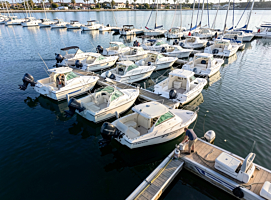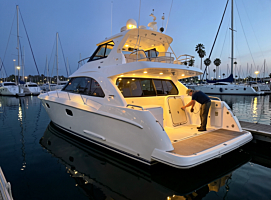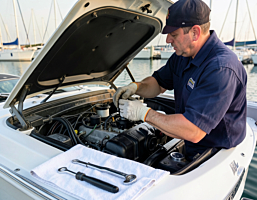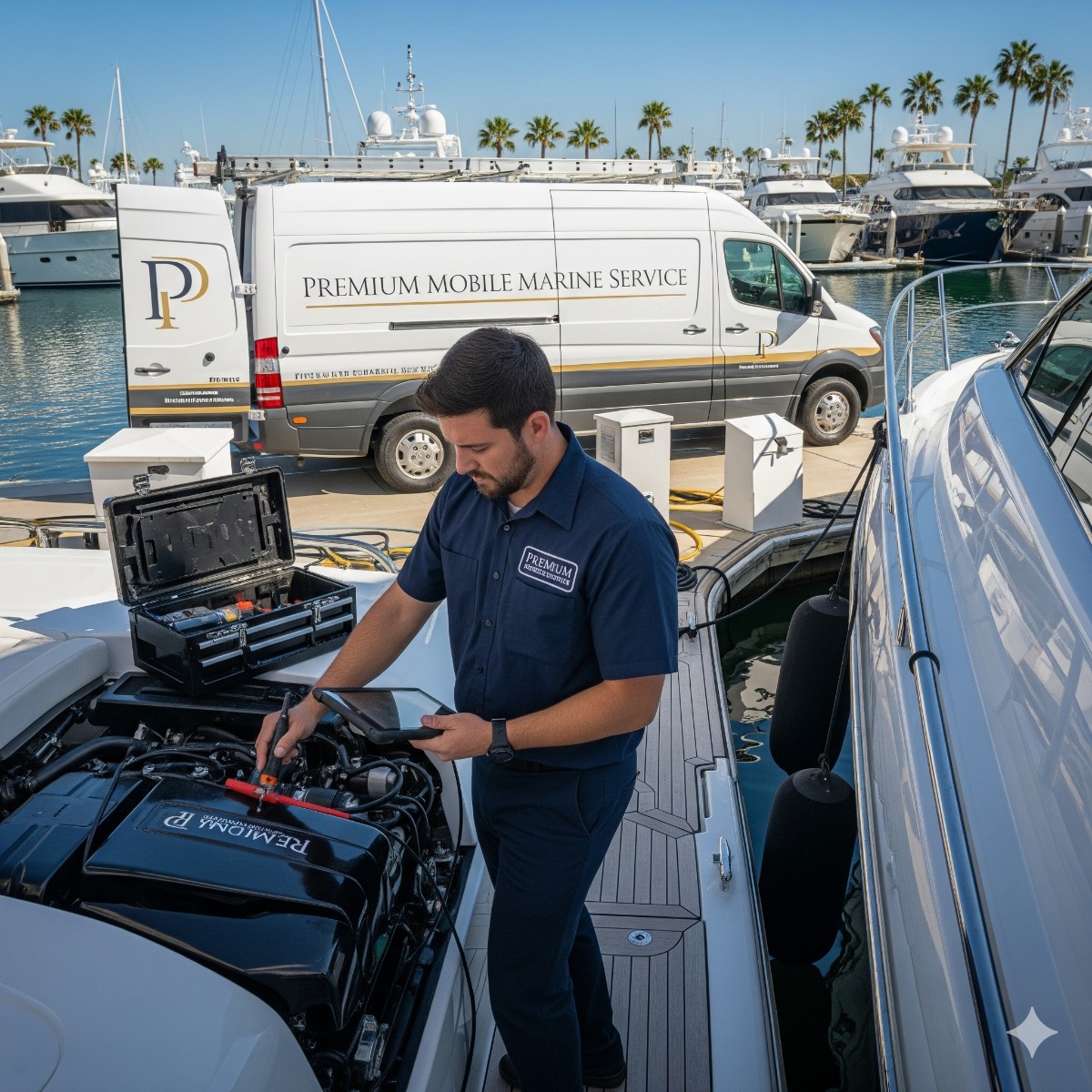
Most marina offices do not want to run a repair shop, but tenants still bring their boat problems to the front desk: dead batteries, a bilge pump that will not stop, an engine that cranks but will not start. A marina service partner gives the office a simple answer. This article explains how marinas and yacht clubs can offer tenants dependable boat service without hiring mechanics, which contractor rules are worth writing down, and how to keep approvals and billing clear.
What tenants actually ask for
- Batteries that will not hold a charge, and chargers or shore power connections that stopped working.
- Bilge pumps running often, float switches stuck, high-water alarms going off.
- Engines that will not start, overheat or lose power.
- Pre-trip checks, seasonal service and help after a boat has sat for months.
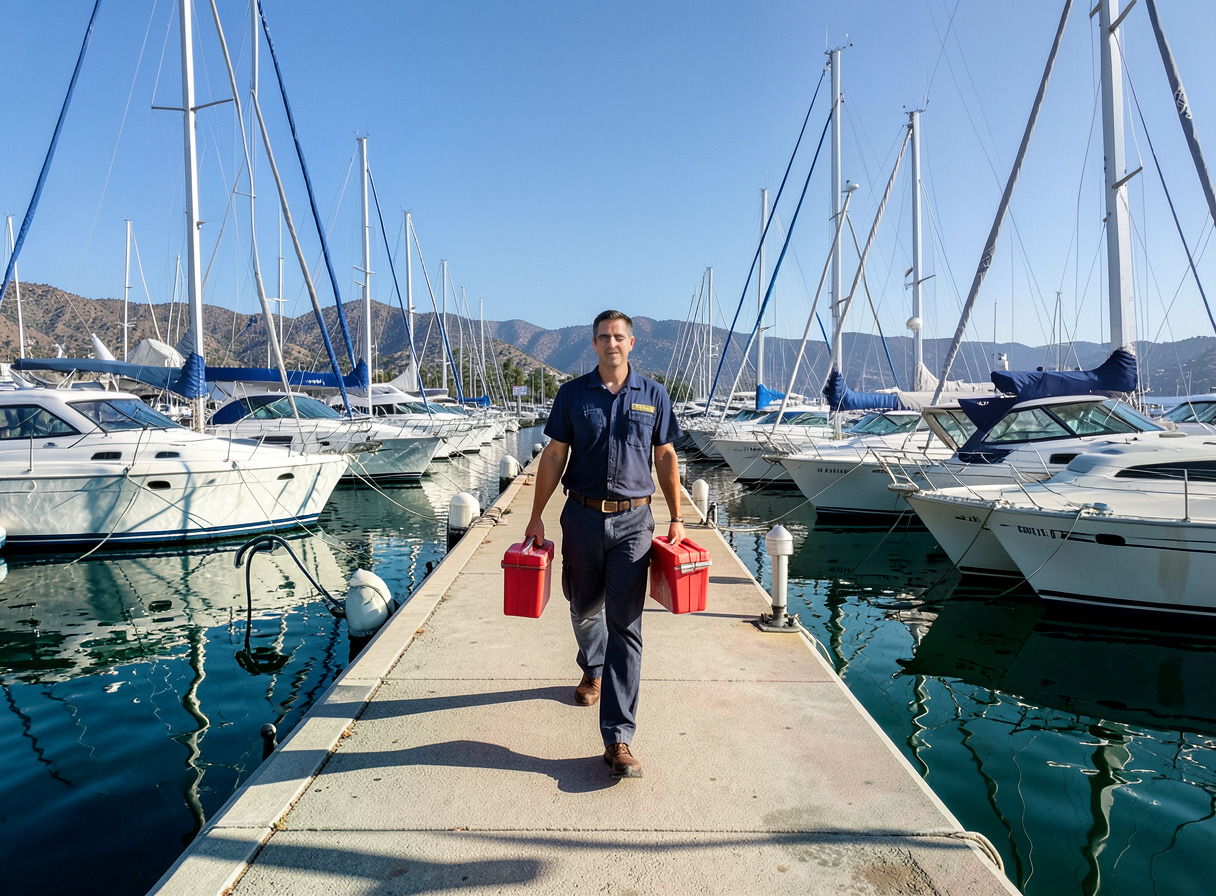
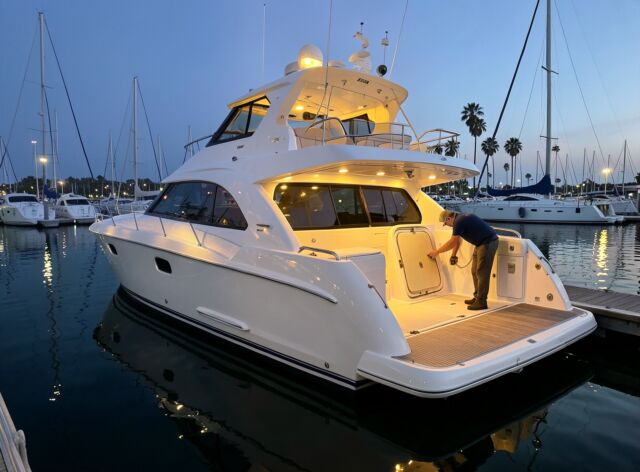
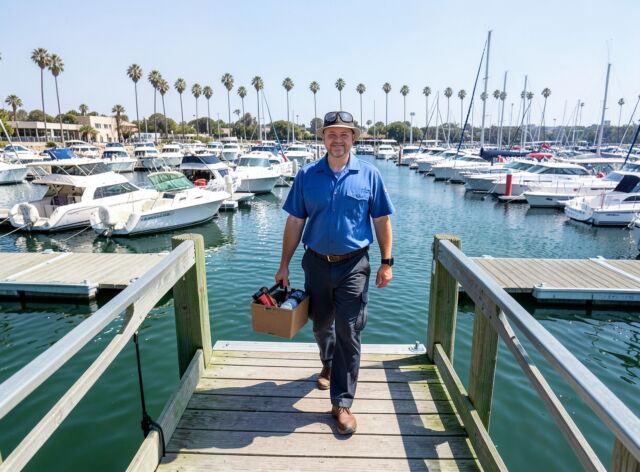
Almost all of this can be handled at the slip by a mobile mechanic, which is why boat repair at the slip is the core of most marina partnerships.
How a marina service partnership works
In the simplest model, the dock office refers tenants to one mobile service team. The boat owner contacts the service, gets a written estimate for their own boat and approves and pays for the work directly. The marina does not stand between the owner and the mechanic, but it knows who is working on its docks and that the work follows its rules. Some marinas also have the same partner look after the marina's or club's own work boats and tenders.
Many marinas keep a short list of approved contractors instead of naming a single partner. Either way, the questions below are the same.
Contractor rules worth writing down
- Check-in: how contractors announce themselves and which boats they are working on.
- Paperwork: what the office requires from contractors, such as business and insurance documents.
- Work hours and noise: when work is allowed and which jobs need advance notice.
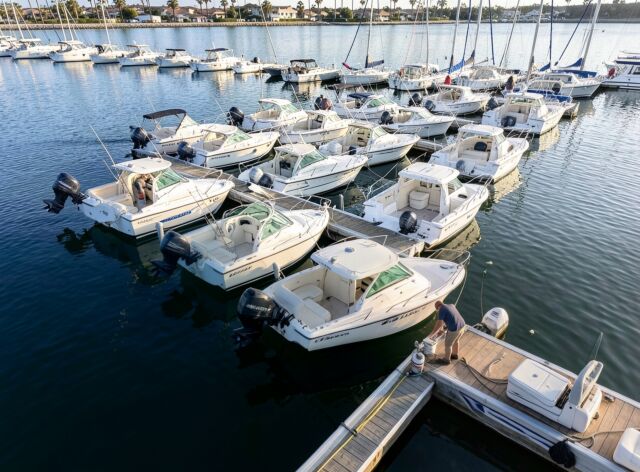
- Parking and carts: where service vehicles may stop and how tools get down the docks.
- Dust, fumes and hot work: which jobs are allowed in the water and which must be done in a boatyard.
- Waste: how used oil, filters, batteries and old parts leave the docks.
Protecting the water
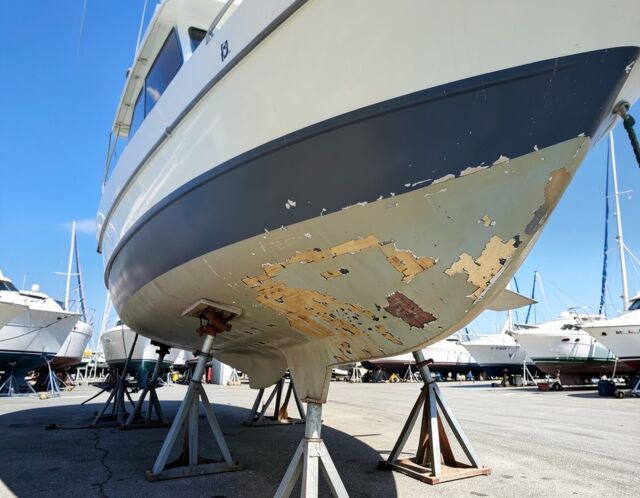
Marinas carry much of the responsibility for what ends up in the water. A good partner uses absorbent pads under engine work, keeps fluids sealed and takes used oil, filters and old parts away for proper disposal. Sanding, painting and other work that creates dust or runoff belongs on land, at a boatyard or shop, rather than in the slip.
Approvals and billing
Keep the money simple: each owner approves and pays for the work on their own boat, and the marina pays only for work it orders itself. Written estimates before work and an invoice with a short description afterwards give owners a clear picture and spare the office from handling disputes.
What the dock office gets
- One phone number to give tenants instead of a list of names.
- Fewer repeat calls about the same boat, because the owner deals with the service directly.
- Work on the docks that follows marina rules.
- A team that knows the marina, its docks and its boats.
Choosing a marina service partner
- Do they work at the slip, and what do they send to a boatyard or shop?
- Which engines and systems can they handle?
- Will they follow your contractor rules and provide the paperwork you require?
- How do they quote and invoice tenants?
- Can they also look after the marina's own boats?
For marinas and yacht clubs in Long Beach and San Pedro, we offer a marina service partner arrangement built on mobile work at the slip, and marinas in Orange County can use our mobile marine service for marinas and yacht clubs in Orange County. All of our services for businesses are on the commercial and fleet boat services page, including marina service in Long Beach.
Marina Service FAQ
Does the marina have to pay for tenants' repairs?
No. In a typical partnership each owner approves and pays for the work on their own boat; the marina pays only for work on its own boats.
Can a yacht club use a service partner too?
Yes. Yacht club service works the same way: members get a team that knows the club's docks, and the club keeps its contractor rules.
What if a tenant wants regular care, not just repairs?
Owners who want scheduled checkups can join a boat care plan, so their boat is checked on a schedule at its slip.