An engine that idles perfectly at the dock but falls on its face when you push the throttle forward is one of the most common complaints boat owners have. The engine is often starving for fuel at the moment it needs the most. The fuel pump is a prime suspect, but it is far from the only one, and replacing it without testing can leave the real problem in place.
How a marine fuel pump does its job
A marine fuel pump moves fuel from the tank to the engine at a set flow and pressure. Older carbureted outboards typically use a mechanical diaphragm pump driven by crankcase pulses. Fuel-injected engines use an electric fuel pump, often in two stages: a low-pressure lift pump that draws from the tank and a high-pressure pump that feeds the injectors. Many modern outboards place the high-pressure pump inside a vapor separator tank, a small reservoir that removes vapor bubbles before fuel reaches the rail.
Symptoms that point to fuel delivery
- Bogging, surging or losing RPM at wide-open throttle while idle seems normal.
- Hard starting after the boat sits, or needing to squeeze the primer bulb repeatedly.
- A primer bulb that collapses while running, which signals high suction on the inlet side.
- A buzzing or whining pump that runs louder than usual, or no priming sound at key-on.
- Stalling after a long run, especially on hot days when vapor forms in the lines.
Pump or something else? What testing reveals
Pressure under load
A gauge on the fuel rail or test port shows whether fuel pressure stays within the engine maker's specification. The key is testing under load. A tired boat fuel pump can hold pressure at idle and still drop off at speed, which is exactly when the engine bogs. A sea trial with a gauge in place is the most reliable way to catch it.
Vacuum on the inlet side
If the pump has to pull hard to get fuel, the problem may be upstream: a kinked hose, a clogged anti-siphon valve, a blocked tank vent or a dirty water-separating filter. A vacuum gauge before the pump tells the technician whether the pump is weak or simply being starved.
Voltage at the pump
An electric pump that receives low voltage because of corroded terminals or an undersized ground spins slowly, delivers less fuel and runs hot. Measuring voltage drop at the pump connector while it runs separates an electrical fault from a pump failure.
What the repair involves
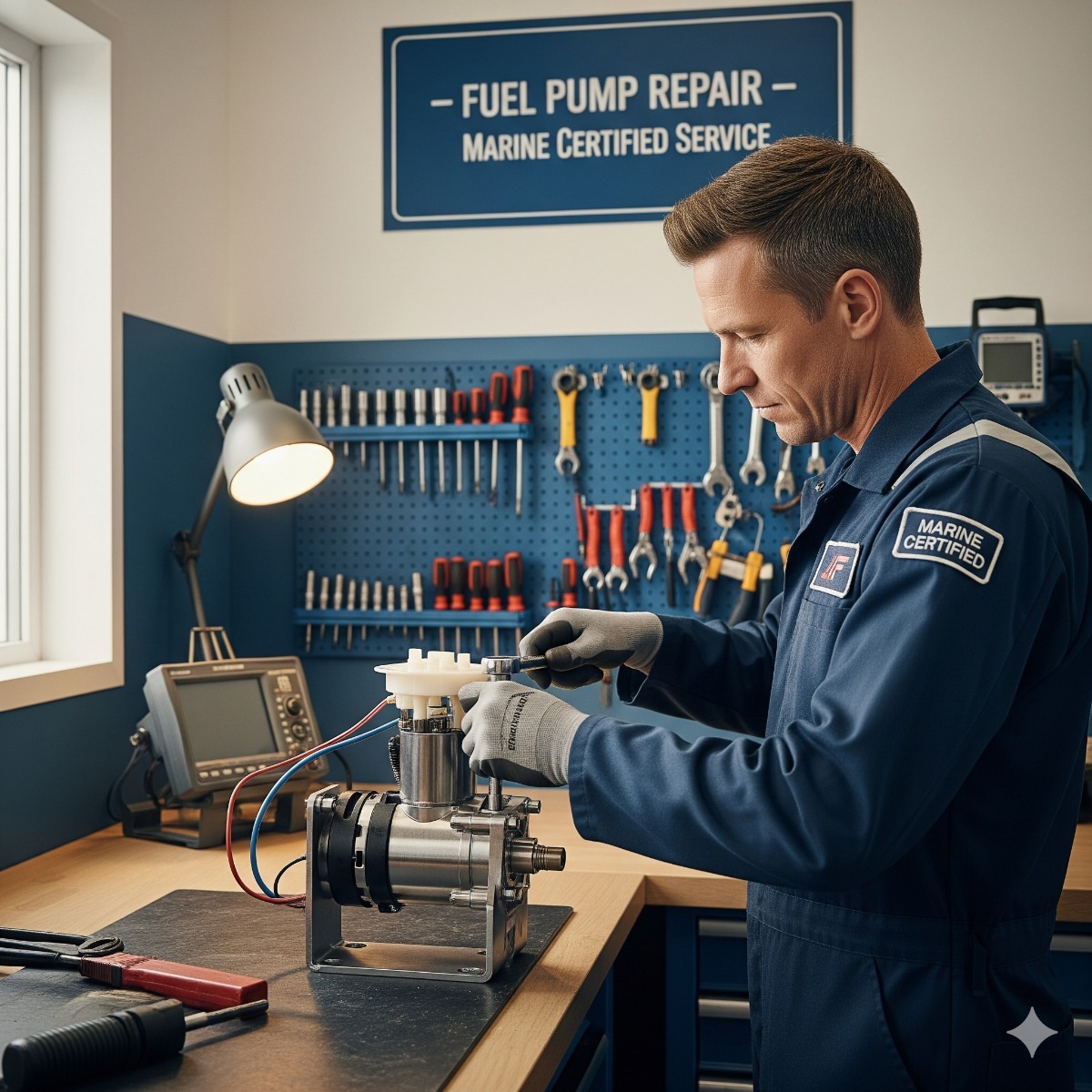
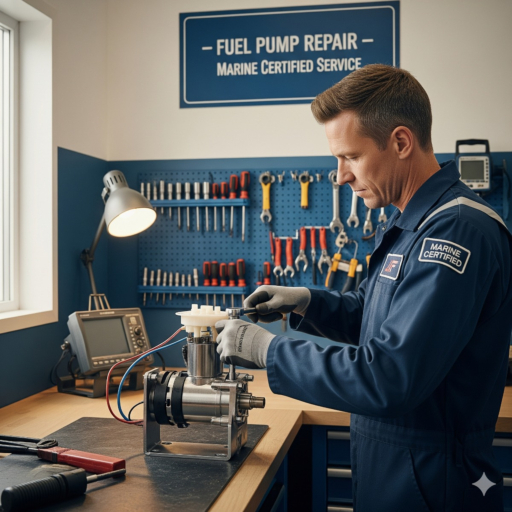
Once testing confirms the pump, fuel pump repair usually means replacing the unit along with its gaskets, O-rings and any in-line or in-tank filter. On outboards with a vapor separator tank, the small filter sock inside is a frequent hidden culprit and should be inspected at the same time. On older two-strokes, a mechanical outboard fuel pump can often be rebuilt with a diaphragm and check-valve kit rather than replaced.
Replacement parts matter. Marine fuel pumps must be ignition protected, meaning they are built so that internal sparks cannot ignite fuel vapor in an enclosed engine space. An automotive pump may look similar and cost less, but it is not designed for a bilge where vapor can collect. Using the correct marine-rated part is a safety requirement, not an upgrade.
What an owner can check first
- Open the fuel cap: if the engine picks up after venting the tank, the vent is blocked.
- Check the primer bulb and hose for cracks, kinks or soft spots.
- Inspect and replace the water-separating fuel filter if it is due or shows water.
- Look for fuel smell or wet spots around fittings, and stop using the boat if you find a leak.
Do not run an engine with a known fuel leak, and never test pumps with open containers of fuel in an enclosed space. If the simple checks do not explain the symptoms, arrange proper fuel pump diagnostics and replacement for boats so pressure, vacuum and voltage can be measured rather than guessed.
Fuel pump FAQ
Can I install an automotive fuel pump on my boat?
No. Fuel system components in enclosed engine spaces need to be ignition protected and resistant to marine corrosion. Automotive pumps are not built to that standard and can create a real fire and explosion risk.
Why does my engine only bog at high speed?
Fuel demand is highest at wide-open throttle, so a weak pump, a clogged filter or a restricted vent often shows up only there. Testing fuel pressure under load confirms which one it is.
Can a diaphragm pump be rebuilt?
On many older outboards, yes. Rebuild kits replace the diaphragm and check valves. If the pump body is corroded or cracked, replacement is the safer choice.