An old engine is usually the most valuable and the most awkward part of a retired boat. It holds oil, fuel, coolant and a lot of metal, and it can weigh far more than people expect. Whether you are planning boat engine disposal on its own or clearing a whole boat, the engine deserves its own decision: sell it, scrap it or let a yard take it with the hull. This guide explains what happens to an outboard or inboard once it comes off the boat, and how to tell which route makes sense.
For the bigger picture, see what happens to an old boat and how boat removal works. This article stays with the engine.
Outboards and Inboards Are Different Jobs
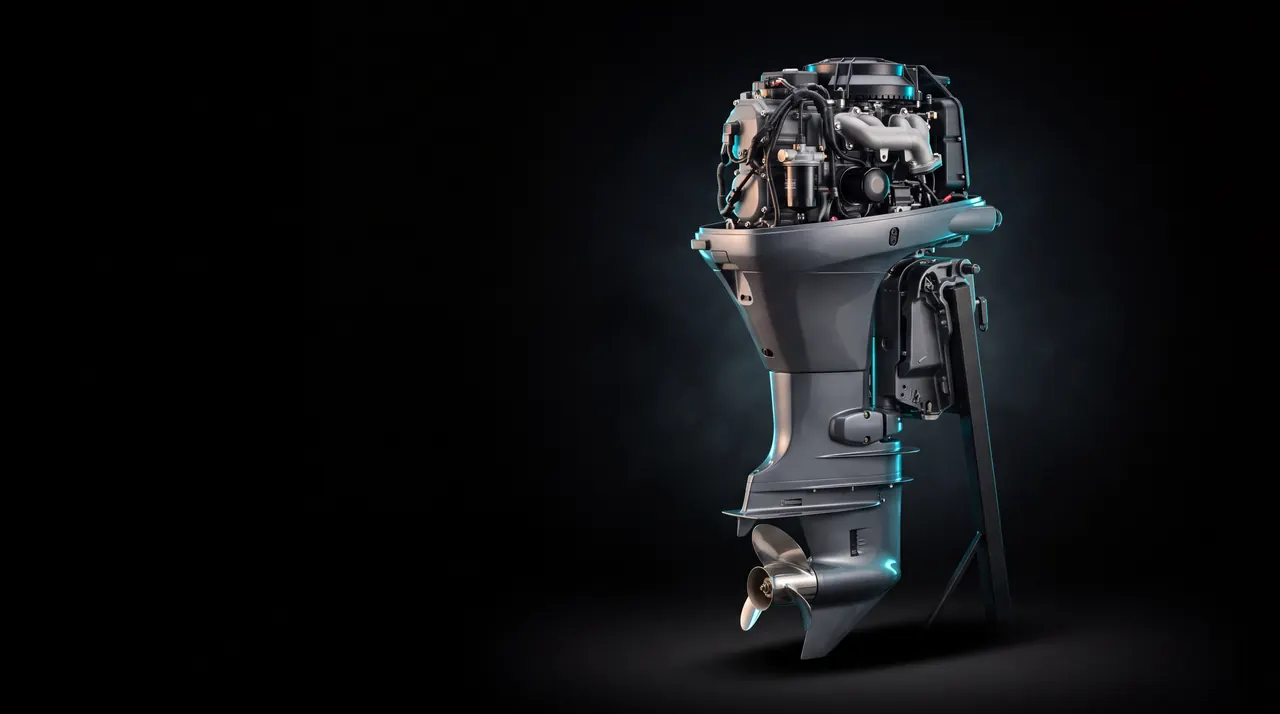
An outboard sits on the transom and comes off with a few bolts, a fuel line and a wiring harness. One or two people with a lift or a sturdy stand can move it, and it can be sold, shipped or hauled away as a single unit. That is why outboard motor recycling and resale are so common.
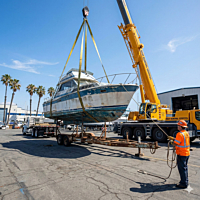
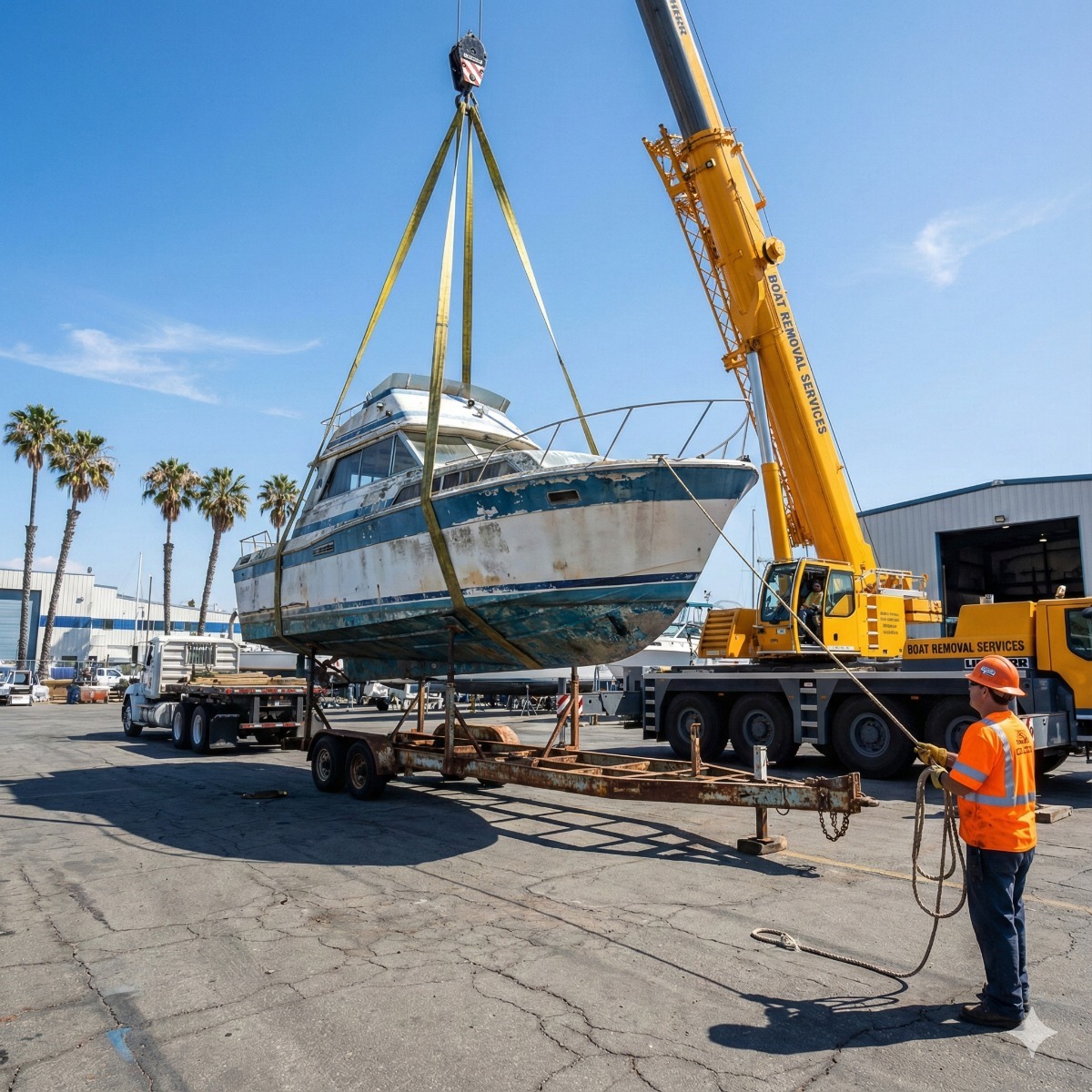
An inboard or sterndrive is built into the boat. Inboard engine removal usually means disconnecting the shaft or drive, exhaust, cooling, fuel, throttle and shift cables, then lifting a heavy block out through a hatch or the cockpit. It often needs a hoist or crane, and sometimes the hull has to be cut open to get it out. The work takes real time, which is why many owners let the disposal crew handle it.
What Is Inside an Engine
A dismantler looks at an engine as a list of fluids and metals:
- Engine oil and gear oil: used oil is a recyclable material, not trash, and must never go on the ground or into a drain.
- Fuel: gasoline in the carburetor, fuel lines and tank, or diesel in the injection system. Old fuel is a hazardous waste.
- Coolant: antifreeze in closed cooling systems, which is toxic and also goes to a recycler.
- Metals: cast iron blocks, aluminum heads and housings, bronze and brass fittings, stainless hardware and copper wiring.
- Batteries and electronics: starting batteries and control modules, which go to separate recyclers.
- Lead: lead-acid batteries are the obvious source, and some older engines and parts also contain lead, so they are handled with care.
Draining Comes First
Before a marine engine moves anywhere, the fluids are drained into proper containers. On an outboard this means the lower unit gear oil, the crankcase on a four-stroke, the fuel in the lines and the tank, and any oil in the tank of a two-stroke. On an inboard it adds the sump, the transmission, the coolant and the bilge below the engine.
Drained oil, fuel and coolant are taken to a collection point or a licensed recycler. This is the step that keeps a sheen out of the harbor, and it is the same reason we ask owners not to let a neglected boat sink; our article on fuel and oil from a sunken boat shows what a single failed engine compartment can release. Old fuel should not be poured out or burned. If you are not sure what is in the tank, say so when you contact us.
What a Yard Does With an Old Engine
Once drained, an engine usually follows one of three paths:
- Reuse. If it runs, or can run with ordinary service, it is tested and sold whole or as a core. Many outboards from reliable brands find a second owner.
- Parts. If it is damaged but has good components, the lower unit, powerhead, carburetors, injectors, starter, alternator, trim unit and cowling are removed and sold separately.
- Scrap. What cannot be used is stripped by metal type. Aluminum, copper, brass, bronze and cast iron or steel go to separate metal recyclers, which melt them for new use. This is the core of marine engine recycling, and it is why even a dead engine is rarely a total loss.
The scrap value depends on what the engine is made of, its weight and how cleanly the materials can be separated. An iron inboard block is heavy but low in value per pound; an aluminum outboard is lighter, and clean copper and bronze parts are worth more. Prices move with the market and the yard, so we avoid quoting numbers here. A rough estimate needs only the make, model, year and a couple of photos.
When to Sell for Parts Instead of Scrapping
Scrapping is the simplest option, but it is not always the best one. You can sell an old outboard for parts, or as a running unit, when:
- It is a well-known brand with a steady parts market.
- It has recent service records, a new impeller or a compression test you can show.
- The lower unit, powerhead or fuel system is in good shape even if something else is not.
- It is a late-model fuel-injected engine rather than a very old carbureted one.
- You have time to list it, answer questions and meet a buyer.
Scrap is usually the better route when the engine is seized, has been underwater or was flooded with salt water, is cracked or corroded through, or is simply too old for anyone to want the parts. When you sell an old outboard for parts, be honest in the listing: say what has failed, what is included and whether it has run in recent years. A clear description avoids returns and arguments.
Paperwork and Small Details
Larger outboards often carry a serial number on a plate on the bracket, and buyers or recyclers may ask for it. Keep any bill of sale you receive, and keep a copy of the one you give. If the engine is on a boat that is being scrapped, tell the person doing the work that you want the engine, or that you want it sold, before they start cutting.
Also remove what you want to keep: the control box, cables, gauges, props, kill switch and fuel tank are all sellable. A good propeller can be worth more than a tired engine.
What Not to Do With an Old Engine
- Do not pour oil, fuel or coolant on the ground, into a storm drain or into the water.
- Do not leave an engine out in the yard to rust with fluids still in it.
- Do not put an engine in a household trash bin; it will be refused and may cause trouble.
- Do not try to lift an inboard by hand or from a weak davit.
Engine Removal in Long Beach and San Pedro
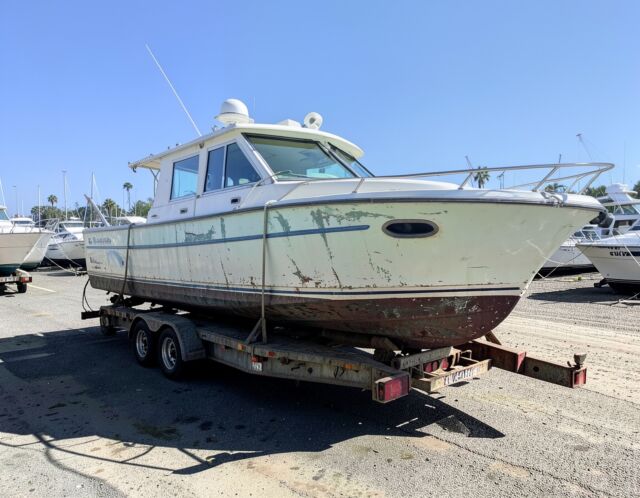
If you are searching for boat engine disposal in Long Beach, CA, our crew handles engine removal, draining and disposal for boats in Long Beach, San Pedro and nearby harbor communities, whether the engine is going out with the boat or by itself. Our boat removal and disposal service page explains what is included. Send us the make, size and location with a few photos, and ask us whether it is better to sell it or scrap it.
Engine Disposal FAQ
Can I recycle an old outboard motor?
Yes. After the fluids are drained, an old outboard is either resold, parted out or stripped and sold as scrap metal. Aluminum, copper, brass and steel are all recyclable.
Is a dead engine worth anything?
Often a little. Even a seized engine carries scrap metal, and some components can be sold. The amount depends on size, type and the market, so ask for an estimate rather than assuming it is free to scrap.
Who drains the fuel and oil?
A disposal service will do it for you and send the fluids to the proper recyclers. If you want to drain them yourself, use sealed containers and take them to an authorized collection point.
Should I remove the engine before the boat is scrapped?
If you want to sell it, yes, or tell the crew beforehand. Otherwise it can go with the boat and be recovered at the yard.