


If there is one upgrade that pays for itself on almost any boat, it is a fuel water separator. Water and debris in the fuel are a leading cause of rough running, stalling, and expensive injector or carburetor damage. A separator traps that water and grit before it ever reaches your engine.
Where does the water come from?
Condensation in the tank, humid air, and especially ethanol-blended fuel, which actively attracts moisture. Ethanol can cause phase separation, where water and fuel separate in the tank, a common cause of sudden rough running that leaves boaters stranded.
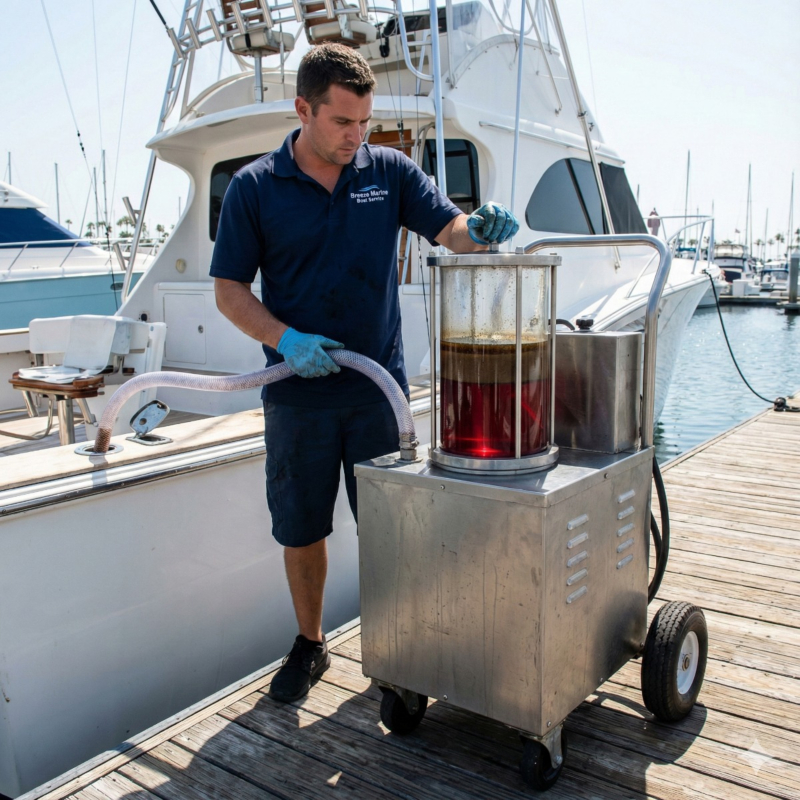
What a separator does for you
- Traps water in a clear bowl you can inspect at a glance.
- Filters out rust, dirt, and debris before the fuel pump.
- Protects carburetors and injectors from water damage.
- Gives you early warning of water in fuel before a small problem becomes a breakdown.
Proper installation matters
A separator has to be sized to your engine’s fuel flow and mounted where you can actually reach it to check and change the element. We select the correct micron rating and capacity, route and secure the boat fuel lines, and prime the system so you leave ready to run.
Protect your marine fuel system before the next bad tank of gas finds you. Learn more about our Fuel Water Separator Installation and run with confidence.
Outboard fuel filter or diesel primary filter?
On a gas outboard, the separator usually serves as the primary outboard fuel filter, mounted in the boat between the tank and the engine so water in fuel is caught before it reaches the small filter on the engine. On a diesel inboard it becomes the primary diesel fuel filter, ahead of the finer engine-mounted element. The elements differ between the two setups, so match any replacement to the engine as well as the housing.
Frequently asked questions: fuel water separator
When should the fuel water separator filter element be changed?
Many engine makers suggest changing it at least once a season or at a set number of hours, so check your engine manual for the exact interval. Change it sooner if the bowl keeps collecting water, the element looks dark or the engine loses power at higher RPM. Carry a spare element, since a bad tank of fuel can clog a new one quickly.
What micron rating should a boat fuel filter have?
Follow your engine manufacturer's specification, since requirements differ. Many fuel-injected gasoline outboards call for a fine filter, often around 10 microns, while diesel engines commonly use a coarser primary filter such as 30 microns ahead of a finer engine-mounted filter. A primary filter that is too fine can clog quickly and restrict fuel flow at high RPM.
Can a fuel water separator fix gas that has already phase separated?
No. Once ethanol fuel phase separates, the water and ethanol layer at the bottom of the tank is more than a fuel water separator is designed to handle, and the remaining gasoline has lost octane. Contaminated fuel usually needs to be pumped out and disposed of properly, the tank inspected and filters changed. A separator protects against normal moisture and small amounts of water.


