
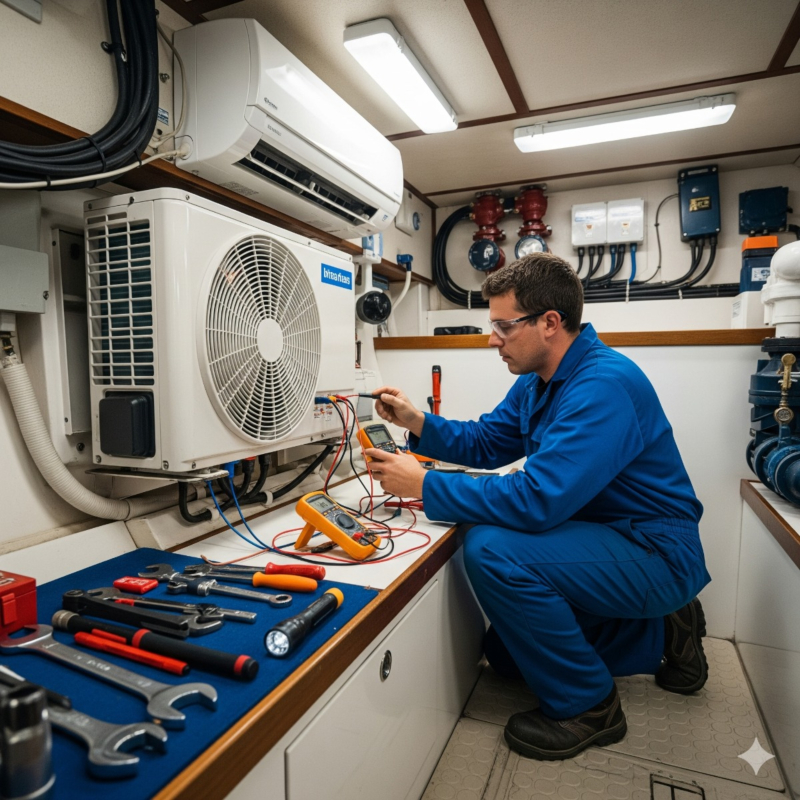

The raw water impeller is one of the least expensive parts on your boat, and one of the most important. This small rubber wheel, the water pump impeller, pulls sea or lake water through the cooling system. When it hardens, cracks, or loses a vane, cooling flow drops and your engine can overheat within minutes.
How often should you replace it?
As a rule of good boat engine maintenance, inspect the boat impeller every season and replace it every one to two years, or sooner if you run in sandy, silty, or debris-heavy water. Rubber degrades even when the boat sits, so age matters as much as hours.
Signs the impeller is due
- Reduced water flow from the exhaust telltale.
- Higher running temperature than normal.
- Rubber fragments found downstream in the cooling system.
- The boat has been stored for a long period without service.
Why timing matters
When an impeller fails, it often sheds broken vanes into the cooling system, which can lodge in the heat exchanger and cause further blockage. A planned replacement avoids boat engine overheating, and lets us check for and remove any stray pieces, inspect the wear plate and housing, and fit fresh gaskets.
Do not wait for a hot gauge to remind you. Book our Raw Water Impeller Replacement Service and keep strong, reliable cooling flow all season.
Frequently asked questions: raw water impeller
Can I replace a raw water impeller myself?
On many inboards with an accessible front-mounted raw water pump, handy owners can: close the seacock, check the sea strainer, remove the cover, pull the old impeller, account for every vane, and fit a new one with a fresh gasket and the lubricant its maker recommends. Reaching an outboard impeller or sterndrive impeller usually requires removing the lower unit, a bigger job. Always reopen the seacock before starting.
Where do missing impeller vanes end up, and how do I find them?
Missing vanes usually travel downstream and lodge in the heat exchanger inlet, oil cooler or hoses, where they block cooling flow. Check the pump outlet hose and remove the heat exchanger end cap first, since that is where pieces often collect. If you cannot locate every piece, have the cooling system inspected before running the engine hard again.
Should I carry a spare raw water impeller on board?
Yes, it is a smart habit for any boat that goes beyond the harbor. Keep an impeller matched to your pump's part number, a cover gasket and the tools needed to swap it, and practice once at the dock. If the raw water impeller fails offshore, a quick replacement can save a tow and prevent overheating damage.


