

Most breakdowns on the water are small ones: a clogged filter, a blown fuse, a worn impeller, a lost propeller nut. A short list of spare parts for a boat, packed properly, turns many of those problems into a ten-minute fix instead of a tow. This guide describes a practical onboard spares kit and boat tool kit, organized by system, so you can build one that fits your own engine and boat.
The right kit depends on the boat. Check your owner's manual and engine maker for the exact part numbers, and write them on the lid of the box.
Cooling System Spares
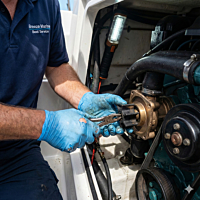
A failed water pump is a classic cause of overheating. Carry a spare raw-water impeller with its gasket and cover seal, and know how to fit it; our article on when to replace a raw-water impeller explains the signs. Add spare drive belts where your engine has them, and a few hose clamps and a short length of hose that suits your cooling lines.
Fuel System Spares
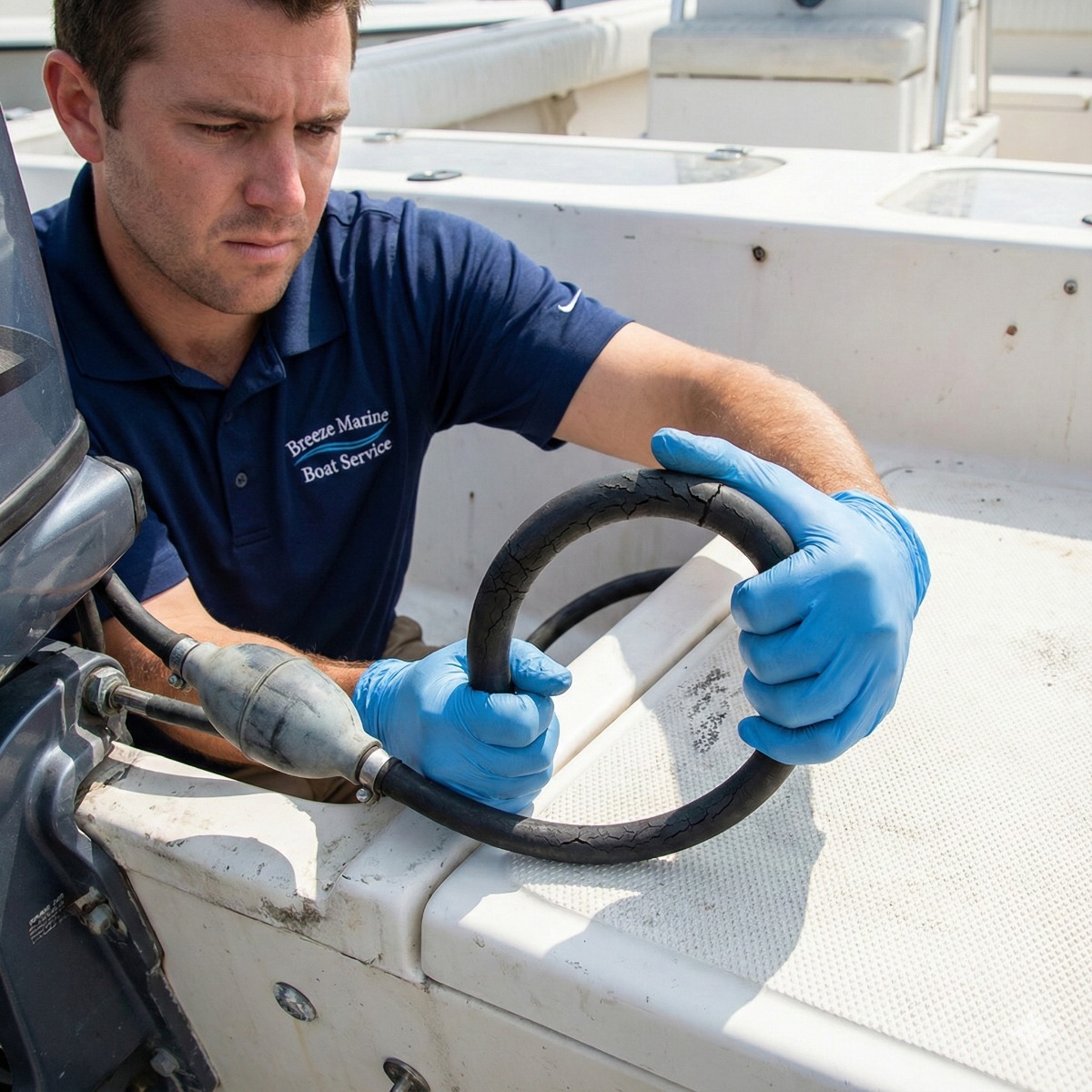
Dirty or watery fuel stops more boats than almost any mechanical failure. Keep a spare fuel filter and a spare water separator element, and the tools to change them. Our guide to why every boat needs a fuel water separator covers the reasons. On outboards, check the line and primer bulb now and then; our fuel line and primer bulb inspection looks at cracks, soft spots and leaks before they strand you.
Electrical Spares
- Spare fuses and breakers: match every type and rating used on the boat.
- Bulbs and a few spare connectors: navigation lights matter on any boat that runs after dark.
- Wire, crimp terminals and electrical tape: enough for a temporary repair.
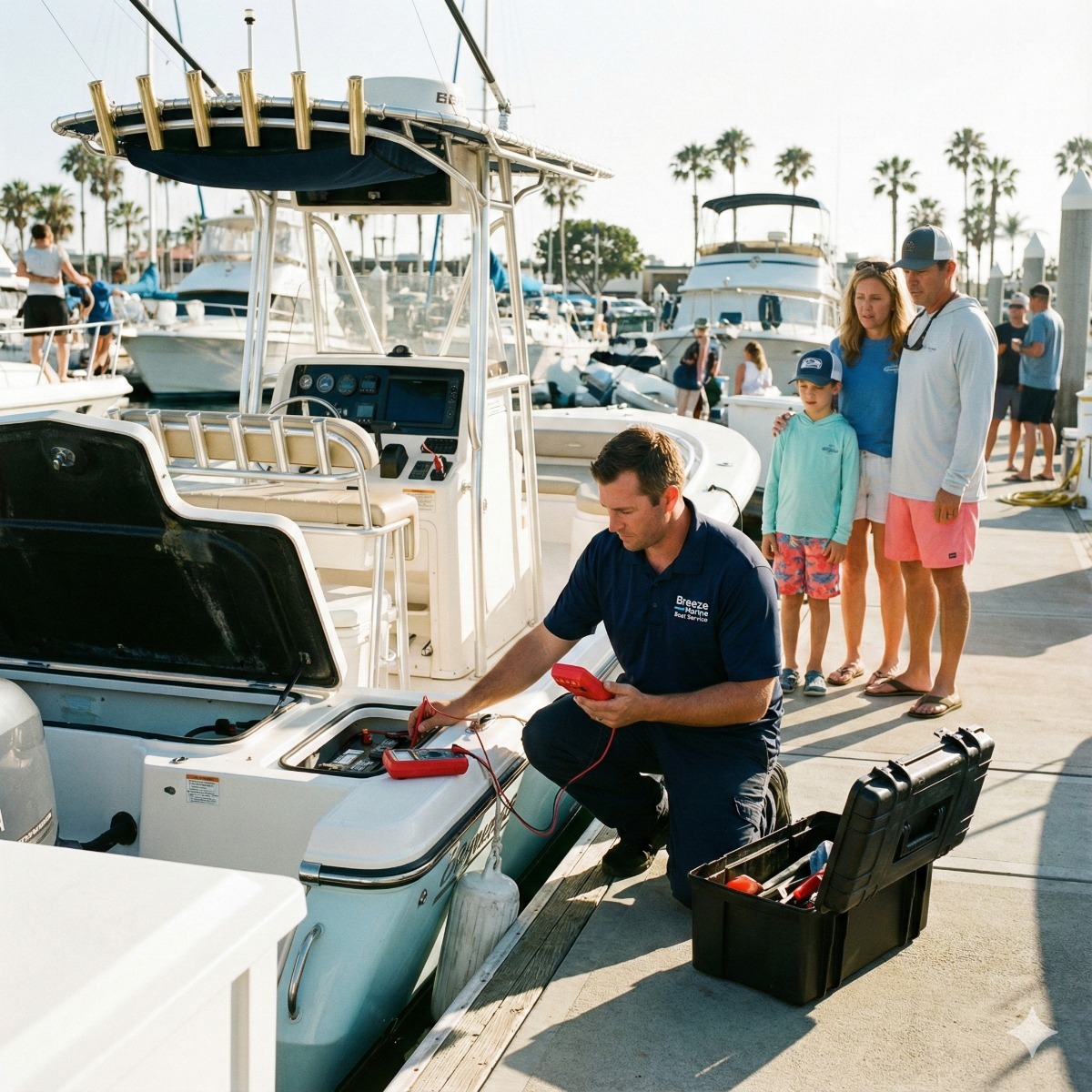
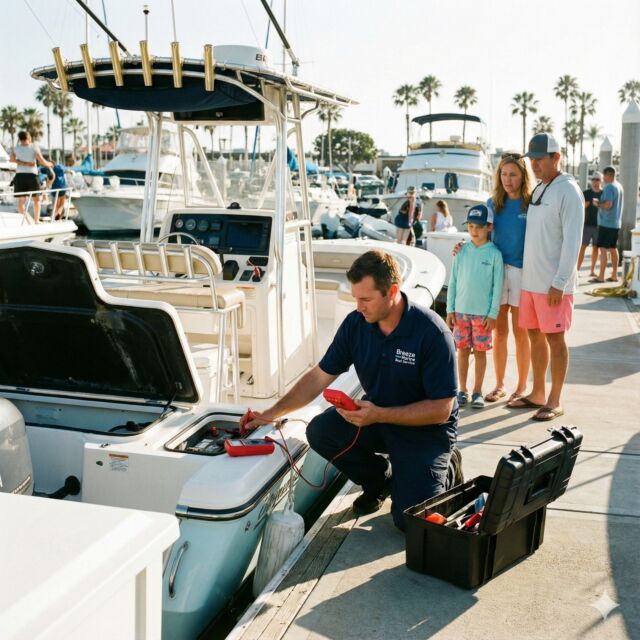
- A multimeter: it shows whether a battery is healthy before you guess; see why a boat battery keeps dying.
Propeller and Drive Spares
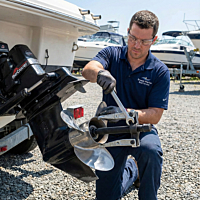
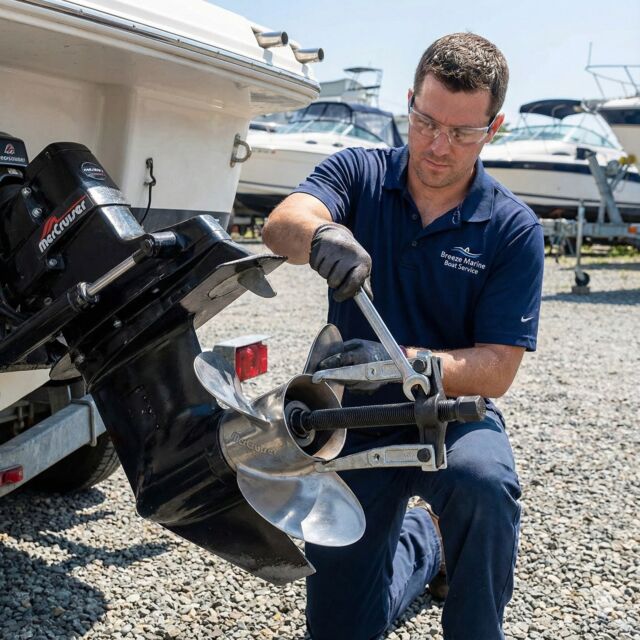
A spare propeller, a propeller wrench and the hardware that holds it on, such as the nut and cotter pin or tab washer, are worth their space. A bent blade can end a day on the water, and our guide to damaged propellers helps you decide between a spare and a repair.
Fluids and Consumables
Carry a small supply of engine oil, gear lube and coolant that match what your engine uses, plus a few rags, gloves and an absorbent pad so a small spill does not reach the water. Keep them in sealed containers so they cannot leak into the box.
Hand Tools for Your Boat Tool Kit
You do not need a full workshop. A compact boat tool kit usually covers screwdrivers, an adjustable wrench, a set of sockets that fit the fasteners on your engine, pliers, a knife, a flashlight with spare batteries, cable ties, tape and a tube of epoxy putty. Stainless tools resist the salt, and a light coat of corrosion inhibitor helps the rest.
Where and How to Store the Kit
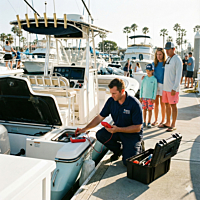
Use a watertight box with a latch, keep it dry and somewhere you can reach it quickly, and label what is inside. At the start of each season, check the dates, replace anything old and restock what you used. A short list taped to the lid keeps it honest.
Know When to Call for Help
A spares kit solves simple problems, not every problem. If you are unsure, stop and call before you make it worse. When a boat will not start at the dock, our quick triage checklist helps you find the cause, and a few notes taken beforehand, as described in what to note before calling a mechanic, speed up any repair. For problems that need a technician at the slip, we offer dockside breakdown repair.
Onboard Spares Kit FAQ
How many spares should I carry?
Enough to fix the things that can stop you from getting home: one of each wear item that fails often, and more of the cheap ones such as fuses. A boat that stays near the dock needs less than one that goes offshore.
Do I need the spare parts if I do not do my own repairs?
It still helps. A mechanic or a friend can often fit a part you already have, which saves time during a boat breakdown.
How often should I check the kit?
At the start of each season and after every use that takes something out of it.