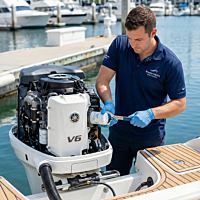

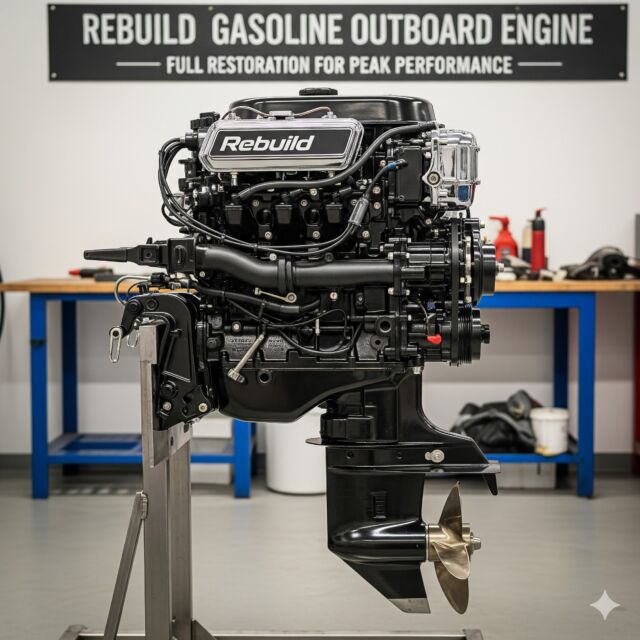
Choosing an outboard looks like a horsepower decision, but power is only one of several things that have to fit the boat. This guide explains how to choose an outboard motor, whether you are buying new, looking at a used outboard motor, or planning to repower a boat whose old engine has given up.
If your real question is whether to replace or fix a failed engine, read blown outboard: powerhead swap, rebuild or repower first, then come back here to match a replacement to the boat.
Start With the Boat, Not the Motor
Every boat has limits set by its builder. Most boats carry a boat capacity plate near the helm or on the transom, and where one is fitted it lists the maximum horsepower and the weight the hull was designed for. That plate, not the motor catalog, sets your upper limit. A hull is designed around a range of weight and power, and an engine heavier or stronger than the plate allows can make the boat harder to control and put extra load on the transom.
Before you shop, write down the plate limits, the transom condition, the type of steering and controls you already have, and how you use the boat: fishing offshore, cruising the harbor, towing skiers or running a small tender. Those answers narrow the choices faster than any brochure.
Outboard Horsepower: More Is Not Always Better
Outboard horsepower should match how the boat is used, inside the plate rating. Extra power on a hull that cannot use it mostly adds weight, fuel burn and cost. Too little power on a heavy boat means slow planing, a motor that works hard all day and little reserve when wind and current build. Remember to count the whole load: fuel, water, batteries, gear and people, not just the empty hull.
Outboard Shaft Length and Transom Height
Outboard shaft length is the part buyers most often get wrong. Motors come in short, long and extra-long shaft versions, and the right one depends on the height of your transom, measured from the top of the transom down to the bottom of the hull. The anti-ventilation plate above the propeller should sit roughly level with the bottom of the hull.
- Shaft too short: the propeller sits too high, sucks air and loses grip, especially when turning or accelerating.
- Shaft too long: the lower unit sits too deep, creates drag and throws more spray.
Measure the transom yourself and confirm the shaft length before you pay, because it is not something you can adjust later without changing the motor or the transom.
Weight and Balance at the Stern
An outboard hangs its whole weight off the back of the boat. A heavier motor changes how the bow sits, how the boat trims and how it behaves at rest in a following sea. Add batteries, a fuel tank and a bracket or jack plate if you plan to use them, and check that the transom is sound. Our article on the signs of a rotten transom explains what to look for before bolting on any motor.
Two-Stroke, Four-Stroke and Fuel Requirements
Both types are in use. A four-stroke has its own oil sump and does not need oil mixed into the fuel, while a two-stroke injects or mixes oil with the fuel. Whichever you choose, read the manual for the fuel grade, the oil specification and the break-in procedure, and use what the manufacturer calls for. Also think about how often the boat sits unused, because fuel that ages in the tank is one of the most common causes of poor running; see ethanol varnish in boat carburetors.
Controls, Steering and Gauges
A new motor must connect to the boat. Check whether you have a tiller or remote steering, cable or hydraulic steering, and what control box and throttle cables are fitted. Older controls and gauges do not always work with a newer motor's wiring and harness. If the controls need to change, include that in the budget from the start, along with the propeller, rigging and installation.
Buying a Used Outboard Motor
A used outboard motor can be a good value, but it hides its history. Ask for service records and find out how it was stored. When you see it run, look at:
- Cold start: does it start easily and idle smoothly without smoke?
- Water pump: is there a strong stream from the tell-tale?
- Lower unit oil: milky oil points to a leaking seal; see milky gear lube in a lower unit.
- Corrosion: check the powerhead, brackets, steering arm and wiring for damage.
- Under load: a short sea trial shows more than a test tank.
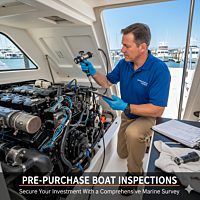
If the price is significant, an independent look is cheap insurance. Our guide to what a pre-purchase inspection checks applies to the motor as well as the boat.
Plan the Outboard Motor Service Before You Buy
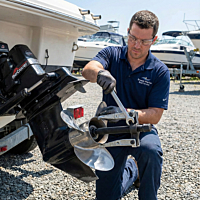
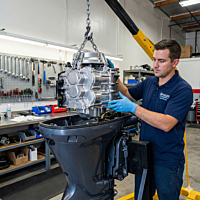
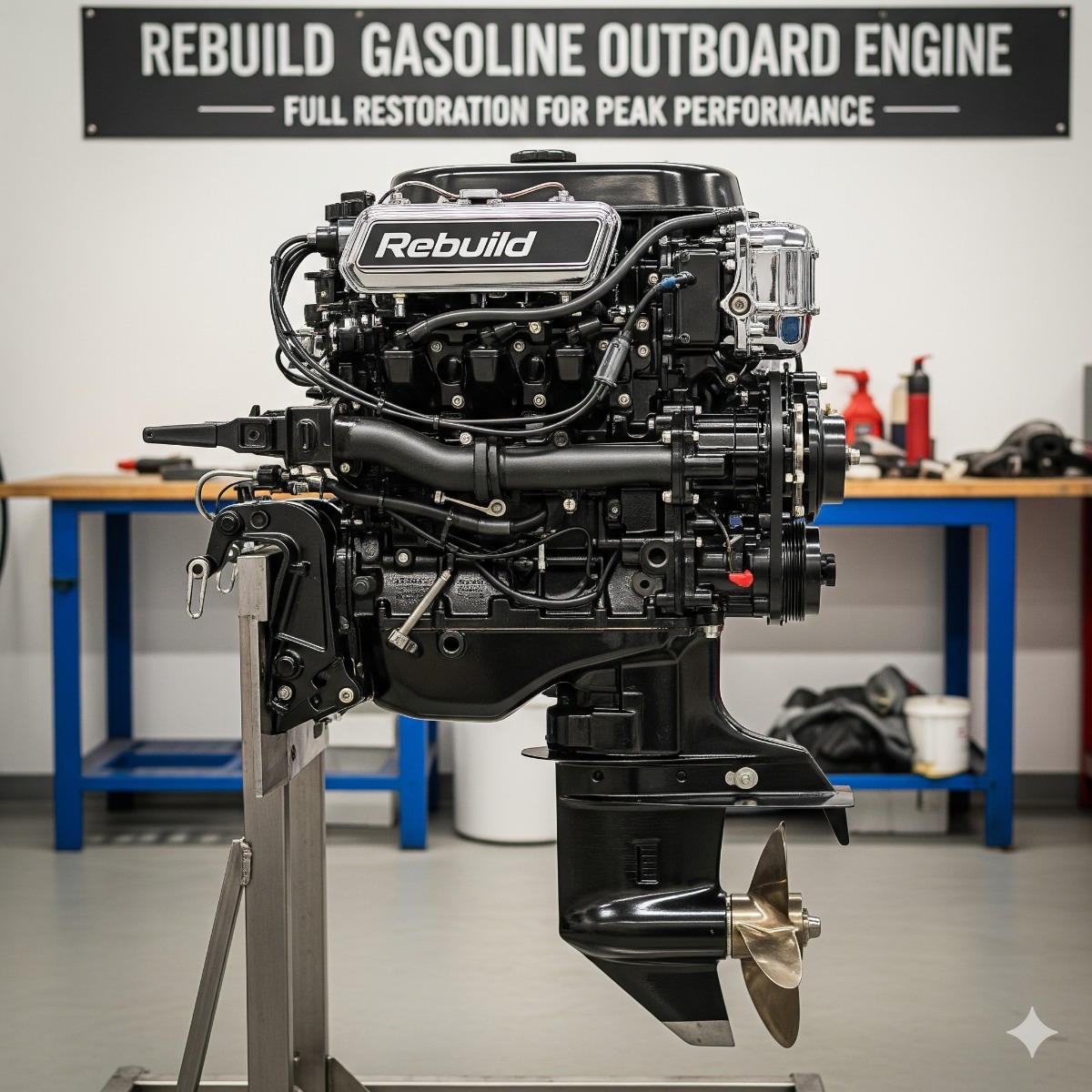
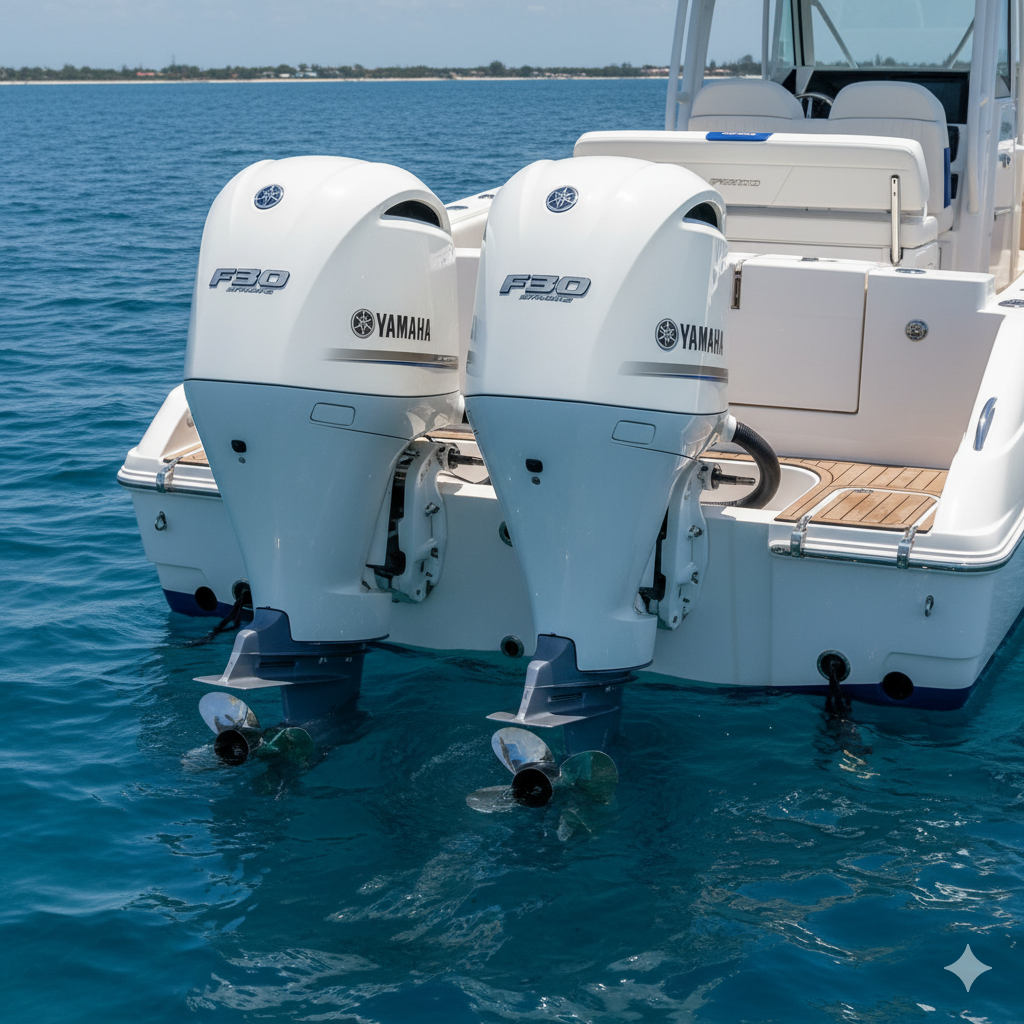
The cheapest motor is not the cheapest to own if nobody nearby can service it. Before you decide on a brand, find out where parts and outboard motor service are available in your area. Our Yamaha outboard service and repair is one example; for a worn-out powerhead, see rebuild gasoline outboard engine. After purchase, keep to the maintenance schedule: an outboard motor service checklist for saltwater fishing boats shows what a yearly visit covers.
How to Choose an Outboard Motor FAQ
Can I fit a bigger motor than the capacity plate allows?
You should not. The plate is the builder's limit for the hull, and exceeding it can affect handling and safety and may cause problems with insurance or registration. If you need more performance, talk through options such as a different propeller or a different boat.
Does shaft length really matter?
Yes. A shaft that does not suit the transom height makes the propeller ventilate or drag, and that cannot be fixed with trim alone.
Should I rebuild my old outboard or replace it?
It depends on the damage, the age of the motor, parts availability and the cost of a replacement fitted to your controls. A technician can inspect it and give you both numbers for your boat.