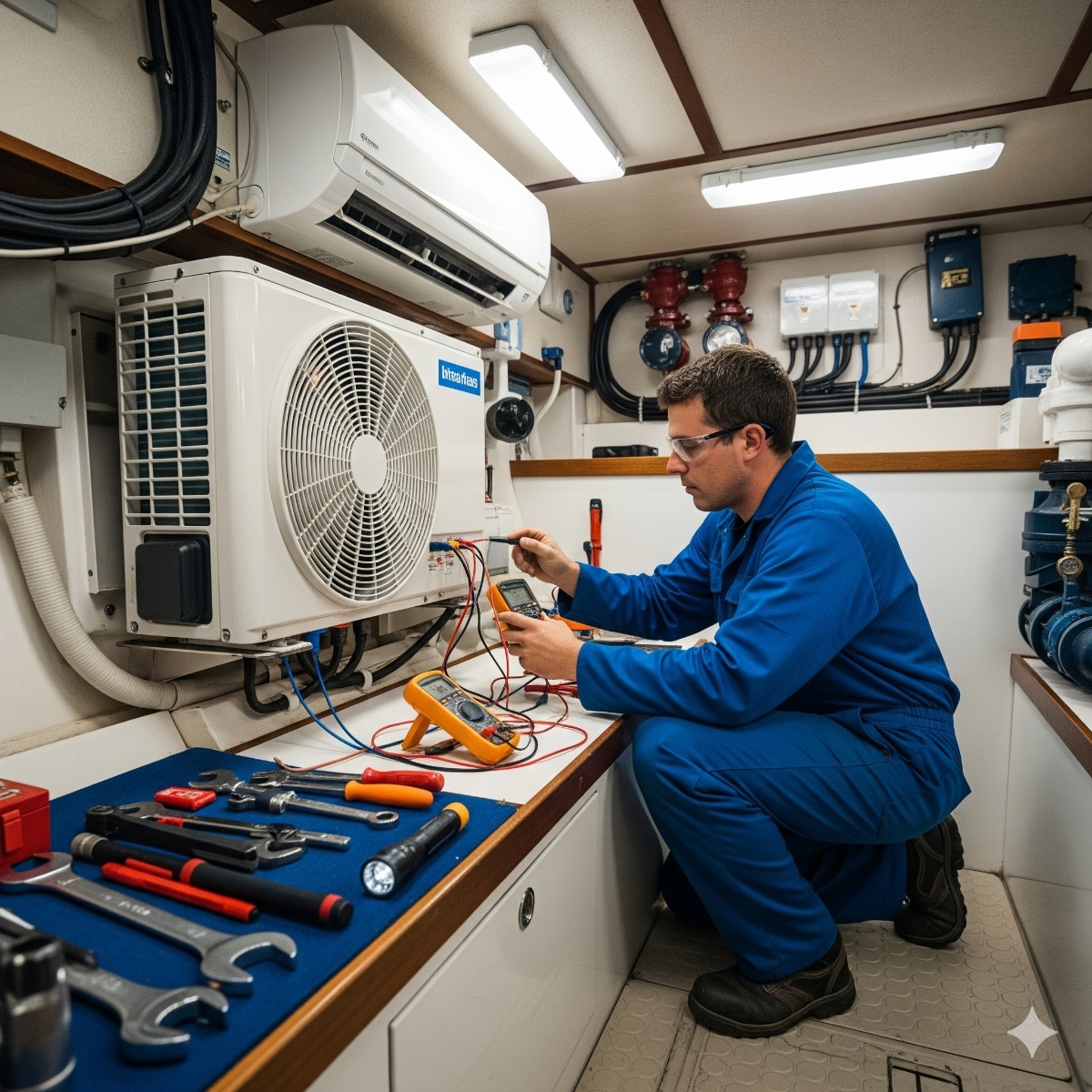
On a warm afternoon in the harbor, a cabin without working air conditioning can become unbearable, and a refrigerator that stops cooling can spoil a weekend's food. Marine air conditioning and refrigeration systems are reliable when maintained, but they operate in a demanding environment: salt water, heat, vibration and long periods of disuse. This guide covers how these systems work, the most common faults, what you can check yourself, and when to call for help.
How Marine Air Conditioning Works
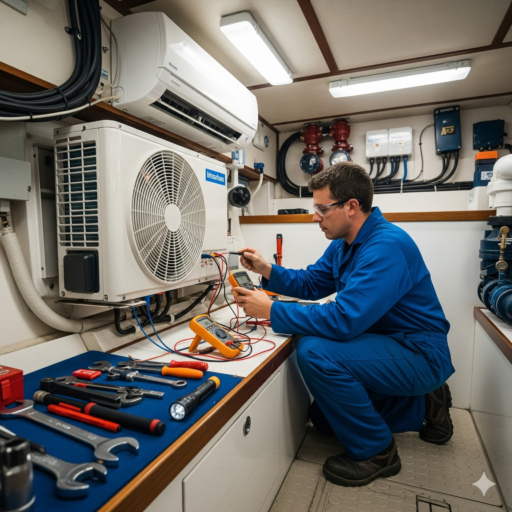
Most boats use self-contained or split direct-expansion systems. A compressor circulates refrigerant between an evaporator coil in the cabin, where it absorbs heat, and a condenser, where it rejects that heat. Unlike a home unit, a marine air conditioner cools its condenser with seawater. A dedicated pump draws water through a thru-hull and strainer, sends it through the condenser coil and discharges it overboard. If that flow is weak, the system cannot shed heat and shuts itself down.
Common AC Problems and Their Causes
Blowing warm air or shutting off
The most frequent cause is poor raw water flow: a clogged strainer, a fouled intake, an air-locked or failed pump, or growth inside the condenser coil. When the condenser overheats, the high-pressure switch trips and the control shows a high-pressure fault. Cleaning the strainer and checking the discharge stream solves many cases.
Weak cooling with good water flow
If water flows well but the air is only slightly cool, suspect a dirty return air filter, an iced evaporator coil or a low refrigerant charge. Refrigerant leaks are common at flare fittings, service valves and corroded coils. Topping up without finding the leak only delays the next failure.
Tripping breakers or not starting
A compressor that hums but does not start may have a failing start capacitor or relay. Repeated breaker trips can point to a shorted pump, a failing compressor, low shore power voltage or undersized wiring.
Water in the cabin and odors
Condensate pans and drains clog with debris, causing water to overflow into lockers. Musty smells come from mold on the evaporator coil and in the ducting.
Marine AC Maintenance You Can Do
- Clean the raw water strainer regularly, and more often in warm water with heavy growth.
- Check for a strong, steady discharge stream whenever the system is running.
- Wash or replace the return air filter.
- Keep condensate drains clear and check that the pan empties.
- Inspect hoses, clamps and the pump for leaks and corrosion.
- Run the system periodically during the off season to keep seals lubricated.
Beyond these basics, a periodic marine air conditioning service should include descaling the condenser coil with an approved solution, checking electrical connections and capacitors, measuring pressures and temperatures, and cleaning the evaporator coil.
Boat Refrigeration Basics
A boat refrigerator uses the same refrigeration cycle but is usually powered by 12 or 24 volts DC, by AC shore power, or both. Many units are air-cooled and need good ventilation behind the cabinet; others are water-cooled or use a keel cooler. Poor ventilation, failing door seals, dirty condensers and low battery voltage are the usual causes of a warm box. DC compressors often shut down to protect themselves when voltage drops, so a weak battery bank can look like a cooling fault.
Signs that marine refrigeration repair is needed include a compressor that runs constantly, frost building rapidly on the evaporator, an error code flashing on the control module, or a fridge that cools on shore power but not on batteries.
When to Call a Technician
Refrigerant work requires EPA-certified handling, specialized tools and leak detection equipment, so it is not a do-it-yourself job. Call for professional boat air conditioning repair if the system keeps tripping after the strainer is clean, if you suspect a leak, if the compressor will not start, or if the control board shows repeated errors. Early marine air conditioner repair often prevents a compressor failure caused by running a system with a low charge or blocked water flow. For owners searching for marine AC repair Long Beach help, our marine AC and refrigeration service covers diagnostics, repairs and maintenance for cabin air and refrigeration systems.
Marine AC FAQ
Can boat AC repair be done in the slip?
Most diagnosis and repair work, including pump, strainer, electrical and refrigerant work, can be done with the boat in its slip. Replacing a thru-hull fitting is the main job that needs a haul-out.
How often should the condenser be descaled?
It depends on water temperature and use. Boats in warm salt water that run their air conditioning often may need it every season; weaker cooling despite good water flow is a sign it is due.
Why does my AC smell musty?
Mold grows on the damp evaporator coil and in the ducting. Cleaning the coil, clearing the drain and replacing the filter usually solves it.