

Propellers take more abuse than almost any other part of a boat. A brush with a sandbar, a floating log, a mooring line or a crab-pot float can nick, bend or distort a blade in a second. Sometimes the damage is obvious; often it is subtle enough that owners only notice a slight vibration or a few hundred RPM missing at wide open throttle. This guide explains how to judge a damaged propeller, what a repair shop actually does, and when replacement is the better option.
How Prop Damage Shows Up on the Water
- Vibration that rises with RPM, felt through the helm, the deck or the steering wheel
- Lost top speed or engine RPM that no longer reaches the manufacturer's recommended range
- Poor hole shot or slow planing, especially with a full load aboard
- Ventilation or slipping, where the engine revs up but the boat does not accelerate
- Higher fuel burn at your usual cruising speed
Even a small bend of a few degrees on one blade upsets the balance and pitch of the whole propeller. The engine then works harder for the same speed, and the vibration travels into the gearcase, shaft seals and engine mounts.
Inspecting Your Propeller
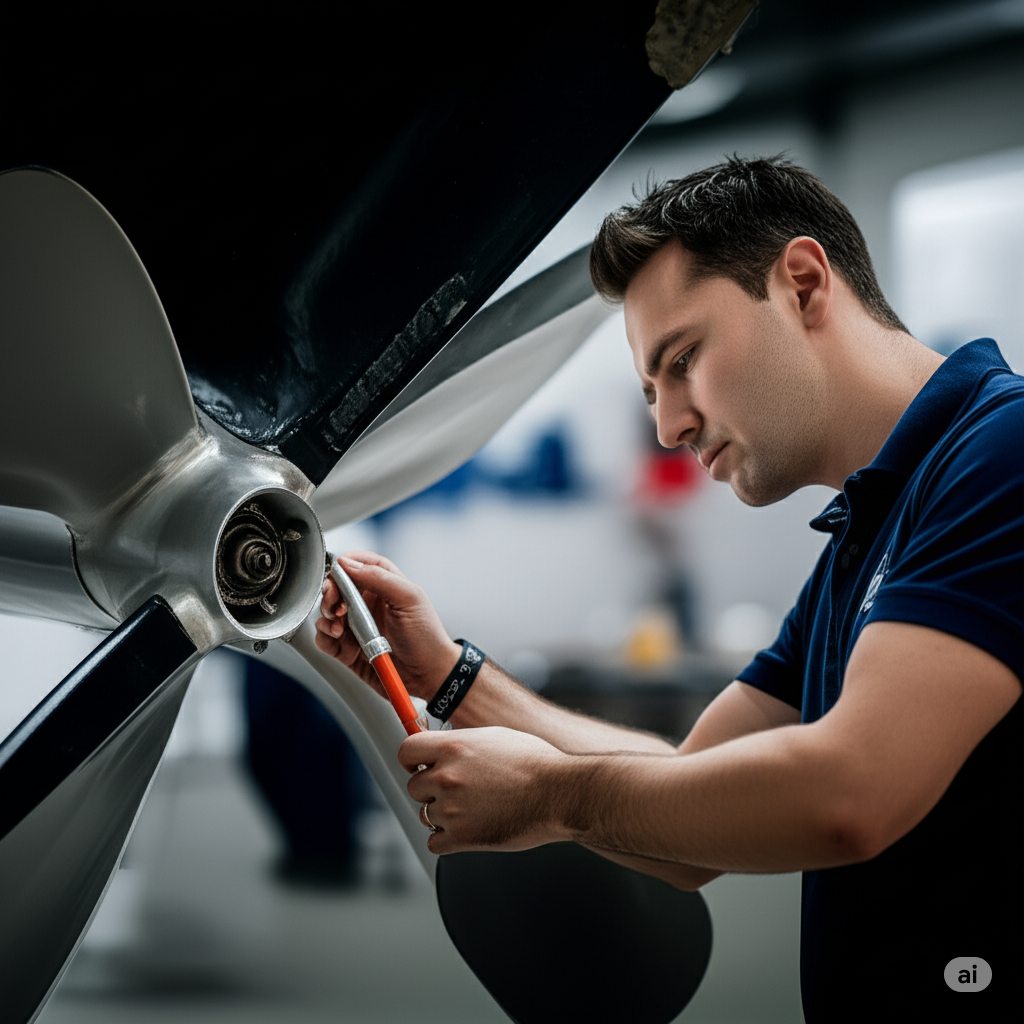
With the engine off and the key removed, take a close look at each blade. Check the leading edges for nicks, the tips for curling or missing material, and the trailing edges and cup for flattening. Sight along the blades from the side to compare their angle; a blade that sits visibly forward or back of the others is bent. Look at the hub for cracks and at the rubber or plastic hub insert for signs of slipping. On inboards, also check the shaft and strut for fishing line wrapped behind the prop.
A simple test is to hold a straightedge or a piece of stiff cardboard at a fixed point near the blade tips while rotating the prop slowly by hand. Different gaps at each blade suggest a bent blade or, if the whole prop wobbles, a bent shaft.
What Professional Work Involves
Modern boat propeller repair is a precise process rather than hammering a blade back into shape by eye. A propeller shop typically mounts the prop on a pitch gauge or scanning fixture and measures pitch, rake and track at several points on every blade. The technician then uses fixtures, controlled force and, for stainless steel, controlled heat to bring each blade back to matching dimensions.
Propeller reshaping
Propeller reshaping straightens bent blades, rebuilds the cup on the trailing edge and re-profiles leading edges so water flows over each blade the same way. Small nicks are dressed out, and missing material may be welded in on aluminum and stainless props.
Propeller balancing
Once the geometry is correct, propeller balancing removes any weight difference between blades so the prop spins without a wobble. Static balancing on a precision stand is the minimum; larger props may also be checked for dynamic balance.
Propeller rebuild
A heavily damaged prop may need a full propeller rebuild: welding on new material, reshaping, replacing the hub insert if it has spun, then balancing and polishing. Whether this is worthwhile depends on the value of the prop and the extent of the damage.
Repair or Replace?
Propeller repair is usually the right call for bent blades, nicks and worn edges, and restoring a quality stainless prop often makes more sense than buying a new one. Replacement is usually the better answer when large sections of blade are missing, the hub is cracked, the prop has already been repaired several times, or an aluminum prop has been badly thinned by corrosion. A good shop will tell you honestly which side of that line your prop falls on.
Prompt boat prop repair also protects the rest of the boat. Running for weeks with a bent blade wears the lower unit seals, cutless bearing and engine mounts, which costs far more to fix than the prop itself.
Vibration Is Not Always the Prop
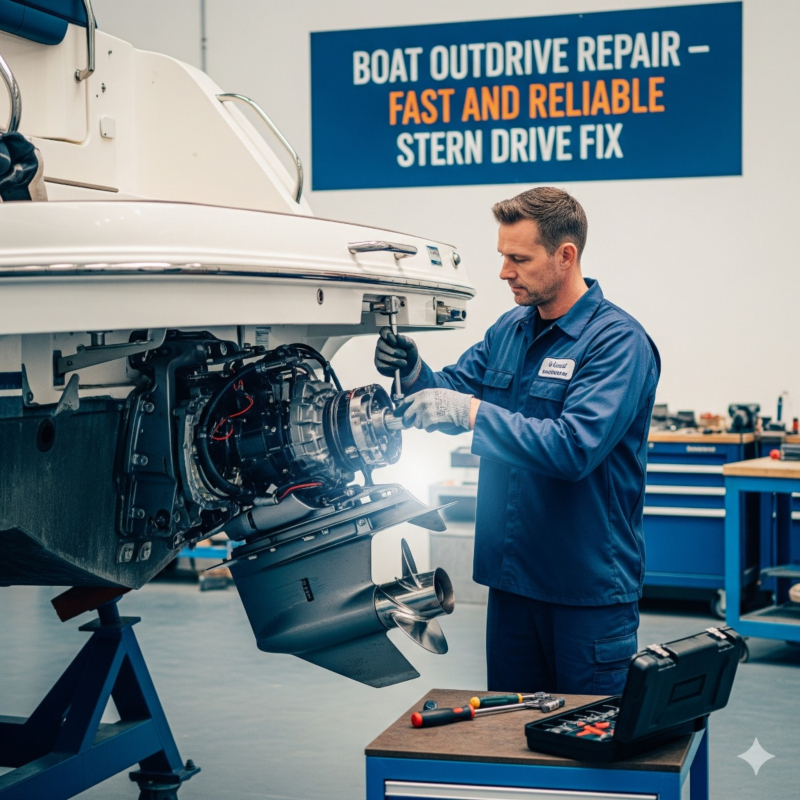
If a freshly repaired prop does not cure the shaking, look further. Boat propeller vibration repair sometimes turns into a drivetrain job, because a bent shaft, worn cutless bearing, loose coupling or tired engine mounts all produce similar symptoms. Sailboat propeller vibration repair has its own quirks: folding and feathering props wear at the hinge pins and gears, and a fixed prop that sits in the water all season often picks up heavy growth that throws it out of balance. That is why propeller and engine repair are often looked at together, since misalignment and prop damage feed each other.
When to Call a Technician
Have the prop checked after any strike, even if the boat seems to run normally, and whenever you notice new vibration or lost RPM. A technician can remove the prop, inspect the shaft splines or taper, check the hub, and send the prop out for measurement. Our prop repair and balancing service covers inspection, removal, reshaping and reinstallation so the boat regains its original performance.
Prop Repair FAQ
Can I keep running a prop with a small nick?
A tiny nick on the leading edge is not an emergency, but it disrupts water flow and can grow. Dress small nicks early and have bent blades checked promptly, because vibration from an unbalanced prop wears seals and bearings.
Will a repaired prop perform like new?
Done properly, repair returns the prop to its original specification, so the boat should regain its original RPM and speed. A shop can also adjust pitch or cup slightly if the engine is over-revving or under-revving.
Should I carry a spare?
Yes, especially for longer trips. A spare prop, nut, washer, cotter pin and the right socket let you swap out a damaged propeller at the dock or on a calm anchorage and get home safely.