The cooler is packed, everyone is aboard and you turn the key to hear a click, a slow groan or nothing at all. When a boat won't start at the dock, a calm, logical check often finds the cause in minutes. This checklist covers what to look at first, what is safe to try yourself and when to stop and get help.
Safety first
Before anything else, run the blower for at least four minutes on inboards and sterndrives, and sniff the engine compartment for fuel. Never attempt to crank or jump an engine if you smell gasoline. Make sure the boat is secured, passengers are clear of the engine and nobody is in the water near the stern.
What you hear tells you where to look
Nothing at all
- Is the battery switch on and set to the correct bank?
- Is the kill switch lanyard clipped in?
- Is the throttle fully in neutral? Most engines will not crank in gear.
- Has a main breaker or fuse tripped at the helm or the engine?
A single click or rapid clicking
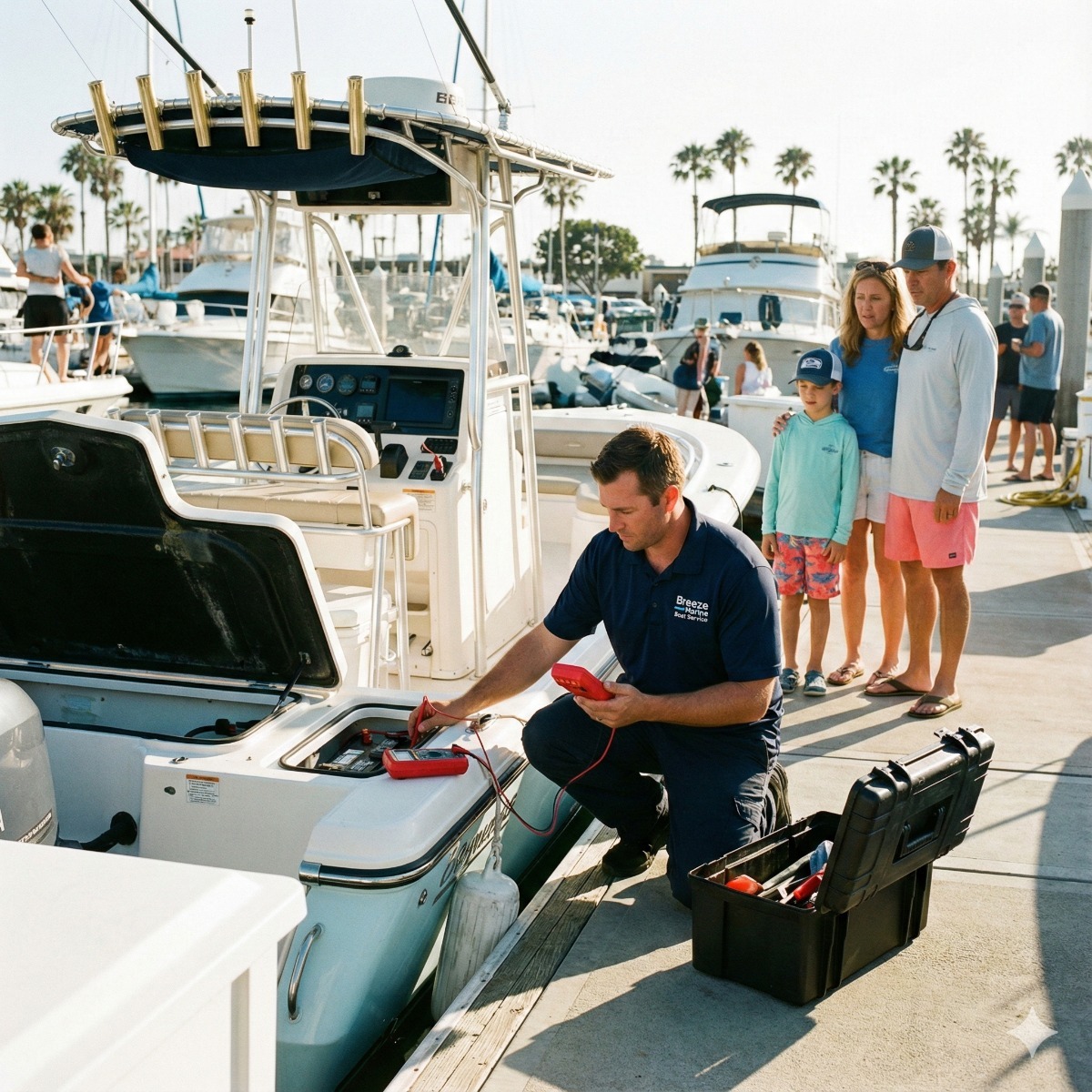
This is the classic dead boat battery or a poor connection. Check that cable clamps are tight and free of white or green corrosion at the battery and at the starter. A battery can show normal voltage with no load and still collapse when the starter draws current, which is why a battery load test is more reliable than a simple voltage reading.
Slow, labored cranking
A weak battery, corroded cables or a failing starter. If the engine turns slowly but tries to fire, the battery is often the cause. Switching to the second bank, if you have one, can confirm it.
Cranks normally but will not fire
Now the focus is fuel or spark. Check that the fuel valve is open, the tank has fuel and the vent is not blocked. On outboards, squeeze the primer bulb until firm. Look at the water-separating fuel filter: water in the bowl or a filter that has not been changed in a long time can stop an engine. Remember that repeated cranking without starting can flood some engines or overheat the starter, so crank in short bursts with rests between.
Safe quick fixes an owner can try
- Tighten and clean battery terminals if they are visibly loose or corroded, with the battery switch off.
- Use a portable jump pack sized for marine engines to jump-start from the correct battery terminals, following the pack's instructions.
- Replace a clogged or water-filled fuel filter if you carry a spare and know the procedure.
- Reset a tripped breaker once. If it trips again, stop, since something is drawing too much current.
Avoid jumping from a car in a marina parking lot with long improvised cables, and never bypass safety switches to get an engine running. A bypassed neutral safety or kill switch is a serious hazard.
When to call for help
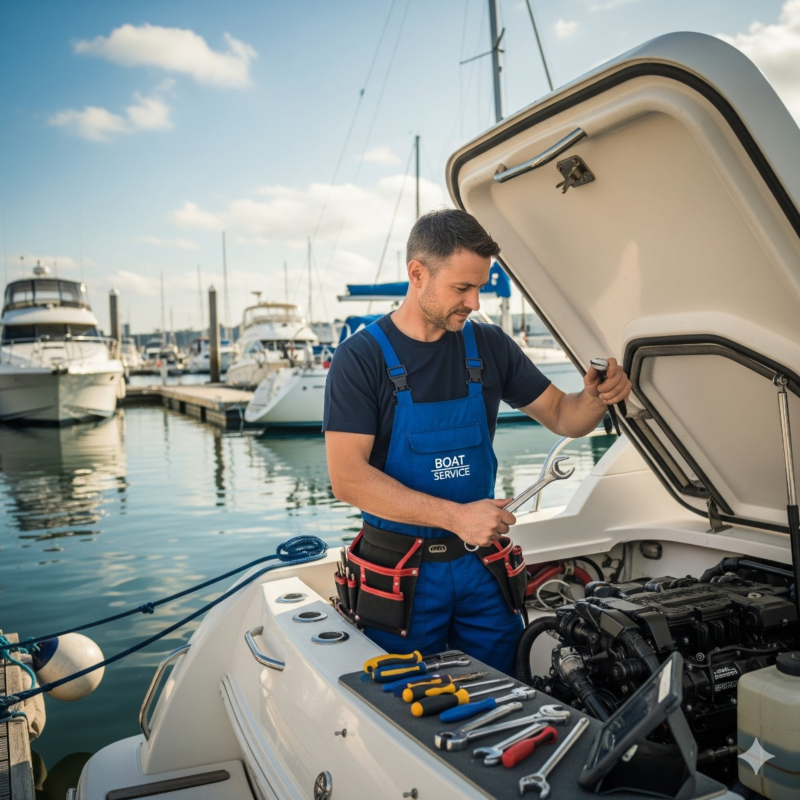
Call a boat mechanic if the checks above do not reveal the cause, if the battery will not hold a charge after a jump, if you hear grinding from the starter or if there is any smell of fuel or burning insulation. Many problems that ruin a day on the water, such as a failed starter solenoid, a bad ignition switch or fuel pump trouble, need diagnostic tools.
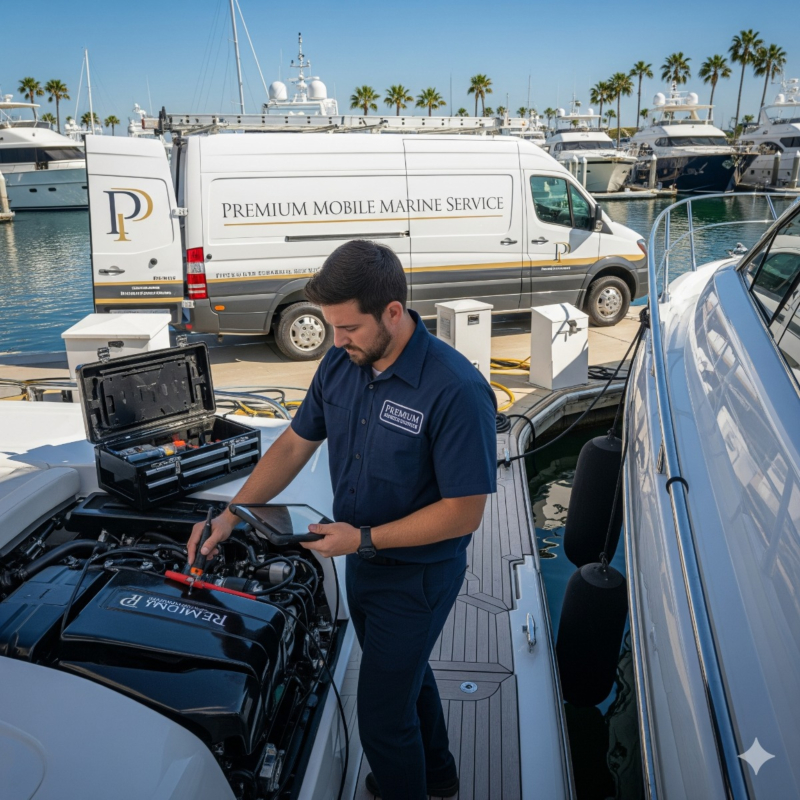
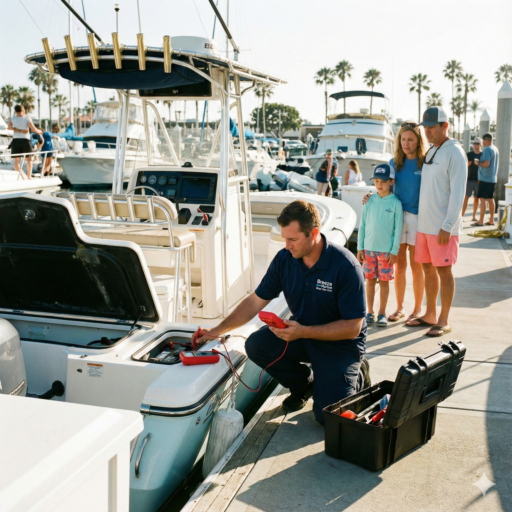
Dockside boat repair is well suited to these situations because the boat does not need to be moved. A mobile boat mechanic can load test batteries, test fuel pressure and spark, and decide whether a safe temporary fix is possible or whether a proper repair should be scheduled. For boats around Long Beach and San Pedro, the emergency dockside breakdown assistance page explains how an emergency breakdown service visit works and what information to have ready.
Preventing the next no-start
- Load test batteries at least once a season and replace them before they fail.
- Keep terminals clean and coated with a protective spray.
- Use a battery charger or maintainer when the boat sits at the slip.
- Replace fuel filters on schedule and carry a spare aboard.
- Check for parasitic drains if batteries go flat between trips.
Regular maintenance does not remove the need for emergency boat repair entirely, but it makes a dead engine at the dock much less likely.
No-start FAQ
Why does my battery show 12.6 volts but the engine only clicks?
Voltage without load does not prove the battery can deliver starting current. A load test, or checking voltage while cranking, gives the real picture. Corroded cables can cause the same symptom.
Can I jump my boat from my truck?
It is possible in some setups but risky around fuel vapor and water. A dedicated jump pack is the safer choice aboard a boat.
What should I tell the technician?
Describe exactly what you hear when you turn the key, when the boat last ran, the battery age and any recent work or warnings.