

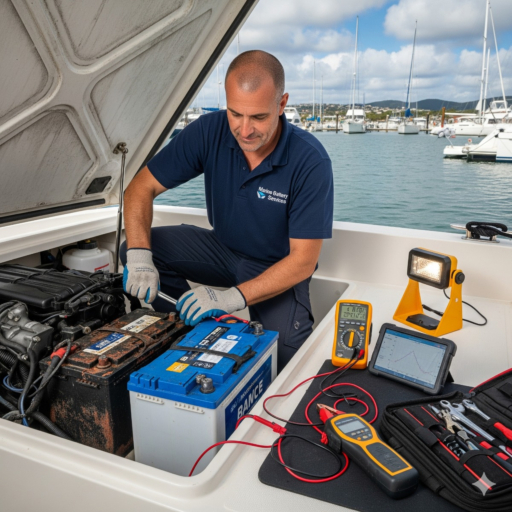
Few things ruin a morning at the slip faster than turning the key and hearing a single click. The natural reaction is to buy a new battery, but a dead boat battery is often the victim rather than the cause. If something is draining it at the dock or the engine is not putting charge back in, a fresh battery will fail the same way within weeks. This guide explains why boat batteries go flat, what you can check yourself and when the job needs proper testing.
Why Batteries Die on Boats
Marine batteries live in a harsh place. They sit in warm, damp compartments, get pounded by waves and are often left for weeks between trips. Most failures come down to one of four causes:
- Age and sulfation. Lead-acid batteries lose capacity as sulfate crystals harden on the plates. Leaving a battery partly discharged for long periods speeds this up dramatically.
- Parasitic draw. A small, constant load that keeps running when everything looks switched off.
- Undercharging. A tired alternator, a failing regulator or a charger that never finishes the job.
- Resistance in the connections. Corroded lugs, loose wing nuts and green cable ends that choke current in both directions.
The Silent Drain
This is any current flowing while the boat is supposedly off. Common culprits include stereo memory circuits, a chartplotter left on standby, a bilge pump float switch stuck in the up position, a courtesy light on a failed switch, or a chafed wire leaking current to ground in a wet bilge.
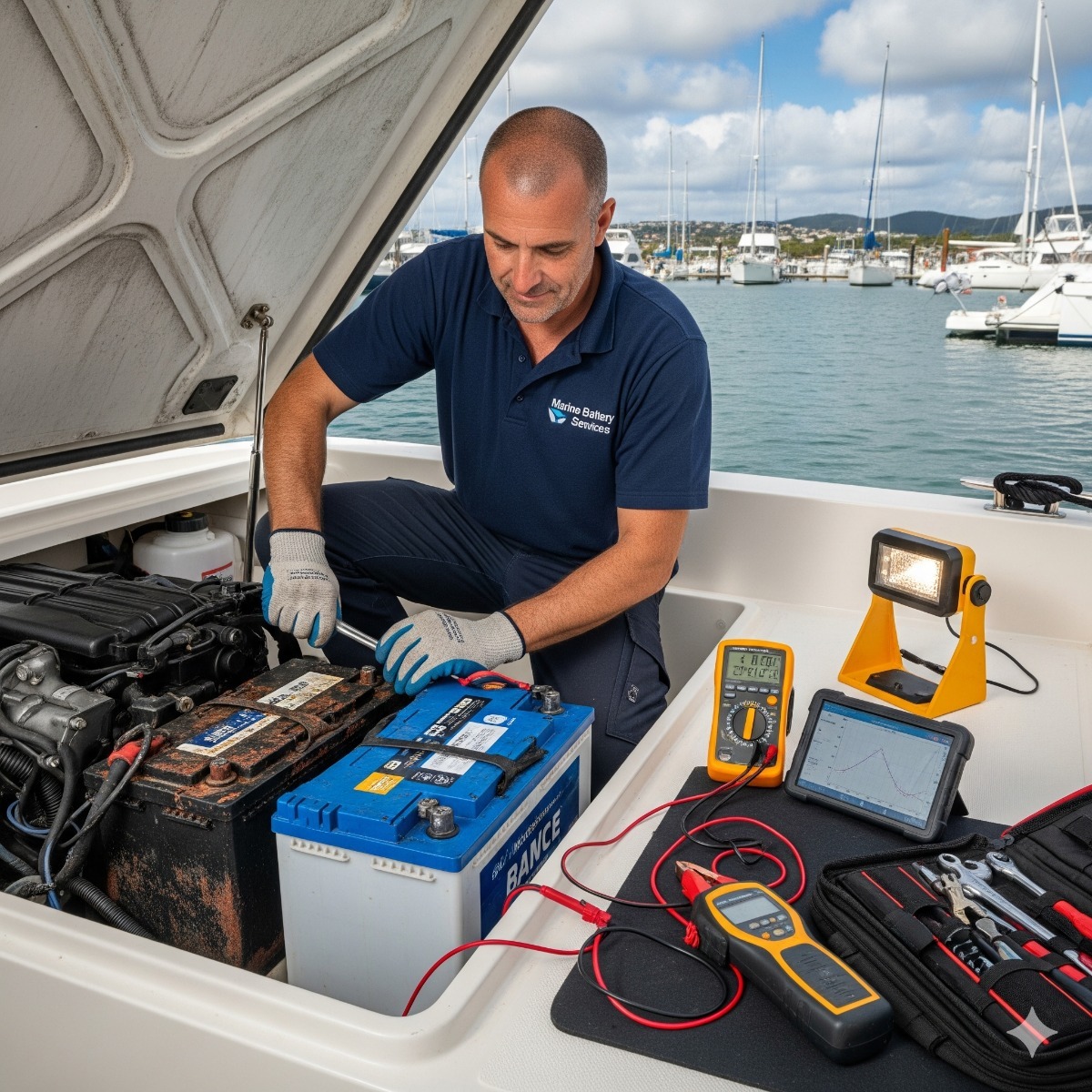
An owner with a digital multimeter can do a basic check. Turn off every switch, disconnect the negative cable, and place the meter in series between the cable and the post on the amps setting. A healthy boat with the battery switch on usually shows only a few milliamps. If the number is higher, pull fuses one at a time until the reading drops; that tells you which circuit is responsible.
Is the Charging System Doing Its Job?
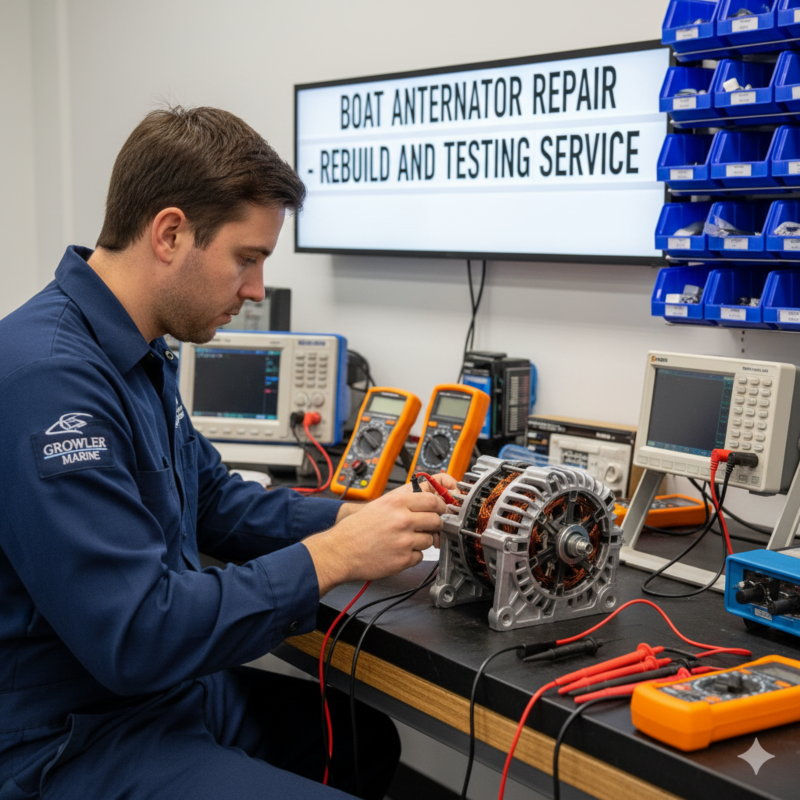
With the engine running at a fast idle, measure voltage across the battery posts. A working system typically shows somewhere around 13.6 to 14.4 volts. If you see 12.6 volts or less, the battery is not being charged and alternator output is the next thing to investigate. Loose or glazed belts, a failed regulator, a broken exciter wire or a corroded ground can all produce the same symptom. When the voltage is correct at the alternator but low at the battery, the problem is in the wiring between them, which is a classic charging system repair rather than a component swap.
Shore power chargers matter too. Older ferro-resonant units push a fixed voltage and can boil flooded batteries dry over a season, while an undersized charger may never bring a deep-cycle bank back to full. Modern multi-stage smart chargers adjust voltage through bulk, absorption and float stages, and many can be set for AGM, gel or flooded chemistry. Matching the charger profile to the battery type is one of the simplest ways to extend battery life.
How Load Testing Tells the Truth
A battery can show a perfectly normal resting voltage and still collapse the moment the starter engages. That is why load testing is more reliable than a quick voltmeter reading. A load tester applies a heavy draw for several seconds; a good battery holds its voltage, while one with sulfated or shorted plates drops quickly. Conductance testers give a similar answer electronically. If a battery fails a load test after a full charge, replacement is justified. If it passes, keep looking for a drain or charging fault.
Owner Checks Before You Replace Anything
- Remove, wire-brush and re-tighten every terminal, including grounds at the engine block and bus bars.
- Check electrolyte level in flooded batteries and top up with distilled water only.
- Look at the battery date code; most batteries on boats last roughly three to five years with reasonable care.
- Note whether the problem appears after sitting, after a run, or only when using electronics at anchor.
Replacing Batteries the Right Way
When a boat battery replacement is due, a few rules prevent repeat failures. Replace batteries in the same bank together, because an old battery drags a new one down to its level. Keep the starting battery isolated from the house bank with a voltage-sensitive relay or combiner so running the stereo at anchor cannot leave you unable to start. Choose chemistry to suit how you use the boat: flooded batteries are economical but need watering, AGM batteries tolerate vibration and need no maintenance, and gel cells handle slow deep discharge well. Heavy batteries buried in tight compartments are one reason many owners prefer professional marine battery replacement with proper cable sizing and secure hold-downs.
When to Call a Technician
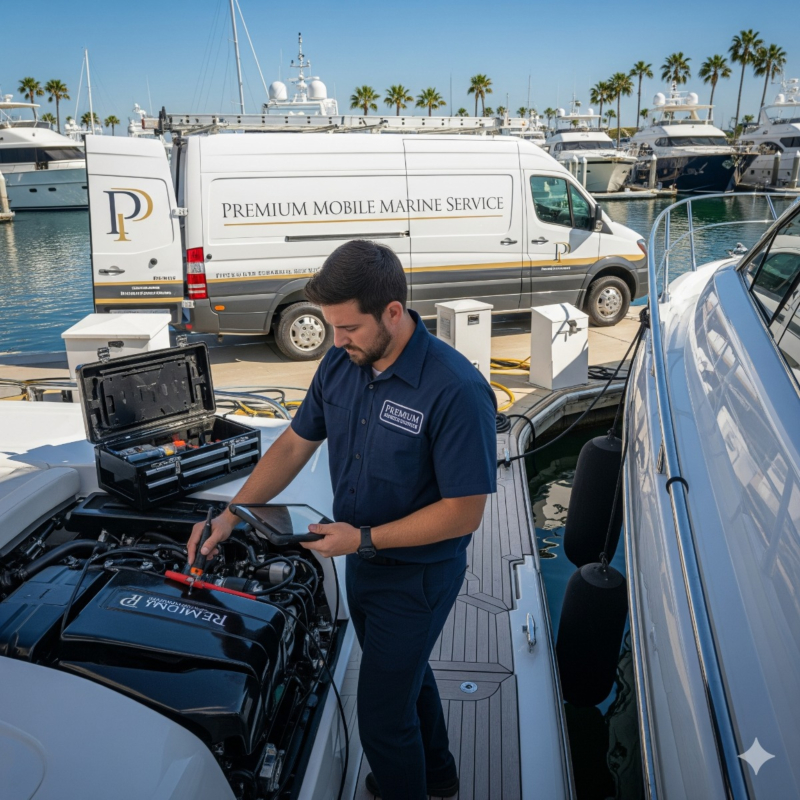
Call for help if the battery is new and still going flat, if charging voltage is outside the normal range, if you smell rotten eggs or see a swollen case, or if tracing a drain leads into wiring you cannot reach safely. Our marine battery replacement and charging system repair service starts with testing the batteries, alternator and wiring so the root cause is fixed rather than just the symptom.
Battery Drain FAQ
How much parasitic draw is normal on a boat?
Many boats show a few milliamps from electronics memory. Anything much higher is worth tracing because it can flatten a battery during a few weeks at the dock.
Can I use a car battery on my boat?
It is not a good idea. Automotive batteries are not built for the vibration and deep cycling found on boats.
Should I leave the charger on all the time?
A properly set multi-stage charger can stay connected because it drops to a float voltage. An old fixed-voltage charger should not, as it can overcharge the batteries.