

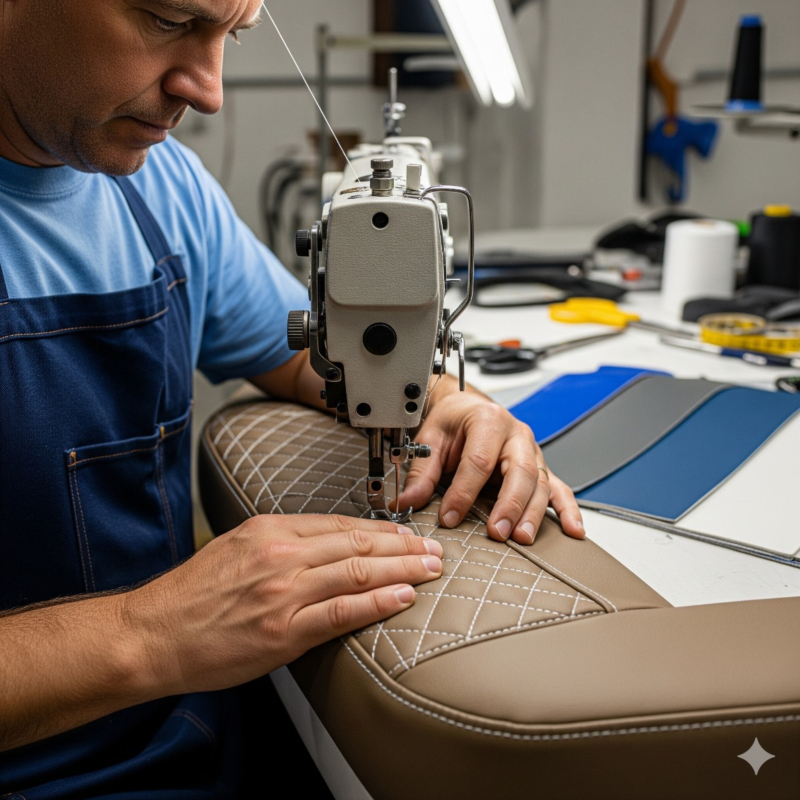
Cabin cushions on a sailboat work harder than most furniture ashore: they are seats by day, berths at night and sometimes a place to wedge yourself in a seaway. When they sag, split or smell of mildew, the whole boat feels tired. If you are planning sailboat interiors upholstery in LA, this guide covers the choices that matter most, from fabric and foam to ventilation and measuring, and how to prepare for anything from a repair to a full refresh.
What wears out first below deck
- Foam: interior foam softens and breaks down over the years, so settees bottom out and berths develop hollows.
- Seams and zippers: thread weakens with age and with sun through hatches and portlights, and metal zippers can corrode in salt air.
- Fabric: sunlight fades and weakens fabric, while damp air leaves mildew spots.
- Undersides: cushions that sit on plywood or against the hull trap condensation, especially in the forward cabin.
Choosing fabrics for sailboat cabins upholstery in LA
The Southern California climate is mild, but a closed-up boat in a sunny marina still gets hot, humid and salty inside. For sailboat cabins upholstery in LA, most owners choose between:
| Material | Strengths | Watch for |
|---|---|---|
| Marine-grade vinyl | Wipes clean and sheds water; good for dinettes and busy seats | Can feel warm and sticky to sit or sleep on |
| Woven upholstery fabric, such as solution-dyed acrylic or performance fabrics | Breathes and is comfortable for berths and settees; many resist fading | Needs cleaning rather than a quick wipe |
| Microfiber and suede-type fabrics | Soft, residential look | Choose types suited to high-moisture use |
Choose thread and zippers for the environment as well: UV-resistant thread for anything near a hatch, and plastic zippers rather than metal. Before you commit, read the fabric maker's care and cleaning guidance.
Foam and ventilation
Interior cushions normally use open-cell polyurethane foam in a density chosen for comfort and support. Many owners go firmer for settees and add a softer topper on berths. Cockpit cushions are a different case and often use closed-cell foam, or open-cell foam made to drain quickly. Below deck, mildew is the main enemy:
- Add a breathable spacer mat or raised mesh under berth cushions so air can move against the plywood.
- Keep the boat ventilated with solar or dorade vents, and consider a dehumidifier on shore power if your marina allows it.
- Stand cushions on edge or prop them up when the boat is closed for long periods.
Measuring and patterns
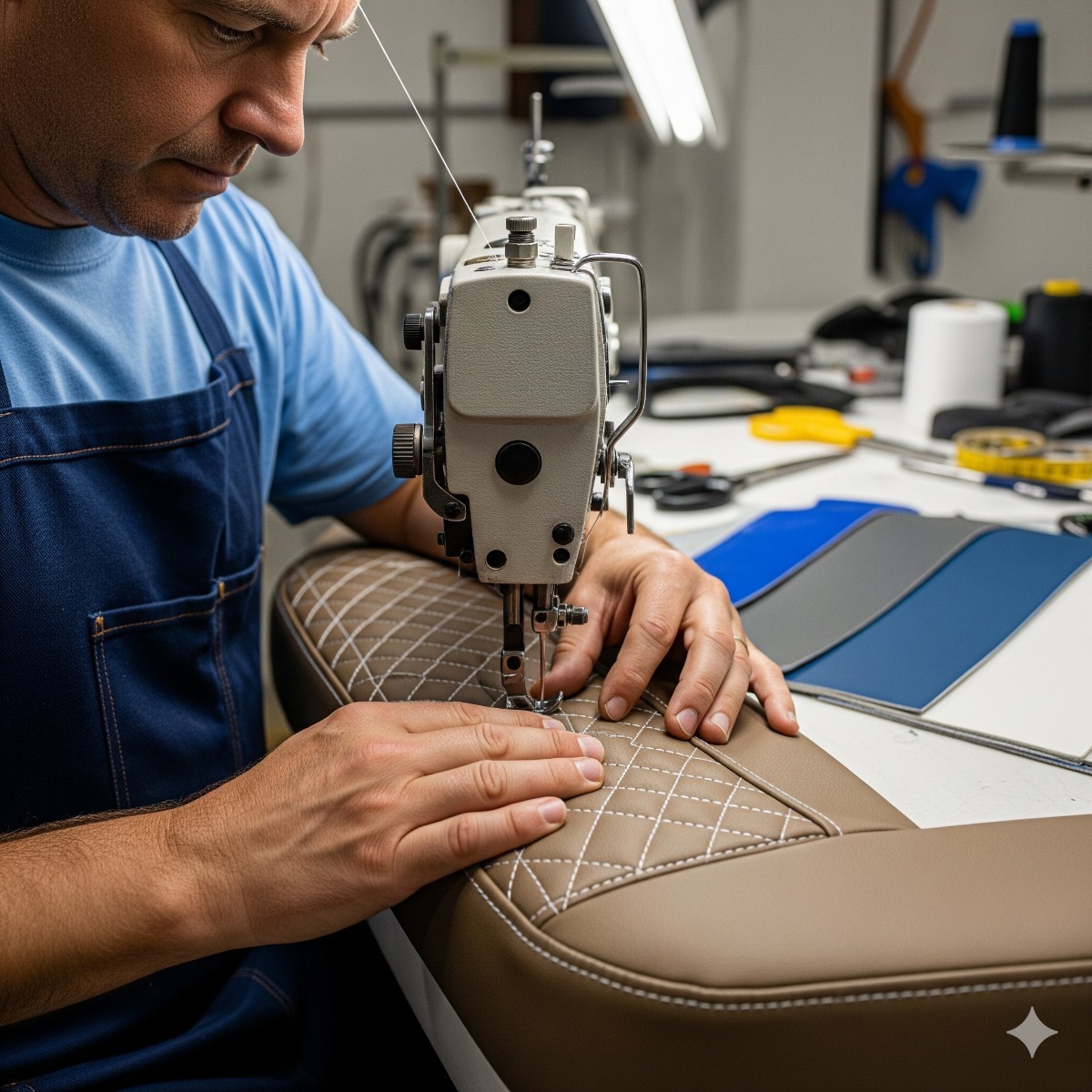
Very few cushions on a sailboat are rectangles. Settee backs follow the hull curve, berths taper toward the bow and many cushions have a bevelled edge where they meet the hull. That is why upholstery work starts with precise measurements or templates taken on board rather than a tape measure and a guess. When replacing V-berth cushions, plan where the pieces will split so each one can be lifted to reach the storage and tanks below.
Planning sailboat interiors upholstery in LA: repair, recover or replace?
- Restitching suits cushions with sound foam and fabric where only the seams have opened.
- New covers suit cushions whose foam is still supportive but whose fabric is faded, stained or split.
- New foam and covers make sense when foam has collapsed or mildew has soaked in.
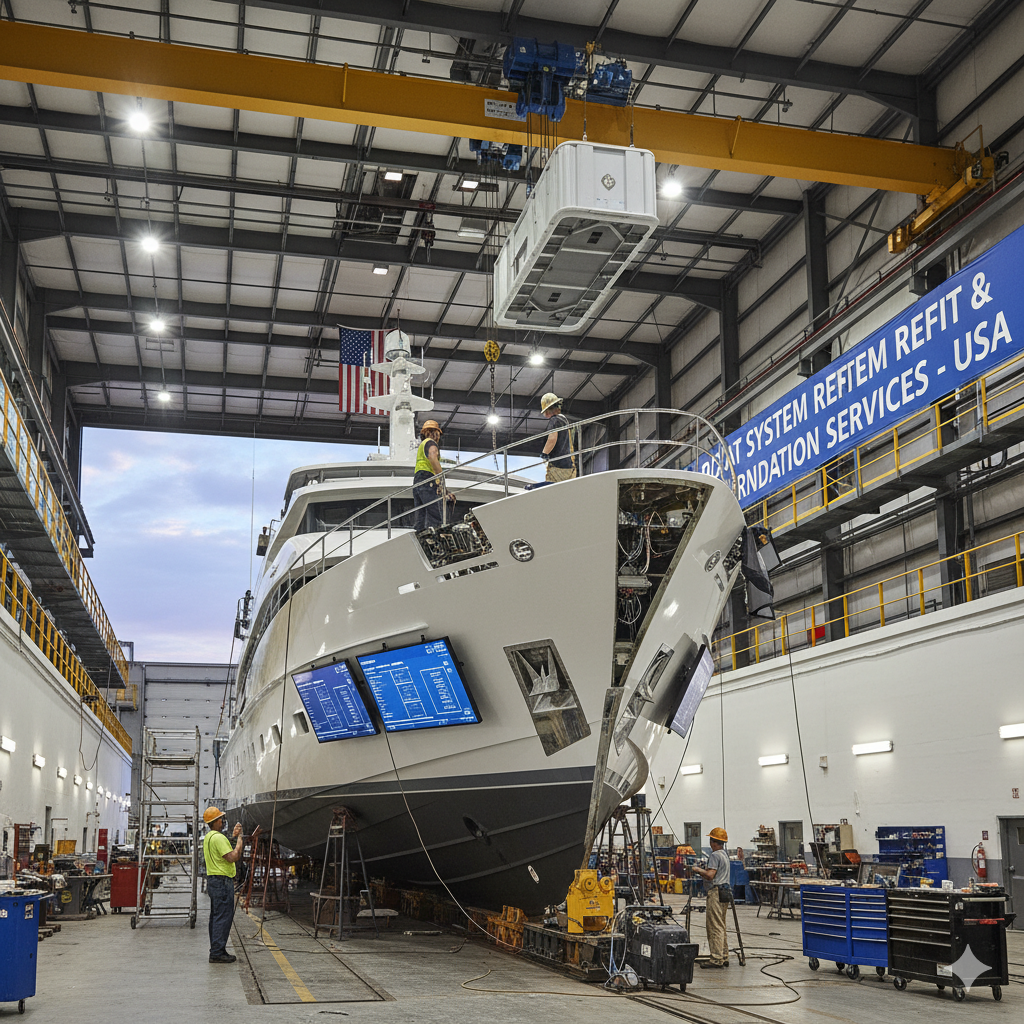
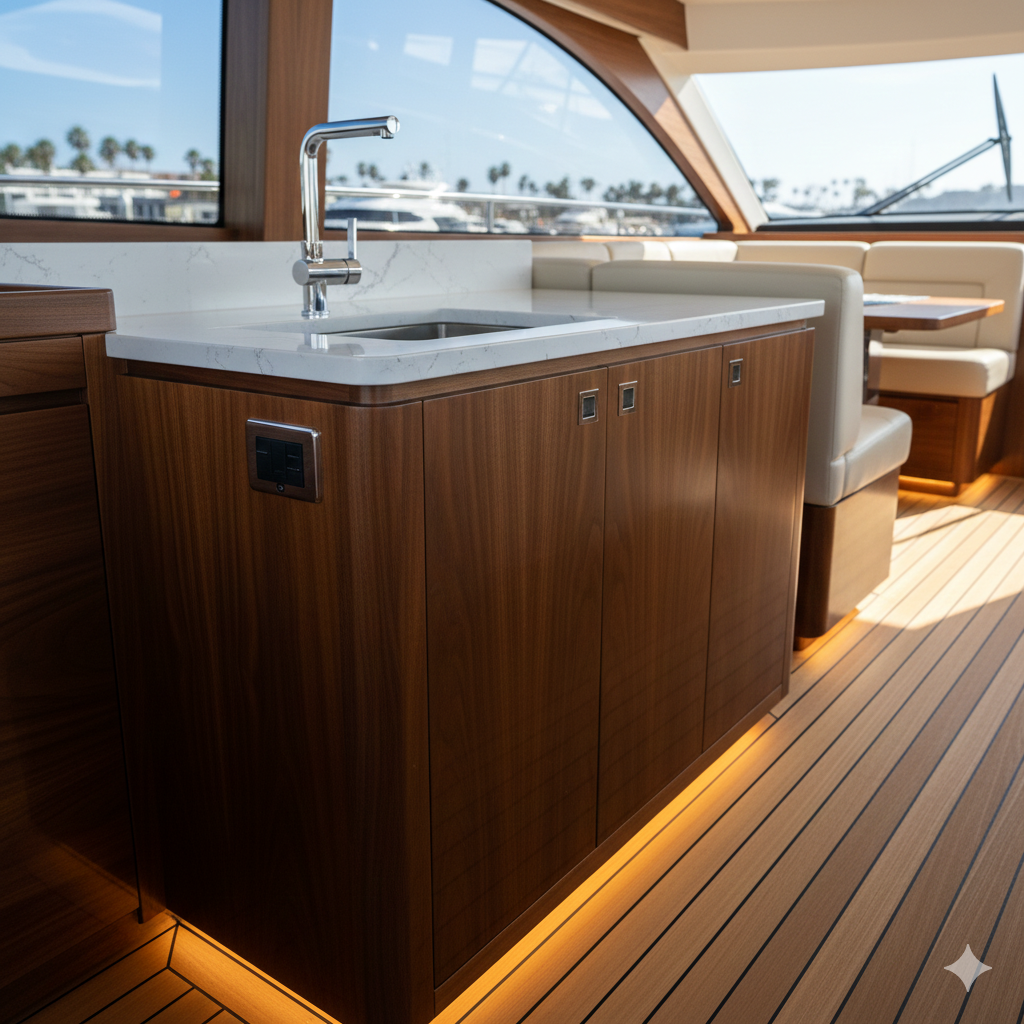
Interior projects often grow: cushions lead to cabinetry, flooring and lighting. If that is where you are heading, a planned boat refit lets upholstery, marine cabinetry and other interior work happen in a sensible order.
Motor yacht interiors upholstery in LA
The same principles apply to motor yacht interiors upholstery in LA. Salon seating, helm seats and dinettes sit behind large windows, so fade resistance and UV-resistant thread matter even more, and the larger surfaces make comfort and ease of cleaning a bigger part of the choice between vinyl and woven fabric.
How to prepare for a boat upholstery repair
- Photograph each cushion and the damaged areas, including the undersides.
- List the pieces that need work and note any that must match existing fabric.
- Decide whether you want to match the current color or change the look.
- Note how the boat is used, whether for day sails, weekends aboard or longer cruises.
Frequently asked questions: sailboat interiors upholstery in la
How often do sailboat cushions need replacing?
There is no fixed interval. Foam that no longer springs back, fabric that tears easily and mildew that keeps returning are the usual signs that covers, foam or both are due.
Can mildew be cleaned out of cushions?
Surface mildew on vinyl and many marine fabrics can often be removed with cleaners the fabric maker recommends. Mildew that has soaked into the foam is much harder to deal with, and new foam is often the practical answer.
Vinyl or fabric for a V-berth?
Most owners prefer a breathable woven fabric for sleeping, because vinyl can feel warm and trap moisture. Vinyl works well on dinette and galley seating that needs frequent wiping.
How do I keep new cushions looking good?
Vacuum and wipe them regularly, clean spills early with products the fabric maker recommends, close curtains or cover hatches when the boat is shut up in the sun, and keep air moving underneath so moisture cannot collect.
We serve Long Beach and LA County and work on upholstery for boats and yachts alike, with custom stitching and marine-grade materials. See our boat upholstery repair service for details, and contact us with photos and a list of the cushions you want to refresh.