
Lithium LiFePO4 Battery Conversion & Power Upgrades
Lithium (LiFePO4) battery installation in Long Beach and nearby harbors: more usable power, faster charging and less weight, with the bank sized to your boat's loads and the charging system set up for lithium.
Labor estimate Quoted after inspection
Book sends us a ticket; nothing is charged online. Before any work you get a written estimate for labor, parts and the trip fee, and nothing is done without your OK.
Trip fee By distance, one way: $30 in San Pedro, $50 in Long Beach
- San Pedro$30
- Wilmington, Terminal Island$40
- Long Beach: Shoreline, Rainbow Harbor$50
- Long Beach Marina, Alamitos Bay$60
- Redondo Beach$60
- Seal Beach, Huntington Harbour$75
- Marina del Rey$85
- Newport Beach$110
Farther away: $25 plus $2.50 a mile, one way from our San Pedro shop. No trip fee when the boat comes to our shop, or for plan members. The work of a visit is at least $150; the trip fee is on top.
- Registered in California
- Breeze Marine Boat Service LLC, San Pedro
- Where we work
- At your slip from Marina del Rey to Newport Beach, or in our San Pedro shop
- Questions first
- (213) 693-0224 or submit a ticket
About this service
Silent Power.
More Time at Anchor.
Lead-acid batteries are heavy, slow to charge and wear out sooner. Our marine lithium battery conversions (LiFePO4) give you more usable power for less weight, so you can run electronics quietly at anchor and, with a bank and inverter sized for them, AC appliances too.
More Usable Capacity
Lead-acid batteries wear out quickly if regularly drained below 50%. Lithium lets you use most of its rated capacity, with a much flatter voltage curve than lead-acid. In an AGM to lithium conversion, a 200Ah lithium bank gives close to the usable energy of a 400Ah AGM bank at a fraction of the weight.
Faster Charging
Lithium accepts high charge currents, up to the limit its maker sets, so generator and solar time goes further. The generator runs for less time, and more of what your solar panels produce is stored.
Total Visibility
No more guessing. We integrate Victron Cerbo GX or Mastervolt displays that show your state of charge and the estimated "Time to Go" at current usage, also on your phone or chartplotter.
The Conversion.
More than just swapping batteries.
Audit & Design
We calculate your daily amp-hour load (fridge, lights, inverter) to size the house battery bank correctly. We design the physical layout to fit your existing battery footprint.
Alternator Protection
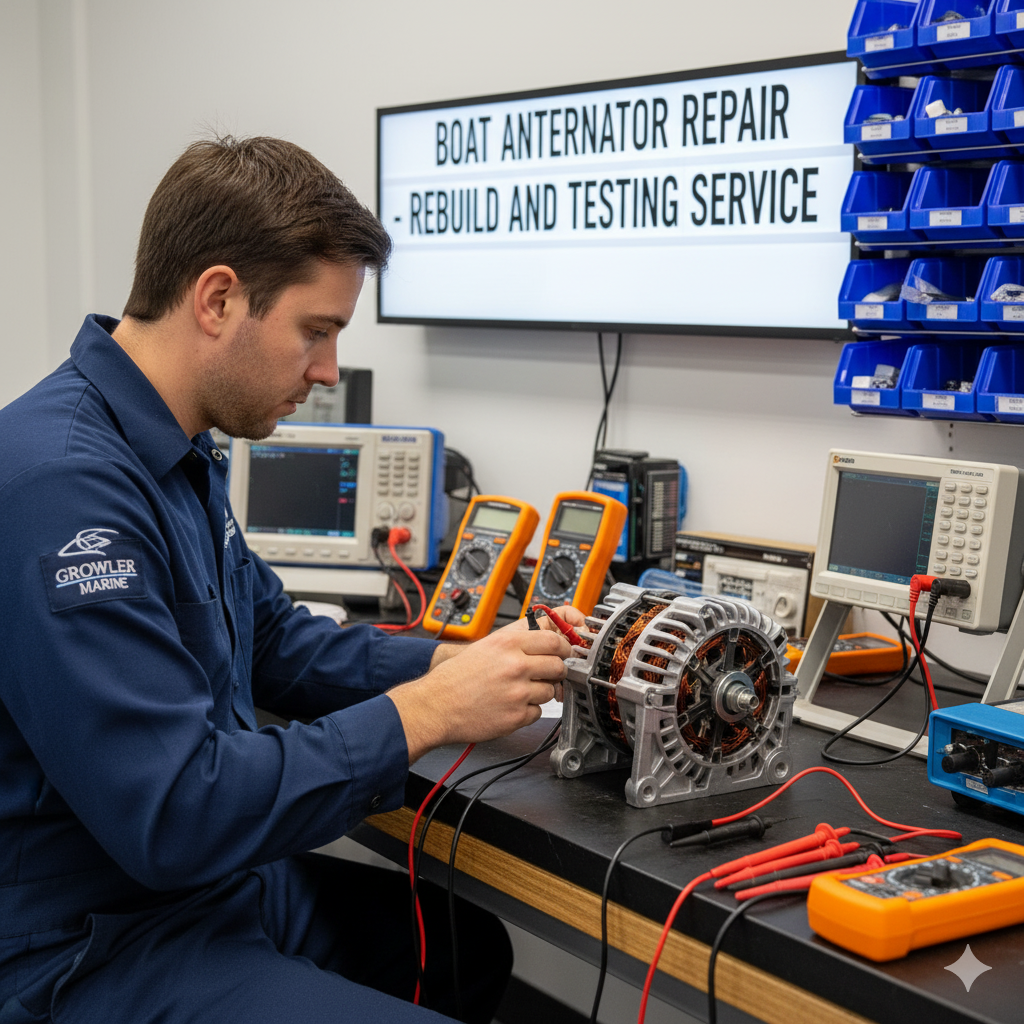
Crucial Step: lithium can draw so much current that a standard alternator overheats and burns out. We install DC-to-DC chargers or external regulators to protect your alternator.
Installation
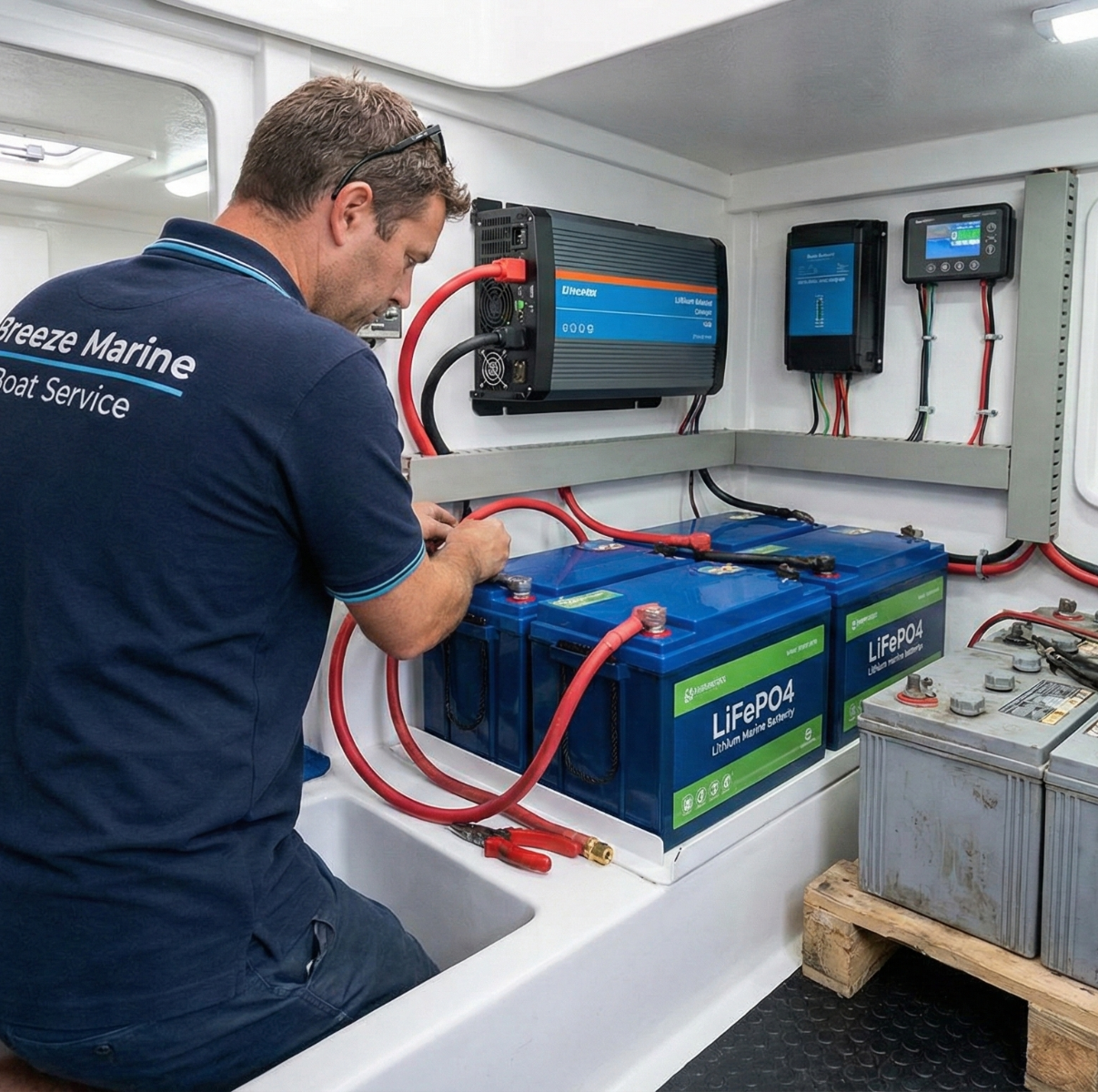
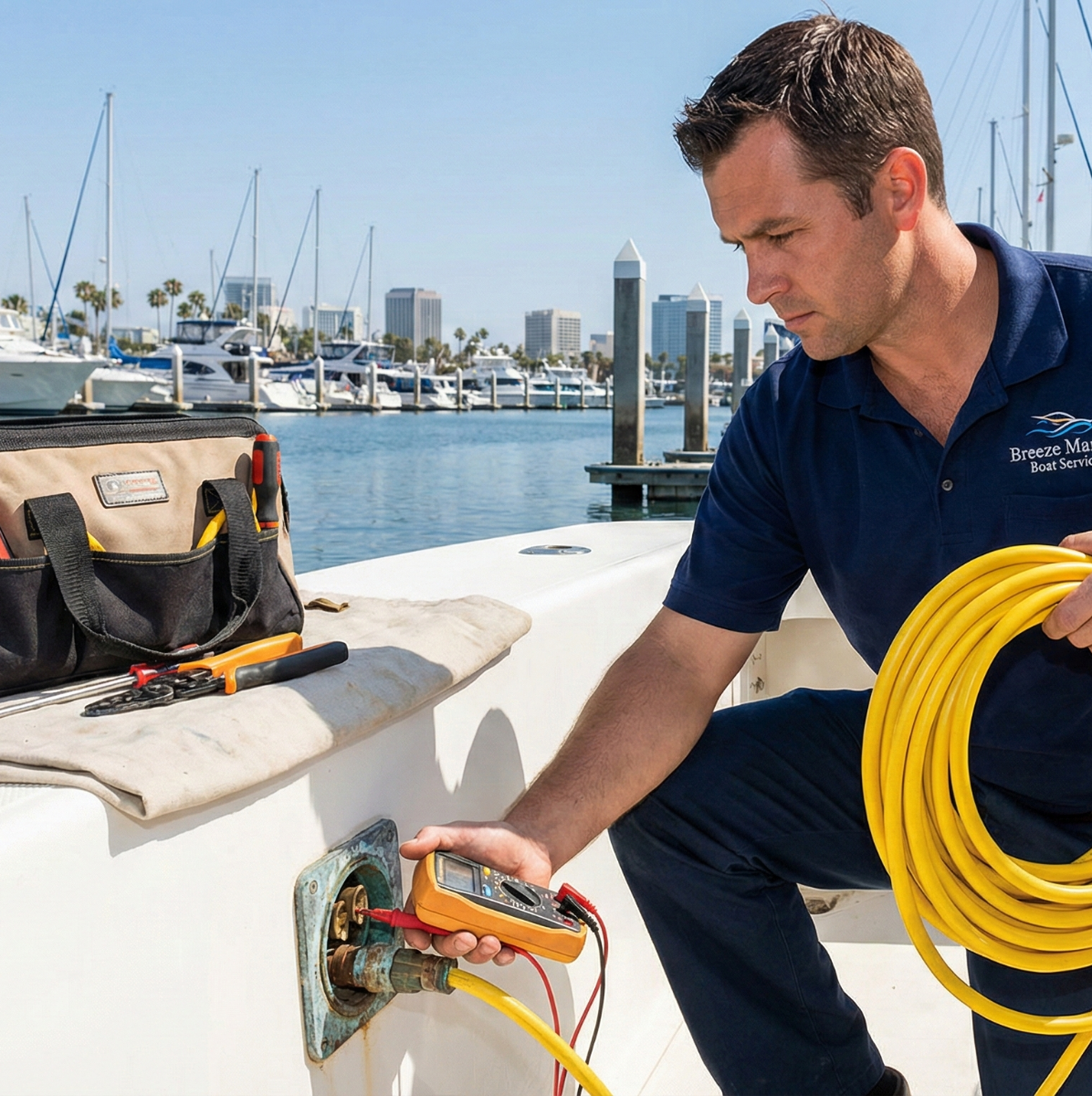
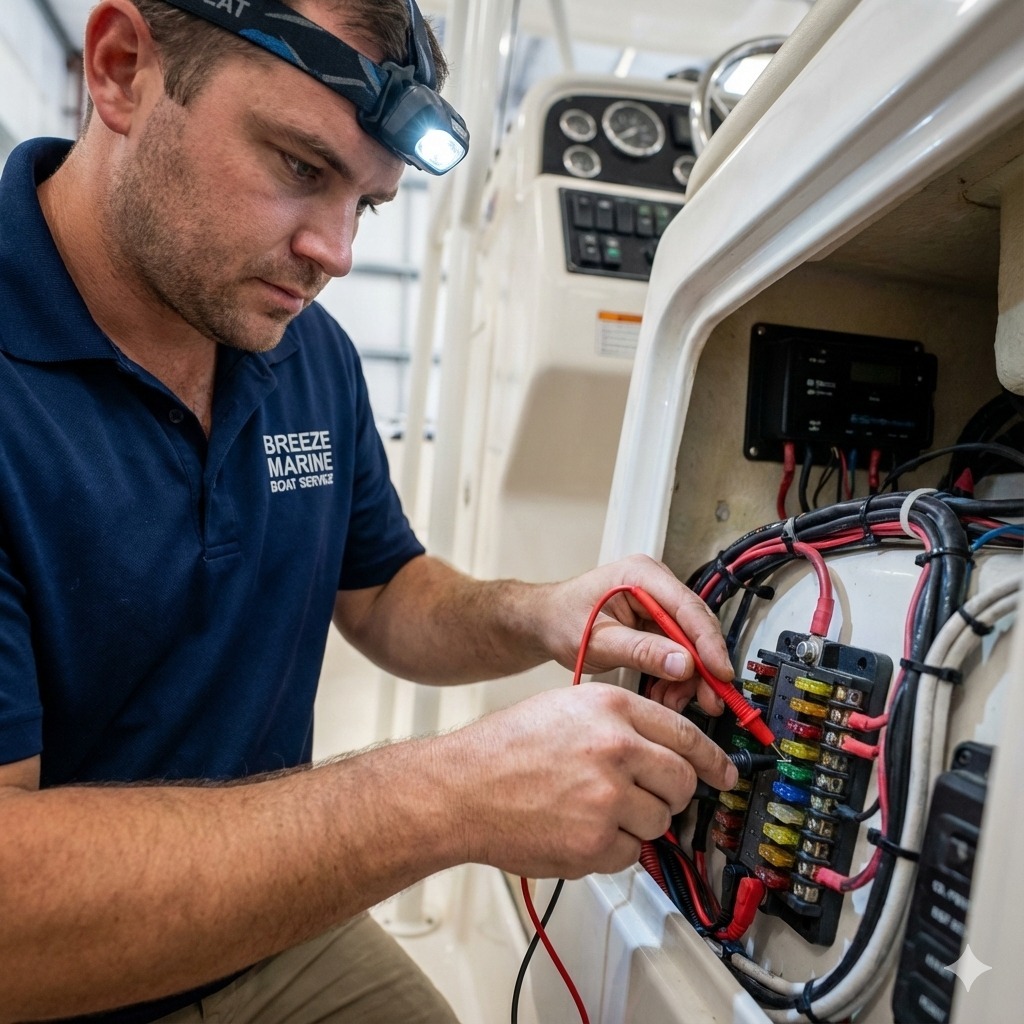
We install the LiFePO4 boat battery bank, high-amp bus bars, Class-T fusing, and heavy gauge marine cabling. All connections are torque-checked and heat-shrunk.
Programming
We configure your Inverter/Charger and Solar Controllers with specific LiFePO4 charging profiles to ensure battery longevity and safety.
Energy Independence.
A professional, clean installation.


Brands We Install.
Equipment from established manufacturers.
Common Questions
Is Lithium safe on a boat?
Yes, when it is installed correctly. We use only LiFePO4 (lithium iron phosphate), which is much less prone to thermal runaway than the lithium-ion cells in phones or scooters. It still needs a battery management system, Class-T fusing and charging set for lithium, and we install it that way.
Can I just drop them in?
No. A "drop-in" without updating your charging sources (alternator, shore charger) can damage the batteries or overheat the alternator. The system must be engineered as a whole.
Is a lithium battery conversion kit enough on its own?
Many owners start by looking at a lithium battery conversion kit and expect a simple boat battery replacement. A kit supplies parts, but it cannot size the bank to your daily amp-hour load, and without updated charging sources it can damage the batteries or overheat the alternator.
We treat the boat as one system: a load audit, a layout that fits your existing battery footprint, DC-to-DC chargers or external regulators, Class-T fusing and heavy gauge marine cabling, then LiFePO4 charging profiles on your inverter/charger and solar controllers.
Planning a Lithium Marine Battery Installation
Every lithium marine battery installation is planned around how the boat is used: nights at anchor, electronics running all day or AC appliances fed through an inverter. When AC loads are part of the plan, a marine inverter installation is designed together with the new bank, so the inverter/charger, charging sources, fusing and cabling work as one system.
Reviews 4
Questions 7


Related Posts
-
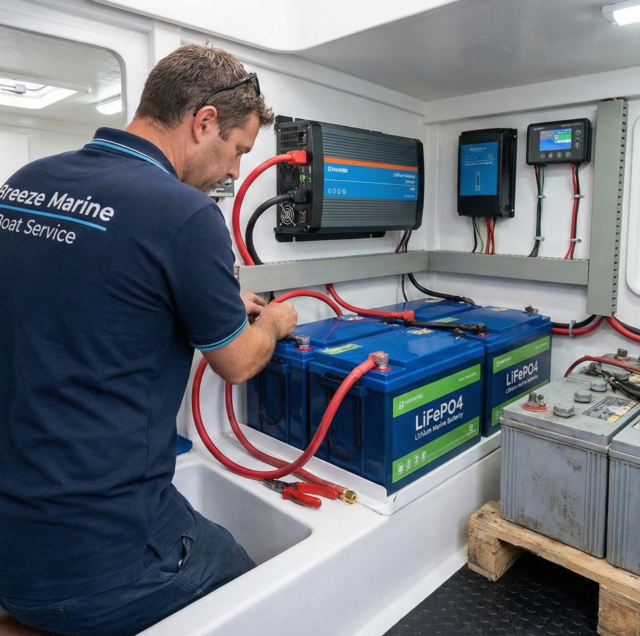


 What an AGM to lithium conversion really involves on a boat: sizing the bank, protecting the alternator, fusing, charging profiles and what owners can check first.
-
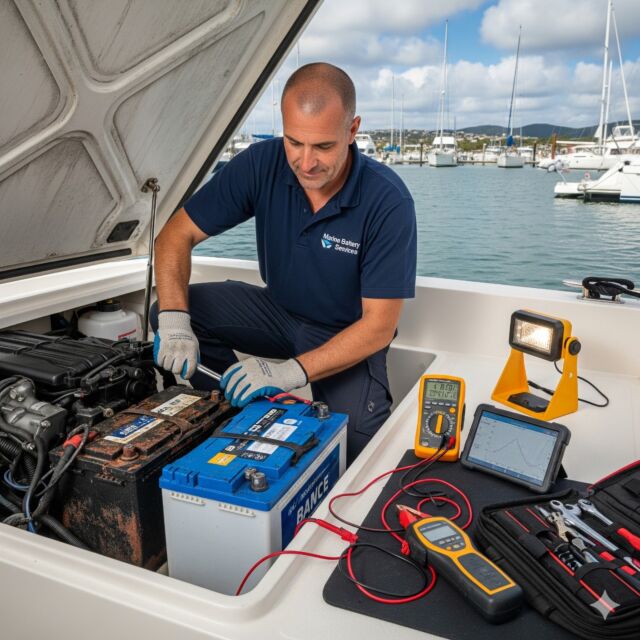 How lead-acid and lithium batteries fail underwater, what lead and acid do to the harbor floor, and how to keep batteries out of the water.