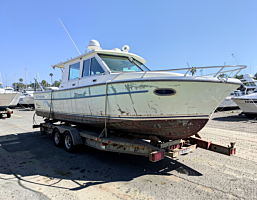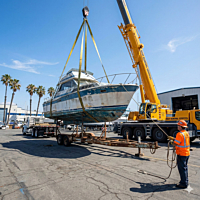

Of everything aboard a boat that sinks, the battery is one of the smallest items and one of the most stubborn problems. A typical boat carries one to several batteries for starting, house loads and electronics, and every one of them was built to stay sealed and dry. Once the boat is underwater, that is over. This article looks at what a sunken boat battery does to the water, why lead-acid and lithium batteries fail in different ways, and how to keep a battery from ever ending up on the bottom.
It is part of our series on why an old boat should never be sunk or abandoned.
What Is Inside a Marine Battery
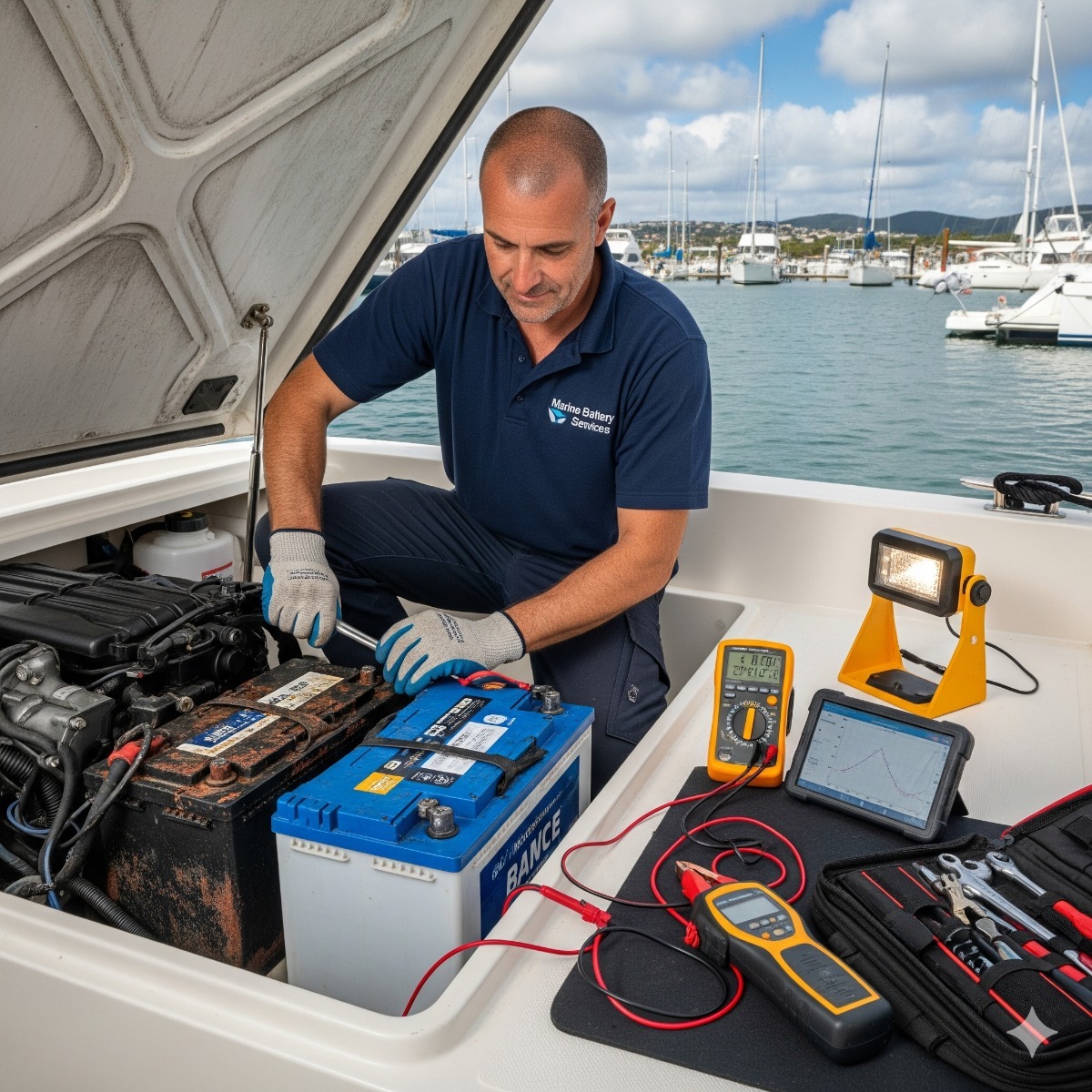
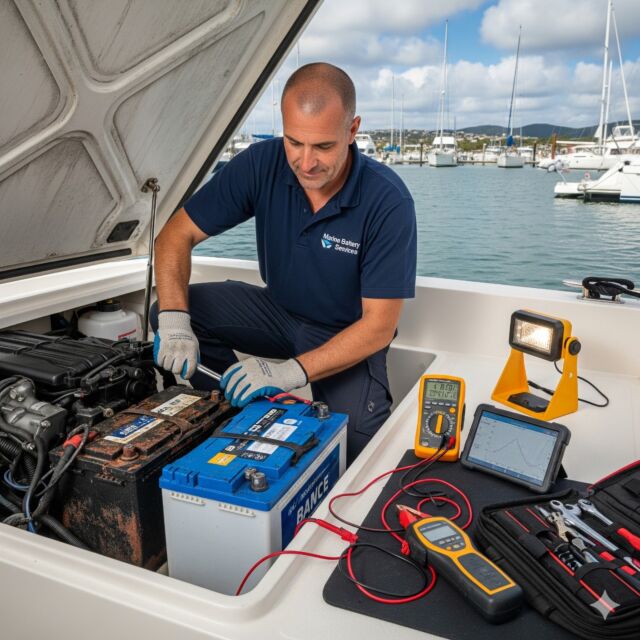
Most boats still run on lead-acid batteries: flooded, AGM or gel. All three use plates of lead and lead dioxide in an electrolyte of diluted sulfuric acid. Flooded batteries have vent caps and liquid acid that can slosh out; AGM and gel types hold the acid in glass mats or a gel, but they are sealed against spills, not against being submerged for months.
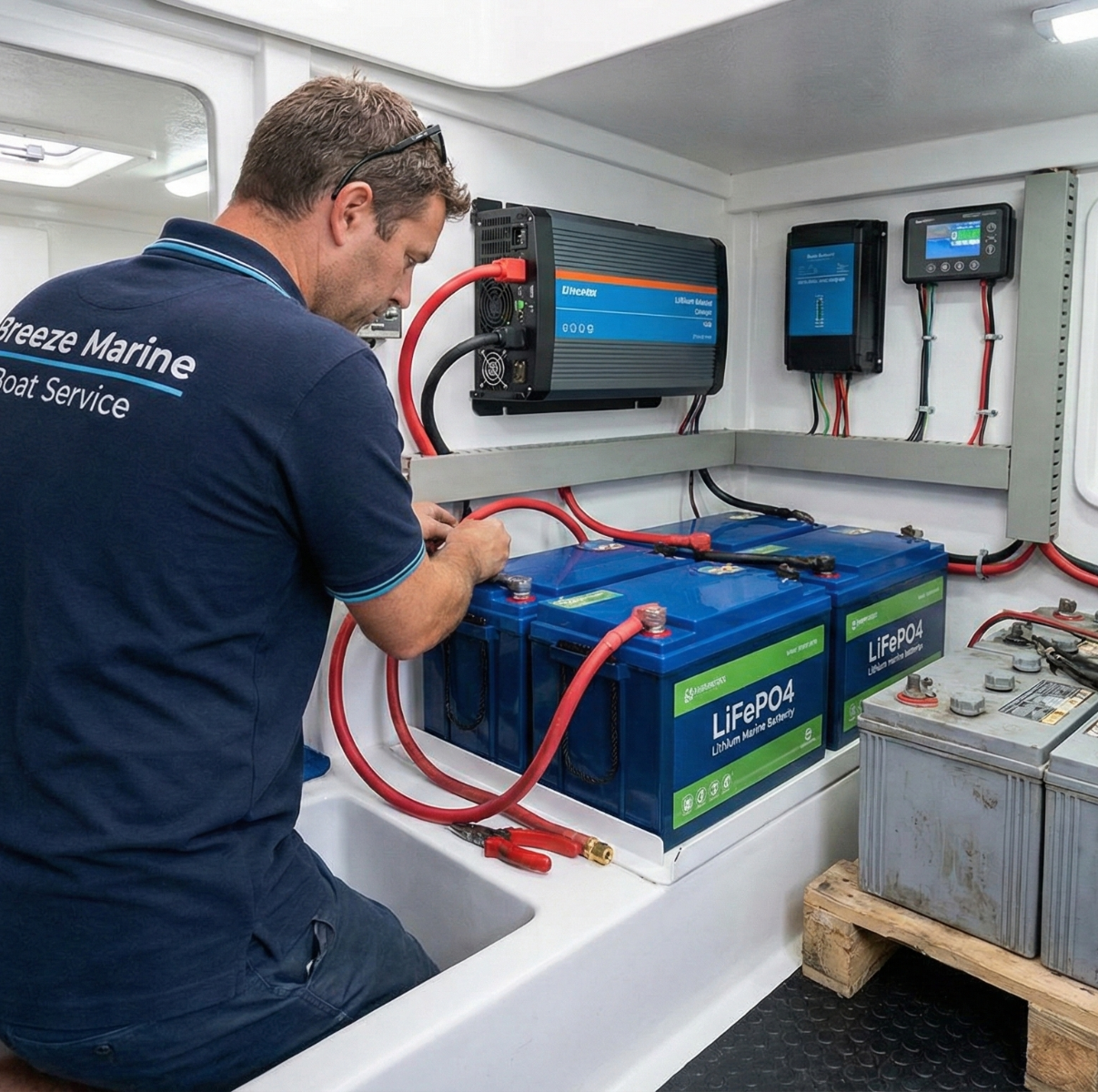
A growing number of boats carry lithium batteries, usually lithium iron phosphate, with a battery management system, wiring and cells packed in a sealed case. They contain no liquid acid, but they store a lot of energy in a small space, and that changes how they fail.
A Lead Acid Battery in Water
When a lead-acid battery goes under, a few things happen in sequence:
- The terminals short through the water, especially salt water, and the battery discharges while the terminals and cables corrode quickly.
- Water enters through vents, and acid leaves the same way, lowering the pH right around the battery.
- The case cracks or breaks as the hull shifts, gets hit during a storm, or is damaged during salvage, releasing the remaining acid and exposing the plates.
- Lead compounds settle into the sediment, where they stay. Lead does not break down; it accumulates in the mud and in the animals that live and feed there.
Lead is toxic to fish, shellfish, birds and people, which is exactly why lead-acid batteries are among the most recycled products in the country; battery recycling recovers the lead and plastic for new batteries. In California, they may not be thrown away with ordinary trash and must go back to a retailer or recycler. A battery that sinks with a boat skips that system entirely.
A Lithium Battery in Salt Water
A lithium battery in salt water fails differently. Salt water conducts electricity well, so a submerged pack can short across its terminals and internal connections. That current splits the water, producing gas and heat, and in seawater it can also release chlorine gas. Damaged cells may swell, vent or, in the worst case, go into thermal runaway, sometimes after the battery has been pulled out of the water and seems to have dried out.
The chemistry inside the cells is also unfriendly to water. Lithium salts in the electrolyte can react with moisture to form corrosive compounds, and the metals in the cells and electronics do not belong on the seabed. A lithium pack recovered from a sunken boat should be handled as hazardous material and never simply recharged and put back into service.
Why Batteries Help Sink Boats in the First Place
Batteries are not only a casualty of sinkings; a dead battery is often the cause. Many boats sink at the dock because rainwater collects faster than the bilge pump can remove it, and the bilge pump stops when the battery runs flat. A neglected boat with a failing battery, a clogged cockpit drain and a few heavy rains can go down in a single winter. Keeping the battery charged and the bilge pump working is the cheapest protection there is.
What to Do With Batteries From an Old Boat
- Take the batteries off any boat that is laid up for a long time or waiting for disposal, unless they are needed to run the bilge pump and are kept charged.
- Recycle lead-acid batteries through a retailer or recycler; many charge a core deposit that is refunded when the old battery comes back.
- Tape the terminals of lithium batteries and take them to a battery recycler that accepts them. Do not put them in household trash or recycling bins.
- Check the charging system if batteries keep dying, before the boat is left on its own. Our marine battery replacement and charging system repair service covers both.
When a whole boat is being retired, a boat removal and disposal service removes the batteries first and sends them to the right recycler. Our guide to boat disposal and recycling covers the rest of the boat.
Sunken Boat Battery FAQ
Is a battery dangerous to touch after a boat sinks?
It can be. A flooded lead-acid battery may leak acid, and a lithium battery may still hold a charge or be unstable. Leave recovery to the salvage crew and wear gloves and eye protection around any battery that has been underwater.
Can a lead acid battery in water be saved?
A battery that has been submerged, especially in salt water, should be replaced and recycled. Even if it holds a charge for a while, internal corrosion makes it unreliable.
Where does marine battery disposal happen in California?
Auto parts stores, battery retailers and household hazardous waste facilities take lead-acid batteries back. Lithium batteries go to battery recyclers or hazardous waste programs that accept them.