

Voltage Regulator Testing & Replacement
The Gatekeeper
of Power.
Uncontrolled voltage destroys batteries and fries electronics. We diagnose and replace faulty regulators to keep your voltage steady and safe.
The Overcharge Risk
If your regulator fails "open," your alternator can pump 16-18 volts into the system. This boils the electrolyte out of your batteries, ruining them in hours.
Electronics Protection
Modern chartplotters and ECUs are sensitive. A voltage spike from a bad regulator can burn out thousands of dollars in navigation equipment instantly.
Flickering Lights
If your cabin lights pulse or get brighter as you rev the engine, your regulator is struggling to maintain a constant output. We fix the flicker.
Diagnostic Protocol.
Precise testing to isolate the component.
Baseline
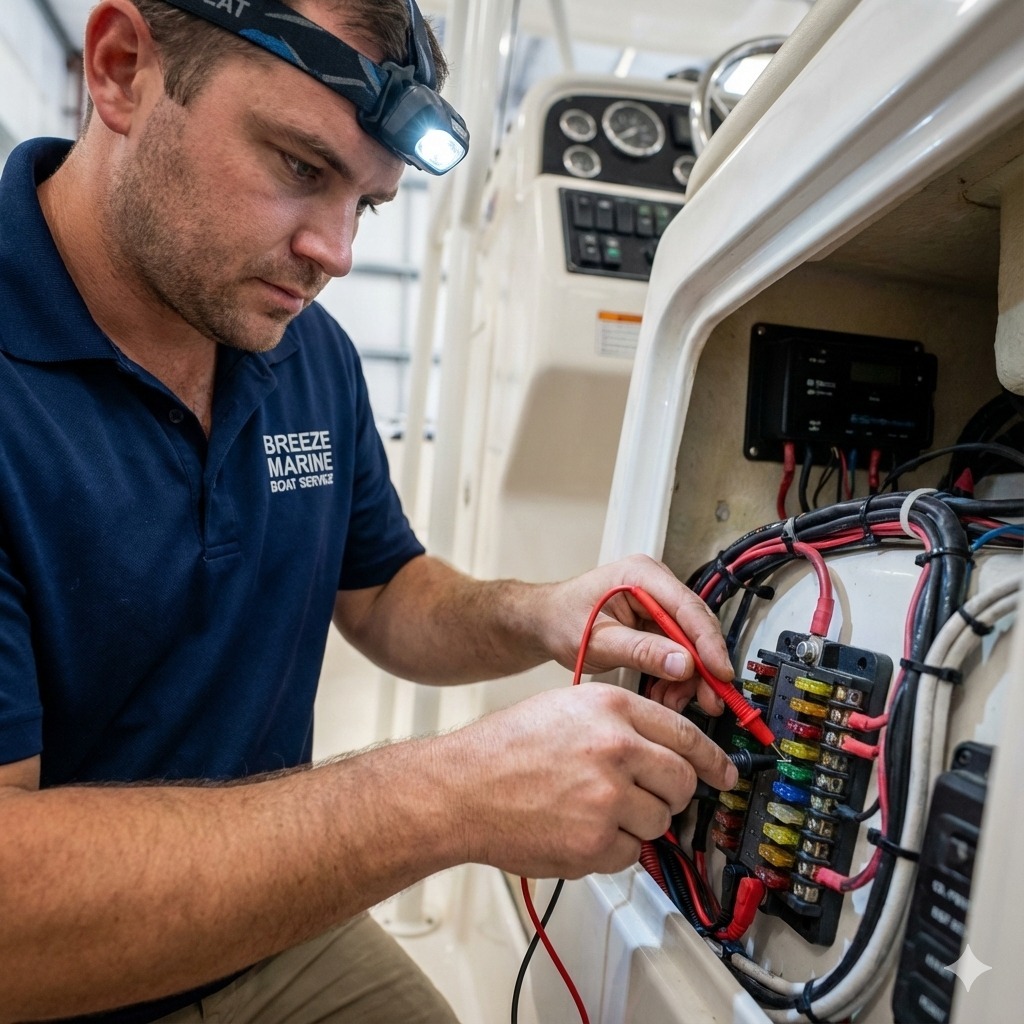
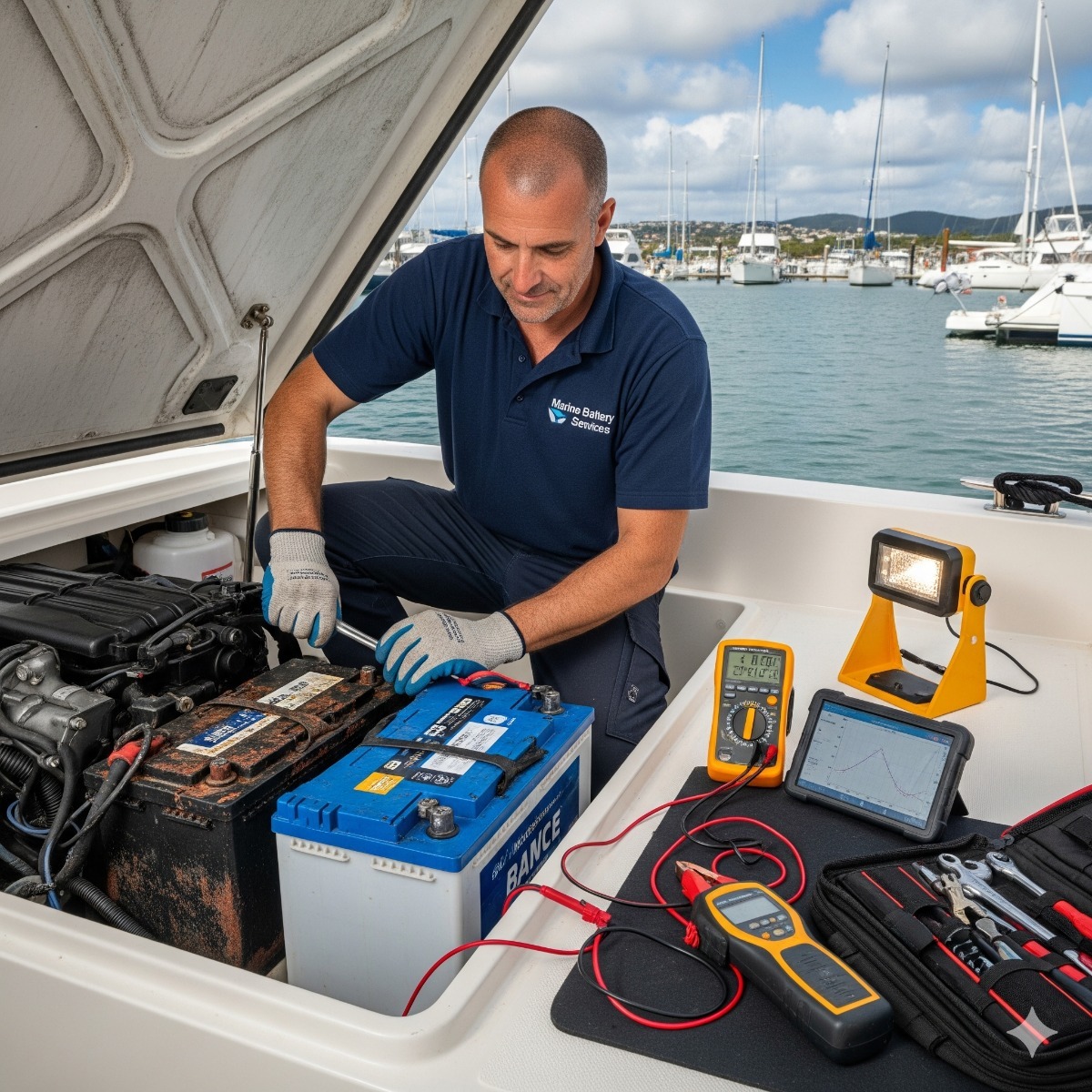
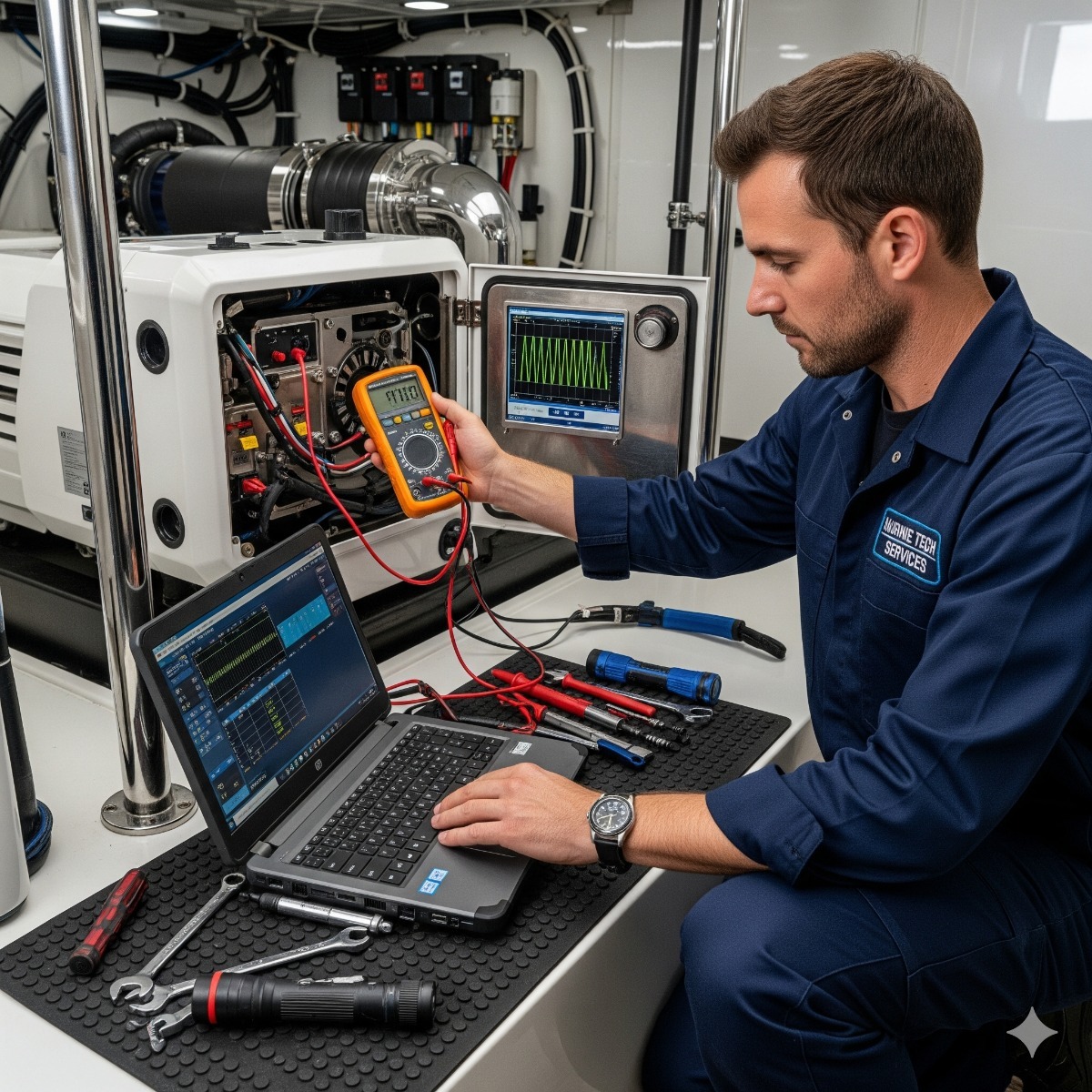
We measure resting battery voltage and then run the engine to check charging output at idle and high RPM.
Stress Test
We turn on heavy loads (AC, electronics) to see if the regulator can maintain voltage without sagging or spiking.
Replace
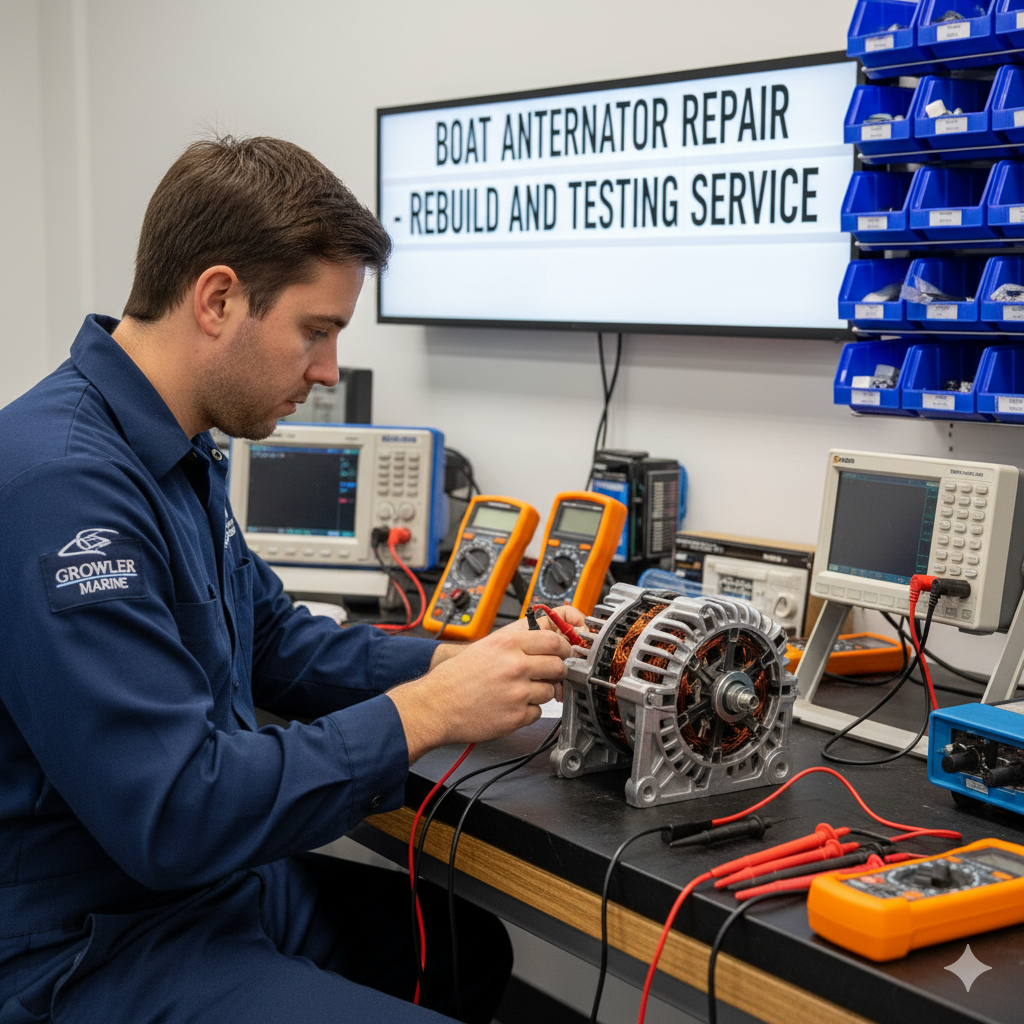
For internal units, we rebuild the alternator. For external units, we install new solid-state regulators.
Verify
We confirm a steady 13.8V - 14.4V charging curve, ensuring safe operation for all onboard systems.
Precision Power.
Ensuring your electrical system runs cool and steady.
Component Knowledge.
We service all types of marine regulation systems.
Common Questions
What voltage is "too high"?
Generally, anything consistently over 14.8V (for lead-acid/AGM) is dangerous. If you see 15V+, turn off the engine immediately.
Do I need a whole new alternator?
Not always. On many larger marine alternators, the regulator is a replaceable part. We check if repair is cheaper than replacement.
| Manufacturer | Breeze Marine Boat Service |
|---|






-
 Boat Service$150.00
 -
 Marine Boat Service$150.00