
Few sounds are as satisfying to a boat owner as the smooth, powerful hum of a well-maintained marine engine. It’s the heart of your vessel, propelling you to your favorite fishing spots, hidden coves, or simply providing that exhilarating feeling of freedom on the water. But what happens when that heart starts to falter? When performance drops, oil consumption rises, or strange noises emerge, the question often arises: is it time for an engine rebuild?
At Breeze Marine Boat Service LLC, we understand the emotional and financial investment you have in your boat. That's why we don't just "fix" engines; we restore their vitality, ensuring many more years of reliable service.
When Does a Marine Engine Need a Rebuild?
Unlike a car engine, which often runs in more stable conditions, marine engines face unique challenges: constant load, exposure to saltwater, and varying operational cycles. Here are the key indicators that your engine might be whispering (or shouting) for a rebuild:
- Excessive Oil Consumption: Are you constantly topping off your oil? This often points to worn piston rings or valve seals, allowing oil to burn in the combustion chamber.
- Smoke Signals:
- Blue Smoke: Indicates burning oil.
- White Smoke: Can signal burning coolant (head gasket issue) or unburnt fuel.
- Black Smoke: Often means incomplete fuel combustion (rich mixture).
- Low Compression: A professional compression test showing significantly lower readings across cylinders, or major differences between cylinders, points to internal wear (valves, rings, head gasket).
- Knocking or Ticking Noises: While some noises are minor, persistent knocking, rattling, or ticking that changes with RPM can indicate worn bearings, lifters, or other critical components.
- Loss of Power & Fuel Efficiency: If your boat feels sluggish, struggles to get on plane, or is suddenly drinking more fuel than usual, wear and tear are likely reducing efficiency.
- Overheating Issues: Chronic overheating can warp cylinder heads or damage internal components, making a rebuild necessary.
- Hours & Age: Every engine has a lifespan. High hours (especially in harsh conditions) or significant age often mean components are simply worn out.
The Value of a Professional Rebuild
While buying a new engine might seem like the simplest solution, a professional rebuild offers significant advantages:
- Cost-Effectiveness: Often, rebuilding an engine is substantially less expensive than replacing it with a new one, especially for specialized or older models.
- Extended Lifespan: A properly rebuilt engine can often deliver performance and reliability comparable to a new engine, extending your boat's life for many years.
- Preserving Value: For classic boats or those with specific engine models, a rebuild maintains originality and can enhance resale value.
- Known History: You know the history of your engine. A rebuild ensures critical components are refreshed, giving you confidence.
Our Rebuild Process: Precision, Quality, Reliability
At Breeze Marine Boat Service LLC, an engine rebuild is a meticulous process. It involves:
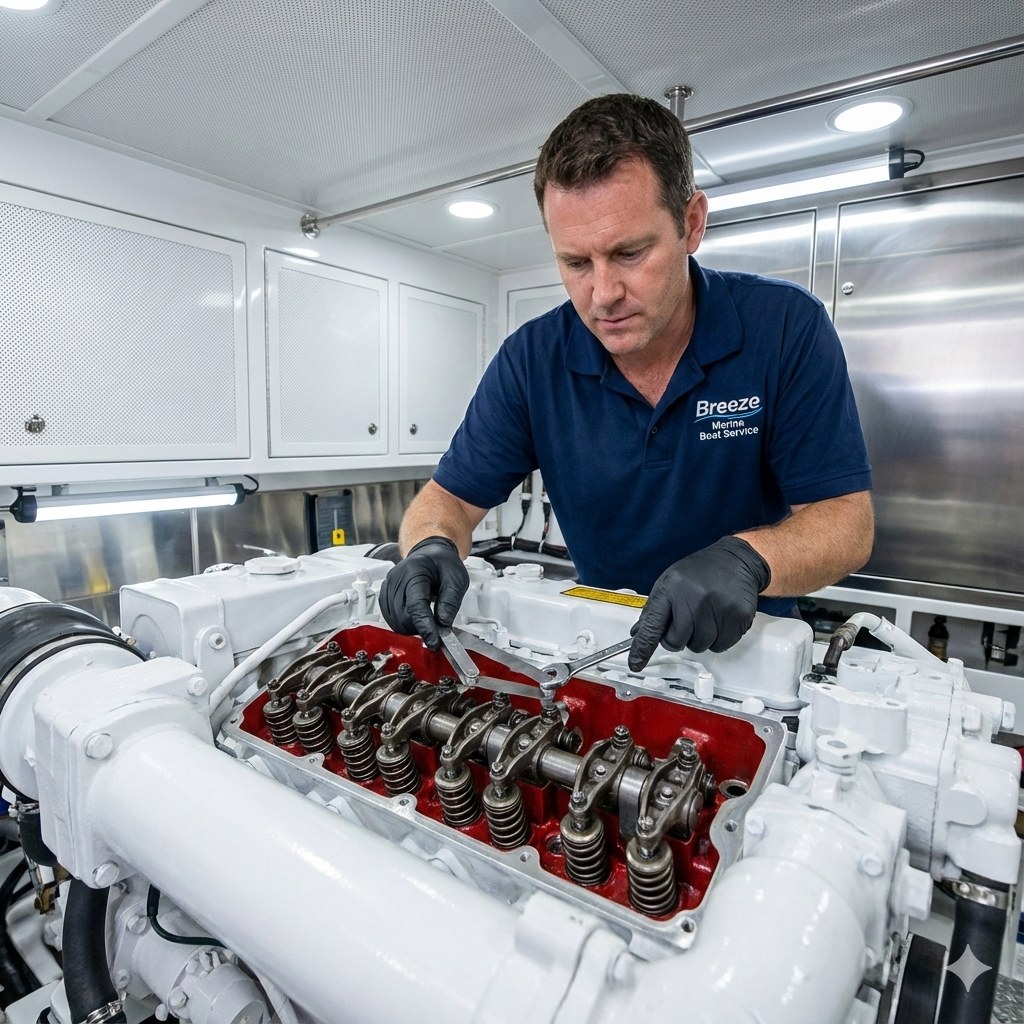
- Complete Disassembly & Inspection: Every component is removed, cleaned, and thoroughly inspected for wear, cracks, or damage.
- Machining & Replacement: Cylinder heads are reconditioned, crankshafts polished, cylinders re-bored, and worn components (pistons, rings, bearings, gaskets, seals) are replaced with high-quality parts.
- Precision Assembly: The engine is reassembled with exacting tolerances, ensuring optimal performance.
- Rigorous Testing: Post-rebuild, the engine undergoes comprehensive testing to verify proper function, compression, and oil pressure before it ever goes back in your boat.
Don't let a tired engine keep you from the water. Whether it's a diesel powerhouse or a robust gasoline engine, our experienced team in Long Beach has the expertise, tools, and dedication to breathe new life into your marine motor. If you’re experiencing any of the signs above, or simply considering extending your boat’s life, talk to us.
Ready to revive your boat's heart? Contact Breeze Marine Boat Service LLC today for a consultation on a boat engine rebuild. Let's get you back to enjoying the open water with confidence!
Frequently asked questions: Marine Engine Rebuild
How does a short block differ from a long block in a marine engine rebuild?
A short block is typically the bottom end: block, crankshaft, connecting rods and pistons. A long block adds the cylinder heads and valve train. A complete engine or full rebuild also covers accessories such as manifolds, water pump and fuel system parts. Knowing exactly what an estimate includes helps you compare a marine engine rebuild with other options fairly.
How long should a rebuilt marine engine be broken in?
Follow the break-in procedure from the rebuilder or engine manufacturer, which often covers roughly the first 10 to 20 hours. It typically involves varying RPM, avoiding long periods at idle or at wide-open throttle, and an early oil and filter change. Watch temperature and oil pressure closely during this period, because it is when problems are most likely to appear.
What else should be replaced during a marine engine rebuild?
Because the engine is already apart, it makes sense to address parts that caused or suffered from the original failure. That often means the raw water pump, exhaust manifolds and risers, hoses and motor mounts, and on inboards the damper plate and engine alignment. Replacing them at the same time helps protect the rebuilt engine from the same problem.
Can water in the engine oil be fixed without a full rebuild?
Sometimes. Milky oil can come from a failed head gasket, a leaking exhaust riser or manifold, or a cracked oil cooler, and catching it early may allow a targeted marine engine repair. If water has sat in the engine long enough to rust cylinders or damage bearings, a rebuild may be needed. Stop running the engine and have it inspected quickly.