Most of the fittings on a boat are held on by a handful of screws, bolts and pins, and when one fails the result can be anything from a leaking deck to a lost anchor. Choosing marine screws hardware is less about brand names and more about three things: the right alloy for the location, keeping dissimilar metals apart and sealing every hole you drill. This guide covers stainless grades, galvanic and crevice corrosion, bedding, and a simple inspection routine for fasteners, a marine shackle, snap hooks and hinges.
304 vs 316 stainless: which grade goes where
Both grades are austenitic stainless steels containing chromium and nickel. The key difference is molybdenum: 316 stainless steel contains a small amount, typically around 2 to 3 percent, which gives it noticeably better resistance to pitting in salt water and spray. 304 stainless steel, often sold as 18-8, is fine in dry, protected places but tends to stain and pit sooner when it stays wet with salt.
| Location | Usual choice | Why |
|---|---|---|
| Deck fittings, rails, cleats and hinges exposed to spray | 316 stainless or bronze | Constant salt exposure |
| Below the waterline | Bronze, or the material the fitting maker specifies | Stainless can suffer crevice corrosion where oxygen is scarce |
| Dry interior cabinetry and trim | 304 or 316 stainless | Low exposure, so 304 is usually acceptable |
| Aluminum spars, T-tops and brackets | 316 stainless with an isolating compound or washers | Limits galvanic attack on the aluminum |
Avoid zinc-plated or plain steel screws anywhere that can get wet. They rust quickly and stain the gelcoat. Whenever an equipment maker specifies fastener size, grade or torque, follow the manufacturer's manual rather than a general rule.
Galvanic corrosion and mixed metals
When two different metals touch and are wetted by salt water, they form a small battery. The less noble metal, often aluminum or zinc, corrodes while the more noble one, usually stainless steel or bronze, is protected. That is why a stainless screw in an aluminum mast or T-top can leave a white, powdery crater around its head. To reduce galvanic corrosion:
- isolate stainless fasteners from aluminum with a barrier compound, nylon washers or insulating sleeves;
- avoid pairing galvanized and stainless parts where they stay wet, such as a stainless shackle on galvanized chain, unless the maker says the combination is suitable;
- keep underwater metals bonded and protected by anodes, and replace anodes before they are used up.
Stray current from shore power or wiring faults can eat underwater metal far faster than simple galvanic action. Our earlier article on marine grounding and bonding explains how the bonding system fits in.
Crevice corrosion: the hidden failure
Stainless steel resists rust because of a thin oxide film that needs oxygen to repair itself. Where a bolt sits in wet, stagnant conditions, for example inside a leaking deck core, under a backing plate or in a chainplate slot, the film cannot recover and crevice corrosion starts. The head of the bolt can look perfect while the shank inside the deck is pitted or cracked. That is why chainplates, stanchion bases and cleat bolts on older boats deserve to be pulled and inspected rather than judged by appearance.
Bedding boat fasteners hardware properly
Most deck leaks start at a fastener. Good practice when installing boat fasteners hardware on deck:
- On a cored deck, drill oversize, remove a little core around the hole, fill it with thickened epoxy and redrill, so water can never reach the core.
- Chamfer the top of the hole slightly so the sealant forms a gasket around the fastener.
- Use a flexible marine bedding compound or butyl tape, and keep permanent adhesive sealants for parts you never expect to remove.
- Tighten in stages so the sealant is not squeezed out completely, and fit a backing plate or large washers under cleats, winches and stanchions.
Shackles, snap hooks and hinges
A marine shackle for any loaded job should be of known quality and marked with its working load limit, sized so that limit comfortably exceeds the load. On anchor and mooring gear, secure the pin with seizing wire so it cannot unscrew. Check for a distorted body, a worn or bent pin and threads that bind. A boat snap hook takes shock loads on halyards, sheets and tethers, so make sure the latch closes fully on its own, the spring is still strong and the hook opens only when intended. Boat hatch hinges are small but work hard; look for play in the pin, cracked mounts and rust stains around the screws, and replace them with hinges of the same material rather than mixing metals.
A simple inspection routine for marine screws hardware
- Look for rust streaks, often called tea staining, below fittings. They often point to a lower grade of stainless or a crevice problem.
- Check for weeping, soft deck or gelcoat cracks around fittings, all signs of a leaking fastener.
- Push and pull each cleat, stanchion and rail base by hand to feel for movement.
- On a regular schedule, remove and inspect a sample of the most heavily loaded fasteners.
Frequently asked questions: marine screws hardware
Is 18-8 stainless good enough for a boat?
For dry interior spots, usually yes. For anything on deck or in regular contact with salt water, 316 stainless steel or bronze is the safer choice.
Can I use stainless screws in aluminum?
Yes, but isolate them. An insulating compound or washers keep the stainless from speeding up corrosion of the aluminum. Check the equipment maker's instructions as well.
How do I know if a deck fitting is leaking?
Stains on the headliner or cabinetry below, soft spots in the deck and cracks around the fitting are the usual clues. A moisture meter can confirm wet core.
Why are my stainless fittings rusting?
Surface rust on stainless usually comes from a lower grade, contamination from steel tools or steel wool, or salt left to dry on the surface. Clean it early, rinse regularly and choose 316 for replacements.
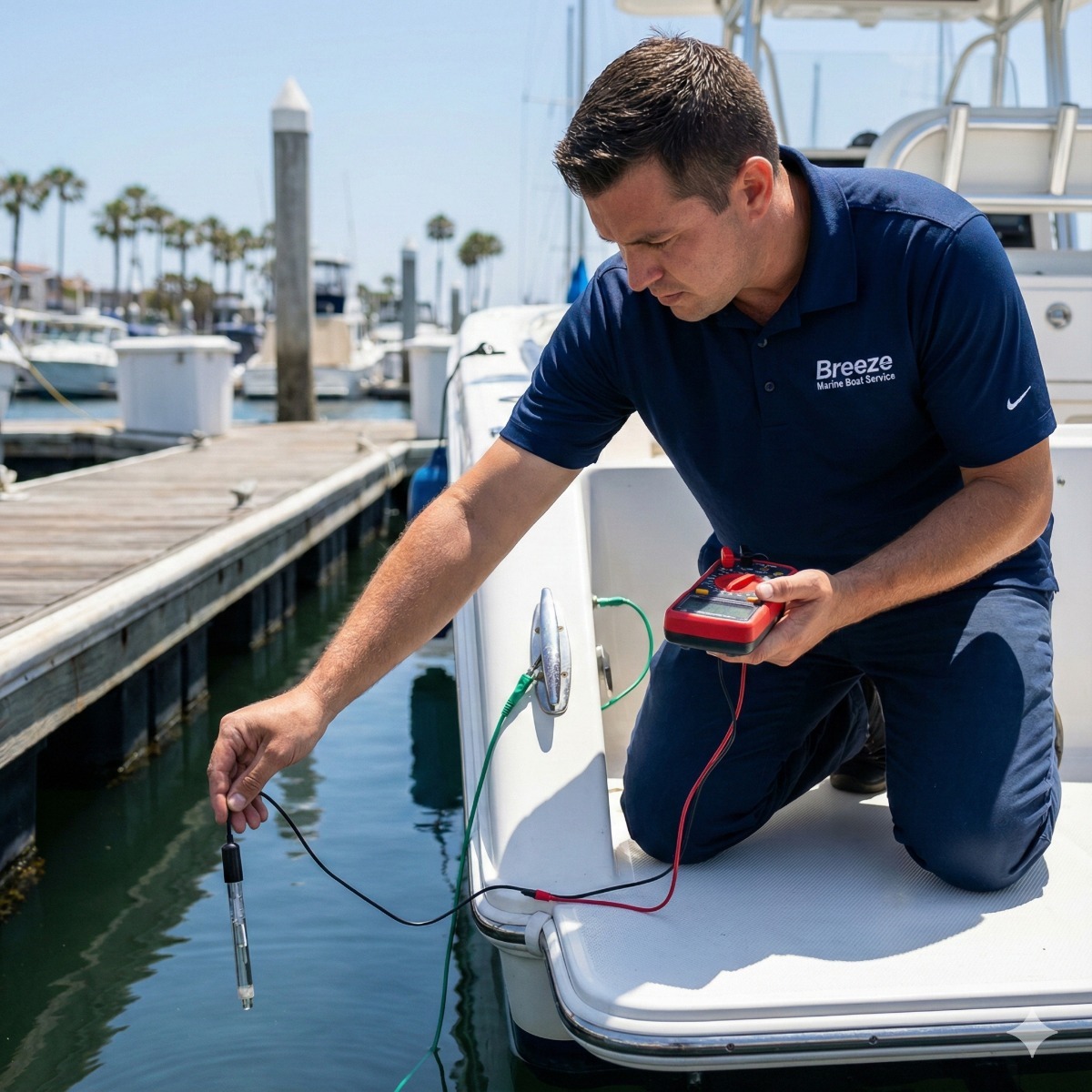
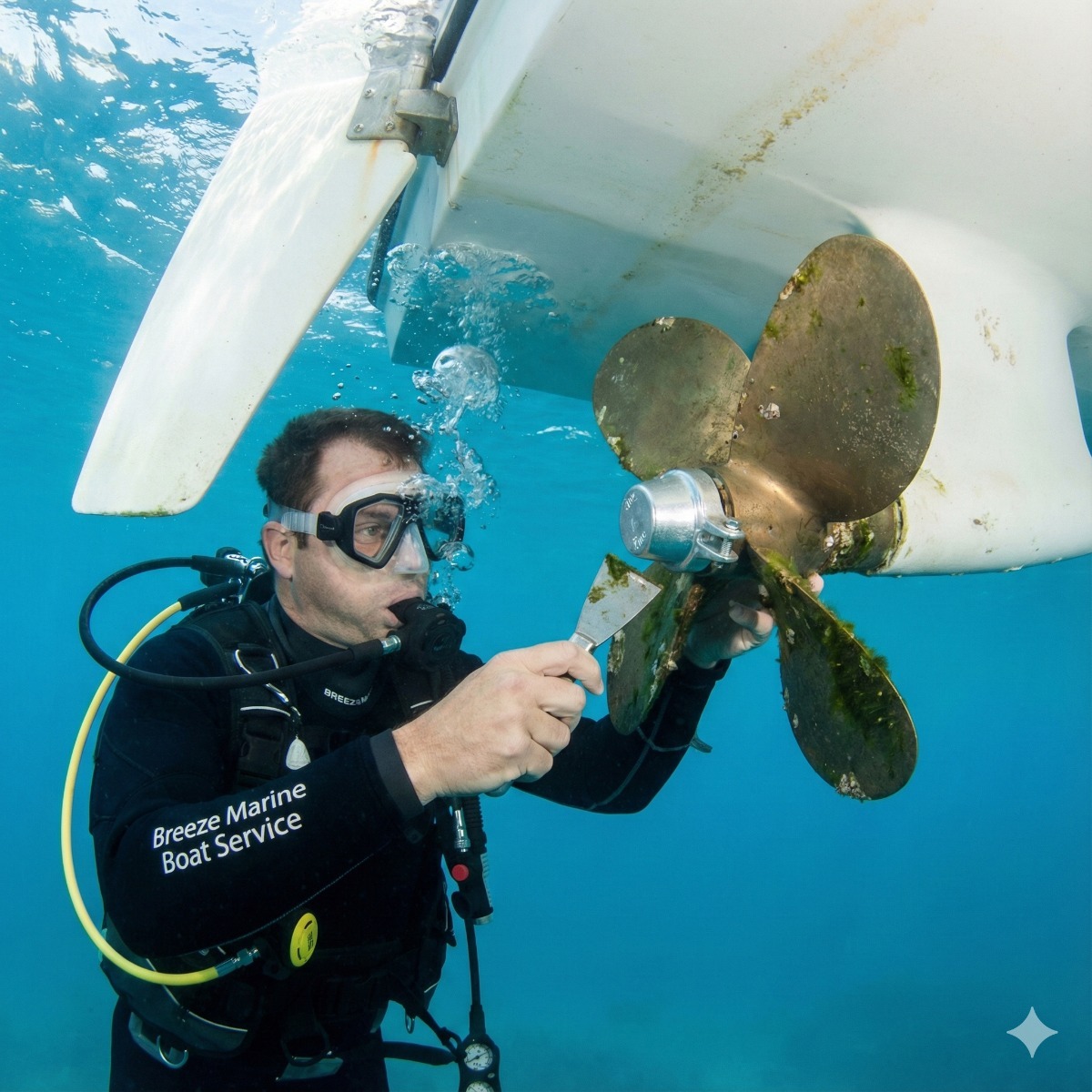
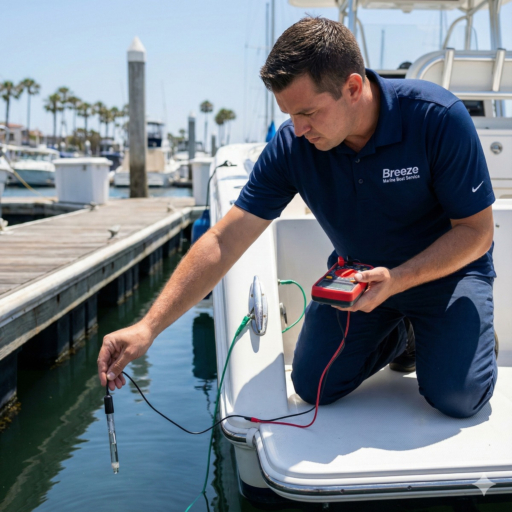
If fittings keep corroding or your anodes wear unusually fast, the cause may be electrical rather than the hardware itself. Our electrolysis and galvanic corrosion testing checks bonding continuity and protection levels, and our in-water hull cleaning and zinc replacement keeps anodes in service. To talk it through, contact us.