
Electrolysis & Galvanic Corrosion Testing and Bonding System Check
Labor estimate Usually 1–2 hours
Book sends us a ticket; nothing is charged online. Before any work you get a written estimate for labor, parts and the trip fee, and nothing is done without your OK.
Trip fee By distance, one way: $30 in San Pedro, $50 in Long Beach
- San Pedro$30
- Wilmington, Terminal Island$40
- Long Beach: Shoreline, Rainbow Harbor$50
- Long Beach Marina, Alamitos Bay$60
- Redondo Beach$60
- Seal Beach, Huntington Harbour$75
- Marina del Rey$85
- Newport Beach$110
Farther away: $25 plus $2.50 a mile, one way from our San Pedro shop. No trip fee when the boat comes to our shop, or for plan members. The work of a visit is at least $150; the trip fee is on top.
- Registered in California
- Breeze Marine Boat Service LLC, San Pedro
- Where we work
- At your slip from Marina del Rey to Newport Beach, or in our San Pedro shop
- Questions first
- (213) 693-0224 or submit a ticket
About this service
Find Corrosion
Before It Spreads.
Some corrosion is unavoidable on a boat in salt water, but serious damage usually is not. We measure your underwater metals against a reference electrode to check that your bonding system and zinc anodes are actually protecting your props and drives.
The "Half-Cell" Test
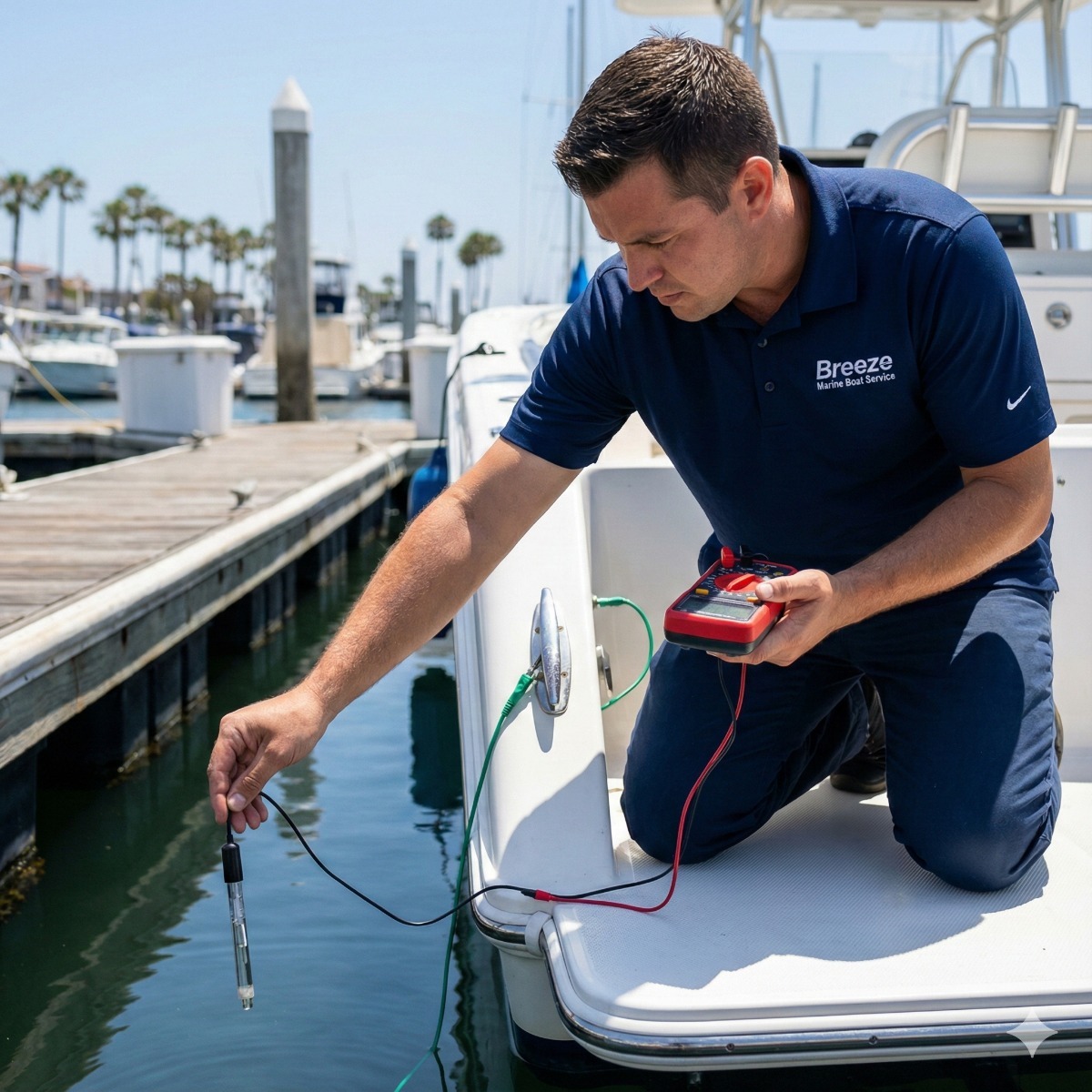
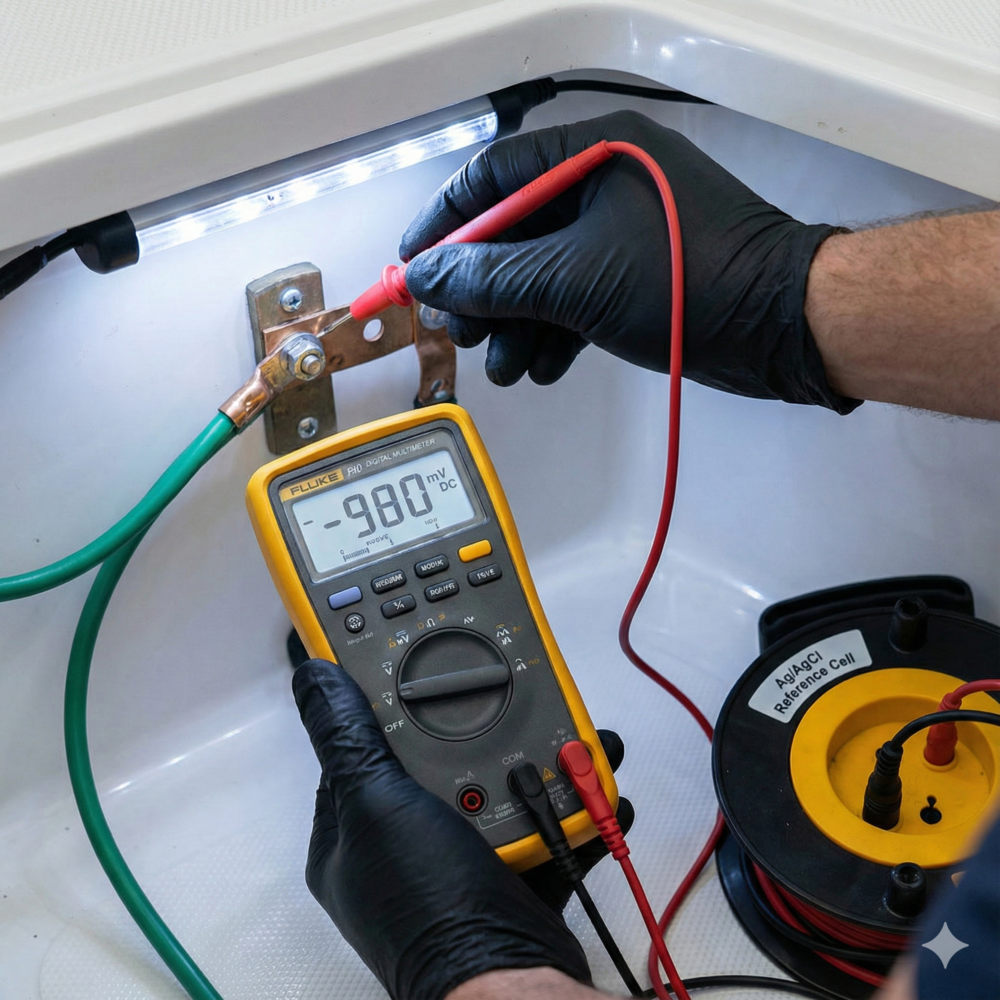
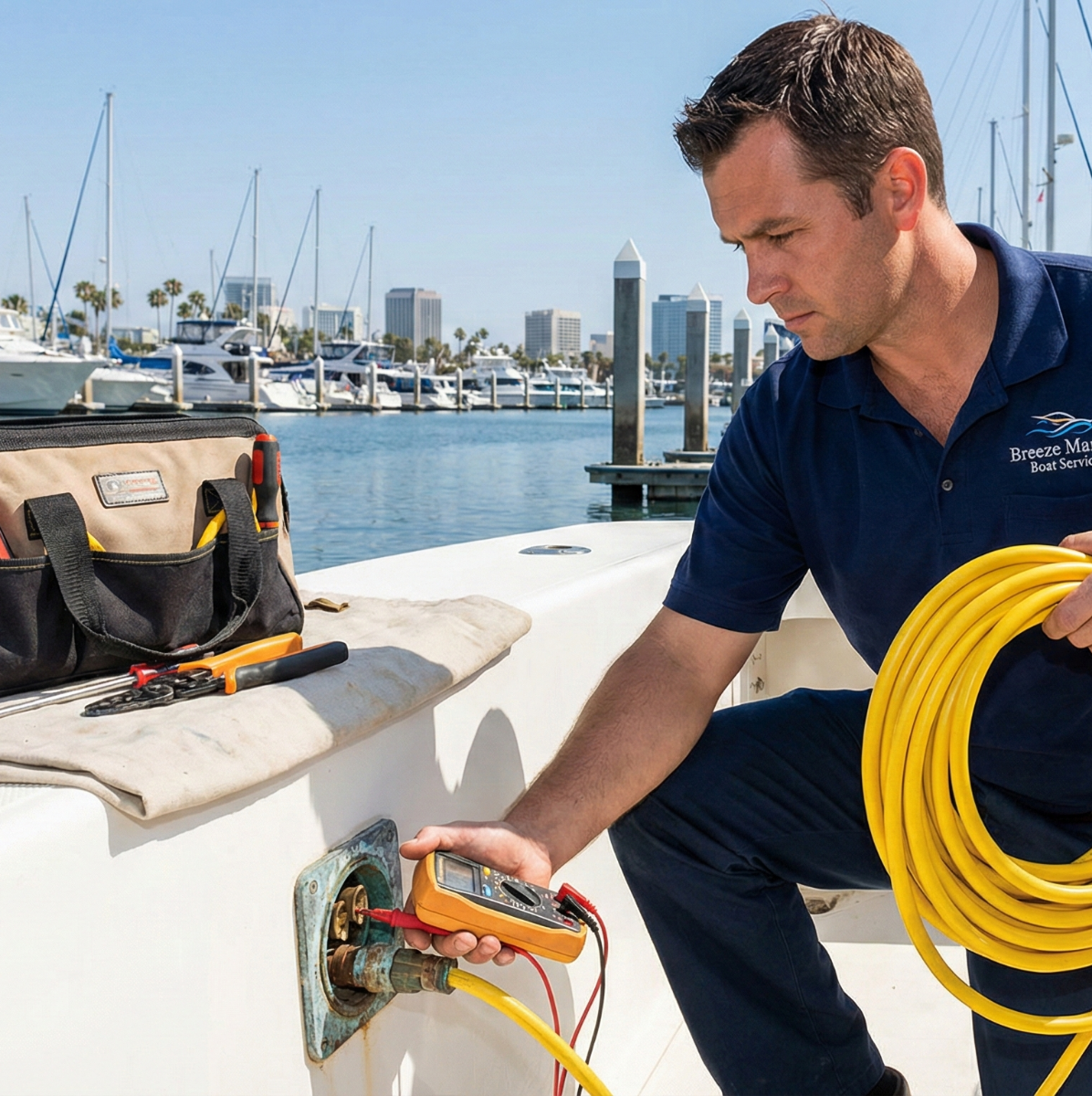
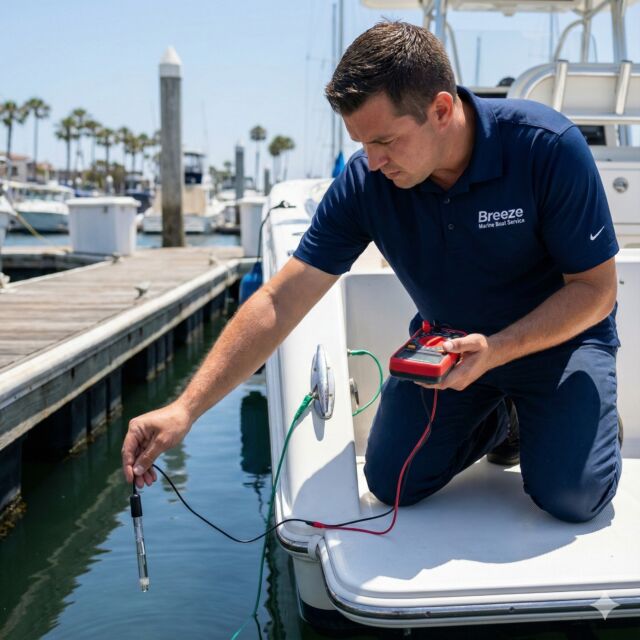
We don't guess; we measure. Using a silver-silver chloride (Ag/AgCl) reference electrode, we check the voltage of your underwater metals against the seawater. The reading shows whether your boat is over-protected, under-protected or in the protected range.
Bonding Integrity
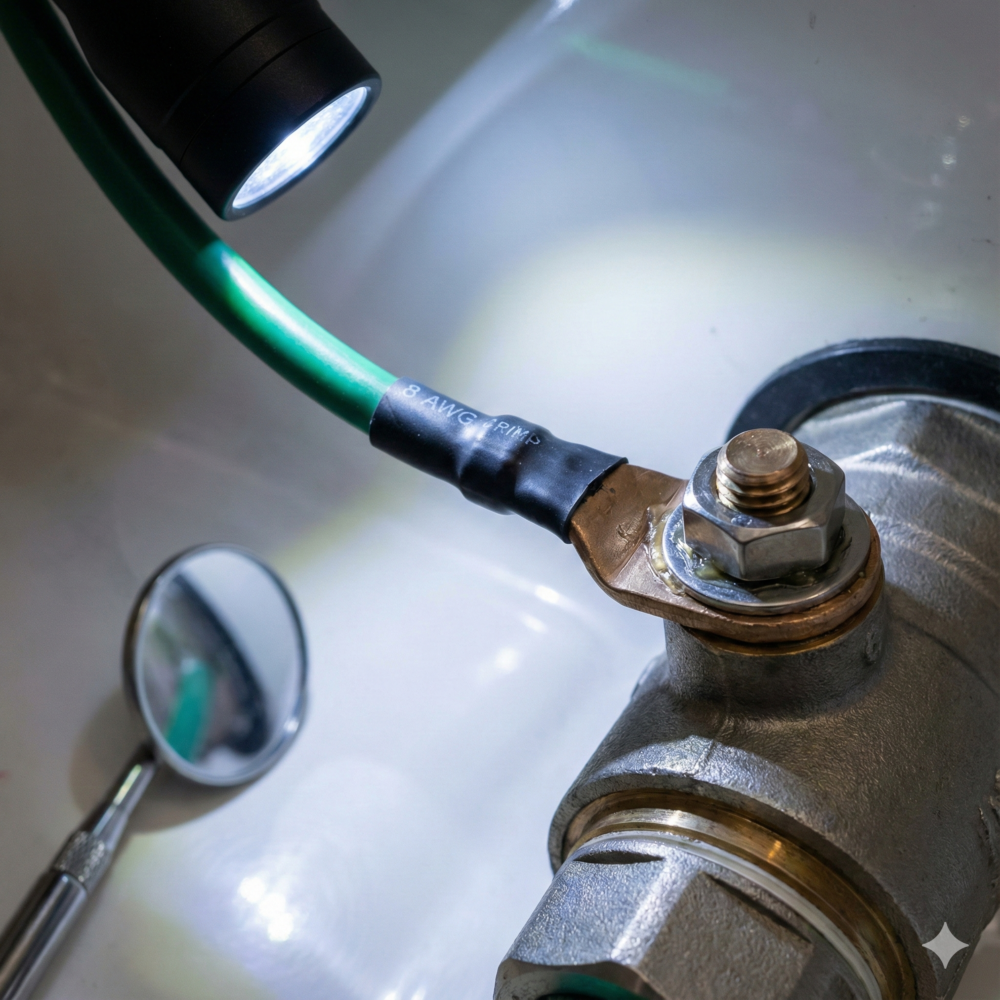
On a boat with a bonding system, the underwater metals are connected by green bonding wires to a common bonding conductor and the anodes. A broken wire leaves that propeller, shaft or thru-hull without anode protection, so it can start to corrode. We test continuity across your entire boat bonding system.
Stray Current vs. Galvanic
Galvanic corrosion is slow. Stray current corrosion (electrolysis) can be fast enough to eat a drive in days. We test for DC leaks and install galvanic isolators to block the low-voltage galvanic current that travels along the shore-power ground wire.
The Science of Protection.
A rigorous diagnostic protocol.
Reference Test
We hang the reference electrode in the water and connect the meter to your bonding system, with shore power connected and then disconnected. A fiberglass inboard boat should read between -750mV and -1100mV; the other boat types are in the table below. A reading outside the range is a problem.
Bonding Audit
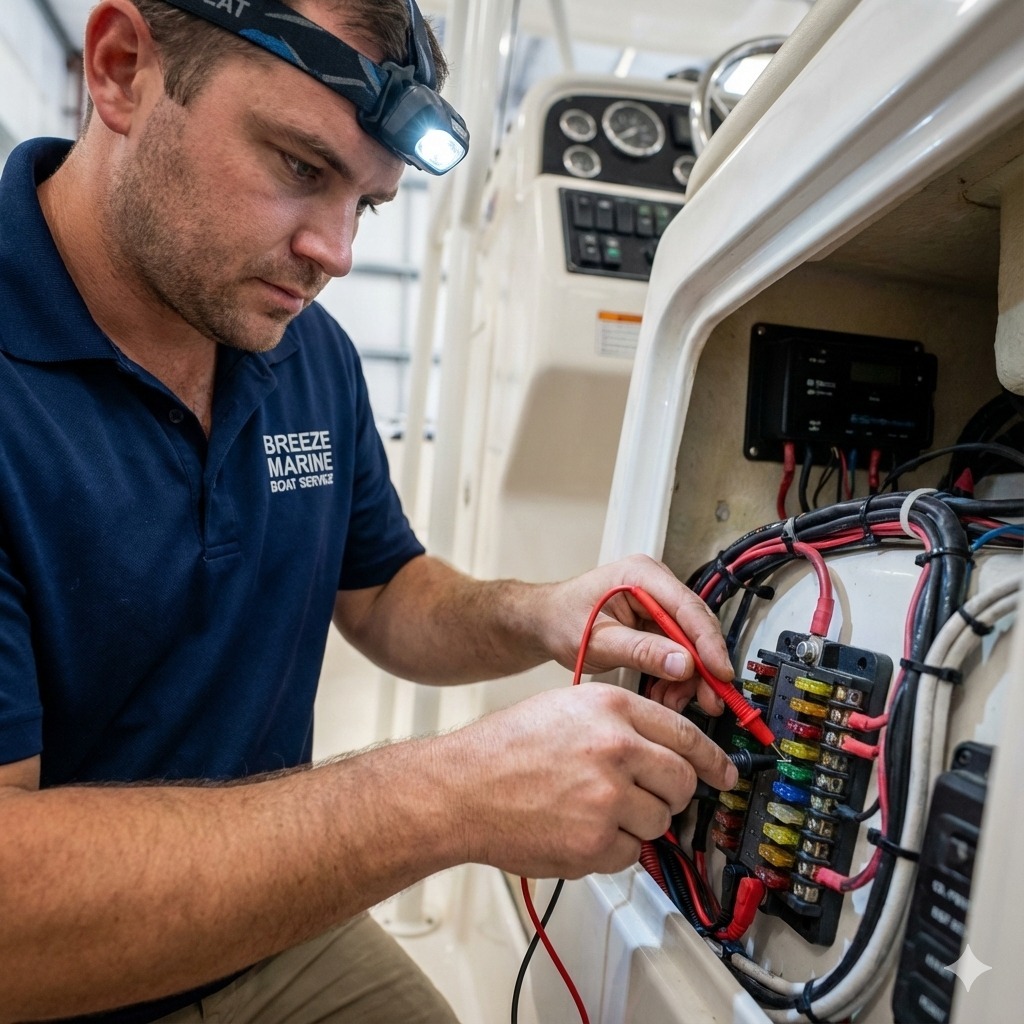
We physically inspect the green bonding wires in the bilge. We look for green corrosion on terminals and loose connections on thru-hulls and rudders.
Anode Analysis
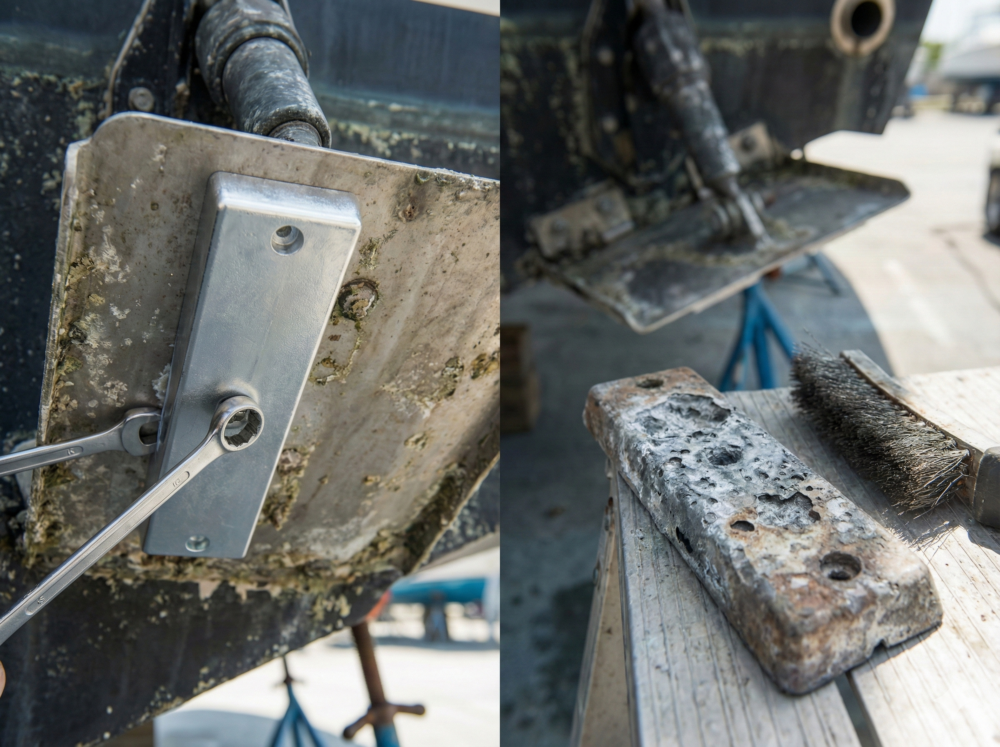
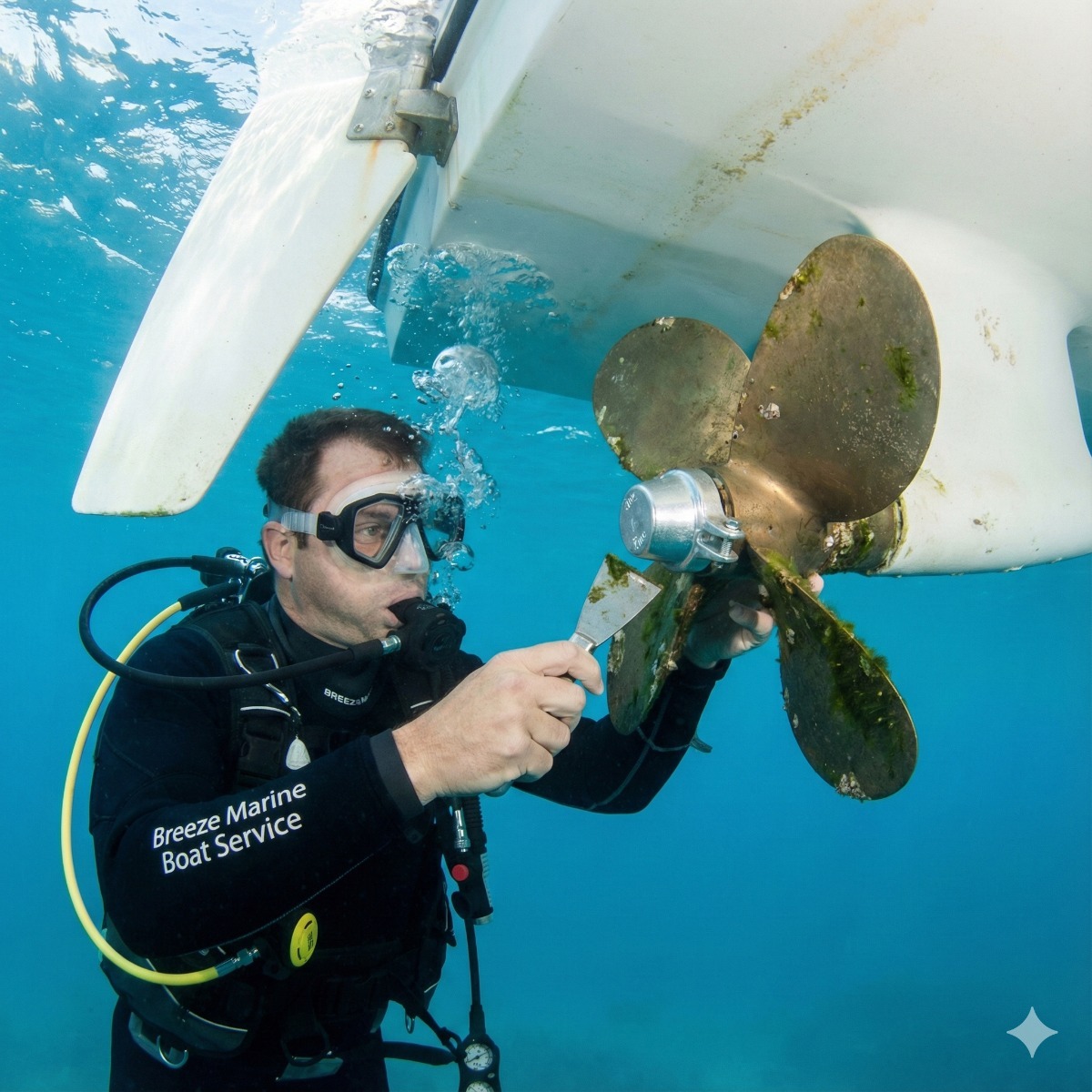
Are your zincs disappearing too fast? Or not at all (passivated)? We determine if you need more surface area or a different material (Aluminum vs. Zinc vs. Magnesium).
Shore Isolation
We verify your Galvanic Isolator is functioning. This device blocks low-voltage DC current from your neighbor's boat from traveling up your shore power cord and eating your zincs.
Save Your Metals.
Prevention is cheaper than new props.
Target Voltages.
What the numbers mean (vs Ag/AgCl).
Common Questions
My zincs last forever. Is that good?
Usually not. If your zincs are not wearing at all, they are probably not working. They may be "passivated" (coated in a hard shell) or disconnected from the bonding system, and then your prop and other metals can corrode instead.
Should I switch to Aluminum Anodes?
In many cases, yes. Modern Aluminum anodes (Navalloy) last longer and work better in brackish water than traditional Zinc. We can test to see which is best for your marina.
When to Book Electrolysis Testing
Marine electrolysis rarely announces itself. The usual clues are zincs that disappear far too fast, zincs that never seem to wear at all, or pitting on a prop or drive. Any of these is a good reason to book electrolysis testing before the damage spreads to more expensive metal.
The marine electrolysis tester we rely on is a silver-silver chloride (Ag/AgCl) reference electrode placed in the water and connected to your bonding system. It reads the voltage of your underwater metals against the seawater, which shows whether the boat is under-protected, over-protected or in the safe range. From there we check bonding continuity, the condition of your anodes and the galvanic isolator on your shore power. It helps to tell us when your zincs were last replaced and which anode material they are.
Electrolysis testing is a critical step in diagnosing and preventing marine corrosion on your boat's hull, propeller, and other underwater components. This non-invasive process detects the presence of electrolysis, which can cause costly damage through galvanic corrosion. A thorough electrolysis test helps identify potential issues before they become major problems, ensuring you stay afloat with a reliable vessel.
Electrolysis Testing: FAQ
What is the purpose of an electrolysis testing procedure?
This diagnostic service identifies areas where electrolysis may be occurring between dissimilar metals on your boat's hull and underwater components. It helps prevent costly repairs by pinpointing potential corrosion hotspots before they cause significant damage.
How does the bonding system check relate to electrolysis testing?
The bonding system is a critical component in preventing electrolysis, as it ensures all metal parts are electrically connected to prevent stray current corrosion. Our technicians inspect and test this system to ensure it's functioning correctly and recommend repairs or upgrades if necessary.
Reviews 4
Questions 7
Related Posts
-


 The wrong screw can leak, stain or snap. Learn where 316 stainless belongs and where 304 is fine, how galvanic and crevice corrosion attack fasteners, how to bed deck hardware so it stays dry, and...
 -
 Introduction to Marine Grounding and Bonding In a marine environment, the combination of metal, saltwater, and electrical currents creates a perfect storm for galvanic corrosion. A properly...