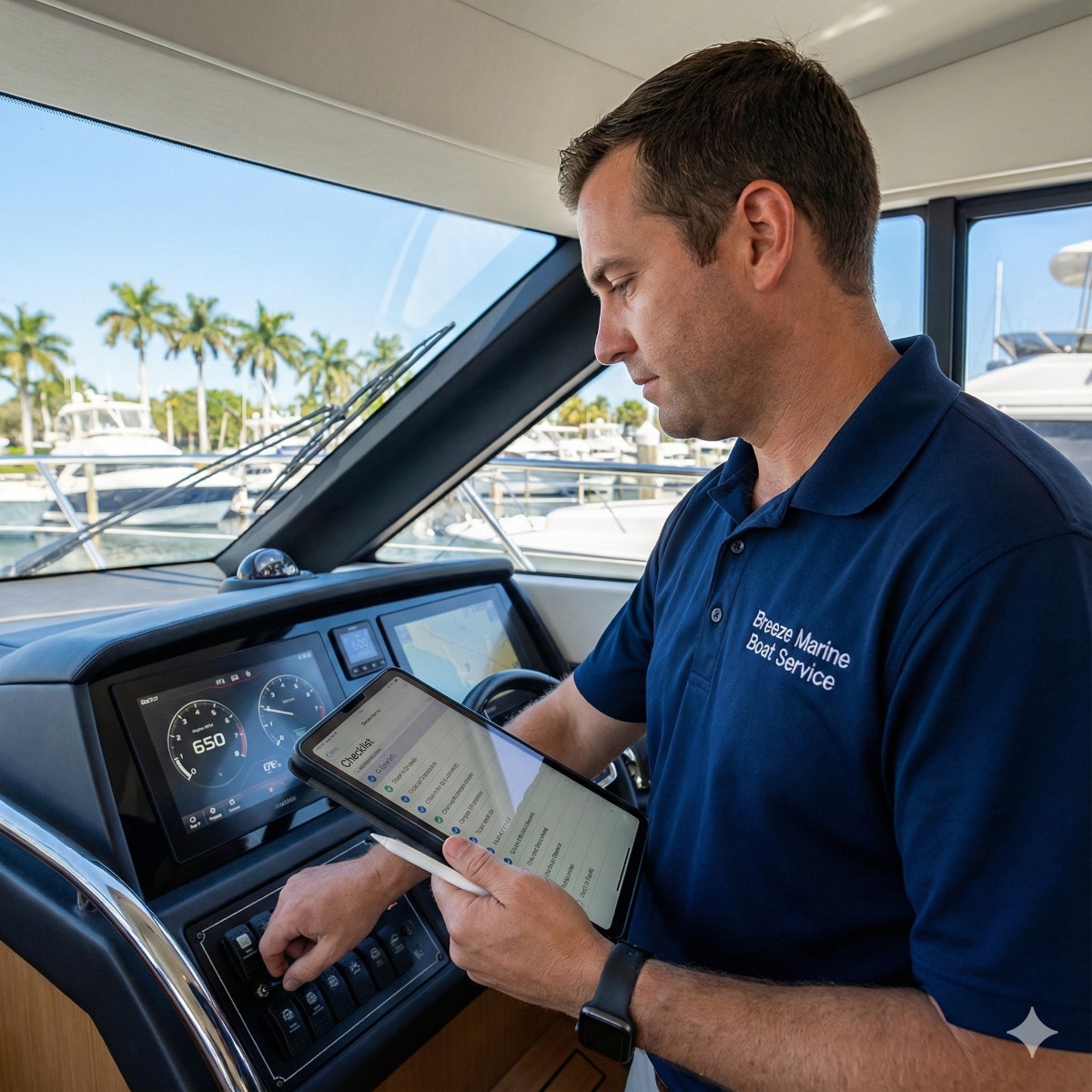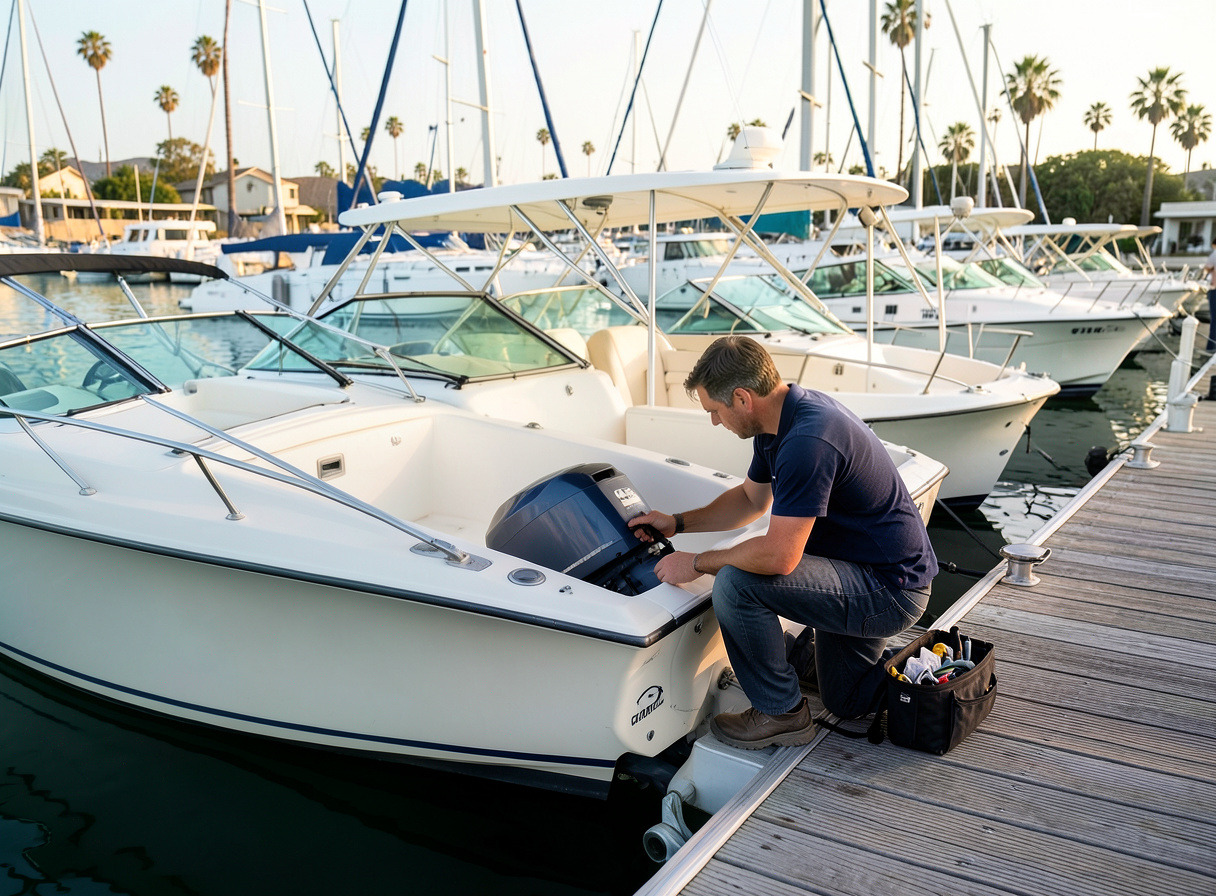
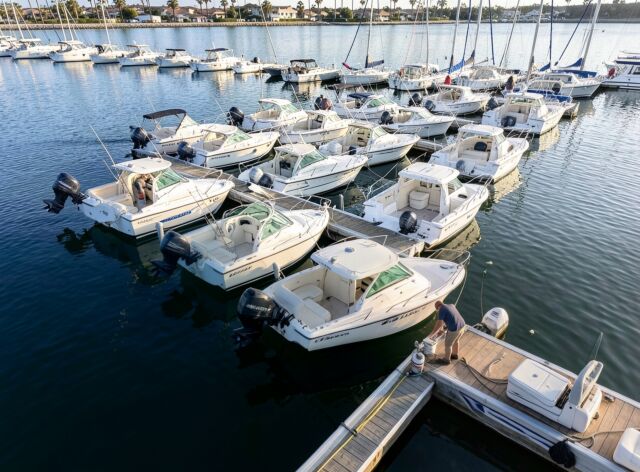
For a charter or rental business, one engine that will not start on a Saturday in July costs more than a whole morning of planned work in March: lost bookings, refunds, a crew waiting at the dock and a customer who may not come back. That is why boat fleet maintenance is planned differently from looking after a single private boat. Fleet boats run more hours, are driven by more people and have less time between trips. Here is how charter and rental operators can keep a fleet on the water, and what to look for in a service partner.
Why fleet boats wear differently
- Many different drivers: renters and guest skippers shift hard, touch bottom, run batteries down with the stereo and forget to trim up in shallow water.
- High engine hours: a rental boat can reach a private owner's yearly hours in a few busy weeks, so service intervals come around fast.
- Short turnarounds: boats come back, get rinsed and go out again, which leaves little time to notice a weeping hose or a loose battery terminal.
- Salt water every day: corrosion on connections, anodes and cooling systems builds up quickly when boats are used daily and rarely flushed.
Charter boat maintenance and rental boat maintenance therefore lean on a schedule, not on calls after something breaks.
Build a rotating maintenance schedule
The core of a fleet maintenance schedule is rotation: boats leave service in turn, so the fleet never loses several boats at once. A practical way to set it up:
- Group boats by hours. Boats that run the most go on a shorter cycle; boats that mostly sit still need checks, but less often.
- Follow the engine maker's intervals, by hours or by calendar, whichever comes first. Oil and filters, fuel filters and water separators, impellers, belts and gear lube all have their own intervals.
- Use a rotating maintenance schedule for routine work, for example one or two boats per week, so service never takes the whole fleet down.
- Keep larger jobs for quiet months: haul-outs, bottom paint, major engine work and upgrades fit best between seasons.
- Keep a spare in mind: if one boat is always ready to replace another, a breakdown costs one booking change instead of a cancellation.
Daily and weekly checks your staff can do
Dock staff see the boats every day, and simple checks catch many problems before they become breakdowns:
- Bilge: dry, or water that is explained? Do the bilge pump and float switch work?
- Engine oil level and any fresh oil or coolant under the engine.
- Battery switch, terminals and charge level after the boat comes back.
- Propeller, skeg and lower unit after each rental, especially after shallow-water trips.
- Steering and throttle feel, kill switch lanyard, lights and horn.
- Safety gear: life jackets, fire extinguisher, throwable device, flares where required.
Ask returning renters a simple question, such as "Anything feel odd today?", and write the answer down. A note like "vibration above half throttle" is worth a lot to the mechanic who sees the boat next.
Pre-season and end-of-season work
In Southern California many fleets work most of the year, but there is still a busy season. Before it starts, each boat should get its pre-season checks: engine service, cooling system, steering, batteries and charging, bilge pumps, safety gear and a short sea trial. After the season, boats that will sit get a proper lay-up, and the list of repairs found during the season gets planned. See our notes on winterization and spring commissioning for what that work includes.
Keep service records for every boat
Good service records turn guesswork into decisions. For each boat, track engine hours at each service, parts replaced, problems found and what was deferred. Records show which boats cost the most to keep running, help with insurance and make a big difference when you sell a boat. For high-hour engines, oil sample analysis adds a trend line that can show wear before it becomes a failure.
Choosing a fleet maintenance partner
Whether you hire your own mechanic or work with an outside service, ask these questions:
- Can routine work be done at your slips, or do boats have to be moved?
- Can one team handle your mix of outboard, inboard, sterndrive, gasoline and diesel engines?
- How are repairs quoted and who approves them on your side?
- What records do you get after each visit, and in what form?
- How are haul-outs and shop work arranged when a boat needs to come out of the water?
- Are the scope, schedule and billing written down before work starts?
In Long Beach and San Pedro, our boat fleet maintenance service works on these principles: a walk-through of your boats, a rotating schedule, work at the slip, written quotes and a record for every boat. Everything we offer to operators is listed on our commercial and fleet boat services page, and searches for boat fleet maintenance Long Beach lead there too.
Fleet Maintenance FAQ
How often should rental boats be serviced?
Follow the engine maker's intervals by hours or by calendar, whichever comes first. Rental boats reach their hour intervals much sooner than private boats, so many operators check hours every week and book service before the interval is reached.
Should our own staff do any maintenance?
Daily checks, rinsing and simple items like topping up fluids suit dock staff well. Engine, fuel, electrical and steering work is best left to a mechanic, and every job should be written into the boat's record.
Is a maintenance contract worth it for a small fleet?
Often, yes, because even two or three boats benefit from a shared schedule. Our article Is a boat maintenance contract worth it? explains what to include and how to judge it.