A sterndrive packs a lot of engineering into a small space. The engine sits inside the hull, the drive hangs off the transom, and the two are joined by parts that must flex, turn and still keep the sea out. Two of those parts, the rubber bellows and the gimbal bearing, are easy to forget because they are hidden, yet they are behind some of the most expensive sterndrive failures. Here is what they do and how to tell when they need attention.
What the Bellows Do
A sterndrive has several rubber bellows. The universal joint bellows seals the opening where the drive shaft passes through the transom assembly; exhaust and shift cable bellows, where fitted, seal other passages. Because the drive trims and steers, these bellows flex constantly. Rubber in salt water and sunlight ages, and eventually cracks or tears. A failed universal joint bellows lets water straight into the boat, and on a boat left in its slip that can be enough to sink it.
What the Gimbal Bearing Does
The gimbal bearing sits in the transom assembly and supports the front of the drive shaft where it passes through to the engine. It keeps the shaft centered as it spins. When the bearing wears or water gets in through a damaged bellows, it becomes rough, noisy and loose. A failing gimbal bearing also affects alignment with the engine coupler, which can wear out the coupler splines and damage the drive.
Because a torn bellows lets water reach the bearing, the two are usually inspected and serviced together. Owners often search for bellows and gimbal bearing service as one job for exactly this reason.
Warning Signs
- Growling or rumbling noise: heard from the transom area, especially in gear, often changes with trim angle.
- Water in the bilge: with no other obvious source, check the transom area for a leaking bellows.
- Visible cracks: with the drive trimmed up, cracks, splits or brittleness in the bellows rubber.
- Rust stains: around the transom assembly or on the drive shaft area.
- Shift or steering stiffness: may indicate bellows problems around cables or corrosion in the transom assembly.
- Vibration: a worn bearing or misalignment can cause vibration at certain RPM.
What an Owner Can Check
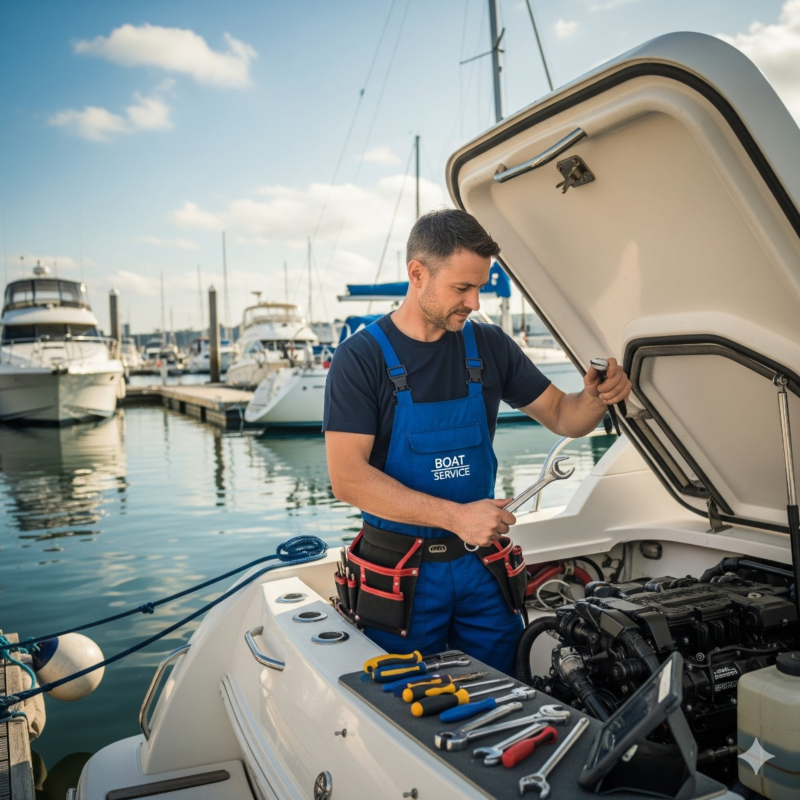
With the engine off and the drive trimmed fully up, look at the visible bellows for cracks, especially in the folds. Check the bilge regularly and note any new water. Listen for bearing noise at idle in gear. Keep records of when the bellows and bearing were last replaced; many manufacturers and technicians recommend replacing bellows every few seasons regardless of appearance, because rubber can fail from the inside.
What Service Involves
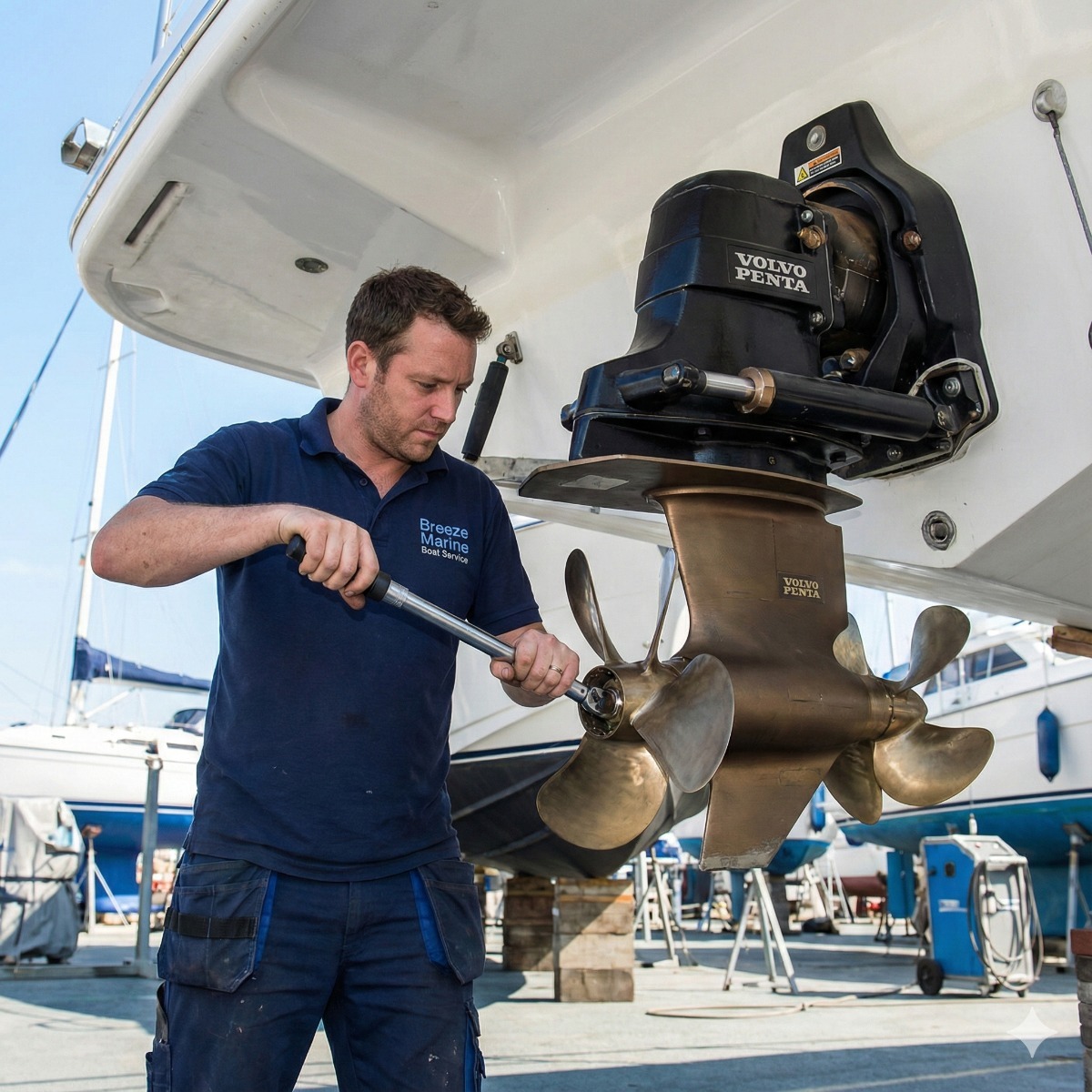
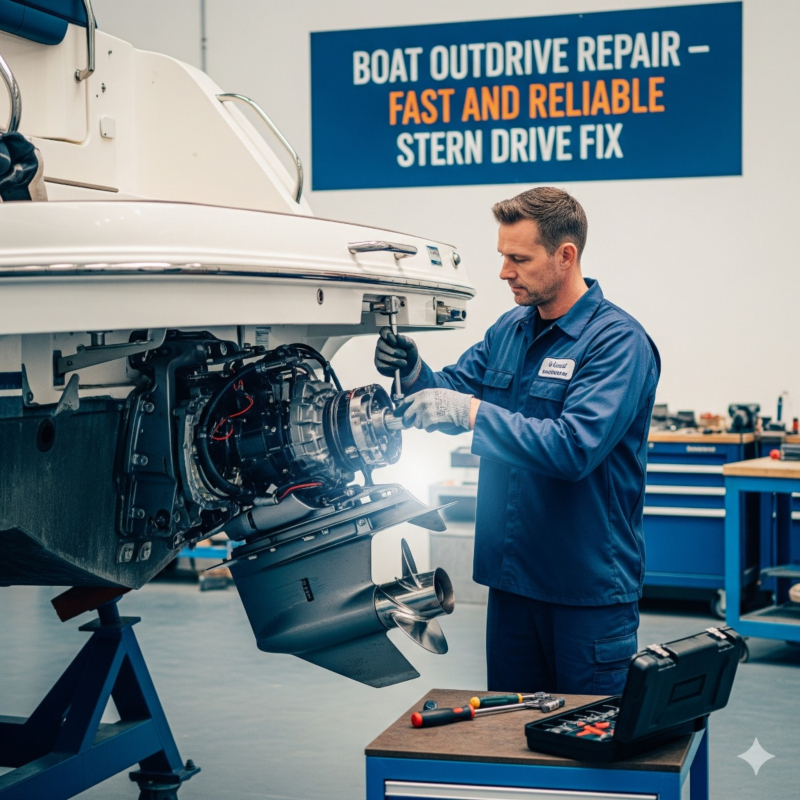
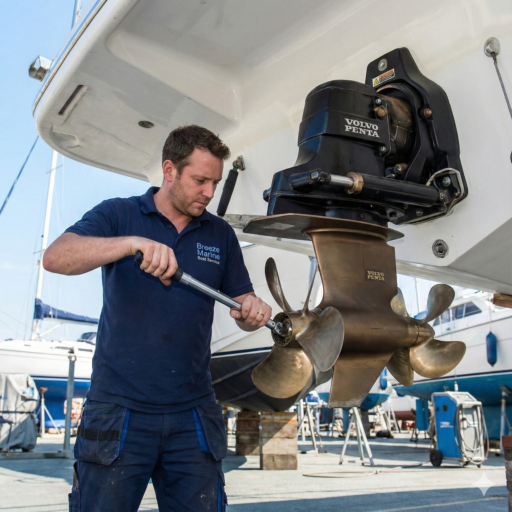
Sterndrive bellows replacement generally requires removing the drive, which usually means lifting the boat or hauling it out. With the drive off, the old bellows are cut away, the transom assembly is cleaned and inspected for corrosion, and new bellows are fitted with the correct adhesive and clamps. Gimbal bearing service is done at the same time: the bearing is checked for roughness and play, and replaced if needed. Engine alignment is then checked with an alignment tool so the drive shaft and engine coupler line up properly. Finally, the drive is refitted, the gear oil checked and the boat tested in the water.
For Volvo Penta drives, a volvo sterndrive service follows the maker's intervals and usually includes checks of the drive's shift mechanism and cone clutch where fitted. On IPS pod drives the concerns are different: there are no bellows, but pod seals, propellers and steering components need regular inspection. IPS seal replacement and other ips drive part service items follow Volvo Penta schedules and depend on hours and condition.
Choosing Someone to Do the Work
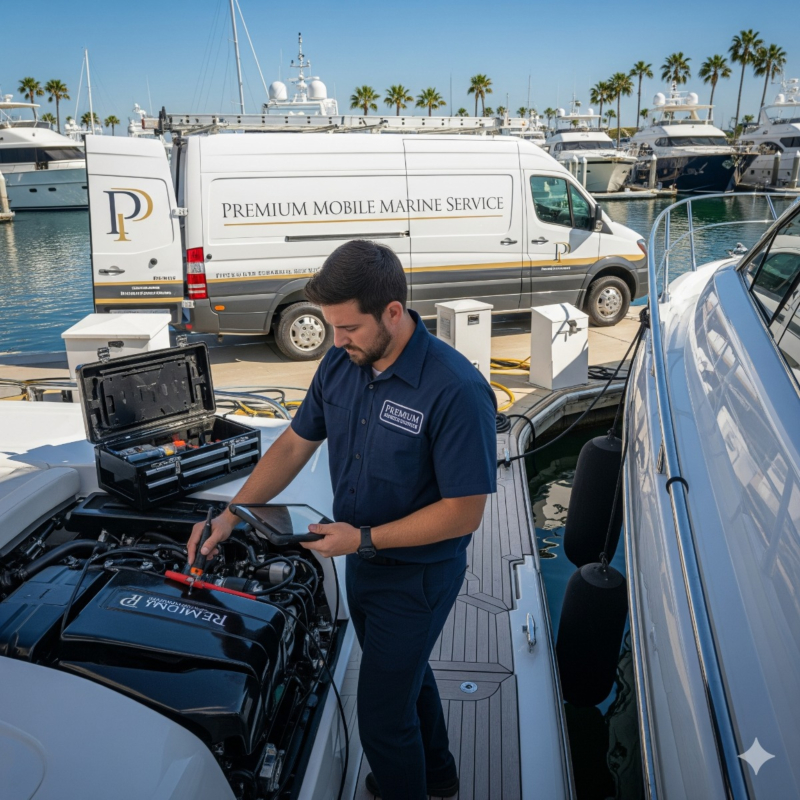
When comparing volvo penta marine repair shops near me, look beyond distance. Ask whether the technician uses the correct diagnostic software for electronically controlled engines, follows the factory service schedule, checks alignment after drive work and tests the boat afterwards. An experienced volvo penta mechanic will also check the drive oil for water and look at anodes during the same visit. The page on Volvo Penta IPS and sterndrive service outlines what that kind of volvo penta marine service includes.
When Not to Wait
Book sterndrive repair promptly if you see a cracked bellows, water in the bilge from the transom area, or hear bearing noise. Delaying risks water entering the boat, a damaged coupler and expensive drive repairs.
Sterndrive FAQ
How often should bellows be replaced?
Intervals vary by manufacturer and use, but many owners replace them every few seasons. Inspect them at least annually.
Can the gimbal bearing be replaced without removing the drive?
No. The drive must come off to reach the bearing.
Do IPS drives have bellows?
No, but they have seals and other wear parts that need regular inspection.