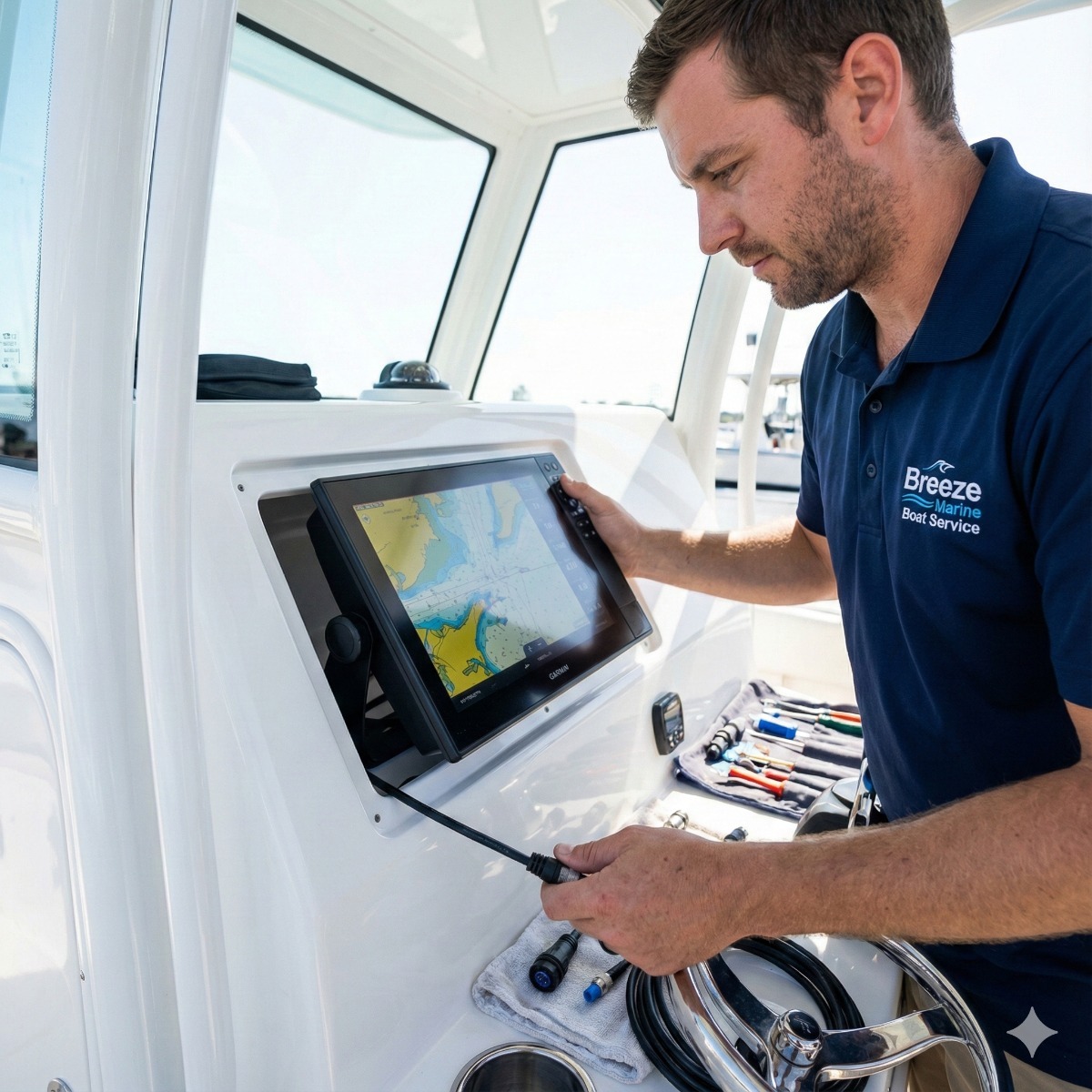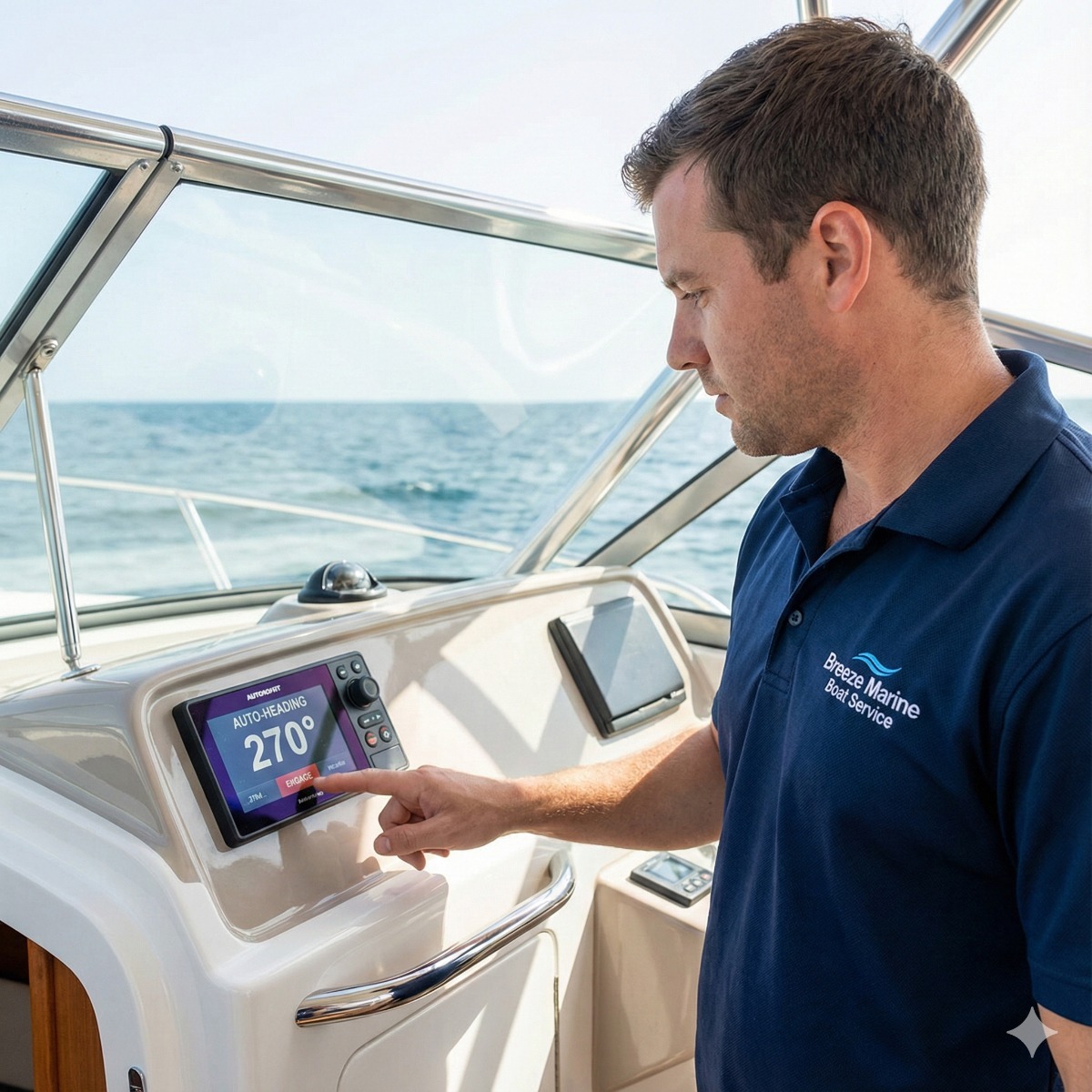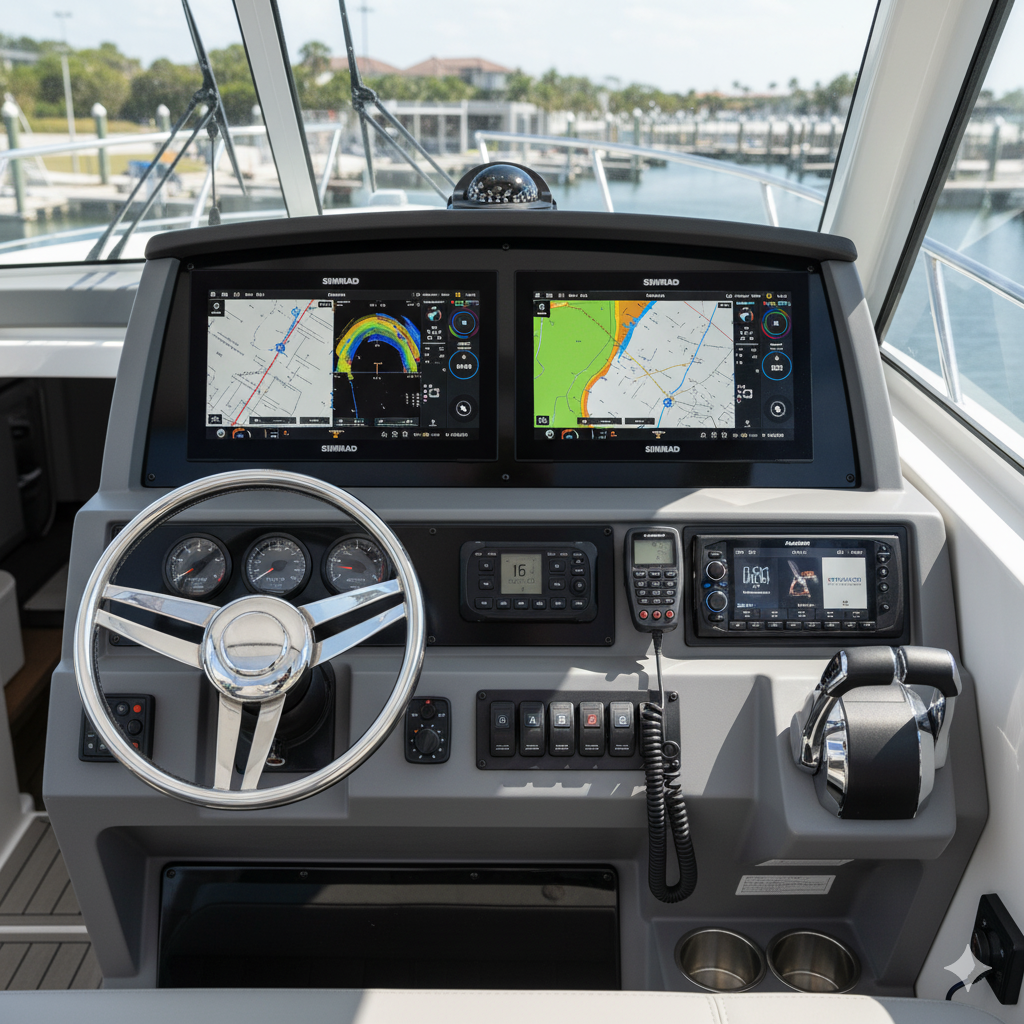
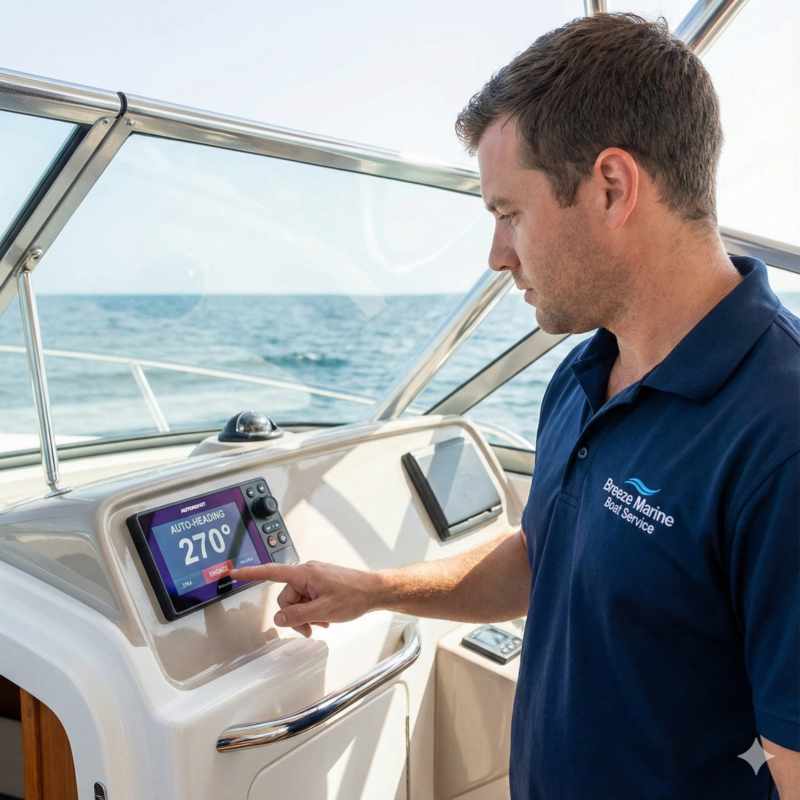
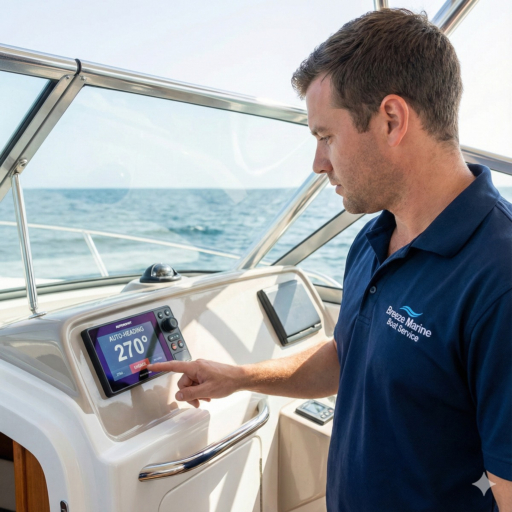
An autopilot takes over the most tiring part of a long run, holding a steady heading, and frees the crew to navigate, fish or keep a better lookout. A good boat auto pilot system installation is more than mounting a control head at the helm. It involves the steering system, the electrical system, a carefully placed heading sensor and a sea trial that teaches the pilot how the boat behaves. This guide walks through what the work involves and what to decide before you buy.
The parts of an autopilot system
- Control head: the display and buttons at the helm used to engage the pilot and change course. Many systems can also be controlled from a compatible chartplotter.
- Course computer: the processor that decides how much rudder to apply. In some systems it is built into the drive or sensor unit.
- Heading sensor: an electronic compass, often combined with solid-state motion sensors, that tells the computer where the boat is pointing and how it is moving.
- Autopilot drive unit: the part that physically moves the steering, such as a hydraulic pump, a linear drive or a mechanical drive.
- Rudder feedback: a sensor that reports rudder angle. Some modern systems for hydraulic steering can work without one while others require it, so check the manufacturer's specifications.
Matching the drive to the steering
| Steering type | Common drive option | Notes |
|---|---|---|
| Hydraulic steering | Hydraulic autopilot pump teed into the steering lines | The pump is sized to the steering cylinder and helm |
| Mechanical cable steering | A mechanical drive made for cable systems | Needs a different drive from hydraulic systems; check compatibility |
| Inboard boats with a rudder quadrant or tiller arm | Linear drive acting on the rudder stock | Needs a strong mounting point and good access |
| Sailboats with a wheel or tiller | Wheel pilot, tiller pilot or below-deck drive | Below-deck drives suit larger boats and longer passages |
| Power-assisted steering | Depends on the steering maker | The pilot and assist pump must be plumbed and purged together |
Drive sizing comes from the autopilot maker's tables, based on boat size, displacement and steering cylinder volume. An undersized drive may not keep up in following seas, so use the manufacturer's charts rather than guesswork.
Steps in a boat auto pilot system installation
- Survey and planning: identify the steering type, record helm and cylinder details, choose locations for the drive, course computer and sensor, and plan cable routes.
- Drive installation: for hydraulic steering, the pump is teed into the steering lines and mounted securely below deck to limit vibration and noise.
- Heading sensor placement: the sensor goes low and near the middle of the boat where possible, well away from magnetic interference such as speakers, steel, engines and high-current cables.
- Power wiring: the drive can draw heavy current, so it needs wire sized to limit voltage drop and its own circuit protection, following the installation manual.
- Networking: the pilot joins the NMEA 2000 network, or the maker's compatible network, so it can share heading with the chartplotter and radar and follow routes.
- Bleeding the steering: after hydraulic work, the steering is purged of air. Air causes spongy steering and a pilot that wanders.
- Dockside setup: drive direction, rudder limits and boat type are entered, and the steering is checked from lock to lock.
- Sea trial and autopilot calibration: the compass is calibrated, usually by turning slow circles, and the pilot runs its learning or tuning routine. Gain and counter-rudder settings are then adjusted so it holds course without weaving.
On boats with power-assisted steering, the assist pump sits in line with the autopilot, so any work on one affects the other; see our notes on power assist steering pump replacement. If the helm is due for a wider refresh, our NMEA 2000 networking page explains how the data backbone ties the electronics together.
Planning questions before you buy
- What steering system does the boat have, and what are the helm and cylinder models?
- Which chartplotter brand is at the helm? Staying with one brand usually makes integration simpler.
- Is there already an NMEA 2000 backbone, and does it have room for more devices?
- Can the batteries and charging system support the extra load on long runs?
- On a sailboat, do you want the pilot to steer to the wind using a wind instrument?
Using an autopilot safely
An autopilot steers; it does not keep watch. Keep a proper lookout, know how to disengage the pilot quickly, and take the helm yourself in busy waters such as the approaches to the Los Angeles and Long Beach harbors, where commercial ships and small craft mix. Check the pilot's alarms and settings before each longer trip.
Frequently asked questions: boat auto pilot system installation
Can an autopilot be added to a boat with cable steering?
Often yes, but it needs a different type of drive than a hydraulic system. Check the autopilot maker's compatibility list for your steering.
Why does my autopilot weave back and forth?
Weaving usually comes from settings that are too aggressive, an uncalibrated compass, air in hydraulic steering or a heading sensor mounted near interference. Recalibration and tuning on a sea trial usually help.
Does the autopilot need to be connected to the chartplotter?
No, it can hold a heading on its own. Connecting it over NMEA 2000 lets it follow routes and waypoints and share heading data with radar and other displays.
Our autopilot work covers pump plumbing, sensor placement and sea trial calibration as part of our marine electronics installation service. See the marine autopilot installation and calibration page for details, and contact us with your steering type and a list of the electronics on board.