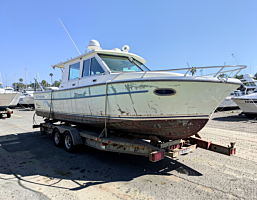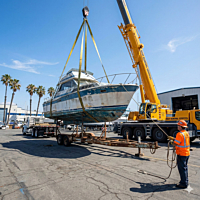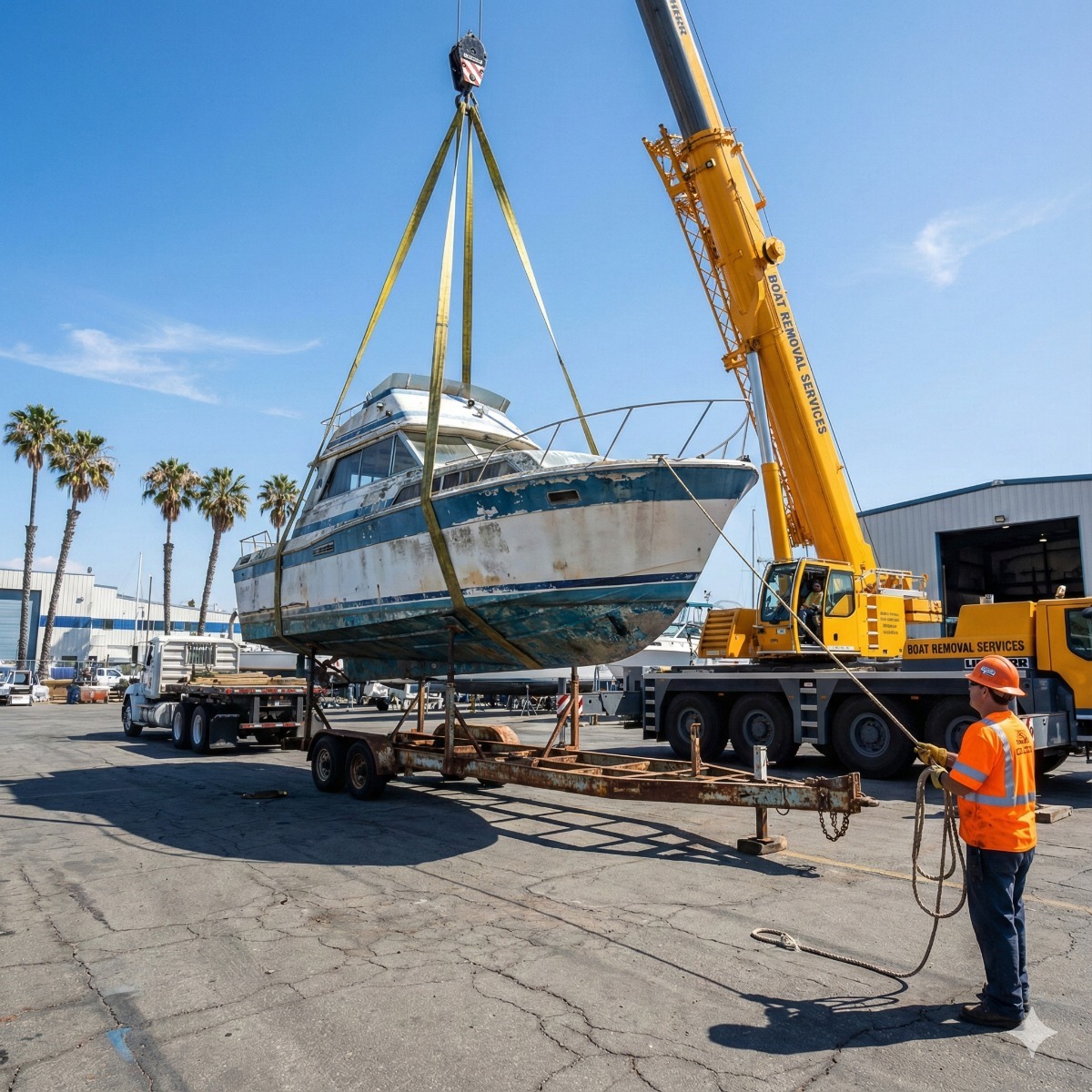
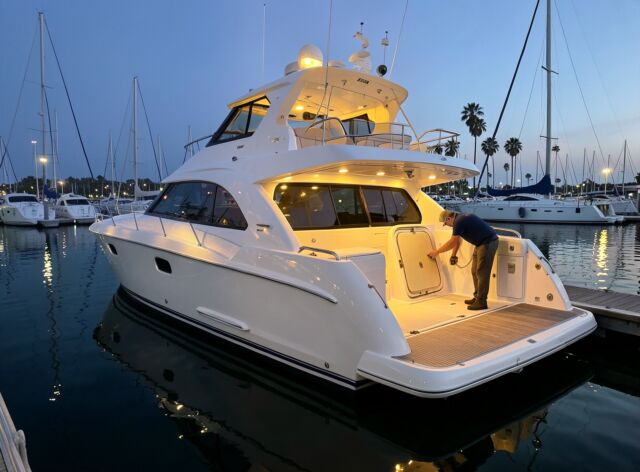
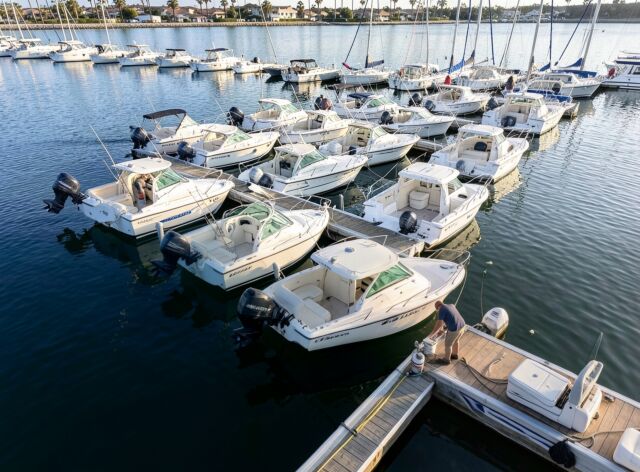
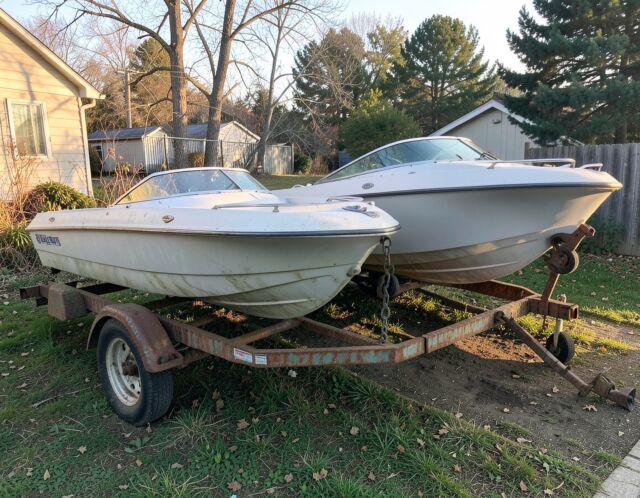
Every year, boats that nobody wants any more end up on the bottom of harbors, bays and coves. Some sink slowly at the dock after years of rainwater and dead bilge pumps. Some are towed to a quiet corner and left. A few are taken offshore and deliberately sunk by owners who think the ocean is the cheapest way out. It is not cheap, it is not legal, and the water pays for it for years. This is our request, as people who work on these harbors every day: please do not sink or abandon an old boat.
This article is the overview of a short series. Each of the things that leak out of a sunken boat has its own story, and we cover them separately: what a sunken boat's battery does to the water, fuel and oil from a sunken boat, bottom paint and copper on a sunken hull and how a fiberglass hull turns into microplastics.
What Happens When a Boat Goes Down
A sunken boat does not simply rest on the bottom. It starts releasing what it carries the moment water reaches it:
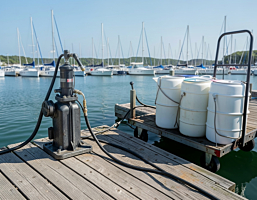
- Fuel and oil escape through vents, fill caps and failing hoses, first as a sheen on the surface and then as a slow leak that can last for weeks.
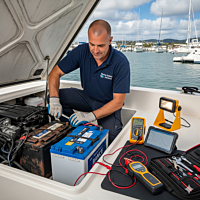
- Batteries flood, short and corrode, and lead-acid units eventually leak acid and lead compounds.
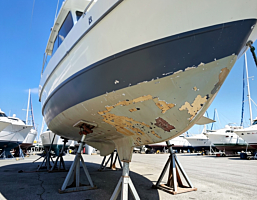
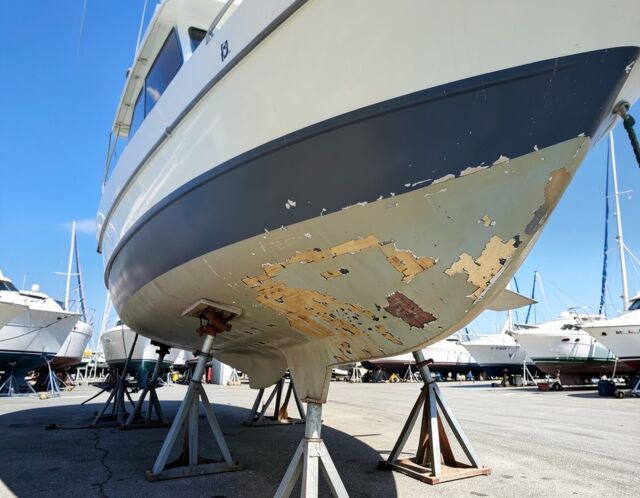
- Bottom paint keeps doing what it was designed to do, releasing copper into the water, now concentrated in one spot on the seabed.
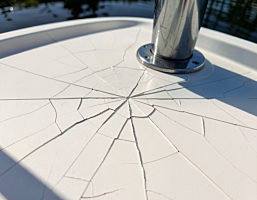
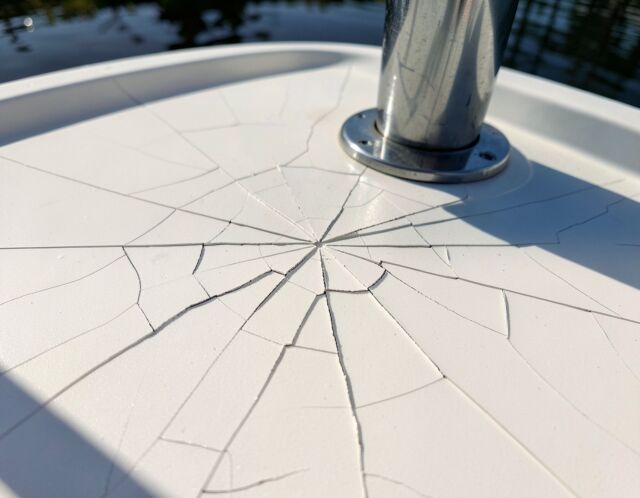
- Fiberglass, foam and wood break down over the years into fragments small enough for shellfish and fish to swallow.
- Holding tank waste, cleaners, paint cans and plastics stored aboard float away or settle into the sediment.
On top of the pollution, a sunken hull is a physical problem. It smothers the bottom habitat it lands on, it becomes a hazard to navigation for other boats and swimmers, and in a marina it can damage docks, pilings and neighboring vessels.
Abandoning a Boat Is Illegal in California
Boat abandonment in California is against the law, whether the boat is left at a dock, on a mooring, on a beach or on public land. The registered owner can be fined and held responsible for the cost of removing the vessel, and that liability does not end just because the owner walked away. Leaving a boat on someone else's property creates the same problem in a different place.
Scuttling a boat at sea is not a loophole. Under federal ocean dumping law, sinking a vessel at sea requires a permit from the EPA, and the boat must first be stripped of fuel, oil and other pollutants. Towing an old boat offshore and opening the seacocks is a federal violation, and any fuel or oil that reaches the water is a reportable spill.
Who Pays When an Owner Walks Away
When a derelict boat sinks, someone still has to raise it. Salvage from the water is far more expensive than disposal on land: it can involve divers, lift bags, pumps, a crane barge, spill booms and absorbent material, followed by the same hauling and dismantling a boat on a trailer would have needed in the first place. If the owner cannot be found or cannot pay, the bill lands on harbor districts, marinas, cities and ultimately taxpayers. California funds local agencies to remove abandoned boats through the Division of Boating and Waterways' Surrendered and Abandoned Vessel Exchange (SAVE) grants, money that would go much further if fewer boats were abandoned at all.
Better Ways to Let an Old Boat Go
There is almost always a legal and cleaner way out, and most of them cost less than the consequences of sinking or abandoning a boat:
- Sell it, even for little, if the engine, trailer or equipment still have value.
- Use a boat surrender program where one is running. Some local agencies accept unwanted recreational boats before they become derelict; ask your harbor office whether a program is open.
- Book a boat disposal service that removes fuel, batteries and hazardous items, recycles the metal and disposes of the hull properly. Our guide on boat disposal and recycling explains where each part ends up.
- Do not let it sink while you decide. Pump out the fuel, take the batteries off, keep the bilge pump working and the cockpit drains clear.
The paperwork side, including titles and releasing liability with the DMV, is covered in our guide to getting rid of an old boat in California.
A Request From Our Crew
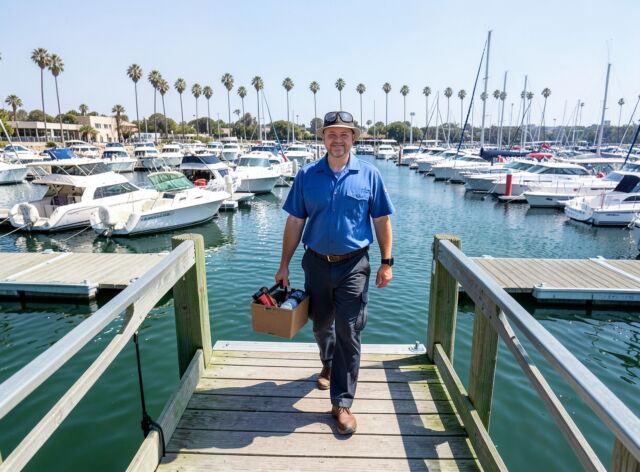
We spend our days on the docks of Long Beach and San Pedro, and we see what a single neglected boat can do to a slip, a marina and the water around it. If you have a boat that has reached the end, talk to someone before it reaches the bottom. Our boat removal and disposal service handles the whole job, and our mobile fuel pump-out can make a boat safe while you decide what to do with it.
Sunken and Abandoned Boat FAQ
What should I do if I see a sunken or abandoned boat?
Tell the harbor patrol or harbor master, and if you see fuel or oil on the water, report the spill to the National Response Center at 1-800-424-8802. Do not board a sunken or half-sunk vessel yourself.
Is it cheaper to let a boat sink than to dispose of it?
No. Raising a sunken boat and cleaning up after it costs far more than disposal on land, and the owner can be held responsible for that bill, plus fines.
Can I sink an old boat to make an artificial reef?
Not on your own. Reef projects require permits and thorough cleaning of every pollutant on board, and they are run by agencies and organizations, not individual owners.