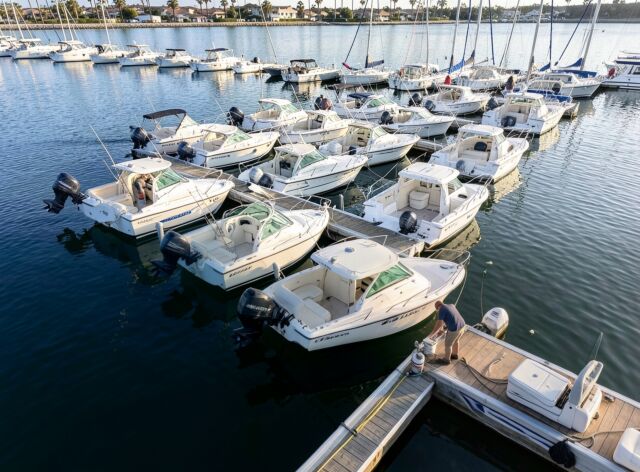
The first sign that a boat has sunk in a marina is often not the boat at all. It is a rainbow sheen spreading across the water between the docks. Fuel and oil are usually the first pollutants to leave a sunken boat and the most visible, and even a small boat can carry enough to foul a whole basin. This article explains what happens to fuel and oil from a sunken boat, how it affects wildlife, and what the law says about a fuel spill from a sunken boat.
It is part of our series on why an old boat should never be sunk or abandoned.
How Fuel and Oil Escape a Sunken Boat
Fuel systems are designed to keep fuel in while the boat floats upright. Underwater, every opening becomes an exit:
- Tank vents let water in and fuel out as soon as they are submerged.
- Fill caps and deck fittings leak once the boat rolls or settles at an angle.
- Old fuel lines and primer bulbs, already cracked on a neglected boat, fail quickly.
- Engine oil, gear lube and hydraulic fluid seep from crankcases, outdrives, steering and trim systems.
- Oily bilge water, which on many old boats is already a mix of oil, fuel and grime, is released all at once.
The leak rarely stops by itself. A sunken boat can release fuel and oil for weeks, especially when tidal currents and passing wakes move the hull.
Gasoline, Diesel and Oil Behave Differently
Gasoline is light and evaporates fast, which sounds reassuring but is not. Its most toxic components, such as benzene, dissolve into the water, and the vapors that collect around a leaking boat are a fire and explosion risk in a crowded marina.
Diesel evaporates far more slowly. It spreads into a thin film that drifts with the wind and tide, coats docks, hulls and rocks, and lingers in calm corners of a harbor. A diesel spill in a harbor can be smelled long before it is seen.
Lubricating oil barely evaporates at all. It clings to surfaces, mixes into sediment and stays. It takes surprisingly little oil to create a sheen across a large area of water, which is why even a small outboard boat matters.
What an Oil Sheen Does to Wildlife
An oil sheen looks thin, but it sits exactly where much of harbor life happens: at the surface and along the shoreline.
- Seabirds that land in oil lose the waterproofing of their feathers and can die of cold even when the oil itself is not toxic enough to poison them.
- Fish eggs and larvae, which often drift near the surface, are especially sensitive to the dissolved compounds in fuel.
- Mussels, barnacles and other animals on pilings and rocks are coated where the sheen meets the shore.
- Sea lions and other mammals that haul out on docks and buoys can be exposed when they come back out of the water.
What the Law Says About a Fuel Spill
Under the federal Clean Water Act, discharging oil or fuel that causes a sheen on the water is illegal, and it must be reported. Boat fuel spill reporting goes to the National Response Center at 1-800-424-8802. In California waters, the state's Office of Spill Prevention and Response also responds to spills. The owner of the boat that caused the spill can be held responsible for the cleanup cost, which with booms, absorbents, crews and disposal can quickly exceed the value of the boat.
Keep the Fuel Out of the Water
The best fuel spill is the one that never happens. For an old boat that is sitting unused, waiting to be sold or headed for disposal:
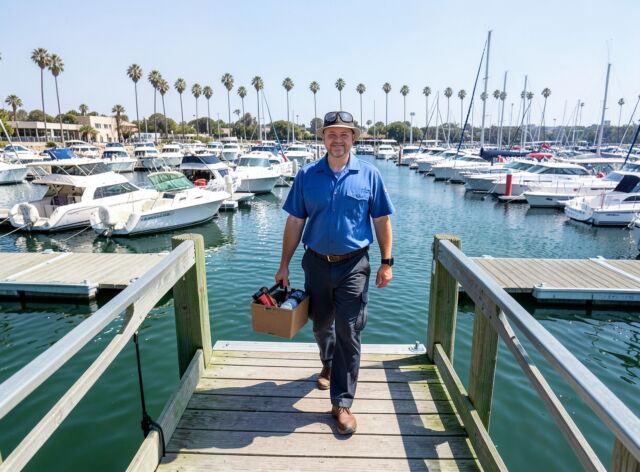
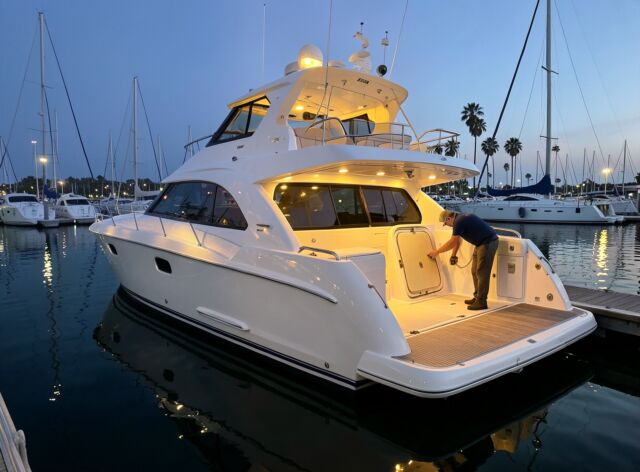
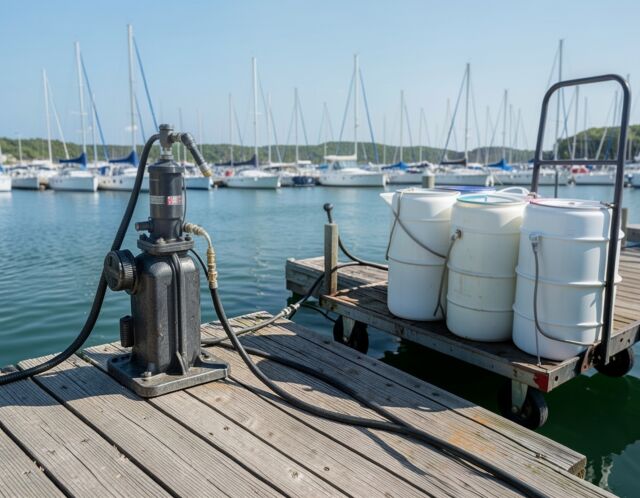
- Remove the fuel. Stale gasoline and diesel do no good in the tank. Our mobile fuel pump out service drains tanks at the slip or in the yard and takes the fuel away for proper disposal.
- Keep absorbent pads in the bilge and replace them when they are saturated. Never pump oily bilge water overboard.
- Check fuel lines, fittings and vents for cracks and leaks.
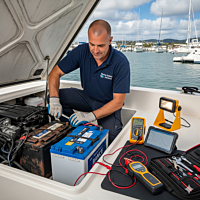
- Keep the boat afloat. A charged battery, a working bilge pump and clear cockpit drains prevent the most common dockside sinkings.
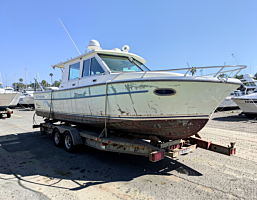
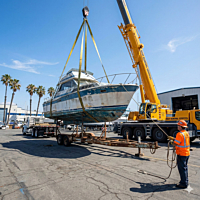
If the boat has reached the end of its life, a boat removal and disposal service drains every fluid before the hull is moved. Our guide to boat disposal and recycling explains what happens next.
Fuel and Oil Spill FAQ
Who do I call if I see an oil sheen in the marina?
Report it to the harbor office and to the National Response Center at 1-800-424-8802. Note the time, location and size of the sheen, and do not try to disperse it with soap; detergents only push the oil into the water column.
Does a small fuel leak from one boat really matter?
Yes. A small amount of fuel or oil spreads over a large surface, and in a marina full of boats, small leaks add up. It is also still a reportable discharge.
What happens to fuel pumped out of an old boat?
It is collected in approved containers and taken to a facility that recycles or disposes of used fuel, instead of staying in a tank that could one day leak.