On most inboard and sterndrive boats, the exhaust does more than carry gases away from the engine. It also carries the cooling water back out of the boat, which is why a marine exhaust manifold lives a much harder life than the one on a car. Salt, heat and long periods of sitting all work on the metal from the inside, and early signs are small: a rust streak, an exhaust smell or a temperature gauge that creeps up on a hot afternoon. Here is how the system works, what fails and what to do about it.
How a Wet Exhaust System Works
A gasoline or diesel marine engine bolts its manifold directly to the cylinder head. Hot gases leave each cylinder and collect in the manifold, which is surrounded by a water jacket. From there the gases pass through a riser, which lifts the exhaust above the waterline, and then through an elbow where the cooling water is sprayed into the gas stream. Mixing the two cools the exhaust enough to run it through rubber hose and out of the transom or through the outdrive.
On engines with raw water cooling, the water in that jacket is seawater pumped straight in from outside the hull. Engines with closed cooling run coolant through the block and often through the manifold as well, but the riser and elbow usually still see seawater. Either way, the parts that meet salt water are the ones that corrode first.
Why Manifolds, Risers and Elbows Fail
- Internal corrosion: salt water eats away the cast iron inside the water passages, where you cannot see it. The outside can look fine while the wall between water and exhaust is almost gone.
- Scale and blockages: salt deposits and rust flakes narrow the passages, so less water flows and the manifold runs hotter.
- Gasket failure: repeated heating and cooling works the joints loose, and the gaskets between the manifold, riser and elbow harden and crack.
- Sitting unused: a boat left in the slip for months with seawater inside the exhaust corrodes faster than one that runs often.
Because the manifold, riser and elbow age together in the same water, many mechanics treat them as a set. Replacing only the part that is visibly leaking can leave a tired neighbor waiting to fail next season.
Warning Signs to Watch For
An exhaust manifold leak does not always drip. Look and listen for:
- Rust-colored weeping or white salt crust at the joints and around the riser.
- Soot marks near a gasket, or an exhaust smell in the cabin.
- Engine temperature rising under load even though the raw water pump is working.
- Rough running, misfires or hard starting, especially after the boat has been sitting.
- Milky oil on the dipstick or signs of water in the cylinders, such as a rusty or wet spark plug.
The last item is the most serious. When the wall inside a riser or elbow rusts through, water can run backwards into the exhaust ports while the engine is off. It collects on top of the pistons, and water in the cylinders can hydrolock the engine or rust the cylinder walls. That is how a small exhaust problem turns into a much larger boat engine repair.
What an Owner Can Check
You do not need to take anything apart to catch many problems early. With the engine cold, inspect the manifold, riser and exhaust elbow with a flashlight, paying attention to the lower joints where water sits. With the engine running, confirm that a steady stream of water leaves the exhaust outlet and watch the temperature gauge. Check the oil on the dipstick regularly and note any change in color.
Carbon monoxide is the other reason to take exhaust problems seriously. A leaking joint in the engine room can let exhaust gas into enclosed spaces, so keep a working carbon monoxide detector in the cabin and test it every season.
What the Repair Involves
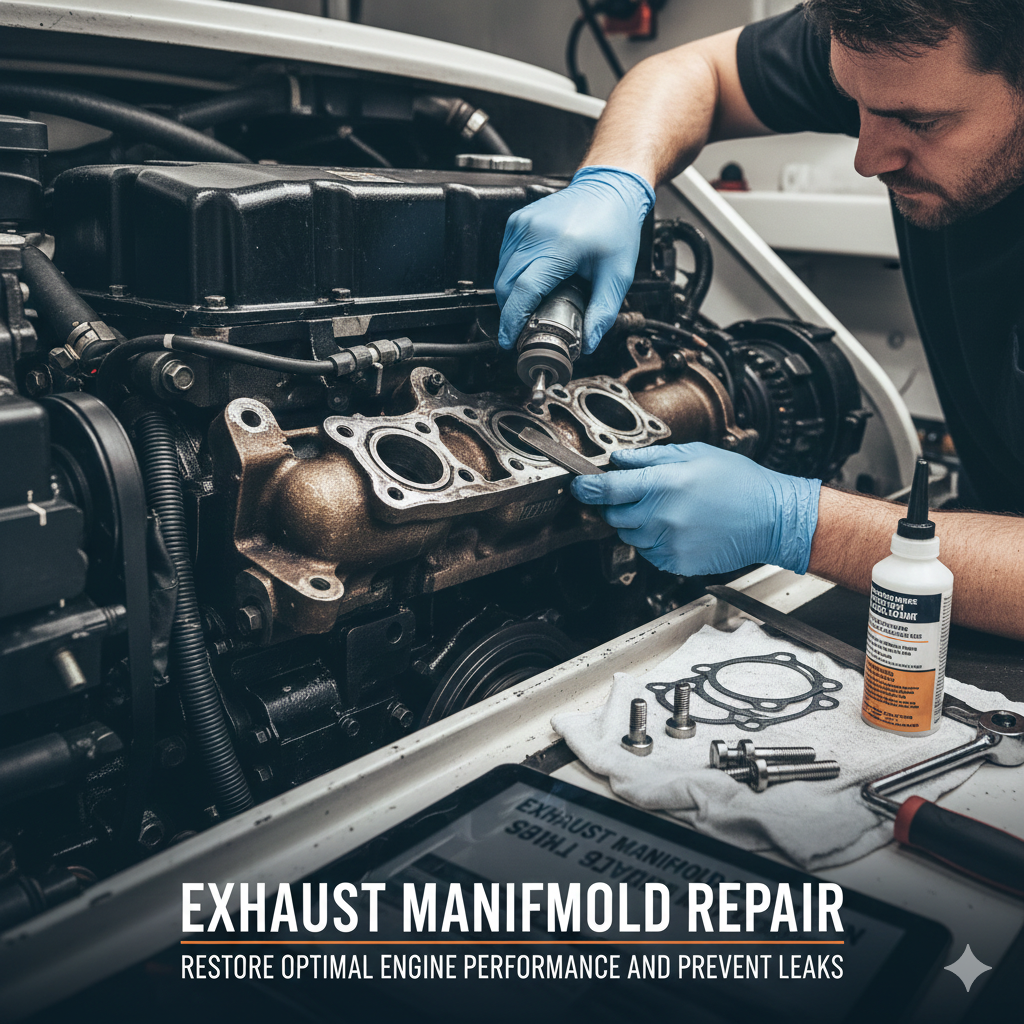
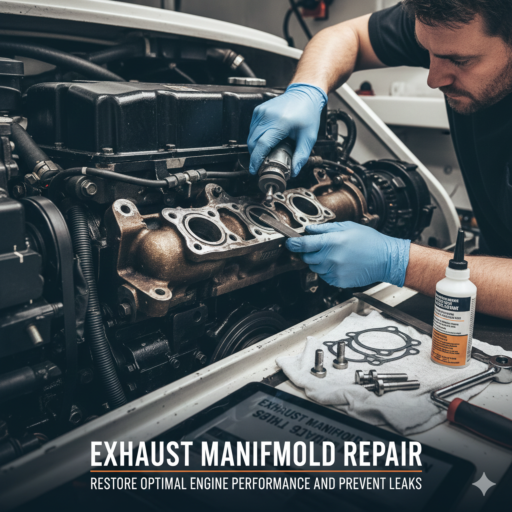
A proper exhaust manifold repair starts with removing the elbow, riser and manifold so the parts can be inspected inside, not just on the surface. A technician looks at how much metal is left in the water passages, checks the mating surfaces on the cylinder head for pitting, and often cuts open or pressure tests the old parts to see how far corrosion has gone. New gaskets go on and everything is torqued back in the right order.
After reassembly the engine is run and watched for leaks, water flow and temperature, and if water has reached the combustion chambers the oil is changed as well. If you have noticed any of the warning signs above, book an exhaust manifold repair and inspection before the next long run rather than after it.
Light weeping can often wait for a planned service visit; milky oil, a wet spark plug, a sudden temperature rise or an exhaust smell in the cabin should not.
Exhaust Manifold FAQ
How often should a marine exhaust manifold be replaced?
There is no fixed interval. Service life depends on salt or fresh water, how often the boat runs and whether it has closed cooling. In salt water, many owners have the exhaust riser and elbow inspected every season or two, because internal corrosion is hard to judge from the outside.
Can I keep running the boat with a small exhaust manifold leak?
It is not a good idea. A small leak can let exhaust gas into the engine room and usually gets worse once corrosion breaks through, so have the joint checked before the next trip.
Is water coming out of the exhaust a problem?
No. Water leaving the exhaust outlet is normal and shows the cooling system is working. The concern is water inside the engine, in the oil or seeping from a joint on the manifold or riser.