

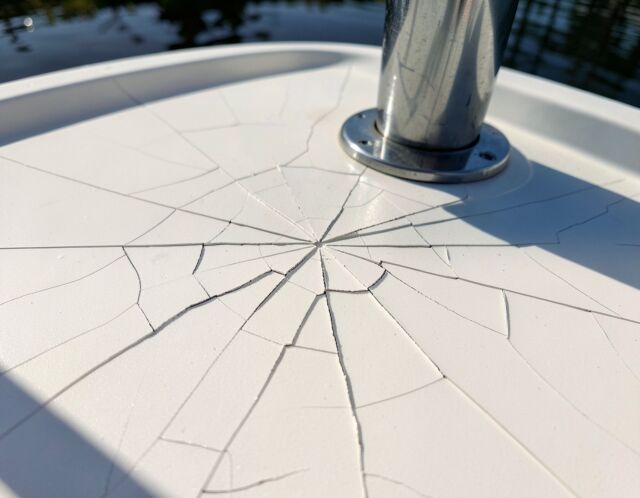
Fiberglass made boating affordable. It is strong, light and does not rot, and that last quality is exactly what makes a sunken fiberglass boat such a long-term problem. A fiberglass hull does not disappear underwater. It slowly breaks into smaller and smaller pieces, until what was once a boat is spread through the sediment as fiberglass microplastics. This article explains how that happens, what those particles mean for harbor life, and why the hull belongs on land.
It is part of our series on why an old boat should never be sunk or abandoned.
What Fiberglass Is Made Of
Fiberglass, or glass-reinforced plastic, is glass fiber locked in a hardened resin, usually polyester or vinyl ester. A gelcoat layer on the outside gives the hull its color and shine. Inside, many boats have cores of balsa, plywood or foam, and foam flotation under the floor. The resin is a plastic, and once it has cured it cannot be melted down again.
How a Sunken Fiberglass Boat Breaks Down
On the bottom of a harbor or bay, a hull is worn down from every side:
- Movement and impacts. Currents, wakes and storms shift the hull, grind it against rocks and pilings, and crack it along old repairs and stress points.
- Abrasion. Sand carried by moving water scours the surface, wearing away gelcoat and exposing the laminate.
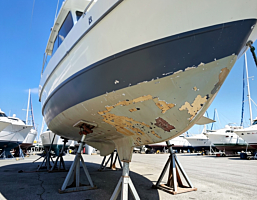
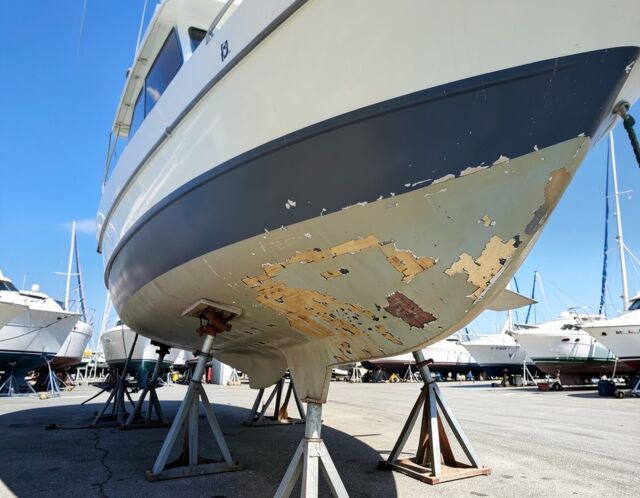
- Water in the laminate. Water works into cracks and the core; wood cores rot, foam crumbles, and the laminate loses strength and splits into sheets.
- Sunlight. Any part of the hull exposed at low tide or near the surface is weakened by UV, which makes the resin brittle.
The result is a steady stream of fragments: large pieces at first, then flakes, glass fiber strands and fine resin particles. Foam flotation adds its own crumbs of plastic. An abandoned boat breakdown like this can take decades, and the boat sheds material the whole time.
Fiberglass Microplastics and Harbor Life
Glass fiber pollution is easy to overlook because it is not as visible as an oil sheen, but the particles end up where animals feed. Filter feeders such as mussels and oysters strain particles from the water, and bottom feeders sift through the sediment. Researchers in the United Kingdom have reported fiberglass fragments in shellfish collected near places where old boats are broken up or left to deteriorate.
Glass fibers can be sharp, and resin particles can carry pigments and additives from the gelcoat and laminate. Once fragments are spread through the sediment, there is no practical way to collect them again. The only realistic fix is to keep the hull from breaking up in the water in the first place.
A Sunken Fiberglass Boat Is a Problem That Grows
A freshly sunk boat can often be raised in one piece. A boat that has been on the bottom for years may come up in sections, or not at all, and every season adds to the debris around it. The longer it stays, the more expensive and less complete the cleanup becomes. That is why reporting a sunken boat early, and removing an unwanted boat before it sinks, matter so much.
Why the Hull Belongs on Land
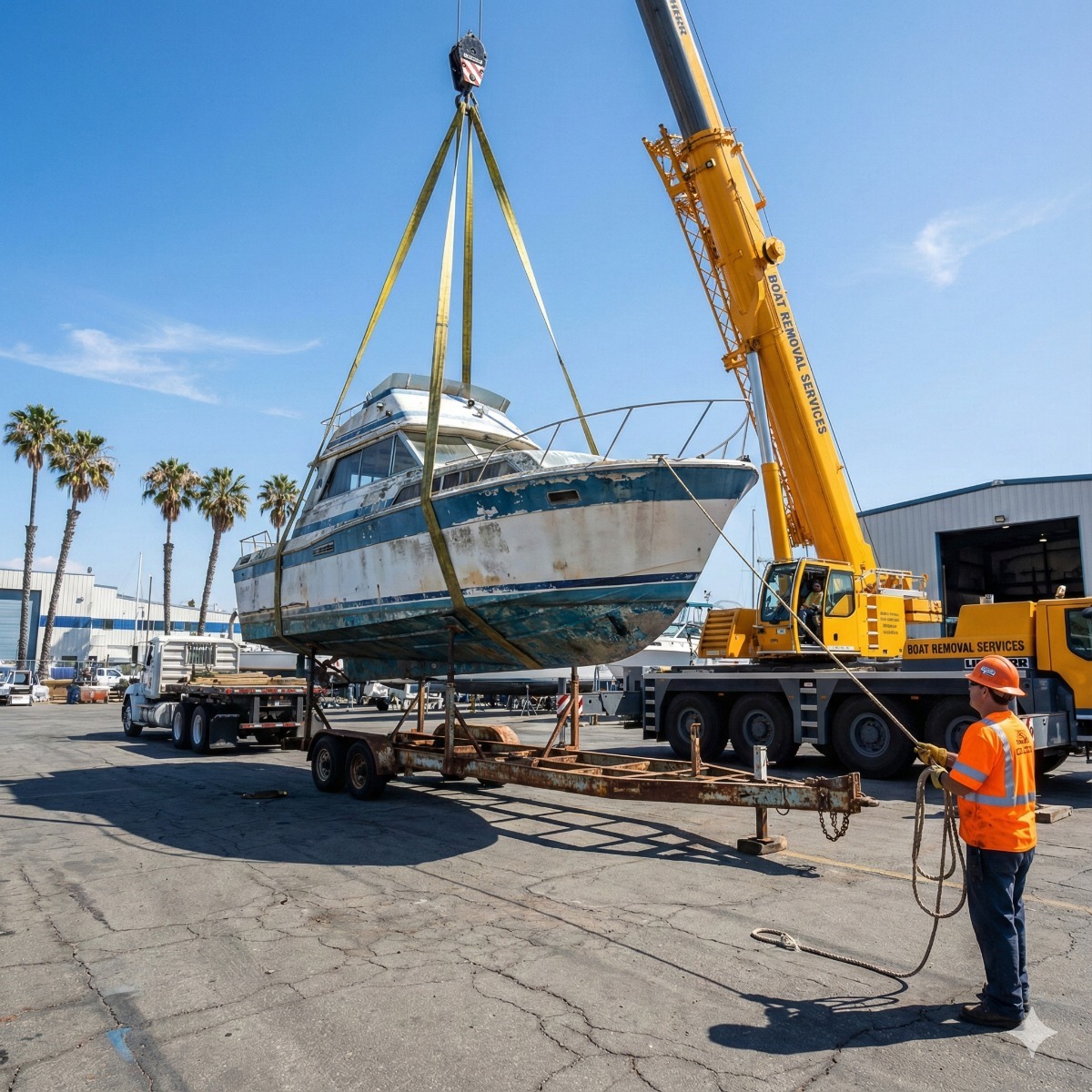
Fiberglass boat disposal on land is not perfect, since most hulls still go to a landfill, but it is controlled. The boat is drained and stripped, metals and equipment are recycled, and the hull is cut with dust collection and taken to a facility that accepts it. That keeps the fragments out of the water entirely. Our guide to boat disposal and recycling explains where each part of the boat goes, including the limited options for recycling fiberglass itself.
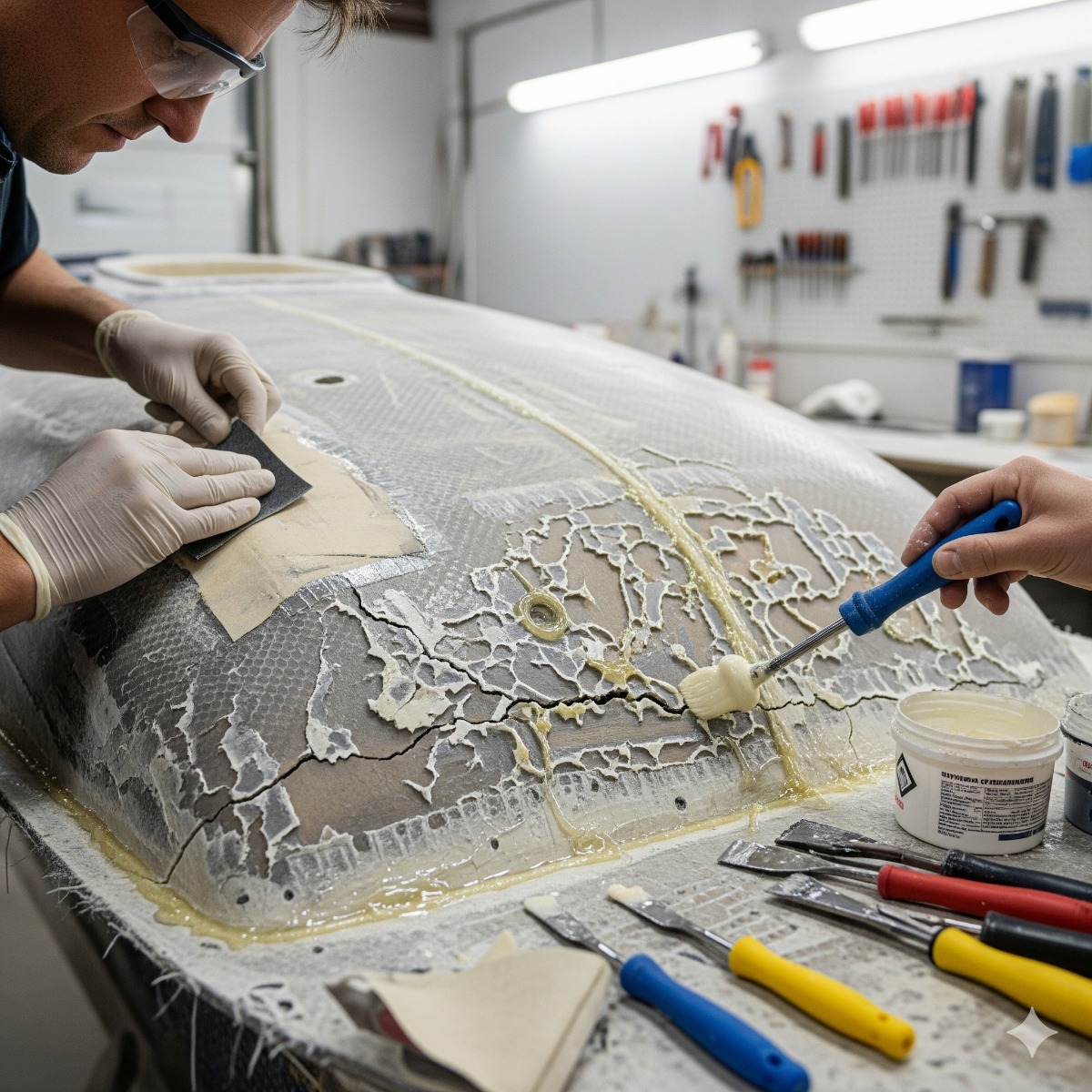
For a boat that still has a future, timely repairs keep water out of the laminate and the boat afloat. Our fiberglass hull damage repair covers cracks, chips and delamination. For one that does not, our boat removal and disposal service takes it out of the water and off your hands.
Fiberglass in the Water FAQ
Does fiberglass break down in the ocean?
It does not decompose. It breaks into smaller pieces, from large fragments down to glass fibers and resin particles, which stay in the environment.
Are fiberglass fragments microplastics?
The resin that binds fiberglass is a plastic, so small fragments of laminate are generally counted among microplastics, along with crumbled foam flotation.
What should happen to a sunken fiberglass boat?
It should be reported to the harbor authorities and raised as soon as possible, ideally in one piece, then drained, stripped and disposed of on land.