Every boat eventually reaches the end of its useful life, or at least the end of its owner's interest. A project boat that never got finished, a hull with a blown engine or a cruiser whose slip fees outweigh its value can quickly turn into a financial and legal burden. The good news is that there are several ways to let go, and knowing the options helps you choose the one that costs the least time and money.
Option 1: Sell it, even cheaply
If the boat has a working engine, a usable trailer or valuable equipment, selling is usually the best option. Even a boat with problems may appeal to a buyer looking for a project or parts. Price it realistically, be honest about its condition and make sure the title and registration are in order. When the sale is complete, file a notice of transfer and release of liability with the DMV so you are no longer responsible for the vessel.
Option 2: Part it out
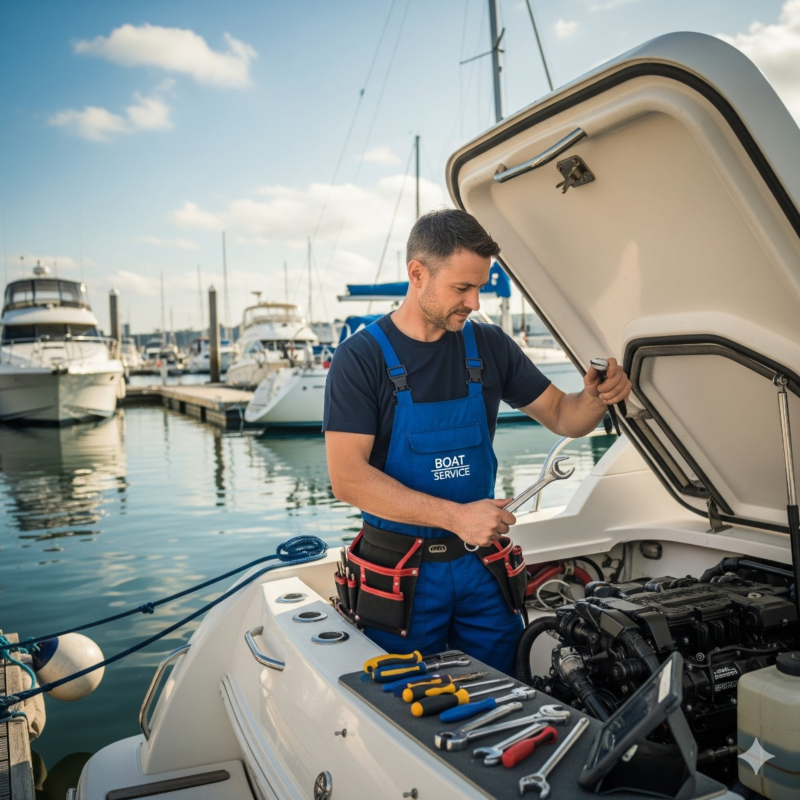
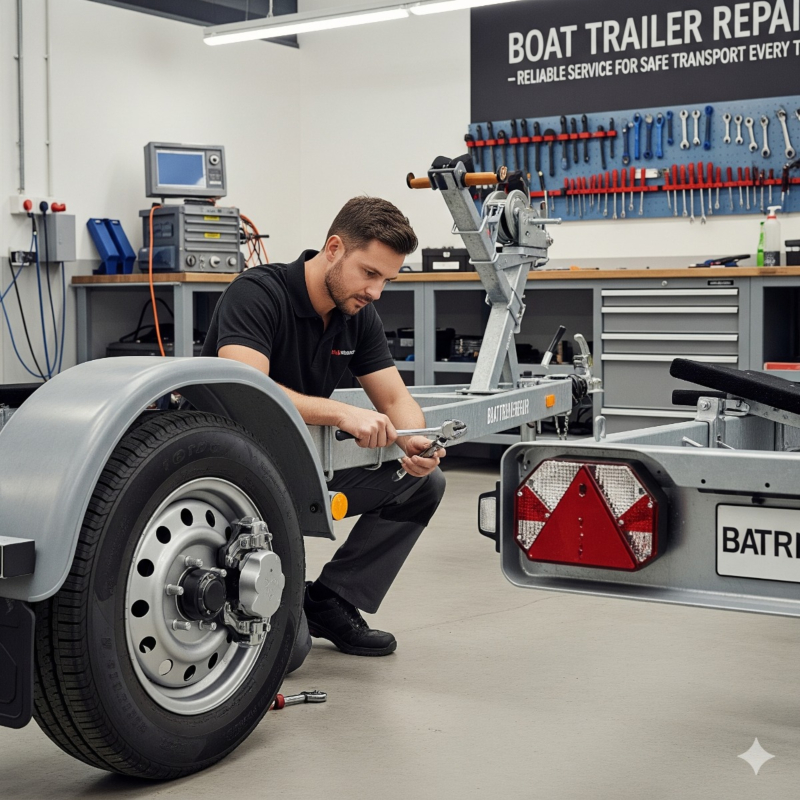
Engines, outboards, electronics, trailers, stainless hardware and even seats can be sold separately. This takes time and space, but it can recover some value. What remains, usually the bare hull, still needs to be disposed of properly.
Option 3: Donate it
Some charities and training programs accept boats. Many are selective and prefer boats in reasonable condition, so a hull with no engine or serious structural damage may not qualify. Check how the organization handles transfer paperwork and whether it will pick up the boat.
Option 4: Surrender programs
California's Division of Boating and Waterways has funded vessel turn-in programs through participating local agencies, allowing owners to surrender unwanted recreational boats before they become abandoned. Availability, funding and eligibility vary by area and year, so contact your local harbor or agency to ask whether a program is currently running.
Option 5: Professional disposal
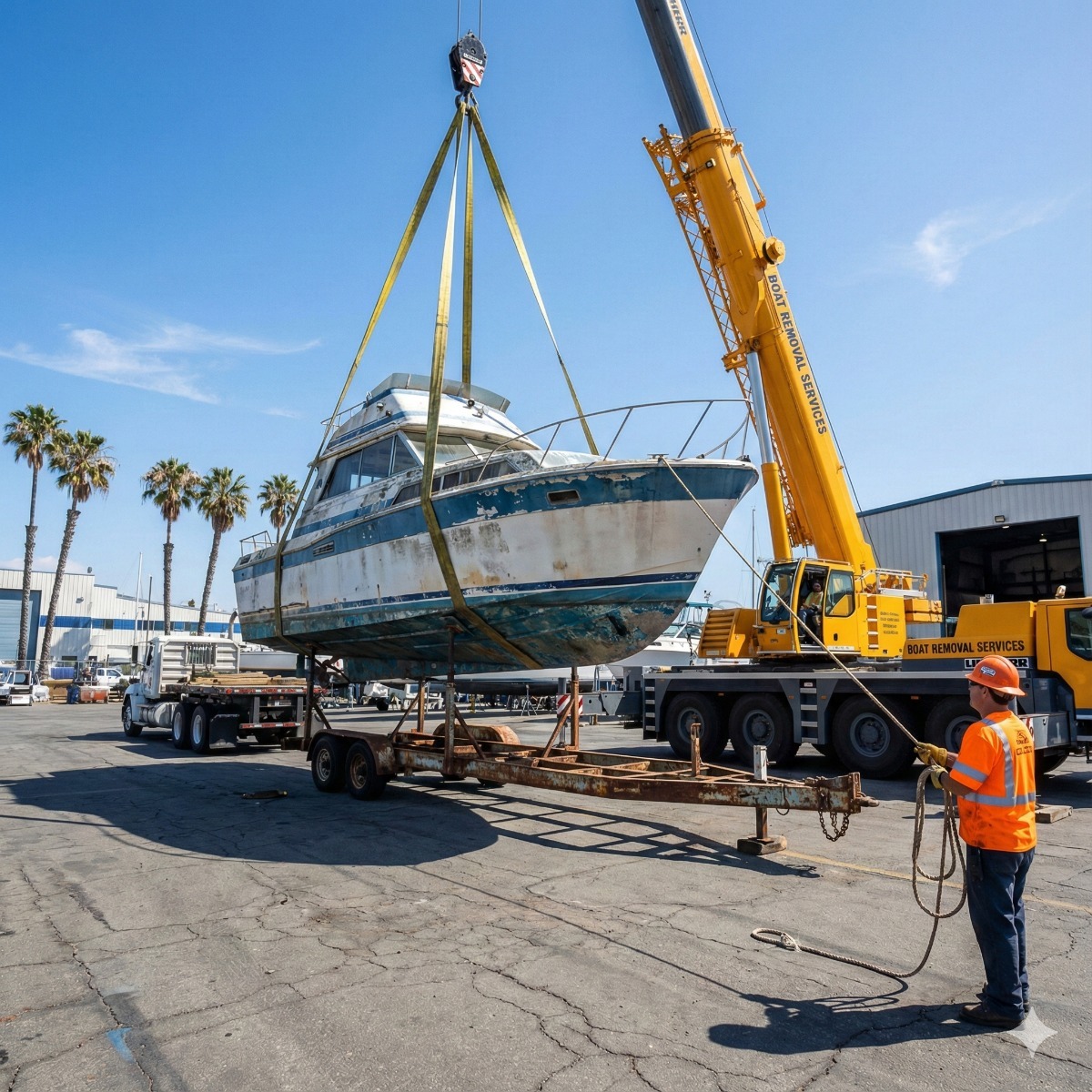
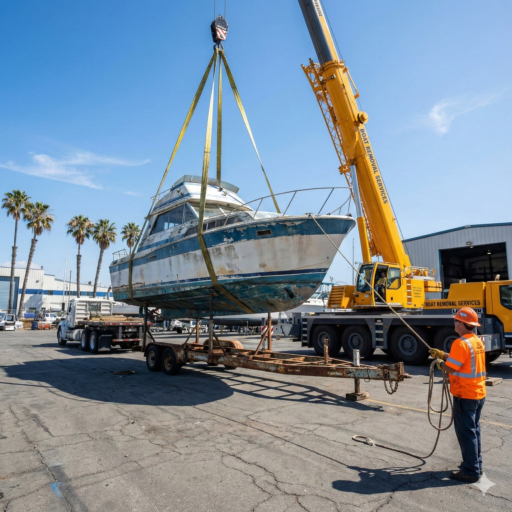
When the boat has no resale value and none of the options above work, a boat disposal service handles removal and destruction. This is not the same as dropping it at a landfill. Boats contain fuel, oil, batteries, refrigerants and sometimes contaminated bilge water, all of which must be removed and handled as hazardous waste. A proper junk boat removal service usually follows these steps:
- Assessment: photos, length, condition and access are reviewed to determine the equipment needed.
- Fluid removal: fuel, oil and coolant are drained; batteries are removed.
- Transport: the boat is loaded onto a trailer or flatbed, sometimes with a crane for tight backyards or boats without trailers.
- Destruction and recycling: metals are recycled, and the hull is broken down.
- Paperwork: the DMV is notified that the vessel has been dismantled or junked.
Fiberglass boat disposal is especially challenging because fiberglass does not break down and cannot be easily recycled. It is typically crushed or cut up before going to an approved facility.
Why ignoring the problem costs more
A derelict boat left in a slip, on a mooring or in a yard continues to generate costs: storage fees, insurance, registration and the risk of sinking or pollution. Abandoning a vessel is illegal in California and can lead to fines and responsibility for removal costs. A registered owner can remain liable until the paperwork shows the boat has been sold, transferred or destroyed.
Paperwork: the part people forget
Whatever route you choose, make sure the boat leaves your name. For a sale, submit a notice of release of liability. For disposal, confirm that the DMV has been notified that the vessel has been dismantled. If you have lost the title or bought the boat without proper documents, the process takes longer, but it is usually manageable with the right forms or a lien sale process. Keep copies of everything.
Choosing a removal provider
Searching for boat removal near me brings up haulers, yards and marine services. Ask whether the price includes fluid removal, transport, disposal fees and DMV paperwork, and whether the provider can handle boats without trailers. For boat removal Long Beach CA owners need, as well as boat removal Los Angeles CA and boat removal Torrance CA jobs, our boat removal service and disposal logistics page explains the process step by step.
Boat disposal FAQ
Can I just leave an old boat at a marina or on the street?
No. Abandoning a boat is illegal, and the registered owner can be held responsible for fines and removal costs.
What if I do not have the title?
It is still possible to dispose of the boat, but extra paperwork, such as a lien sale or DMV forms, may be needed.
Is my old boat worth anything?
If it has a running engine or valuable equipment, try selling it first. Disposal makes sense when the boat costs more to keep than it could ever sell for.