Once an old boat is out of the slip or off the driveway, a second question follows: what actually happens to it? A boat is not one material but dozens, from fiberglass and foam to aluminum, bronze, lead, copper wiring, electronics and old fuel. Each one goes somewhere different, and that sorting is what a boat disposal service really does. If you have been searching boat disposal near me, this guide walks through where each part of an old boat ends up, what can be recycled, what cannot, and how those materials shape the price.
We cover the other steps separately: options and paperwork for getting rid of an old boat in California, and how boat removal works, from the driveway, yard or slip. This one starts where hauling ends.
What an Old Boat Is Actually Made Of
Before anything is cut, it helps to see a boat the way a dismantler does, as a stack of materials:
- Hull and deck: usually fiberglass (glass fiber in polyester or vinyl ester resin), sometimes aluminum, occasionally wood or steel.
- Core and structure: plywood or balsa in the transom, stringers and deck, plus foam flotation under the floor.
- Power: inboard engines, sterndrives or outboards, with props, shafts and steering.
- Metals: stainless rails and cleats, bronze through-hulls and props, copper wiring, and on many sailboats a lead or iron keel.
- Electrical: batteries, chargers, chartplotters, radios, radar and lighting.
- Soft goods: cushions, vinyl, canvas, carpet and headliners.
- Fluids and chemicals: fuel, oil, coolant, holding tank waste, paint and cleaners.
- The trailer, if there is one, which is a separate item with its own registration.
Fiberglass: The Hard Part of Fiberglass Boat Disposal
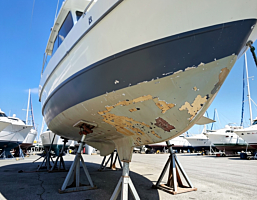
Fiberglass is the reason old boats pile up in yards. The resin is a thermoset, which means it cannot be melted down and reformed the way aluminum or many plastics can. Once a hull is stripped, it is normally cut or crushed into manageable pieces and taken to a landfill that accepts it.
Landfills charge by weight, so the hull's condition matters. A dry 20-foot runabout is one thing; a cruiser with waterlogged foam and a rotten, soaked core can weigh far more than its brochure figure, and every extra pound is paid for at the scale.
Recycling fiberglass is possible, but it is still rare. A pilot program in Rhode Island has ground old fiberglass boats into a feedstock for cement kilns, where the glass and minerals replace part of the raw material and the resin burns as fuel. France runs a national program for dismantling end-of-life recreational boats. Options like these are not yet a routine route on the West Coast, so for most boats around Long Beach, landfill after careful stripping is still the realistic end for the hull itself. What can be recycled is everything that comes off it first.
Aluminum and Other Metals: Where the Scrap Value Is
If you are wondering about boat scrap value, look at the metal, not the fiberglass. Aluminum boat recycling is straightforward: the hull is cut up and goes to a metal recycler like any other aluminum scrap, which is why aluminum skiffs and pontoons are usually cheaper to dispose of than fiberglass boats of the same size.
On a fiberglass boat, the recoverable metals are smaller but real:
- Stainless steel rails, cleats, hinges and fasteners.
- Bronze and brass props, through-hulls, seacocks and fittings.
- Copper in wiring harnesses and battery cables.
- Lead in sailboat keels and batteries; lead ballast is one of the few items that can move the numbers on its own. Iron keels are worth much less.
Scrap prices change constantly, and for a typical fiberglass boat the metal will not cover the whole job. It does take something off the bill, and it means less goes into the ground.
Engines, Outboards and Drives
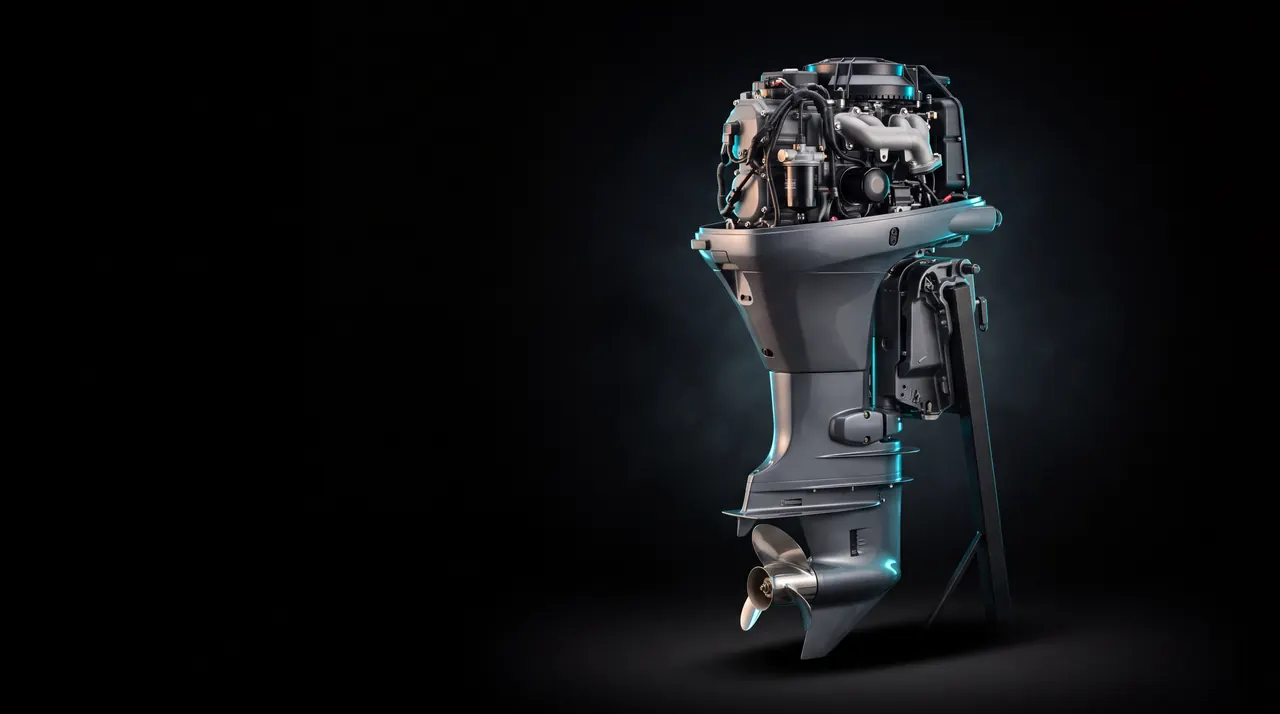
Power is the part of an old boat most likely to have a second life. A running outboard or inboard can often be sold on its own. A non-running engine may still be worth something as a core or for parts: lower units, carburetors, starters, trim pumps and props all have buyers. When nothing is worth saving, the engine is drained of oil and fuel and goes to a scrap metal recycler.
If you plan to sell the engine yourself, decide before the boat is scheduled for disposal. Pulling an outboard is quick; pulling an inboard is a job in itself, and it changes how the boat is lifted and transported.
Electronics and Batteries
Electronics should never ride to the landfill with the hull. In California, many electronic devices are handled as universal waste, so chartplotters, displays, radios and radar units go to an e-waste recycler instead. Newer units may be worth reselling if they still power up.
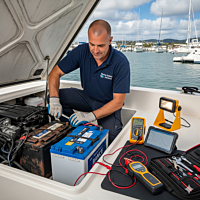
Lead-acid batteries are among the most recycled products there are, and they must go to a battery recycler or retailer that takes them back. Lithium batteries also go to a battery recycler and need taped terminals and careful handling, since a damaged lithium pack can catch fire.
Wood, Bottom Paint and Other Materials That Need Care
Some materials are not dangerous to handle but still need the right destination:
- Treated or painted wood from older boats, transoms and stringers. California has specific rules for treated wood waste, which must go to a facility approved for it.
- Bottom paint. Antifouling paint contains copper biocides, and older layers may contain tin or lead compounds. Cutting and grinding are done with the dust contained, away from the water and storm drains.
- Foam flotation, which is often soaked and heavy, along with vinyl cushions, canvas and carpet. These go to the landfill.
Fuel, oil, coolant, holding tank waste, flares, propane and refrigerants are drained or removed before any of this, as described in our guide to the hauling side of boat removal.
How Materials Shape the Cost of a Boat Disposal Service
Every quote for junk boat removal comes down to the same balance: what the boat will cost to haul, strip and dump, against what can be recovered from it.
Things that push the price up:
- Length and weight, especially a heavy fiberglass hull or a waterlogged core.
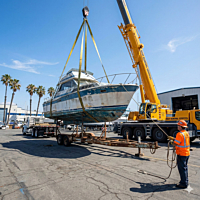
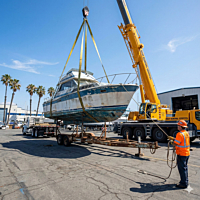
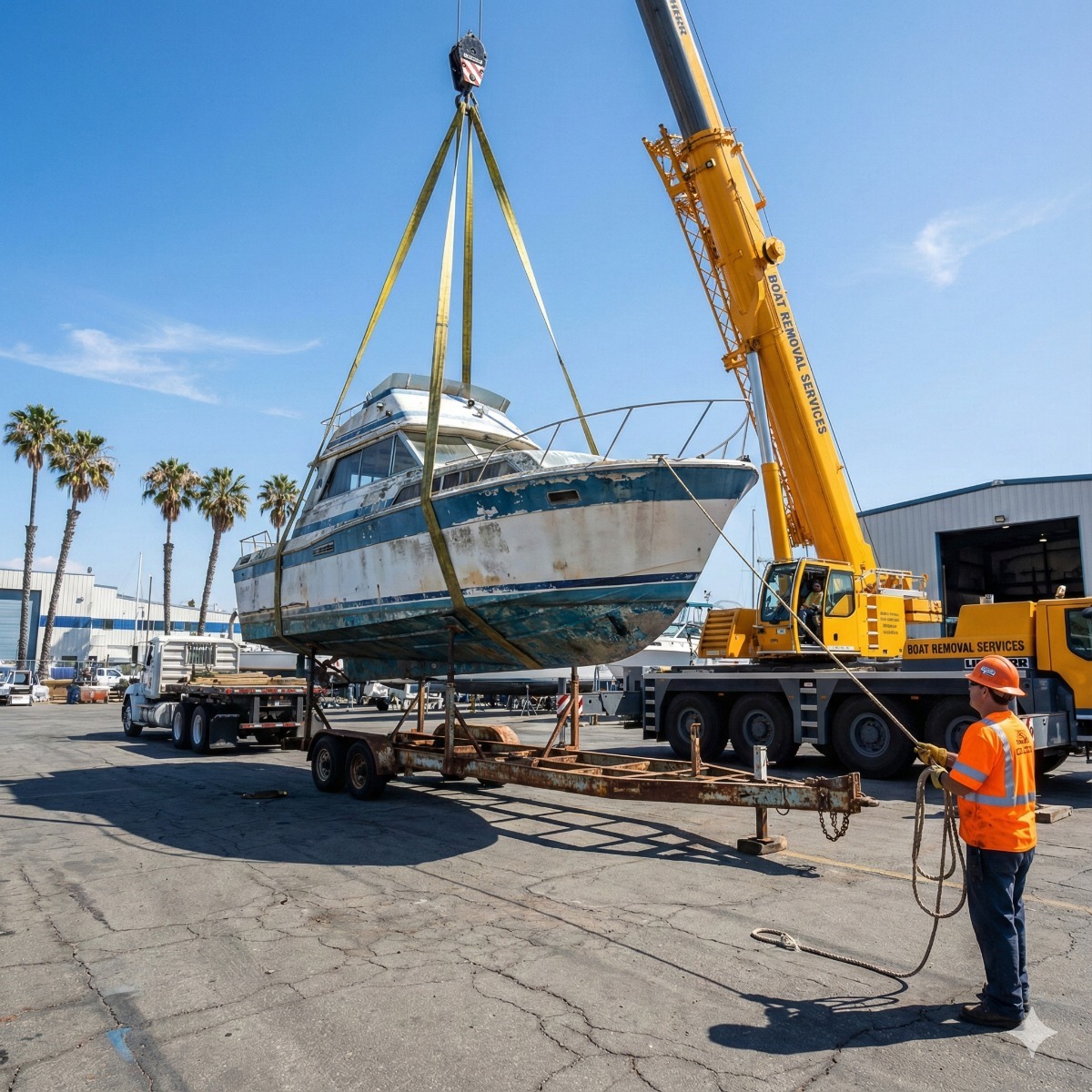
- No usable trailer, which means a flatbed, blocking or a crane.
- A boat that is still in the water, half-sunk or full of rainwater.
- Tight access, such as narrow side yards, gates and slopes.
- Fuel, oil and other hazardous items left aboard in quantity.
Things that bring it down:
- An aluminum hull.
- A running engine or outboard, or one worth selling for parts.
- A usable trailer, which can be sold or scrapped separately.
- Electronics and equipment that still work.
- Lead ballast on a sailboat.
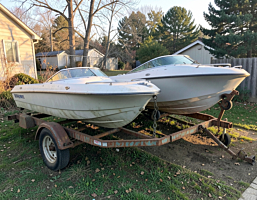
Photos of the boat, the trailer and the path from the street, plus the length and whether the engine is still aboard, are usually enough for a realistic estimate.
A Short Checklist Before Your Boat Is Scrapped
- Remove personal belongings, documents and anything you want to keep.
- Keep the registration card and title, and photograph the hull identification number; you will need them to notify the DMV once the boat is dismantled.
- Decide what you want to sell separately, such as the engine, electronics or trailer, and do it first.
- Tell the hauler how much fuel is aboard and whether batteries, propane or flares are still on the boat.
- Note any access limits, such as gate width, overhead lines or a soft lawn.
Searching Boat Disposal Near Me in Long Beach or San Pedro
Owners usually find us after searching boat disposal near me or boat removal Long Beach CA. We handle removal and disposal for boats in Long Beach, San Pedro and nearby harbor communities, from driveway projects to boats sitting in a slip. Our boat removal and disposal service page explains what is included, and you can send photos for a quote.
Boat Disposal and Recycling FAQ
Can a fiberglass boat be recycled?
Parts of it can. Metals, engines, electronics and batteries are recycled or reused. The fiberglass hull itself can be ground for cement kilns in a few pilot programs, but in most of California it still goes to a landfill after stripping.
Is my old boat worth anything for scrap?
An aluminum hull, a running engine, a lead keel or a good trailer can have real value. A bare fiberglass hull usually does not, so its disposal is a cost rather than a sale.
Do I have to remove the batteries and electronics myself?
No. A disposal service removes them and sends them to the right recyclers. If you want to keep or sell any of them, take them off before pickup.
What happens to the trailer?
A trailer in decent shape can be sold or reused; one that is past saving goes to a metal recycler. Because a trailer is registered on its own, keep its paperwork with the boat's.