
Bottom paint has one job: to keep barnacles, weed and slime off a hull by slowly releasing a biocide into the water. On a working boat, that release is controlled and regulated. On a boat that has sunk and is lying on the seabed, the paint keeps working, only now it is releasing copper into one small patch of the bottom, year after year, and eventually crumbling into flakes. This article explains antifouling paint pollution from a sunken hull, why older layers can be worse than new ones, and how bottom paint should be handled when a boat is retired.
It is part of our series on why an old boat should never be sunk or abandoned.
How Copper Bottom Paint Works
Most antifouling paints used in California rely on copper compounds. As the paint surface slowly wears or leaches, it releases copper ions, which are toxic to the larvae of barnacles, tube worms and other organisms that would otherwise settle on the hull. That is the point of copper bottom paint, and it is also the problem: the same copper affects the small animals and algae that live in the harbor itself.
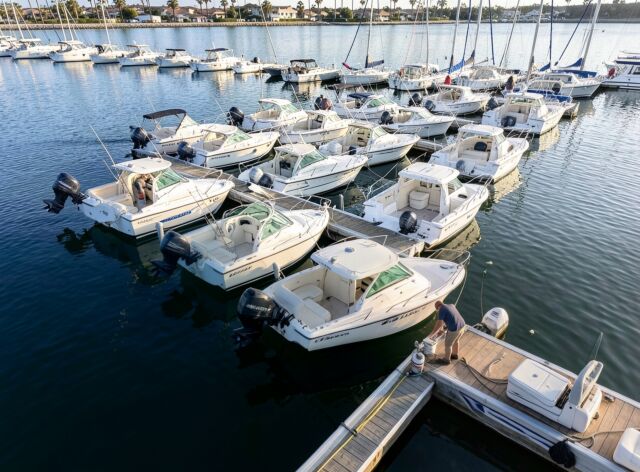
In busy marinas with little water exchange, copper from thousands of painted hulls adds up. San Diego's Shelter Island Yacht Basin, for example, has had a formal plan to reduce copper levels from boat hulls, and California regulators have capped how fast copper antifouling paints sold for recreational boats may release copper. The aim is to keep hulls clean without loading the water with more copper than it can handle.
What Changes When the Hull Is on the Bottom
A sunken boat removes every control that normally limits bottom paint:
- The paint never comes out of the water. There is no haul-out, no inspection and no end to the leaching until the coating is gone.
- The copper is concentrated. Instead of spreading across a basin, it seeps into the sediment directly under and around the wreck, where bottom-dwelling animals live and feed.
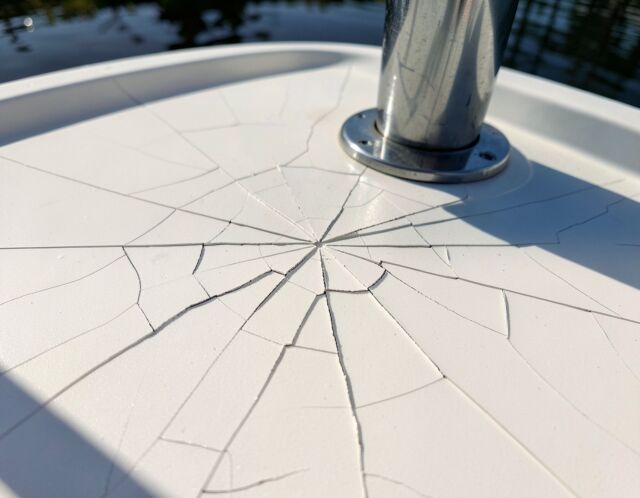
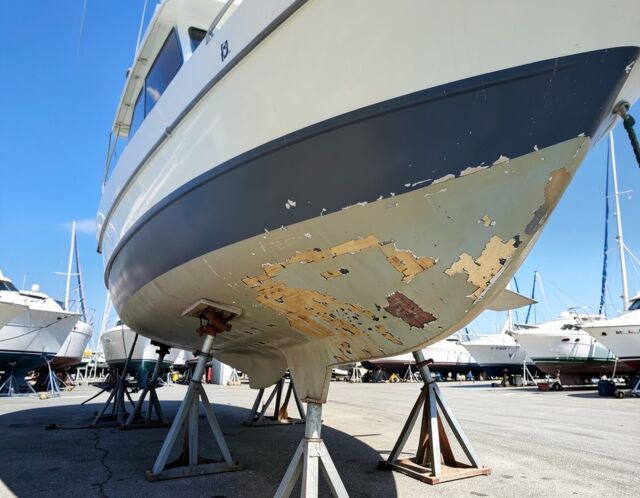
- The coating breaks up. As the hull is battered by currents, storms and its own weight, layers of paint crack and flake off in chips that settle into the mud.
- Paint from other surfaces joins it. Topside paint, varnish and any paint cans left aboard add their own chemicals.
Older Layers: Tributyltin, Lead and Other Legacy Coatings
An old boat rarely has a single coat of bottom paint. Decades of haul-outs leave many layers, and the deepest ones can predate modern rules. Tributyltin, a very effective but very toxic antifoulant, was restricted for most recreational boats in the United States in 1988. It caused shell deformities in oysters and reproductive damage in sea snails at extremely low concentrations, and it persists in sediment. Some very old coatings also used lead or mercury compounds.
On a boat that is maintained, those old layers stay sealed under newer paint. On a sunken or abandoned boat breaking apart, they end up in the water and the mud along with everything else.
Why a Sunken Boat Pollutes More Than Its Paint Suggests
Copper is only one part of sunken boat pollution. The paint works alongside fuel, oil, battery acid and fiberglass fragments, all released into the same spot. For animals living on the bottom, the combination matters more than any single source. That is why removing a boat before it sinks, or raising it promptly if it does, makes such a difference.
Handling Bottom Paint the Right Way
Bottom paint is not dangerous to own, but it needs care whenever it is removed:
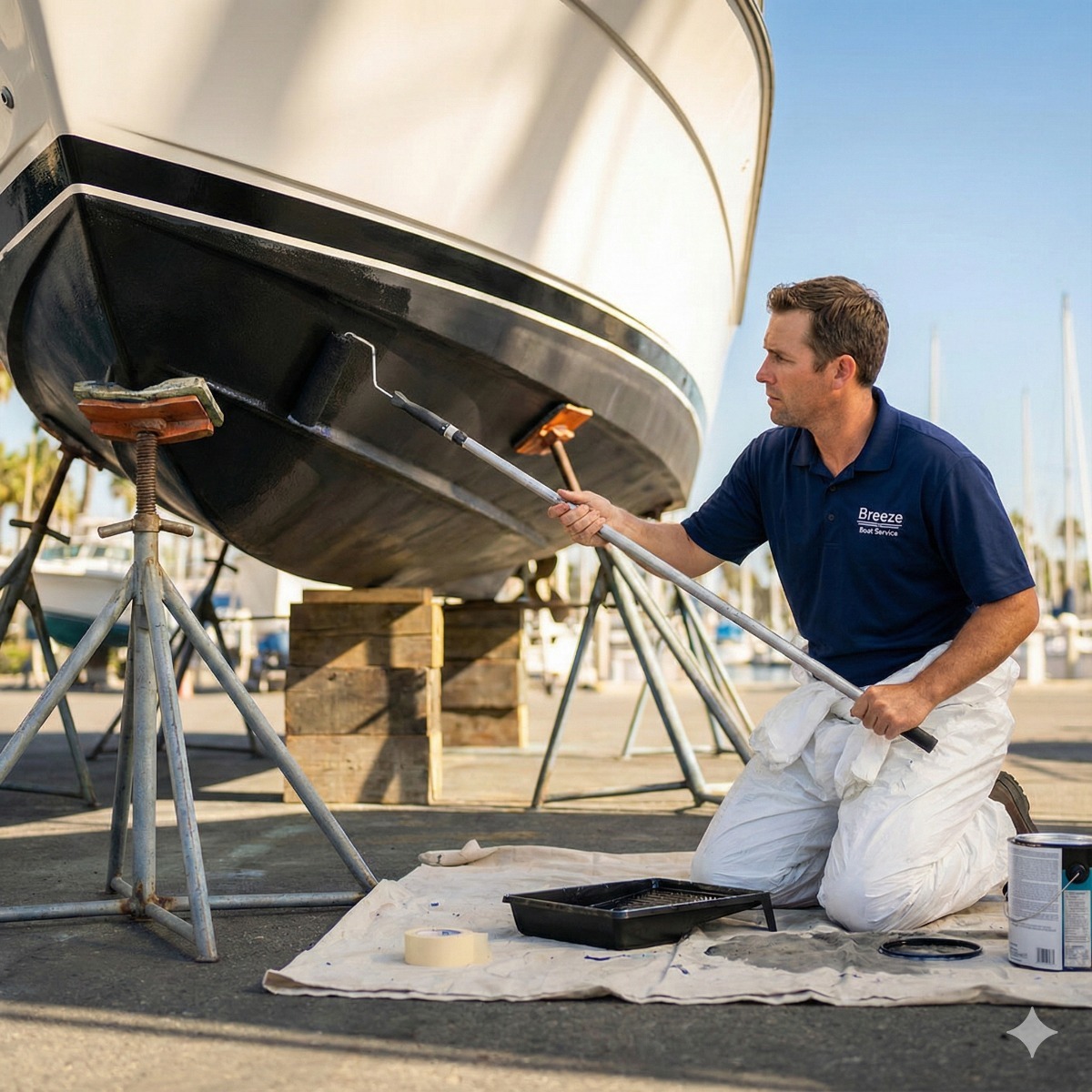
- Bottom paint removal is done on land, on a hard stand with tarps or a containment area, using vacuum sanders or careful scraping, never in the water.
- Dust and chips are collected and disposed of as hazardous waste, not washed into storm drains or the harbor.
- When a boat is dismantled, the painted hull is cut and handled the same way, so the coating goes to a facility that accepts it instead of the seabed.
- When a boat is repainted, choosing a coating suited to how the boat is used, and applying only what is needed, keeps copper releases down. Our bottom painting and antifouling service handles preparation, containment and application.
If the boat is at the end of its life, a boat removal and disposal service takes the painted hull out of the water before it can become a long-term source of copper. Our guide to boat disposal and recycling explains the rest.
Bottom Paint and Copper FAQ
Is copper bottom paint banned in California?
No. Copper antifouling paints are still sold and used, but California limits how quickly paints for recreational boats may release copper, and some harbors have their own copper reduction plans.
Does a sunken boat keep leaching copper?
Yes, until the coating is gone. On the bottom, the paint leaches into a small area and eventually breaks up into flakes that stay in the sediment.
Can I scrape bottom paint in my slip?
No. Scraping or sanding bottom paint in the water releases paint and copper directly into the harbor. Bottom work belongs on land with containment.