
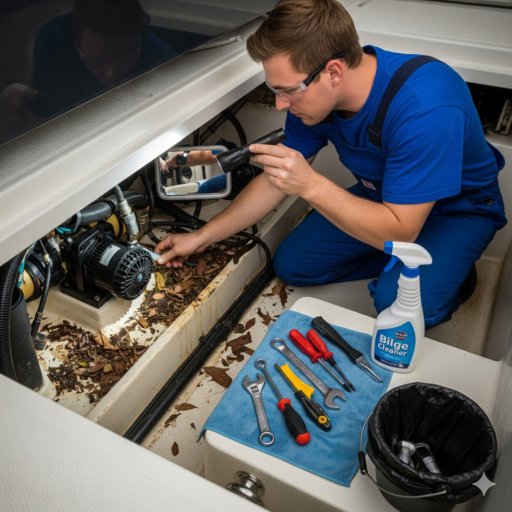
A bilge pump is easy to forget until the day it does not run. Whether it hums without moving water, clicks on and off all night or stays completely silent, a bilge pump not working is a problem to solve before the boat is left unattended again. This guide explains the common causes, the checks an owner can safely make and the signs of a deeper fault.
How a Bilge Pump System Works
Most recreational boats use small centrifugal pumps mounted at the lowest point of the bilge. The pump is only one part of the system. It depends on a power supply with a fuse or breaker, a switch that tells it when to run, a clear intake and a discharge hose that carries water up and out through a fitting in the hull. An automatic bilge pump uses a float switch or an electronic sensor to start itself when water rises, while a switch at the helm lets you run it manually. When any link in that chain fails, the whole system fails.
Common Reasons a Bilge Pump Stops Working
Power and fuse problems
A blown fuse, a tripped breaker or a flat battery is the simplest cause. Corroded terminals and crimp connections sitting in damp bilge air come next. Poor bilge pump wiring, such as undersized wire, household connectors or splices left lying in water, lets the voltage drop until the motor can no longer start.
Float switch failure
The float switch lives in the dirtiest spot on the boat. Hair, sludge, cable-tie tails or a loose sponge can pin the float down so the pump never starts, or hold it up so the pump runs until the battery is drained. Switches also wear out internally. A bilge pump float switch replacement is one of the most common bilge repairs, and it pays to choose a quality switch with a guard or cage that keeps debris away.
Clogged intake or jammed impeller
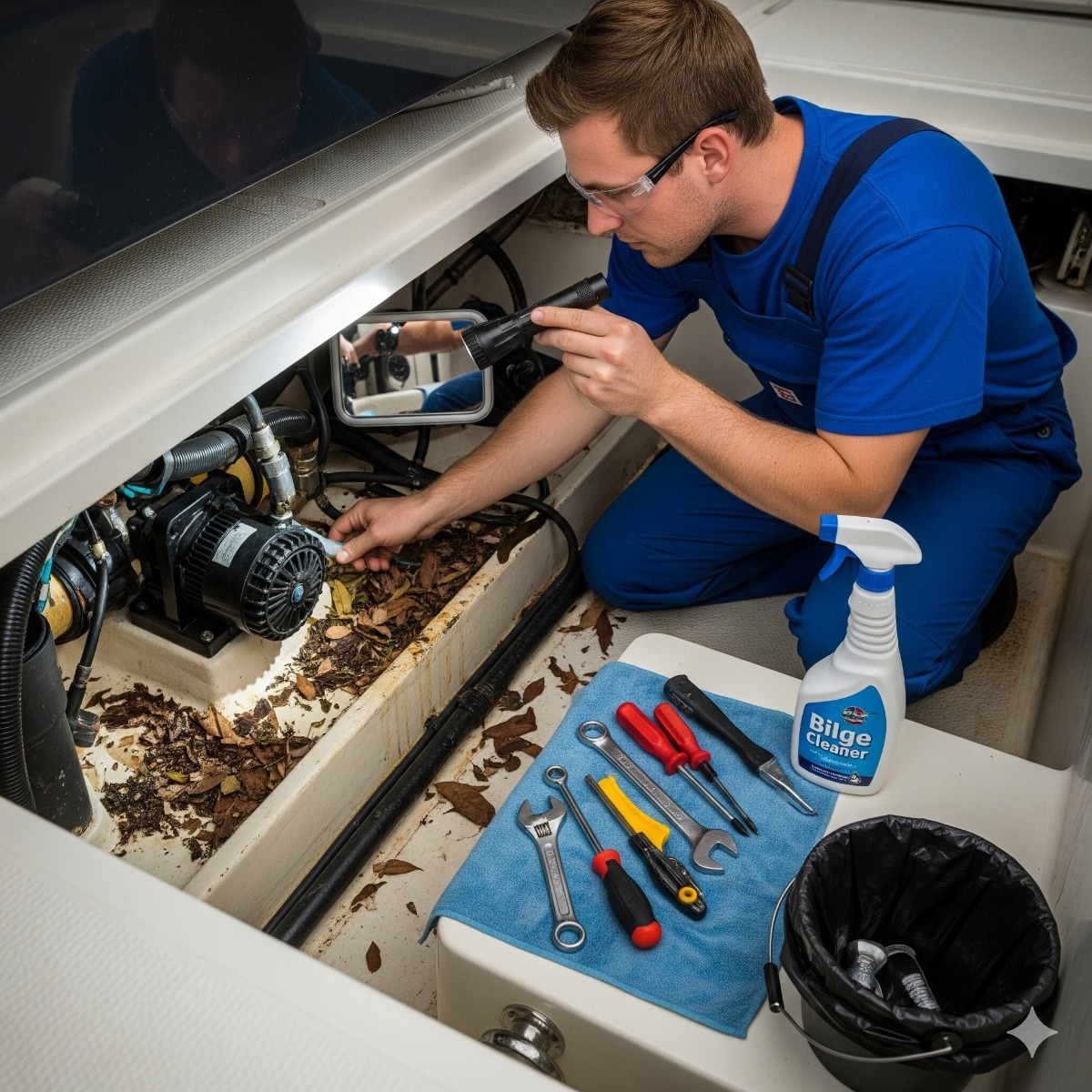
If the pump hums but moves little or no water, look at the strainer base and the impeller. Debris drawn into the pump can stop the impeller outright or wrap around it and choke the flow.
Discharge hose and check valve trouble
A kinked, crushed or cracked discharge hose restricts flow, and a split hose can send water straight back into the bilge. Check valves can stick closed or let water run back down, which makes the pump cycle over and over. An air pocket trapped in a long discharge run can also keep a small pump from priming.
A worn-out motor
Bilge pump motors are sealed units. Once water gets inside or the motor overheats, the pump is usually replaced rather than rebuilt.
When the Bilge Pump Keeps Running
If the bilge pump keeps running or cycles every few minutes, there are two possibilities: the switch is stuck, or water really is coming in. Lift the float by hand and let it drop; if the pump stops, the switch is working and the water has a source. Typical sources include a dripping shaft seal or stuffing box, a loose hose on a raw water circuit, a weeping through-hull fitting, a blocked cockpit drain or simply heavy rain. If it cycles more often from one week to the next, the leak is getting worse.
What an Owner Can Check
- Run the pump manually from the helm switch and listen for the motor.
- Check the fuse or breaker and the battery voltage.
- Lift the float switch gently and confirm the pump starts on its own.
- Clear the strainer base and remove loose debris around the pump.
- Look over the side to confirm water actually leaves the discharge fitting.
- Inspect hose clamps and visible wiring for rust, cracks and green corrosion.
Turn off power before putting your hands near the pump, and do not let a pump run dry for long periods while testing.
Why Bilge Cleaning Matters
A dirty bilge causes many pump failures. Oil, fuel residue, hair and sludge collect around the float and intake, and stagnant water mixed with oil feeds the bacteria behind bilge odor. Regular bilge cleaning keeps switches free, makes new leaks easier to spot and removes the source of the smell. Oily bilge water should never be pumped overboard. Federal rules prohibit discharging oil that leaves a sheen on the water, so use absorbent pads and take oily water to a proper collection point.
When to Call a Technician
Get professional help if the pump keeps failing after a new fuse, if wiring is melted or corroded beyond a simple fix, if you cannot find where the water is coming from, or if the bilge is heavily contaminated with oil or fuel. An automatic bilge pump that is meant to protect the boat while you are away should be wired so it still runs with the main battery switch off. For bilge system repair, pump diagnostics, float switch work and deep cleaning, see our bilge pump repair and bilge cleaning service.
Bilge Pump FAQ
How often should I test my bilge pump?
Test it on every visit to the boat by lifting the float or pressing the manual switch, and give the wiring, hoses and strainer a fuller check at the start of each season.
Should the bilge pump bypass the battery switch?
The automatic circuit is normally connected so it stays live when the main battery switch is off, with its own fuse close to the battery. The manual circuit can run through the helm panel. Tidy, sealed bilge pump wiring above the waterline keeps both circuits reliable.
Why does my bilge smell even when it looks dry?
Oil and bacteria soak into bare fiberglass, and old sludge hides in corners and limber holes. Degreasing the bilge and sealing the surface usually removes the smell at its source.