
Gelcoat & Cosmetic Fiberglass Repair
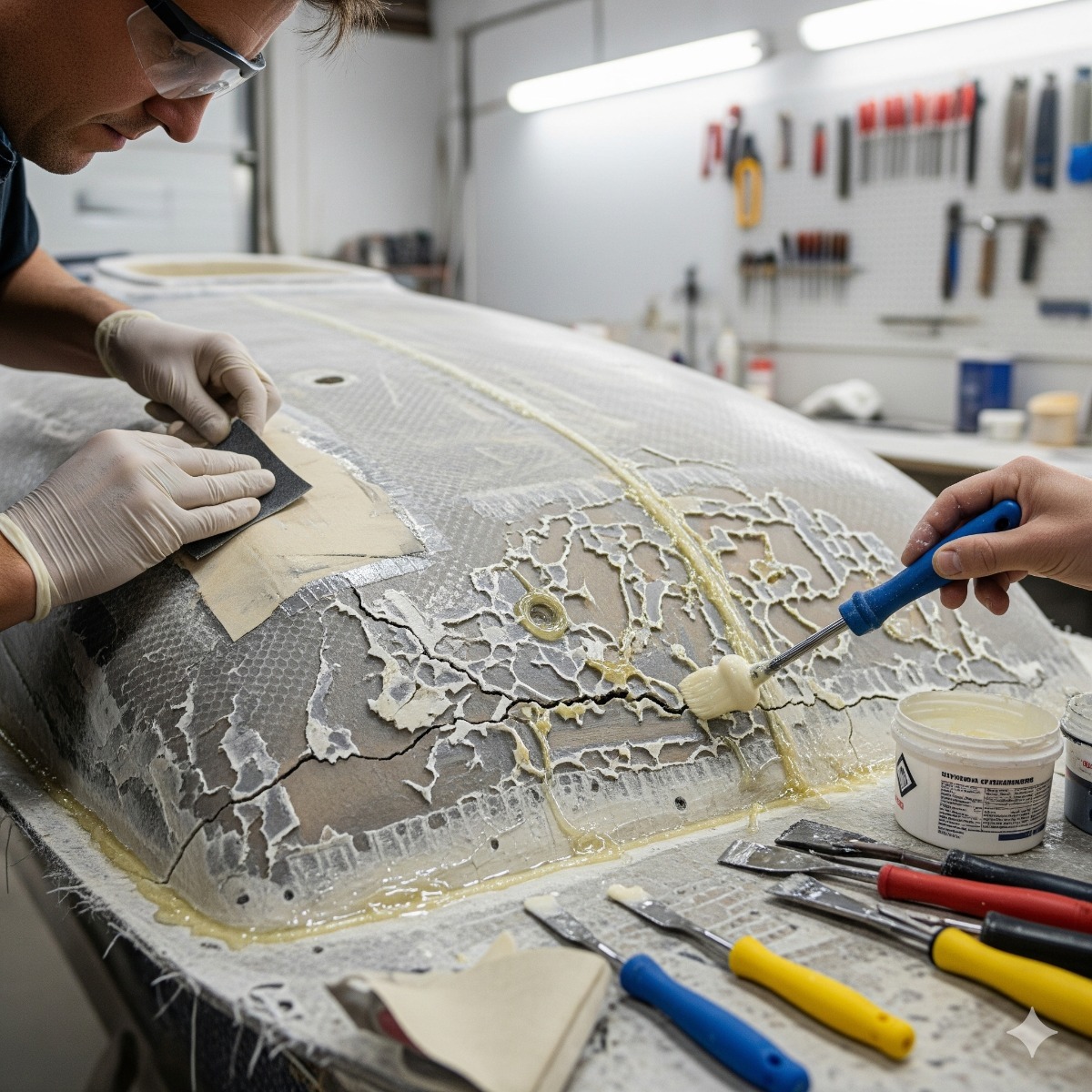
We repair gelcoat chips, scratches, dock rash and cosmetic cracks, and make small non-structural fiberglass repairs. Repairing damage early keeps water out of the laminate and can save a bigger repair later. Structural damage, delamination and transom work are referred to a boatyard.
The repair seals the laminate against water. We tint the gelcoat to your hull's color; on faded or older gelcoat a slight difference can remain, and we tell you before we start.
Labor estimate Quoted after inspection
Book sends us a ticket; nothing is charged online. Before any work you get a written estimate for labor, parts and the trip fee, and nothing is done without your OK.
Trip fee By distance, one way: $30 in San Pedro, $50 in Long Beach
- San Pedro$30
- Wilmington, Terminal Island$40
- Long Beach: Shoreline, Rainbow Harbor$50
- Long Beach Marina, Alamitos Bay$60
- Redondo Beach$60
- Seal Beach, Huntington Harbour$75
- Marina del Rey$85
- Newport Beach$110
Farther away: $25 plus $2.50 a mile, one way from our San Pedro shop. No trip fee when the boat comes to our shop, or for plan members. The work of a visit is at least $150; the trip fee is on top.
- Registered in California
- Breeze Marine Boat Service LLC, San Pedro
- Where we work
- At your slip from Marina del Rey to Newport Beach, or in our San Pedro shop
- Questions first
- (213) 693-0224 or submit a ticket
About this service
Repair the
Damage.
Chips, scratches and dock rash spoil the look of a hull and let water into the laminate. We repair gelcoat and small areas of fiberglass and tint the gelcoat to your hull's color to restore its finish. Structural damage, delamination and transom work go to a boatyard.
Soft Spots & Delamination
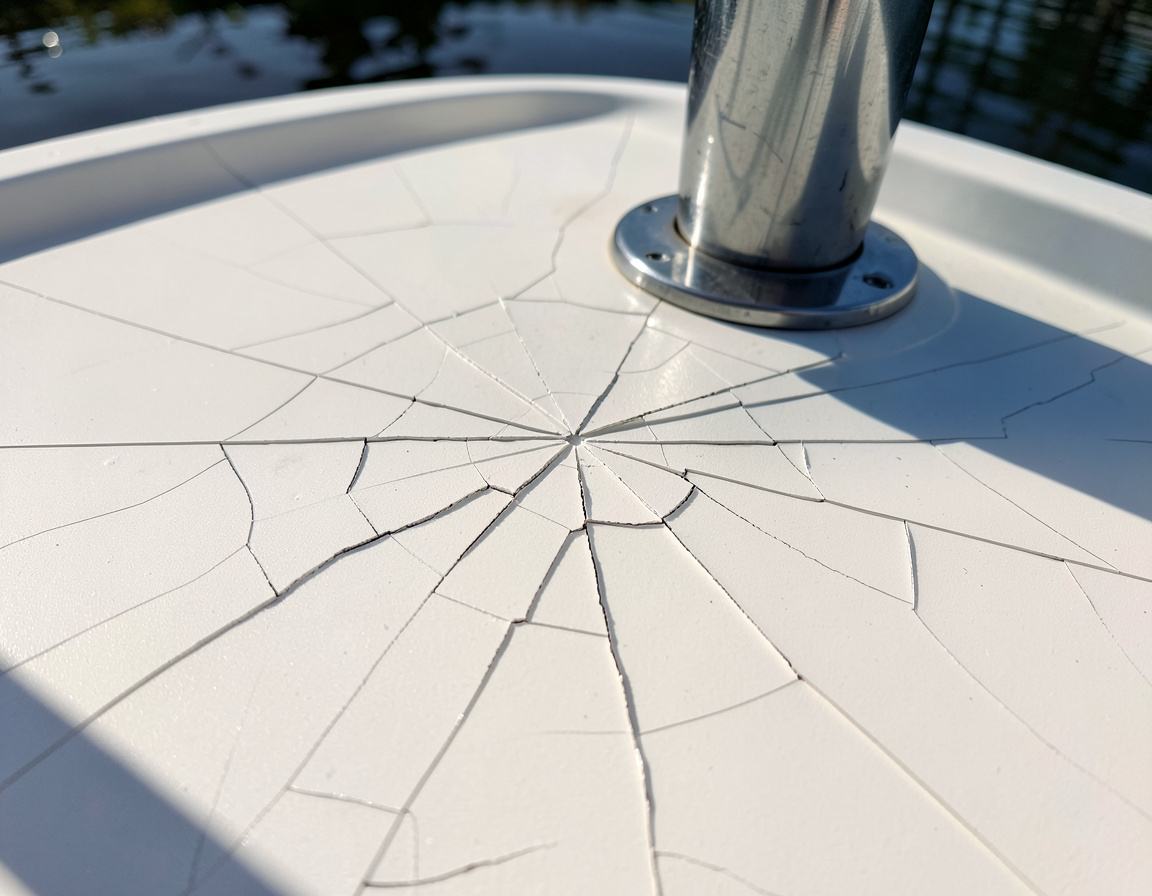
When fiberglass layers separate, the hull or deck develops "soft spots" that flex underfoot. That is structural work, and we refer it to a boatyard. If we find it while repairing gelcoat, we stop and tell you before going further.
Gelcoat Color Match
White isn't just white. There are hundreds of shades of marine white. We tint the gelcoat to your hull's aged color so the repair blends in. On faded or older gelcoat a perfect match is not always possible, and we tell you before we start.
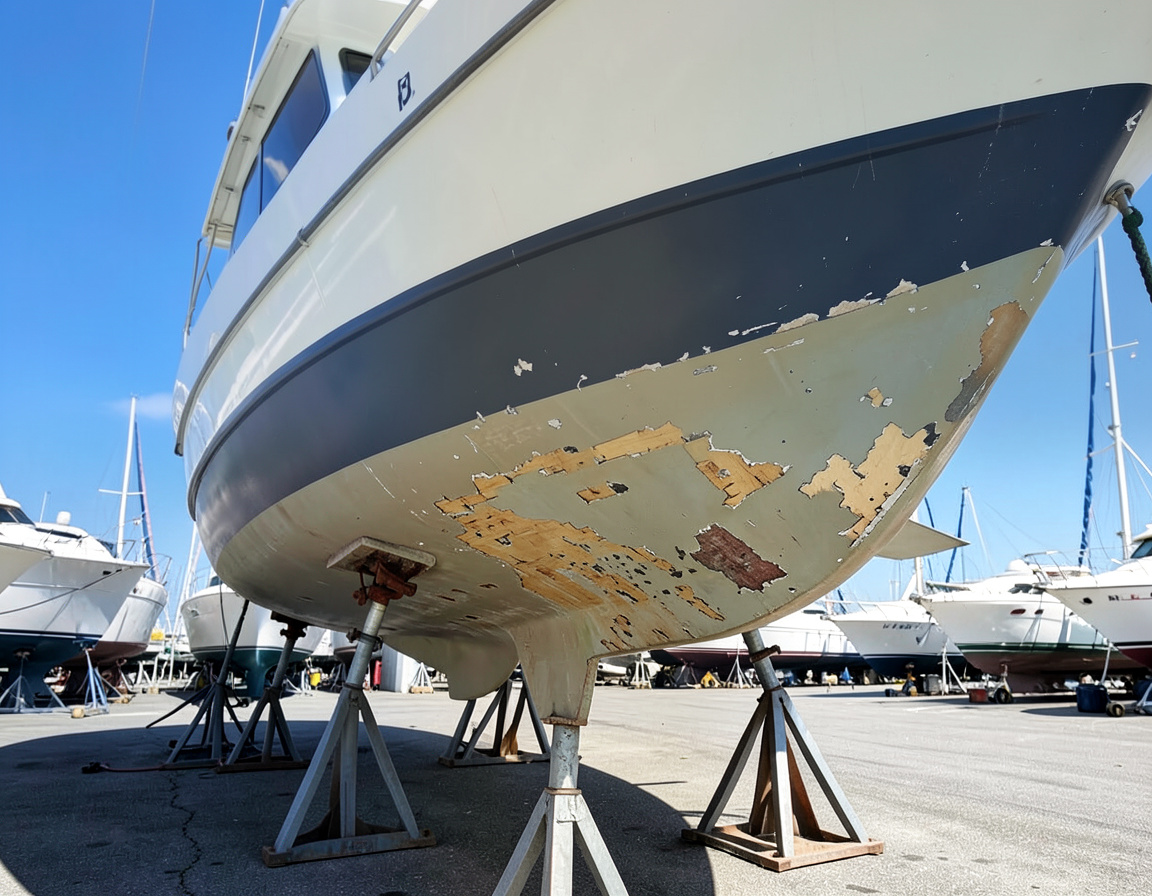
Dock Rash & Gouges
Deep scratches and gouges let water into the laminate. We grind out the damage, fill it with a strong filler and fairing compound, and refinish the area with gelcoat to seal it.
The Repair Process.
Step by step.
Grind & Prep
We bevel the damaged area to a 12:1 ratio. This provides a large surface area for the new fiberglass to bond chemically and mechanically to the old hull.
Lamination
Where the damage goes into the fiberglass, we lay in new layers of 1708 biaxial cloth and marine resin (Polyester or Vinylester), building the area back to its original thickness.
Fairing
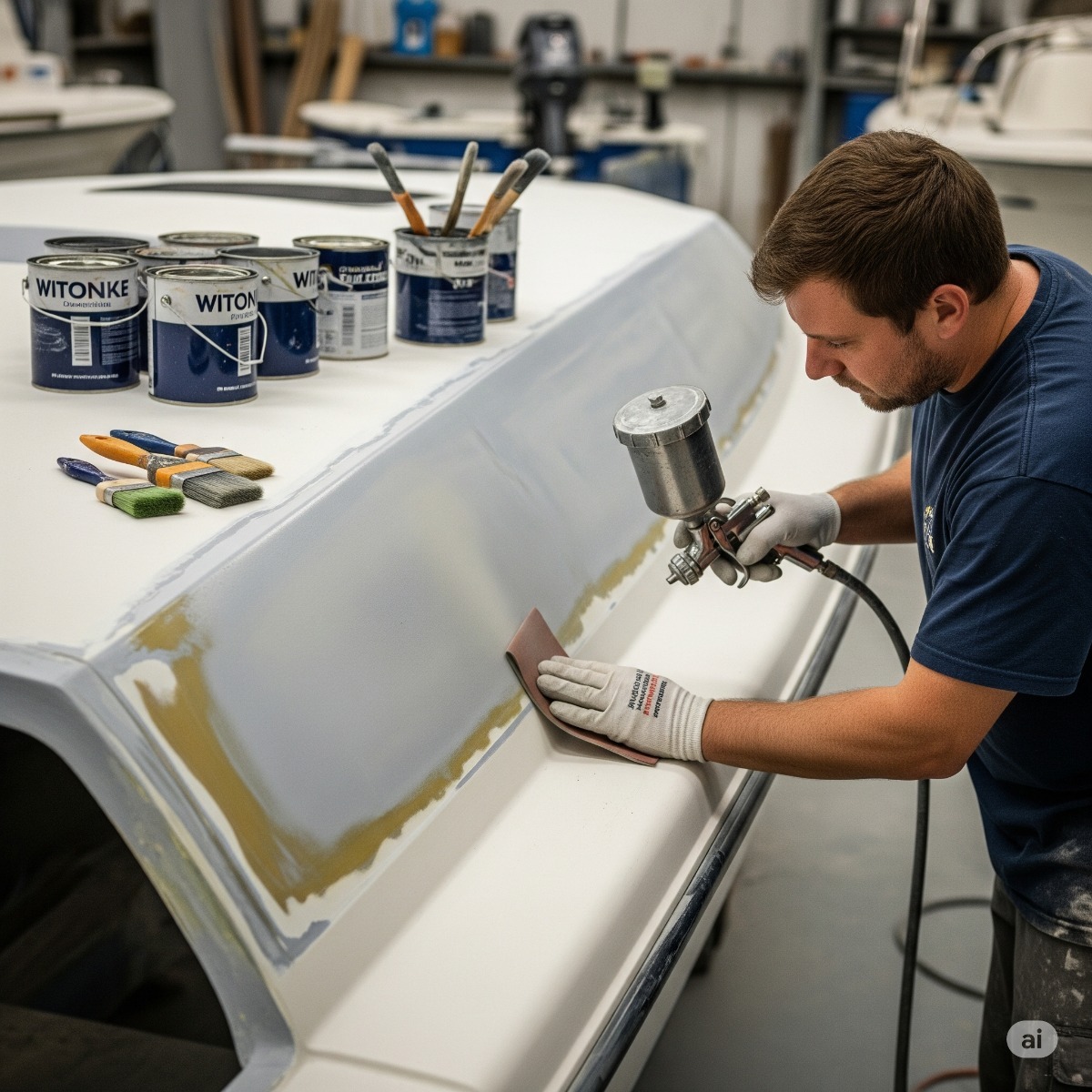
We apply fairing compound and block sand by hand. This step restores the curves so the repair sits level with the surrounding surface.
Finish & Polish
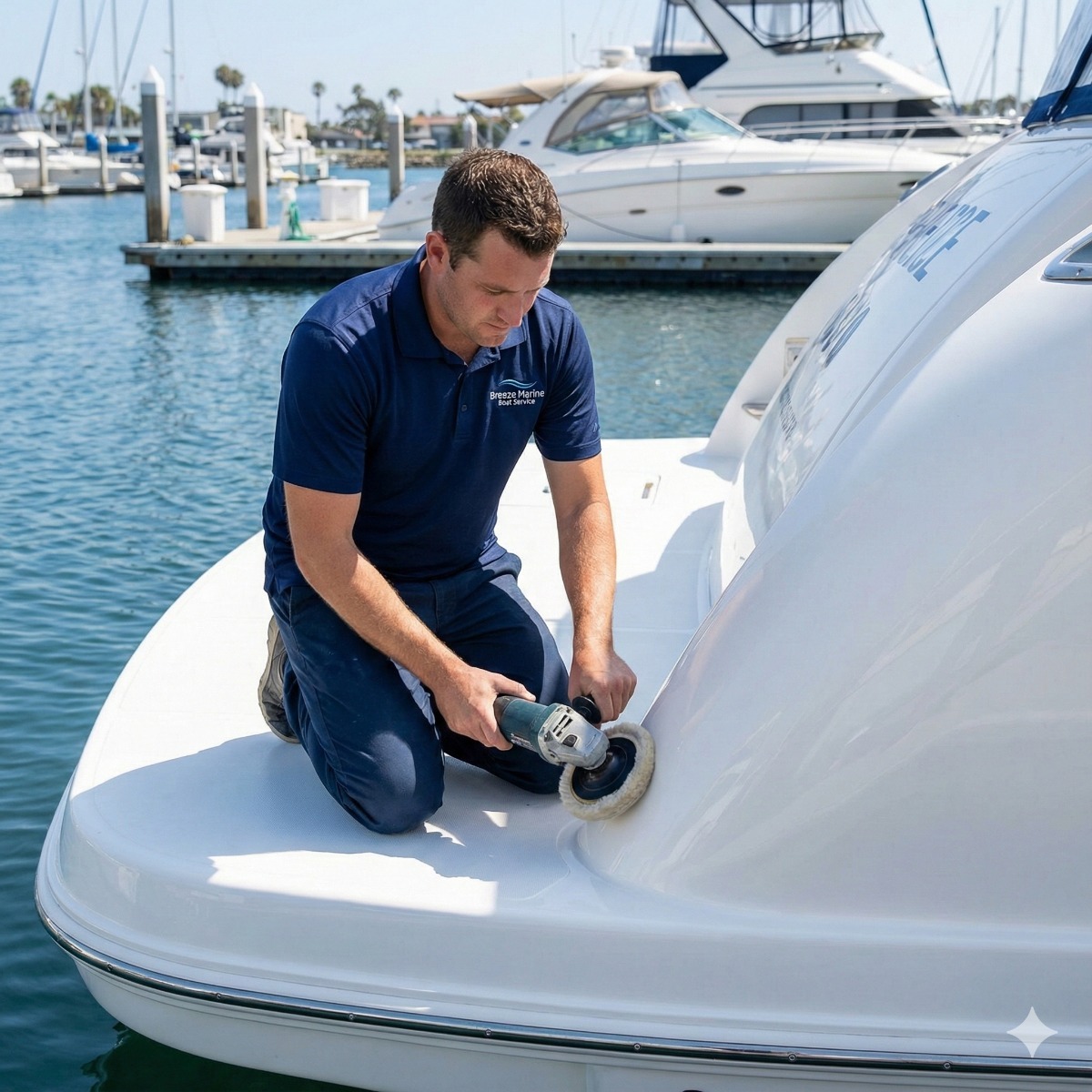
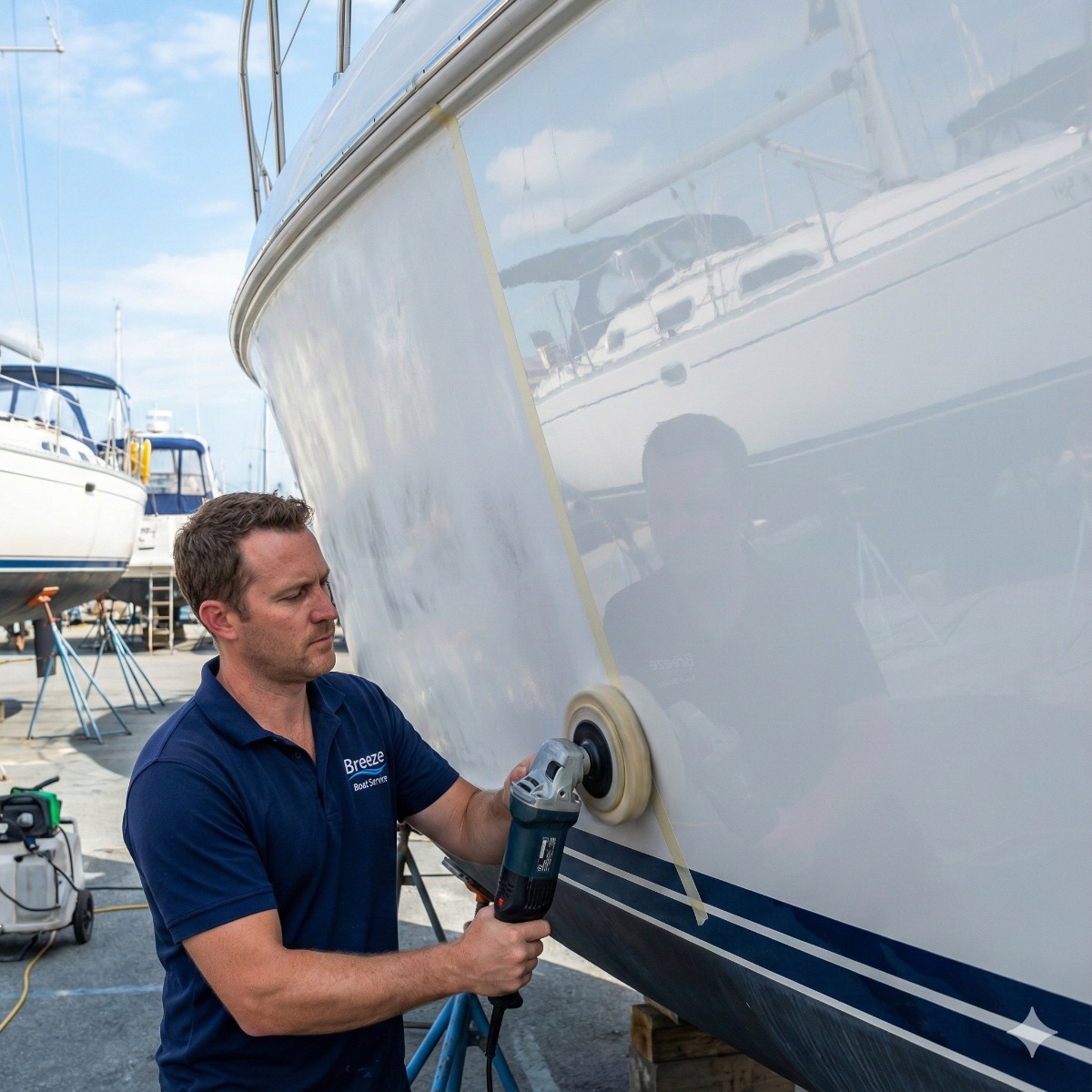
We spray the final gelcoat layer, then wet-sand from 400 to 2000 grit, finishing with a high-speed compound buff to bring back the shine.
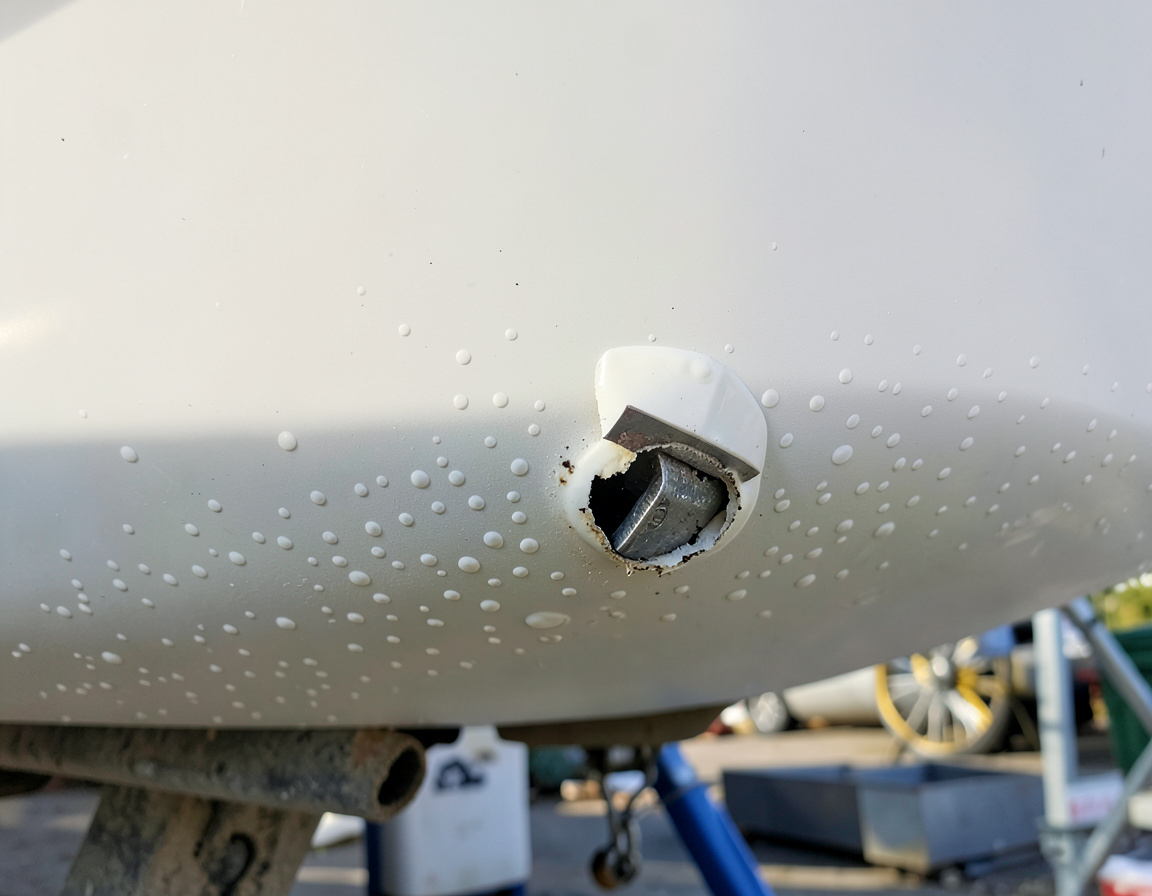
Damage We See.
Cosmetic damage we repair; structural damage goes to a boatyard.
Materials Used.
Chemistry matters.
Common Questions
Will the repair spot be visible?
We tint our materials to blend with the surrounding gelcoat. Aged or faded gelcoat is harder to match, and we tell you before we start if the repair may show.
Is the repair as strong as the original?
Done properly, yes. For the small, non-structural repairs we do, the patch of vinylester resin and biaxial cloth is laid over a beveled area and built back to the original thickness. Damage that affects the hull's strength is structural work, and we refer it to a boatyard.
Boat Fiberglass Repair: Cosmetic or Structural?
Not every fiberglass boat repair is the same job. Chips and dock rash need careful fairing and gelcoat color matching, and that is the work we do. Stress cracks, soft spots and delamination can point to structural damage that must be cut back and relaminated, and we refer that work to a boatyard. A good repair addresses the cause, not just the surface.
Because every hull has its own shape and aged gelcoat shade, each boat fiberglass repair we do is custom: we bevel the damaged area, lay new biaxial cloth with marine resin where needed, fair it by hand and finish with gelcoat tinted to your hull. Before a visit, it helps to send clear photos of the damage, note when and how it happened, and tell us whether the area feels soft or flexes underfoot, so we can tell whether it is a job for us or for a boatyard.
What drives fiberglass boat repair cost?
There is no single figure, because two similar-looking cracks can hide very different jobs. A cosmetic chip needs grinding, filling, fairing and a gelcoat repair matched to the aged hull color, while delamination means cutting back to sound laminate and relaminating, which a boatyard quotes and does. Labor is $150 an hour, plus the trip fee for work at your boat, and the size and location of the damage, whether water has reached the laminate and how closely the aged gelcoat has to be matched all shape the written estimate you get before any work starts.
Reviews 4
Questions 7



Related Posts
-
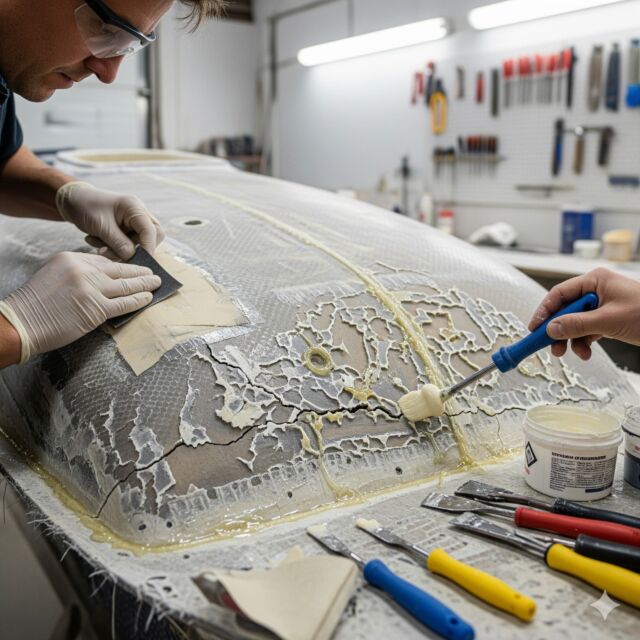


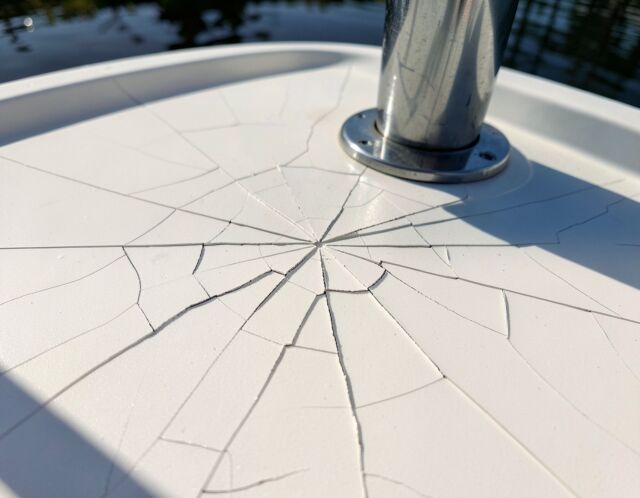
 Soft decks, spider cracks and hollow-sounding hull panels are signs of delamination. Learn how to inspect fiberglass, what causes damage and how it is repaired.
-
 How a fiberglass hull breaks apart on the seabed, how its fragments reach shellfish, and why the hull belongs on land.