
Marine Carburetor Cleaning & Rebuilding
Labor estimate Usually 2–4 hours
Book sends us a ticket; nothing is charged online. Before any work you get a written estimate for labor, parts and the trip fee, and nothing is done without your OK.
Trip fee By distance, one way: $30 in San Pedro, $50 in Long Beach
- San Pedro$30
- Wilmington, Terminal Island$40
- Long Beach: Shoreline, Rainbow Harbor$50
- Long Beach Marina, Alamitos Bay$60
- Redondo Beach$60
- Seal Beach, Huntington Harbour$75
- Marina del Rey$85
- Newport Beach$110
Farther away: $25 plus $2.50 a mile, one way from our San Pedro shop. No trip fee when the boat comes to our shop, or for plan members. The work of a visit is at least $150; the trip fee is on top.
- Registered in California
- Breeze Marine Boat Service LLC, San Pedro
- Where we work
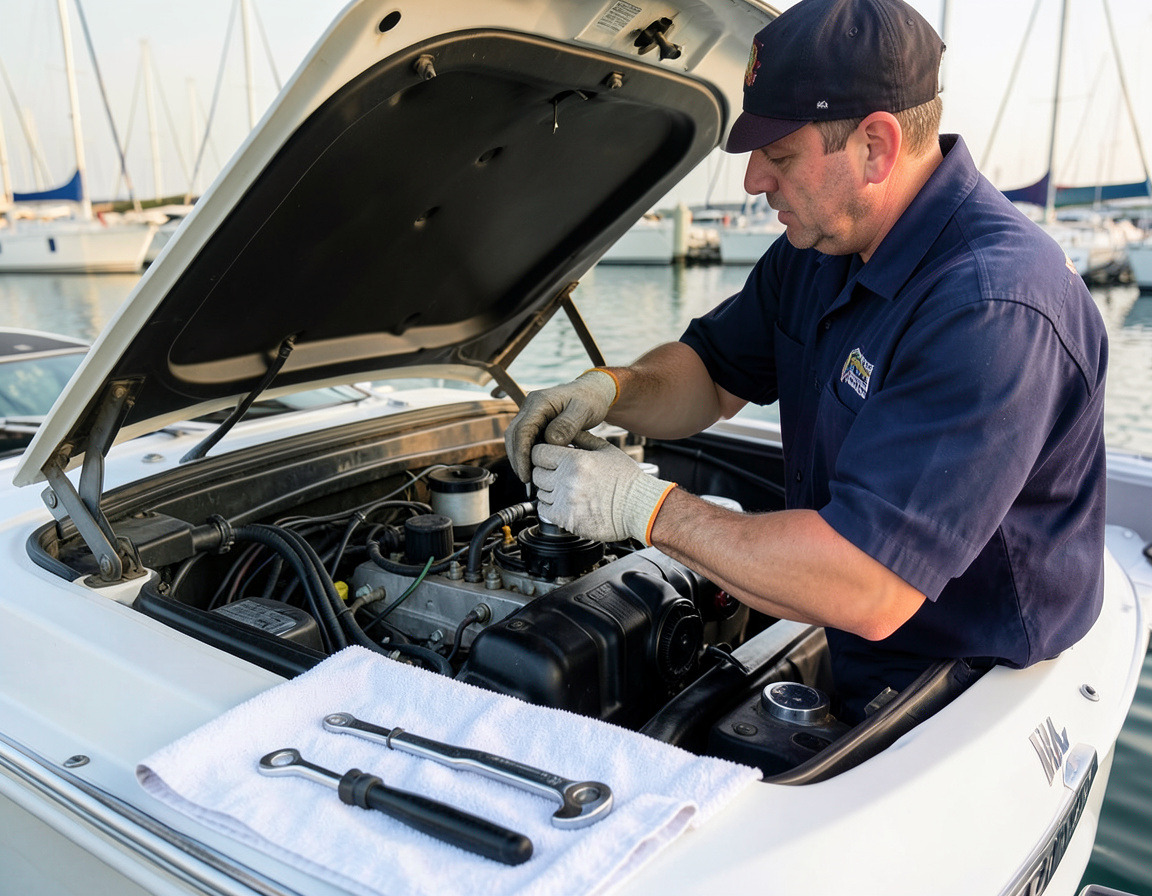
- At your slip from Marina del Rey to Newport Beach, or in our San Pedro shop
- Questions first
- (213) 693-0224 or submit a ticket
About this service
Every Jet.
Every Passage.
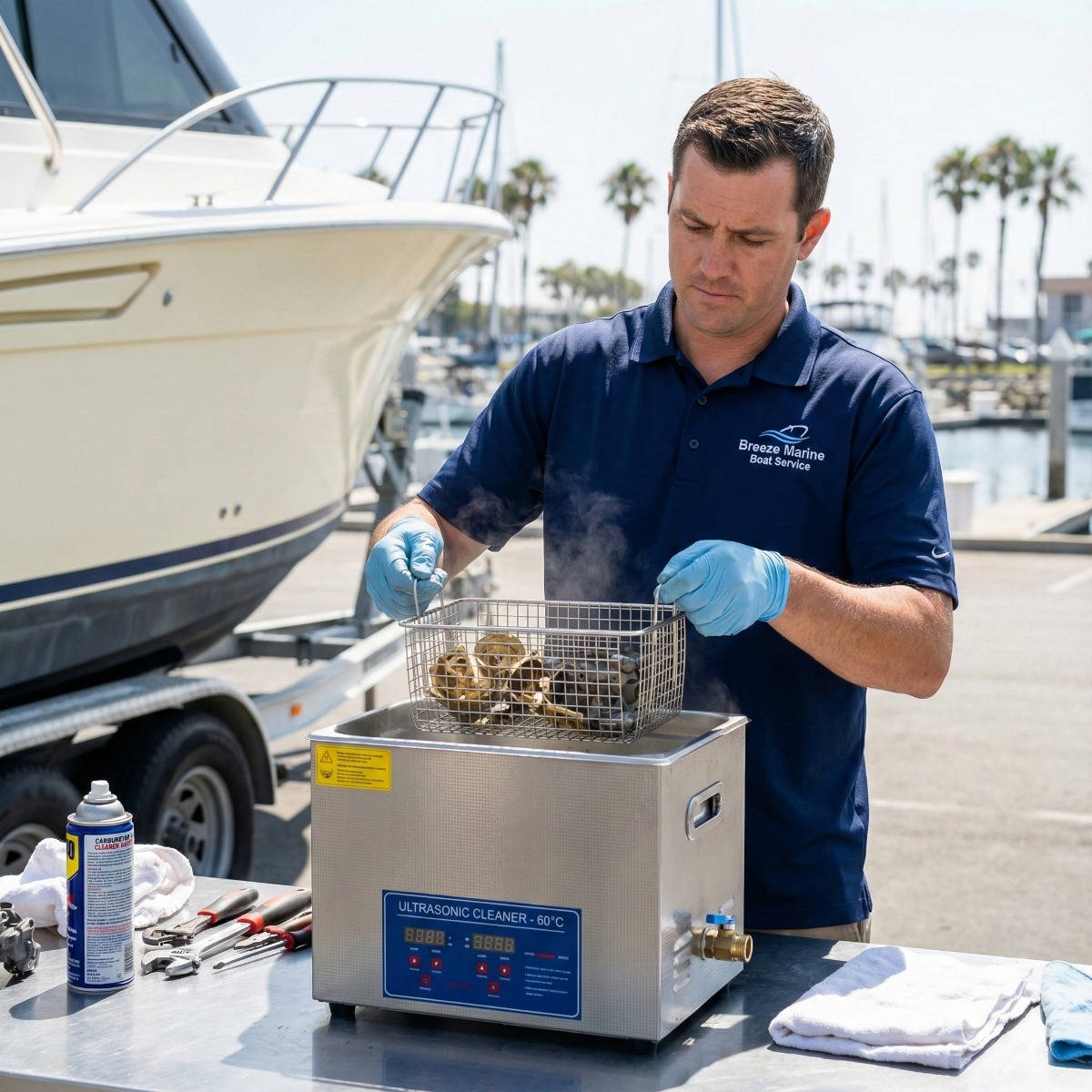
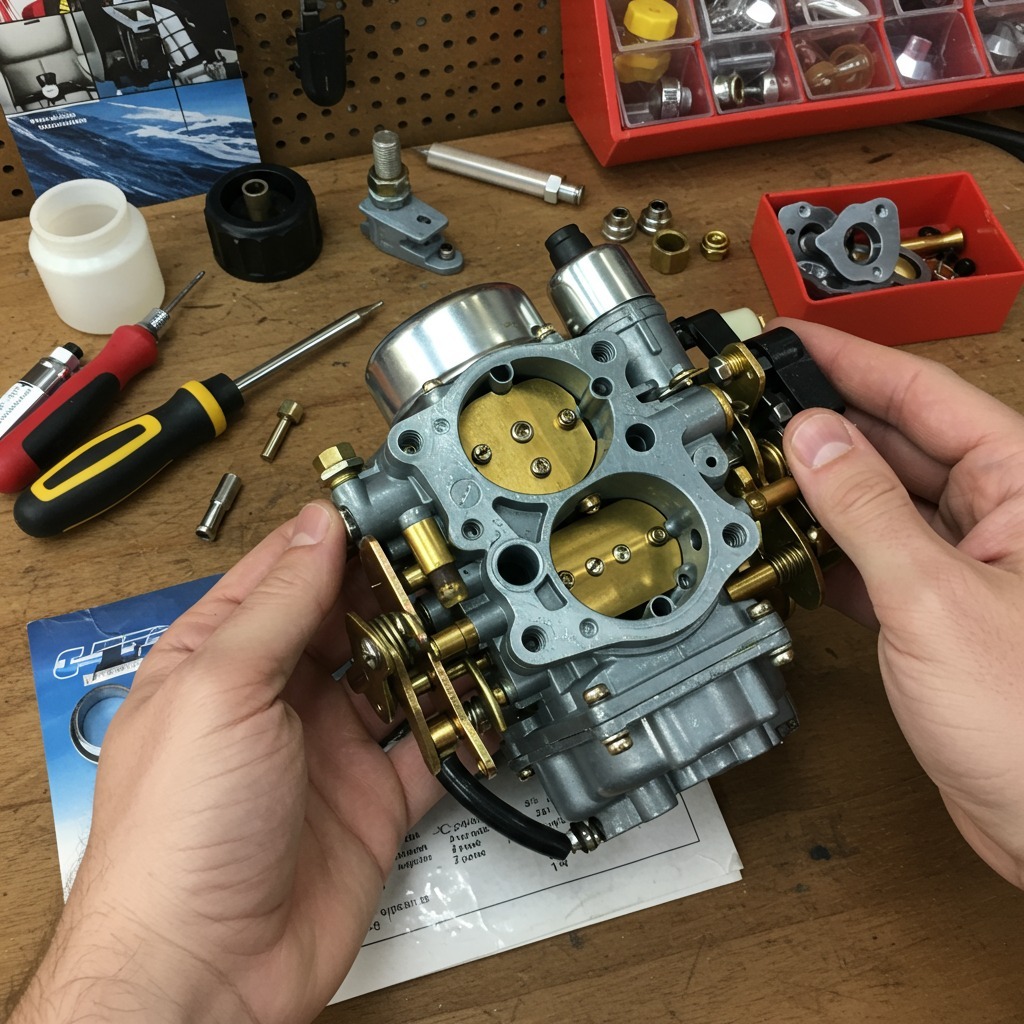
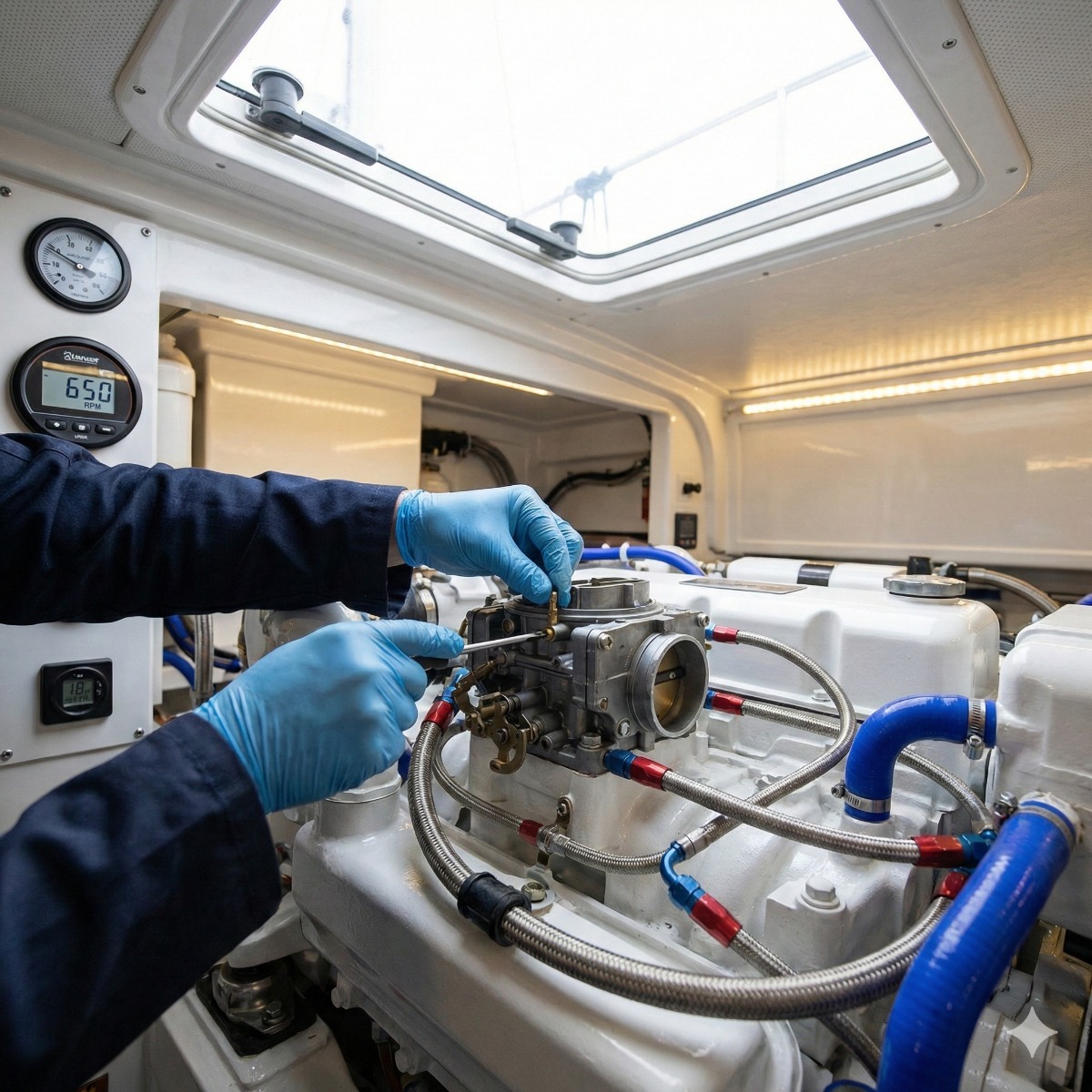
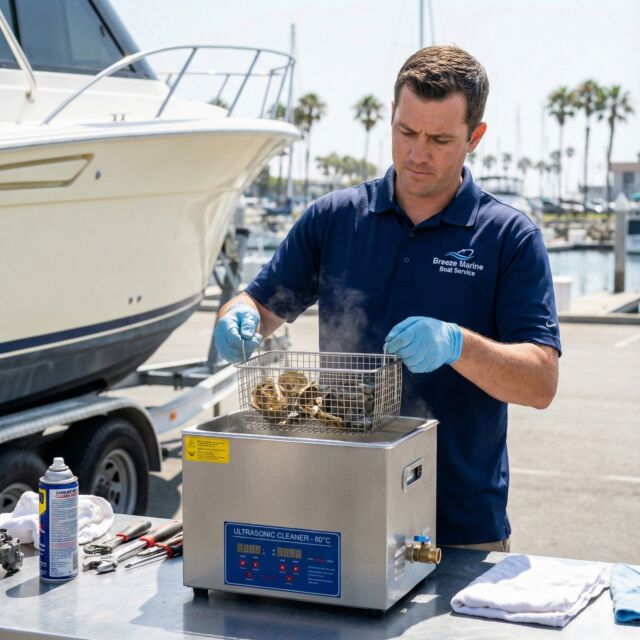
A quick spray of cleaner cannot reach the tiny internal passages of a marine carburetor. We take the carburetor fully apart, soak the metal parts in carburetor cleaner and blow every jet and passage clear with compressed air to remove ethanol gum and varnish.
Jets and Passages
Varnish clogs the pilot (idle) jets first, because their openings are the smallest. We dissolve it in carburetor cleaner and clear each jet without enlarging it, since a jet opened up with a drill bit or a wire meters the wrong amount of fuel.
Internal Passage Restoration
Marine carburetors have complex, hidden fuel circuits, and soaking alone won't clear them. After the soak we blow compressed air through each circuit, including the idle and transition circuits, and check that each one flows freely.
Complete Rebuild
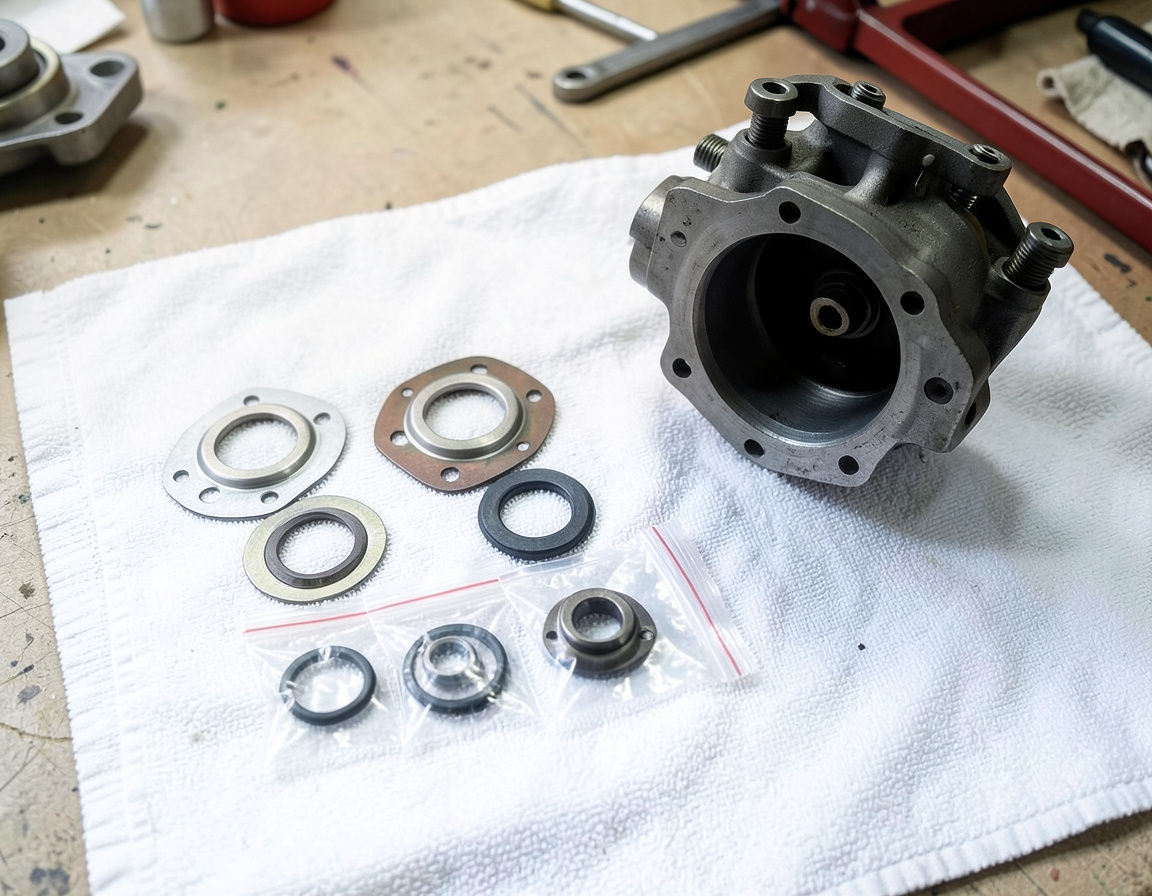
Cleaning is just step one. Our marine carburetor rebuild fits a new ethanol-resistant gasket and seal kit, a new needle valve and seat, and fresh O-rings.
The Restoration Process.
From grime to shine.
Strip & Prep
We completely disassemble the carburetor, removing all rubber and plastic components that could be damaged by the cleaning solution.
Soak & Blow Out
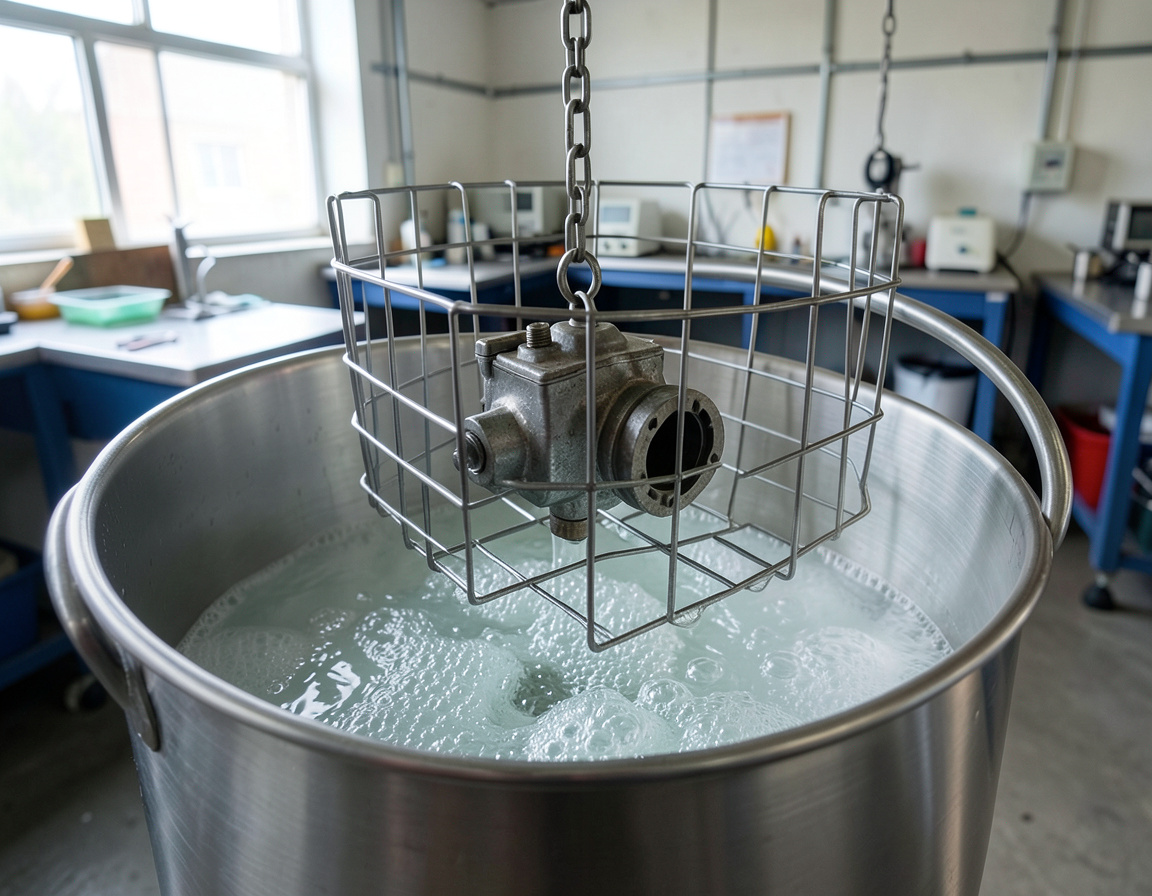
The metal bodies soak in carburetor cleaner to soften the varnish. Then every jet, passage and port is rinsed and blown out with compressed air.
Exterior Cleanup (Optional)
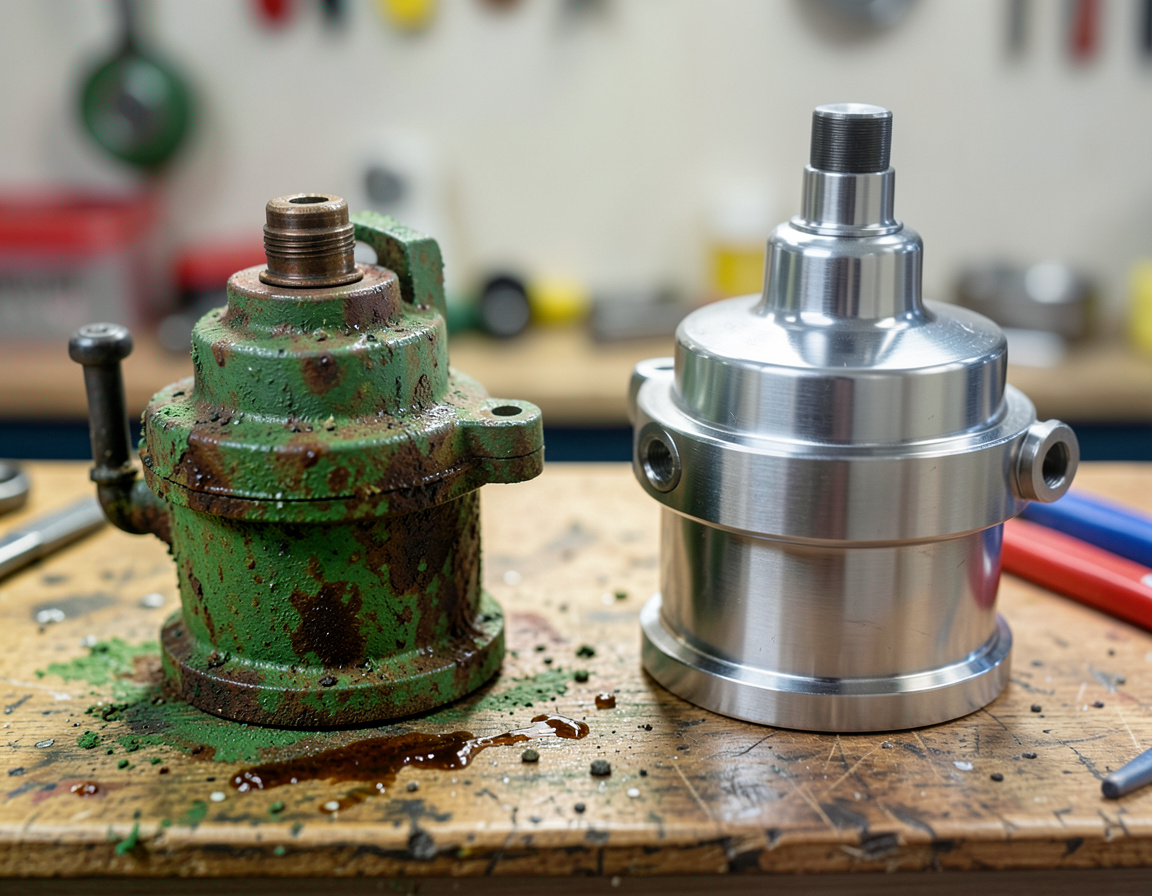
For corroded exteriors, we clean the outside of the carburetor by hand. Deep pitting cannot be undone, and a badly corroded carburetor is often better replaced.
Bench Testing
Once reassembled, we pressure test the carburetor needle and seat (pop-off test) to check that it holds pressure and will not flood your engine.
See the Difference.
Clean passages, new seals.
Brands We Work On.
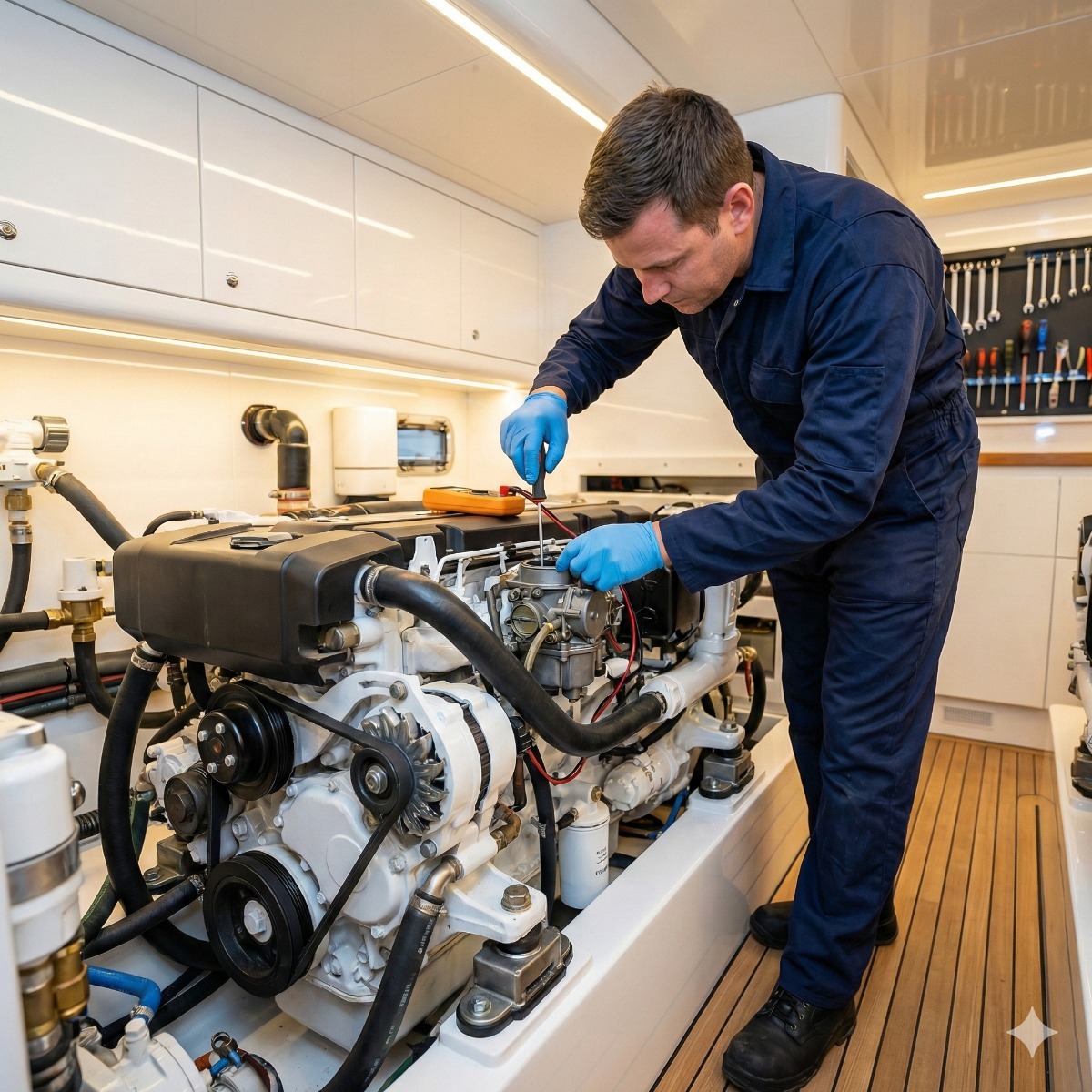
Inboards, Outboards, and Generators.
Common Questions
Does this fix ethanol issues?
It clears the varnish that is there now. Ethanol leaves a hard, green or yellow varnish that spray cleaners cannot dissolve, and a full teardown and soak removes it. To keep it from coming back, use fresh fuel with stabilizer and drain the float bowl before storage.
Can I bring just the carburetor?
Yes. You save the trip fee and the removal time by taking the carburetor off yourself and bringing it to our San Pedro shop for cleaning and rebuilding.
Outboard Carburetor Rebuild Service
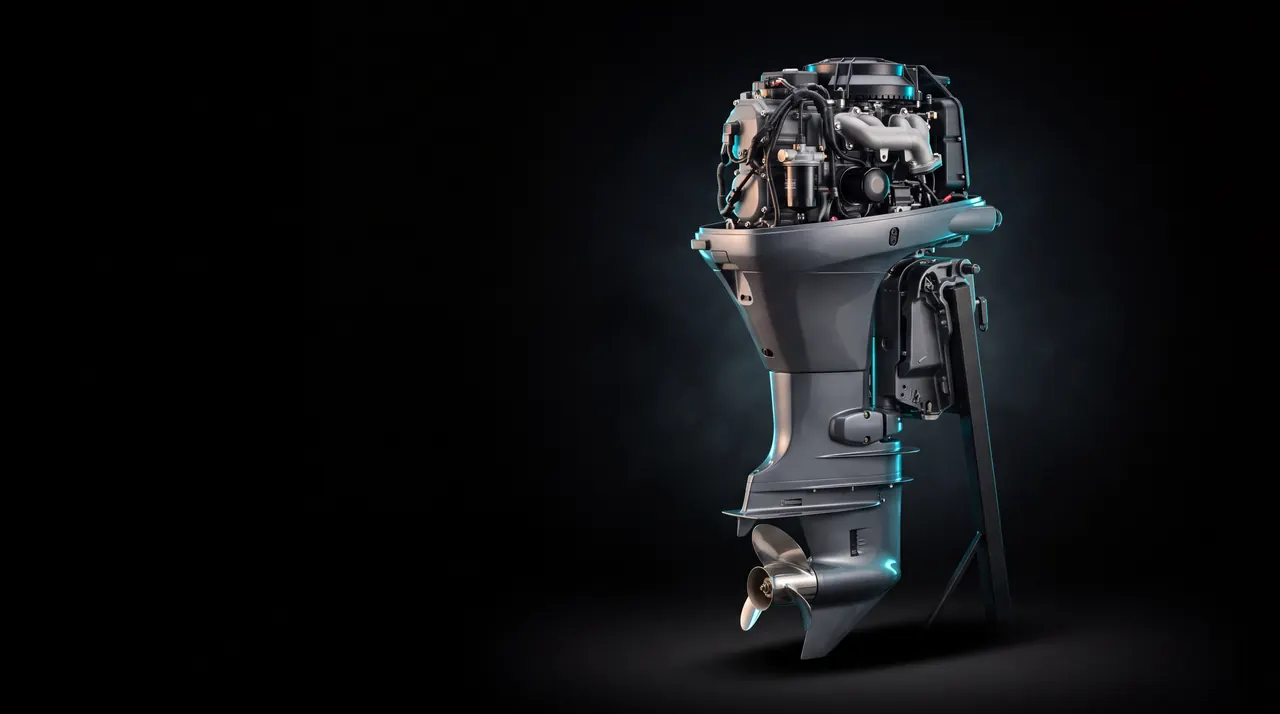
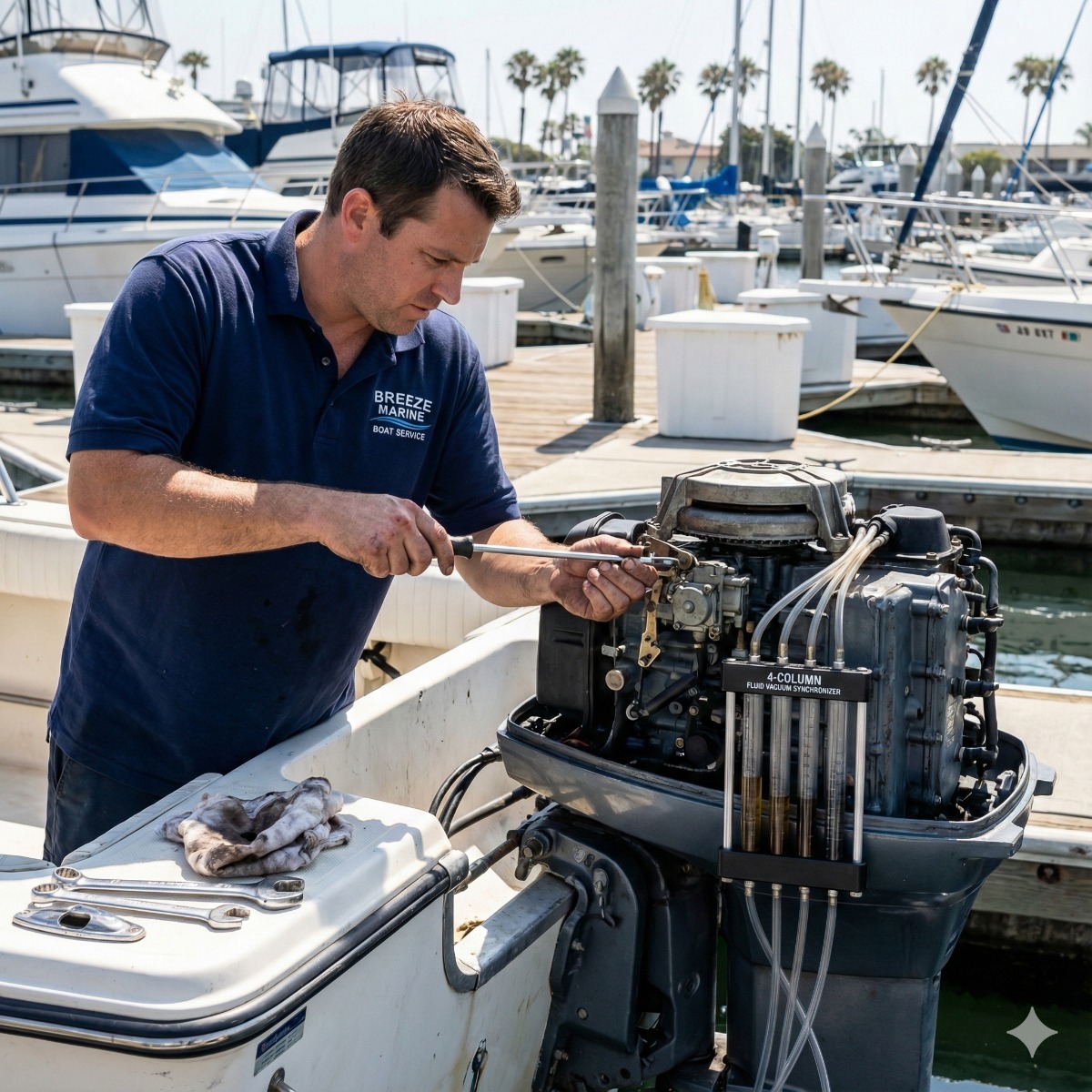
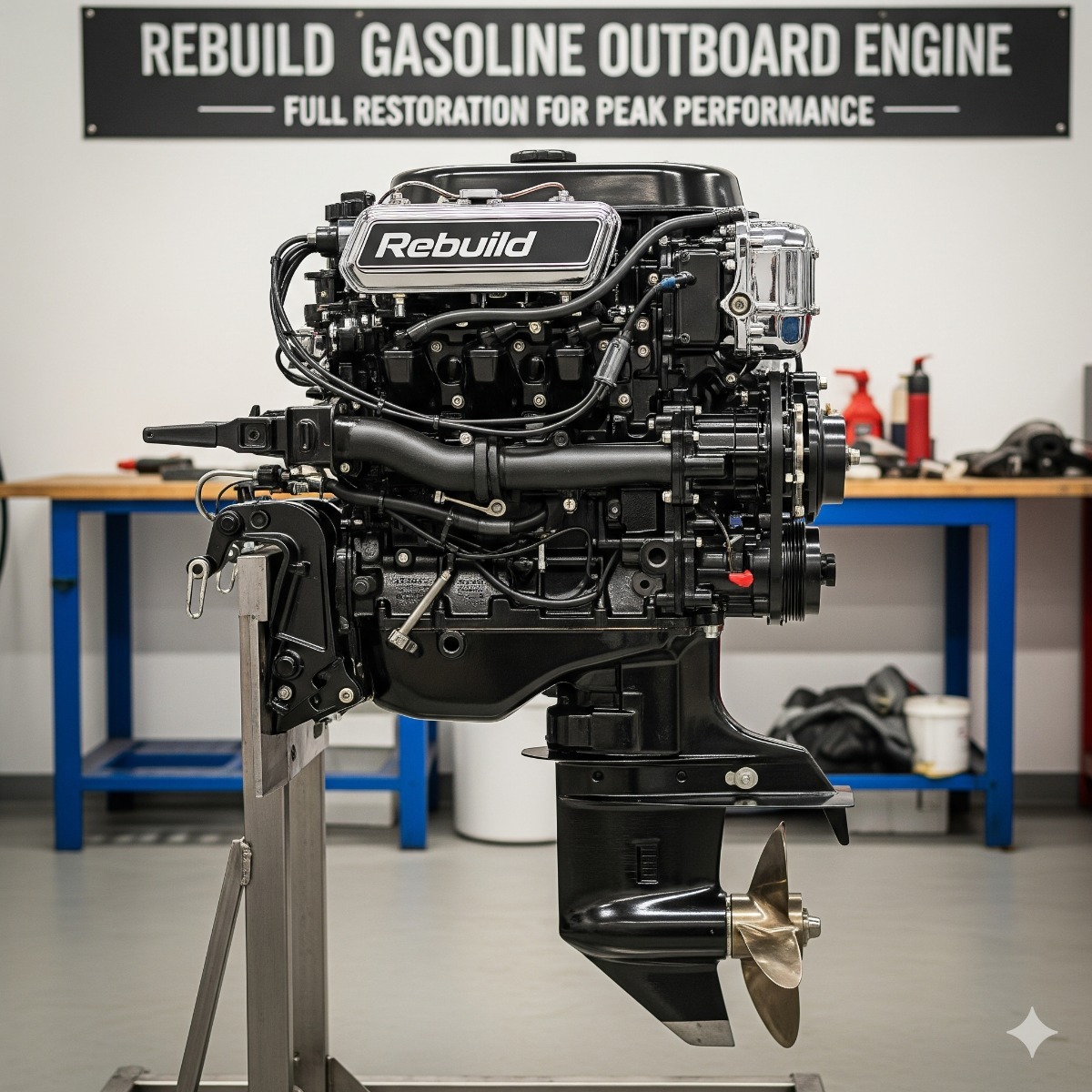
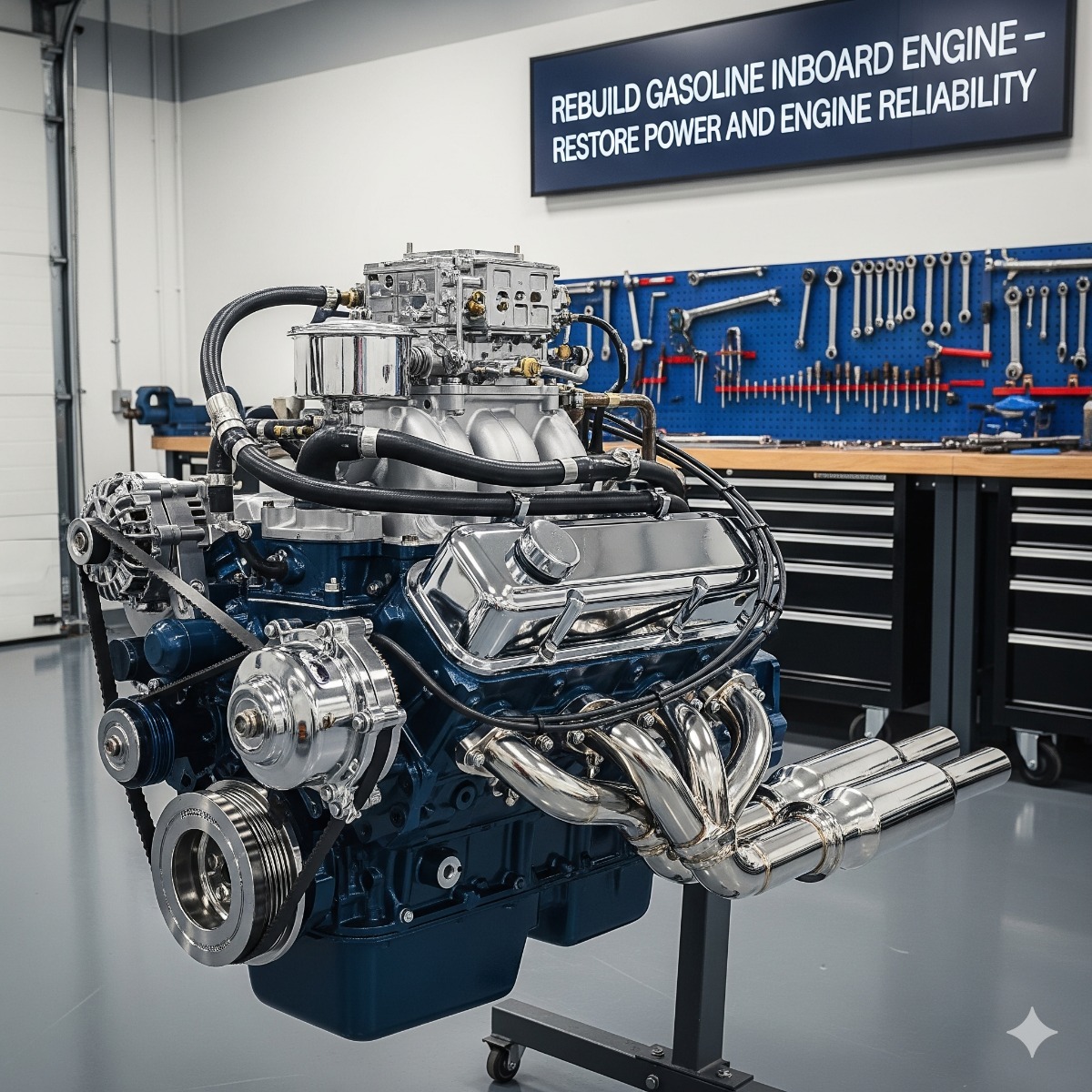
Our outboard carburetor rebuild service follows the same process as inboard and generator work: full teardown, a soak in carburetor cleaner and compressed air through every passage, fresh ethanol-resistant gaskets, needle valves and O-rings, then a bench test before the carburetor goes back on the engine.
Signs that an outboard is due include hard starting, surging at idle, stalling when you throttle back and fuel dripping from the float bowl.
Reviews 4
Questions 7


Related Posts
-


 How ethanol fuel turns into varnish inside a boat carburetor, the surging and stalling it causes, what to check first, and when cleaning or a rebuild is the fix.