
Salt and sun are hard on every boat in Southern California, and the simplest defense is plain fresh water used often. Regular Long Beach CA boat wash downs remove the salt crystals, soot and bird droppings that dull gelcoat, stain stainless steel and wear out canvas. This guide covers what a good boat wash down includes, how often to do it, and when washing is no longer enough and the finish needs polishing and protection.
Why salt and sun do so much damage
Salt spray dries into crystals that draw moisture from the air, so a boat that looks dry can stay damp and corrosive for days. On stainless steel, salt deposits lead to brown tea staining. On gelcoat, salt and grime wear down the wax and let UV damage start sooner. Sunlight then breaks down the surface resin, which shows up as gelcoat oxidation: a chalky, faded finish that rubs off on your hand. Canvas, vinyl and isinglass also age faster when salt is left on them.
What a proper boat wash down includes
- Freshwater rinse from the top down: start at the highest point, such as the hardtop, flybridge or cabin top, and work down so dirty water does not run over areas you have already cleaned.
- Wash with a marine boat soap: choose a pH-balanced boat soap made for waxed surfaces. Household detergents such as dish soap can strip wax.
- Use the right brush: a soft brush or mitt on smooth gelcoat, a stiffer brush on non-skid, and nothing abrasive on clear vinyl.
- Rinse again: flush soap out of hinges, tracks, snaps and drains.
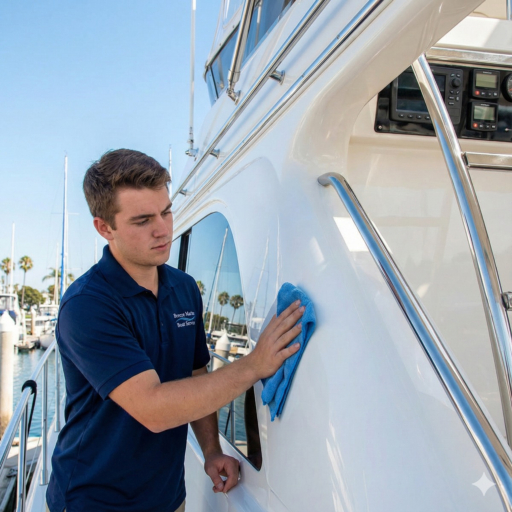
- Dry: use a chamois or microfiber towel to prevent water spots from minerals in the rinse water.
- Isinglass and stainless: flood isinglass with water before wiping it and never wipe it while dry and dusty, which scratches it. Wipe stainless dry.
After a run in the ocean, flush the engine with fresh water if your engine maker recommends it, and rinse the trailer too if the boat was launched from a ramp. Many boats also have a raw-water washdown pump at the bow for rinsing mud off the anchor and chain. It is handy, but it pumps seawater, so follow up with a freshwater rinse on the deck hardware once you are back in the slip.
How often to do Long Beach CA boat wash downs
As a rule of thumb:
- After every outing in salt water: at least a thorough freshwater rinse, plus a soap wash when there is visible salt, grime or fish blood.
- Boats that stay in the slip: many owners rinse every week or two, since salt spray, dust and soot settle on boats that never leave the dock.
- After bird visits: droppings are acidic and can etch wax and gelcoat, so clean them off quickly.
Marinas in Long Beach and San Pedro often have rules about water use, hoses, cleaning products and runoff, so check your marina's guidelines. Many owners choose a biodegradable boat soap and use only as much as they need.
Washing vs boat waxing and polishing
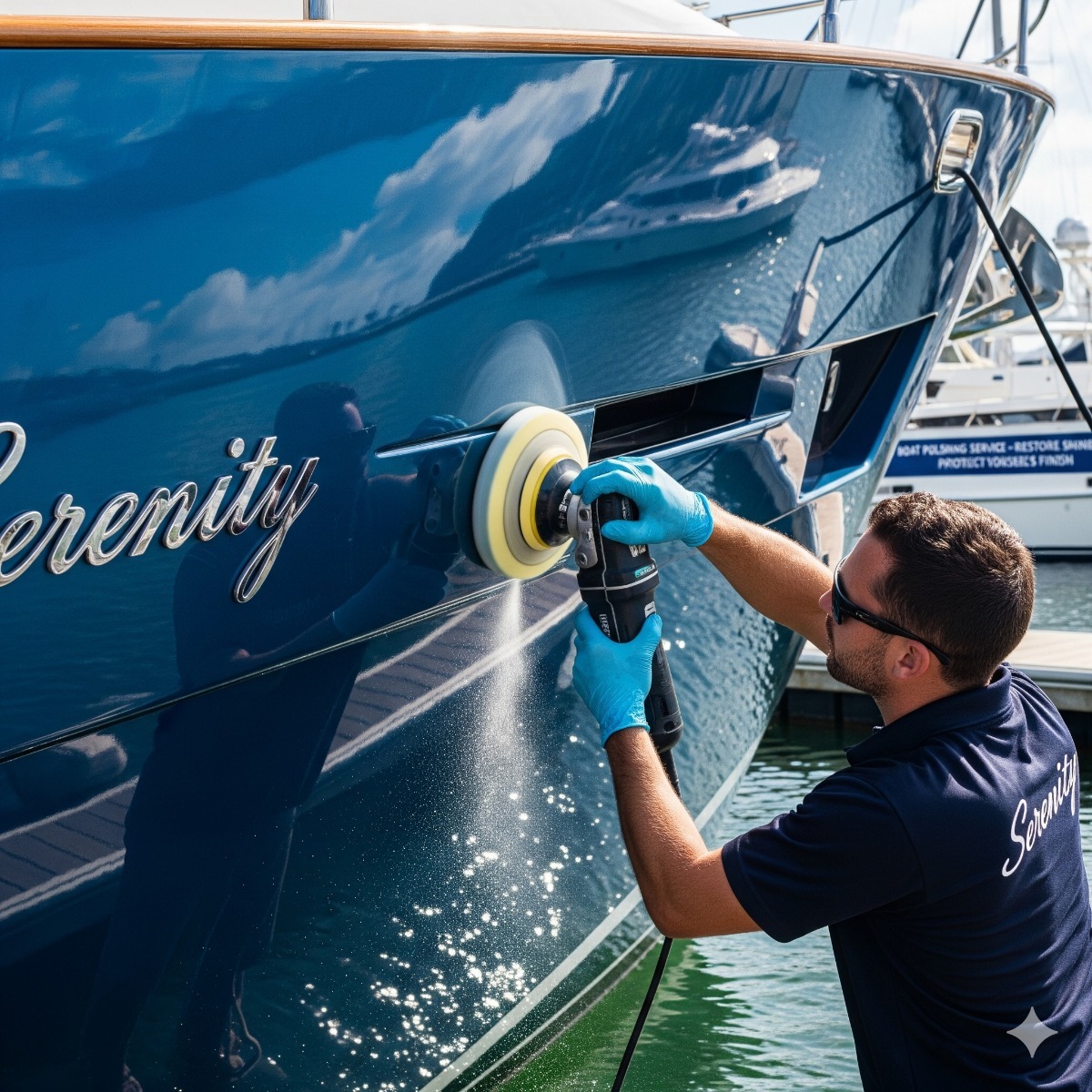
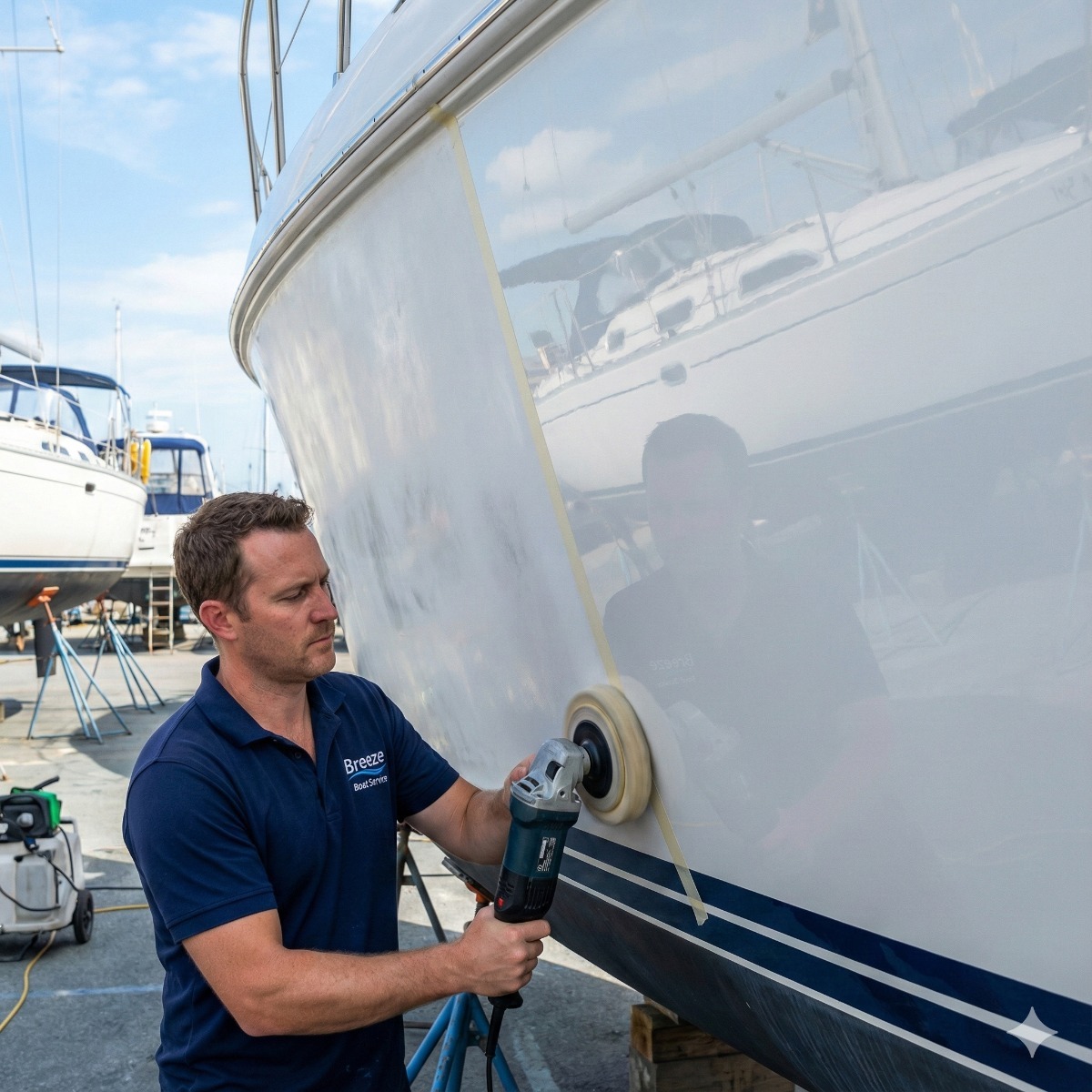
A wash down keeps the surface clean, but it cannot restore a finish that has already oxidized. If the gelcoat looks chalky, feels rough or leaves color on a cloth, washing alone will not bring back the shine. That calls for polishing to remove the oxidized layer, followed by protection. Our boat polishing service, for example, starts with a thorough cleaning to remove dirt, grime and salt buildup before any polishing begins.
| Protection | What it does | Typical interval |
|---|---|---|
| Boat waxing or polymer sealant | A sacrificial layer with UV inhibitors that makes each wash easier | Every 3 to 4 months in California sun |
| Ceramic coating | A harder, longer-lasting bonded layer that sheds water and salt | Around 18 to 24 months, depending on the product and care |
Both still need regular washing. A protected surface simply releases salt and dirt more easily, so each wash down takes less effort.
Common wash-down mistakes
- Washing in full midday sun, which dries soap on the surface and leaves spots.
- Pointing a pressure washer at teak, caulking, canvas, decals or electrical fittings.
- Scrubbing isinglass or dragging a dry towel across it.
- Using household cleaners, bleach or abrasive powders on gelcoat and vinyl.
- Skipping the underside of rails, hardtop edges and hatch gutters, where salt collects.
Frequently asked questions: long beach ca boat wash downs
Is rinsing with fresh water enough?
A freshwater rinse after every outing removes most of the salt. Add a soap wash when salt, grime or fish blood remain, and at regular intervals even when the boat looks clean.
Can I use a pressure washer on my boat?
Many owners use one carefully on hulls and non-skid, at a safe distance and low setting. Keep it away from teak, caulking, canvas, isinglass, decals and electrical fittings.
How do I know my boat needs polishing, not just a wash?
Wipe a clean cloth across the gelcoat. If it comes away with color, or the surface stays dull after washing, the gelcoat has oxidized and needs polishing and protection.
When a wash is no longer enough, our topside polishing and waxing packages start with a decontamination wash, remove light oxidation and add a protective layer, while our ceramic coating and oxidation removal service deals with heavily chalked gelcoat. For advice on your boat, contact us.