Few things are more frustrating than trimming an outboard up at the slip, coming back the next morning and finding the lower unit back in the water. A slow sag, a film of oil on the transom, or an engine that will not hold its angle under throttle all point to the same place: the hydraulic trim rams. This guide explains how the system works, what you can check yourself and when a rebuild beats another top-up.
How a Hydraulic Trim System Holds the Engine
A power trim and tilt unit is a small closed hydraulic circuit. An electric motor drives a pump, the pump pushes fluid through a valve body into one or more cylinders, and the pistons inside extend the rams that lift the engine or drive. When you release the switch, check valves close and the trapped fluid carries the load. Outboards typically combine one tilt ram with one or two trim rams, while many stern drives use a pair of external cylinders mounted between the transom assembly and the drive. A sterndrive trim cylinder sits fully exposed to salt water and marine growth all season.
Because the circuit is sealed, it only works while every seal does its job. The pistons carry O-rings that separate the up side from the down side, the gland caps carry wiper and rod seals that keep fluid in and water out, and the valve body depends on small O-rings and check balls.
Common Symptoms and What They Usually Mean
- Engine sinks overnight or on the trailer: this is trim leak down. In most cases fluid is slipping past a worn piston O-ring or a check valve inside the unit rather than escaping to the outside.
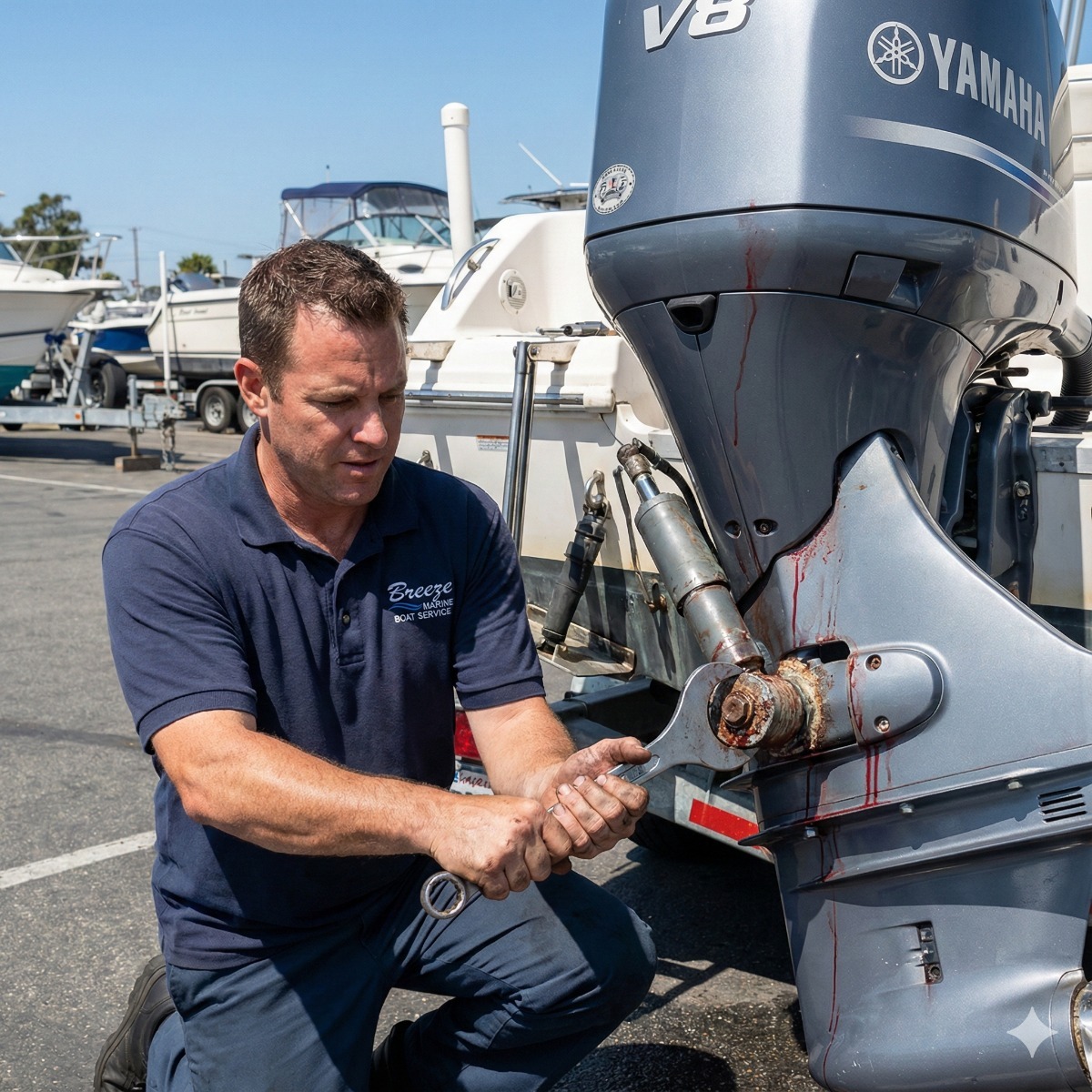
- Oil on the ram shaft or transom: a rod seal or cap O-ring has failed. A leaking trim cylinder keeps losing fluid no matter how often the reservoir is filled.
- Slow movement or stalling under load: low fluid, trapped air, a tired motor or a worn pump can all cause it, so it calls for testing rather than guessing.
- Clicking or humming with no movement: often an electrical fault, a seized ram or a pump that has lost its prime.
Why Salt Water Is Hard on Trim Rams
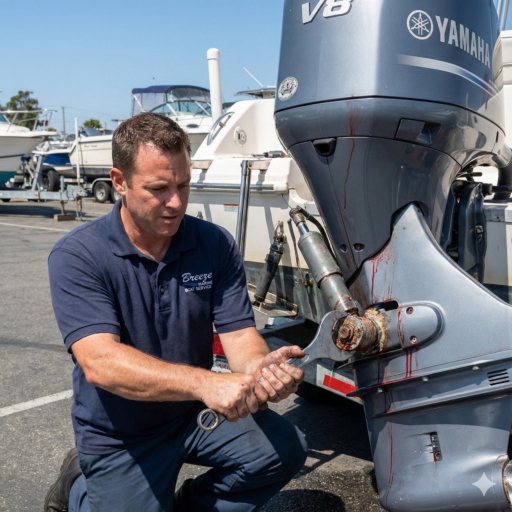
The ram shafts are usually polished stainless steel, while the cylinders and caps are aluminum. In salt water the two metals set up galvanic corrosion, and white aluminum oxide packs into the threads until a cap behaves as if it were welded on. That is why trim ram cap removal is often the slowest step, and why forcing a stuck cap with the wrong tool can crack the cylinder. Pitting and barnacle scars on the exposed shaft also act like a file on the rod seal, so a new seal fitted over a rough shaft may not last long.
What an Owner Can Check
- Check the reservoir level with the engine in the position your manual specifies, since the reading changes with ram position.
- Use only the power trim fluid your engine maker lists. Makers specify different fluids, and mixing types can soften or swell seals.
- Wipe the rams clean, run the trim through its full travel, then look for fresh fluid at the caps and hose fittings.
- Trim the engine up, put a strip of tape on the ram at the cap edge and check it again after a few hours. Any creep confirms internal leakage.
- Rinse the rams with fresh water after each trip and store the engine with the rams retracted where practical, so less shaft is exposed.
Topping up is a way to get home, not a fix. A seal that lets oil out also lets moisture in, and water mixed into the fluid slowly corrodes the pump and motor from the inside.
What a Trim Ram Rebuild Involves
A proper trim ram rebuild begins with removing the rams from the bracket, which often means driving out pivot pins that have seized in their aluminum bores. On the bench the gland caps come off with a spanner that engages the cap's pin holes, the piston assembly is withdrawn, and every seal is renewed: wiper, rod seal, piston O-rings and backup rings. The shaft is inspected and polished smooth. After reassembly the unit is refilled, bled of air and cycled repeatedly under load to prove it holds its position.
Rebuilding is the sensible route when the cylinder body is sound and the shaft cleans up. Replacement is worth discussing only when a cylinder is cracked, the bore is deeply scored or corrosion has destroyed the cap threads.
When to Call a Technician
Book power trim repair when you see oil on the transom, measurable trim leak down, a cap that will not budge, or trim that slows or stalls under load. Early trim and tilt repair usually keeps the job to seals and polishing, before contaminated fluid reaches the pump. If your boat shows any of these signs, arrange a hydraulic trim and tilt repair with a mobile technician who can pull, rebuild and test the rams.
Trim Rams FAQ
Is it safe to run a boat with a leaking trim cylinder?
For a short run, usually, as long as the fluid level is kept up and the engine holds its angle. The risks are an engine that sags at speed, a reservoir that runs low, and moisture that damages the pump over time.
Does trim leak down mean the pump is bad?
Not usually. It is most often a worn piston O-ring or a check valve that no longer seats. A tired pump tends to show up as slow or weak movement instead, and a hold test separates the two.
Can any hydraulic oil be used as power trim fluid?
No. Use the fluid named in your owner's manual. The wrong type can harden or swell the seals.