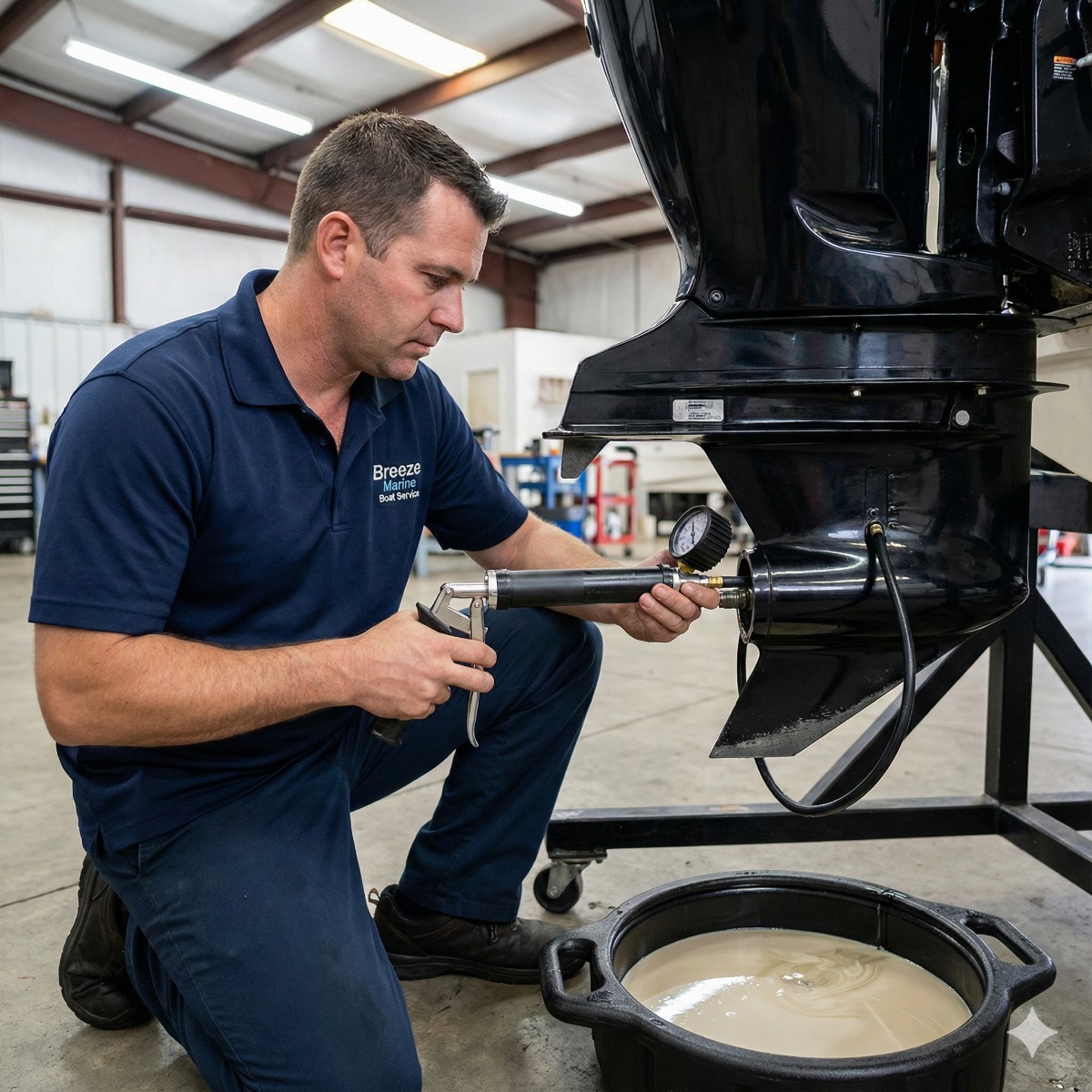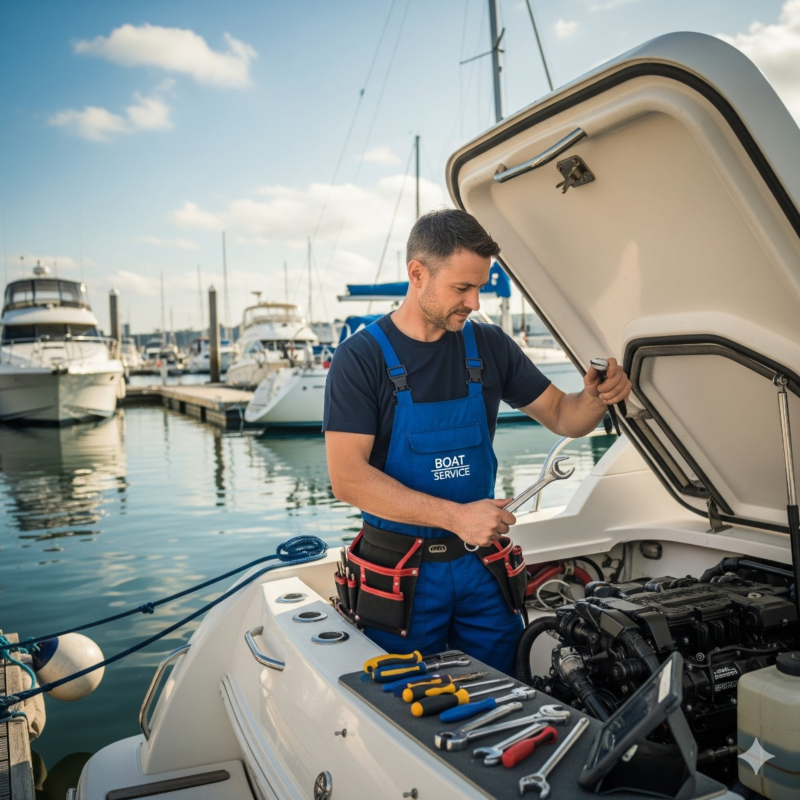
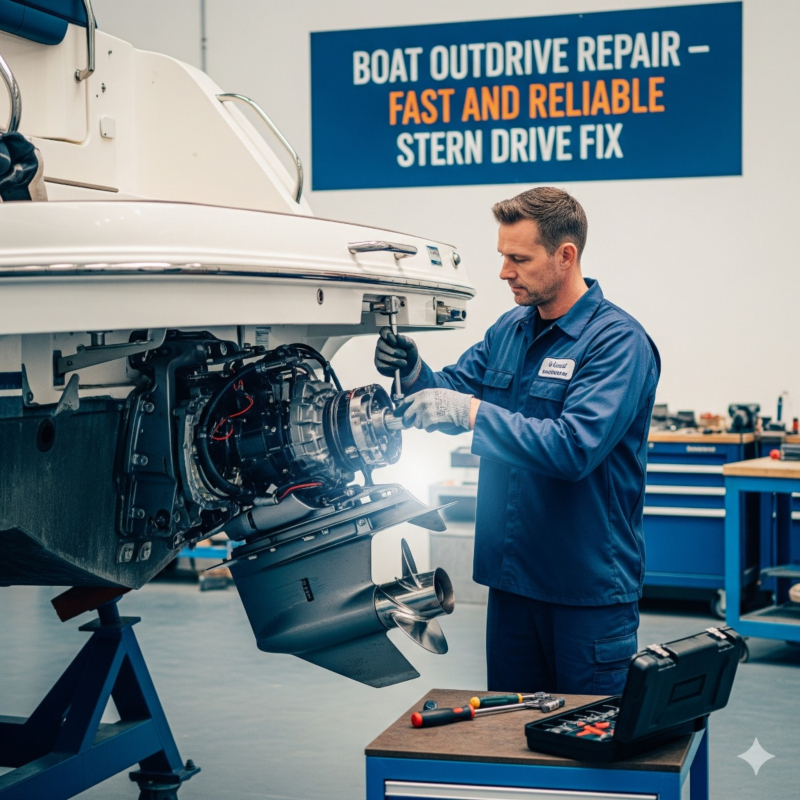
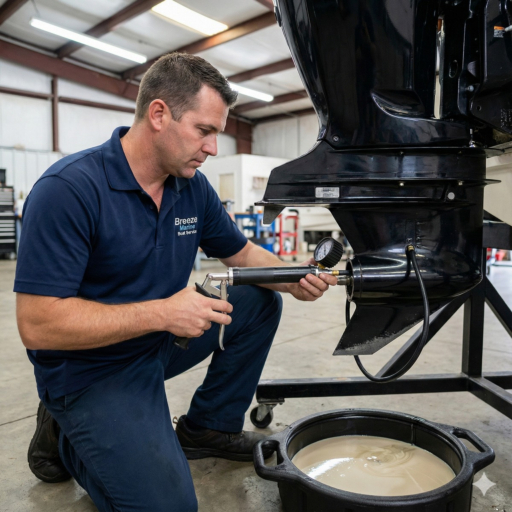
Draining the gear oil from an outboard or sterndrive is one of the simplest maintenance jobs on a boat, and it is also one of the most revealing. Clean oil is a good sign. Oil that comes out creamy, gray or with water running ahead of it tells you seawater is getting into the gearcase. What you do next decides whether the fix is a set of seals or a new set of gears.
What Healthy and Unhealthy Gear Oil Looks Like
Fresh gear lube is usually amber, blue or dark depending on the brand, and it should come out looking roughly the same color it went in, just darker. When you drain it, watch for these signs:
- Milky gear lube: a creamy, coffee-with-milk color means water has emulsified with the oil.
- Free water: clear water running out before the oil, because water is heavier and settles at the bottom.
- Fine metal paste: a gray sheen or glitter, which comes from normal wear in small amounts.
- Metal chips or slivers: larger pieces on the drain plug magnet point to gear or bearing damage.
- Burnt smell: suggests overheating from low oil or mechanical failure.
Water in lower unit oil does not mean the gears are already ruined, but it means the clock is running.
Why Water Gets In
A gearcase is sealed at every point where a shaft or fastener passes through the housing. The usual failure points are:
- Propeller shaft seals: fishing line wrapped around the shaft behind the prop is the most common cause of damage. It works its way in and cuts the seal lips, often without the owner noticing.
- Drive shaft seals: located under the water pump, these can wear with age or when the pump base corrodes.
- Shift shaft seal: where the shift rod enters the case, often worn by corrosion.
- Bearing carrier O-rings and drain plug washers: simple parts that harden and crack over time.
- Housing damage: a strike on the skeg or gearcase can crack the casting.
Age, heat cycling and long periods sitting dry also cause rubber seals to harden and crack.
How a Leak Is Found
Guessing which seal failed wastes money. A lower unit pressure test answers the question directly. With the oil drained, the unit is sealed and pressurized to a low pressure specified by the manufacturer, commonly in the range of 10 to 15 PSI, and watched for a drop. A leaking seal will lose pressure, and soapy water sprayed around the shafts and plugs shows exactly where.
Vacuum testing checks the other direction. When a warm gearcase is dropped into cold water, the air inside contracts and pulls water in past a seal that may hold oil perfectly well under pressure. Pulling a light vacuum and watching for loss catches these leaks. A unit that passes both tests is sealed; one that fails either needs attention.
What a Lower Unit Reseal Involves
A lower unit reseal usually means removing the propeller and bearing carrier, removing the water pump to reach the drive shaft seals, and replacing the prop shaft, drive shaft and shift seals together with all O-rings. The shafts are inspected for grooves worn by old seals, since a new seal will not hold on a scored surface. Once reassembled, the unit is pressure tested again before it is filled with fresh oil. Prop shaft seal replacement on its own is sometimes enough when fishing line is the clear culprit, but many technicians reseal the whole unit at once because the labor to reach each seal overlaps. For a closer look at how the test and reseal are done, see the lower unit reseal and pressure testing service.
What an Owner Can Do
- Check the gear oil at least once a season, and after hitting anything underwater.
- Pull the propeller periodically and remove any fishing line around the shaft.
- Look at the drain plug magnet every time you change the oil.
- Do not just top up oil that has water in it and keep running.
Why Waiting Is Expensive
Water settles at the bottom of the case, right where the gears and bearings sit. It washes away the oil film and starts rust on bearing races and gear teeth. A lower unit leak caught early costs a set of seals; one left for a season can mean worn bearings, chipped gears and eventually complete gearcase failure, often at the worst possible time.
Lower Unit FAQ
Is a little water in the gear oil acceptable?
No. Any visible water means a seal is not holding. Even small amounts accelerate corrosion inside the case.
How often should gear oil be changed?
Most manufacturers recommend changing it at every 100-hour or annual service, and many owners check it mid-season as well.
Can I test the lower unit myself?
Basic pressure testers are available, but interpreting results and replacing seals correctly takes experience and special drivers.