Few sounds ruin a day on the water faster than a knock from the stern followed by silence. A blown outboard engine feels like the end of the motor, but in many cases the serious damage is limited to the powerhead: the block, crankshaft, pistons and heads. The midsection, lower unit, controls and much of the fuel and electrical hardware often survive. This guide explains what usually causes powerhead failure, what you can check yourself, and how to weigh a rebuild, a remanufactured powerhead and a full repower.
What Usually Causes Powerhead Failure
The same handful of causes shows up again and again:
- Lean running. A clogged or failing fuel injector, a restricted fuel line or a blocked tank vent lets one cylinder run lean and hot until the piston scuffs or melts.
- Lubrication problems. On two-strokes with oil injection, a failed oil pump or a blocked oil line can starve the bearings. On four-strokes, a low oil level or long-overdue oil changes do similar harm.
- Overheating. A worn water pump impeller or blocked cooling passages let the block overheat, which can warp heads and seize pistons.
- Water ingestion. A submersion, a swamped boat or water in the fuel can lock a cylinder or corrode the internals.
- Detonation. Stale or low-octane fuel, heavy carbon buildup or incorrect timing can hammer the pistons and rings.
Knowing the cause matters, because a new block installed on top of the same fault will fail the same way.
Warning Signs and What an Owner Can Check
Typical symptoms are a metallic knock, a sudden loss of power on one cylinder, heavy smoke, an engine that will not turn over, or metal flakes in the oil. Before you book any work, a few simple checks give the technician useful information:
- Outboard compression test. With all spark plugs removed, the kill switch lanyard pulled, the throttle held open and a gauge threaded into each plug hole in turn, crank the engine and compare the readings. An outboard compression test is most telling when one cylinder reads well below the others; the spread between cylinders matters more than the exact number.
- Spark plugs. A plug that is wet, chalky white or speckled with metal points to the damaged cylinder.
- Oil. Milky oil suggests water; glitter or chunks suggest bearing or piston damage.
- Alarms and history. Write down any warning horns, overheat alarms or recent fuel problems, plus the engine hours.
If the engine is knocking or will not turn freely, stop cranking it. Forcing a seized engine can turn a repairable problem into a cracked block.
Rebuild, Remanufactured Powerhead or Full Repower
Once internal damage is confirmed, there are three realistic paths.
Rebuilding the original block
A local rebuild reuses your block and crankshaft where possible, with new pistons, rings and bearings. It can work well for light damage, but it depends on the condition of the cylinder walls and on which parts can still be sourced for that model.
Installing a remanufactured outboard powerhead
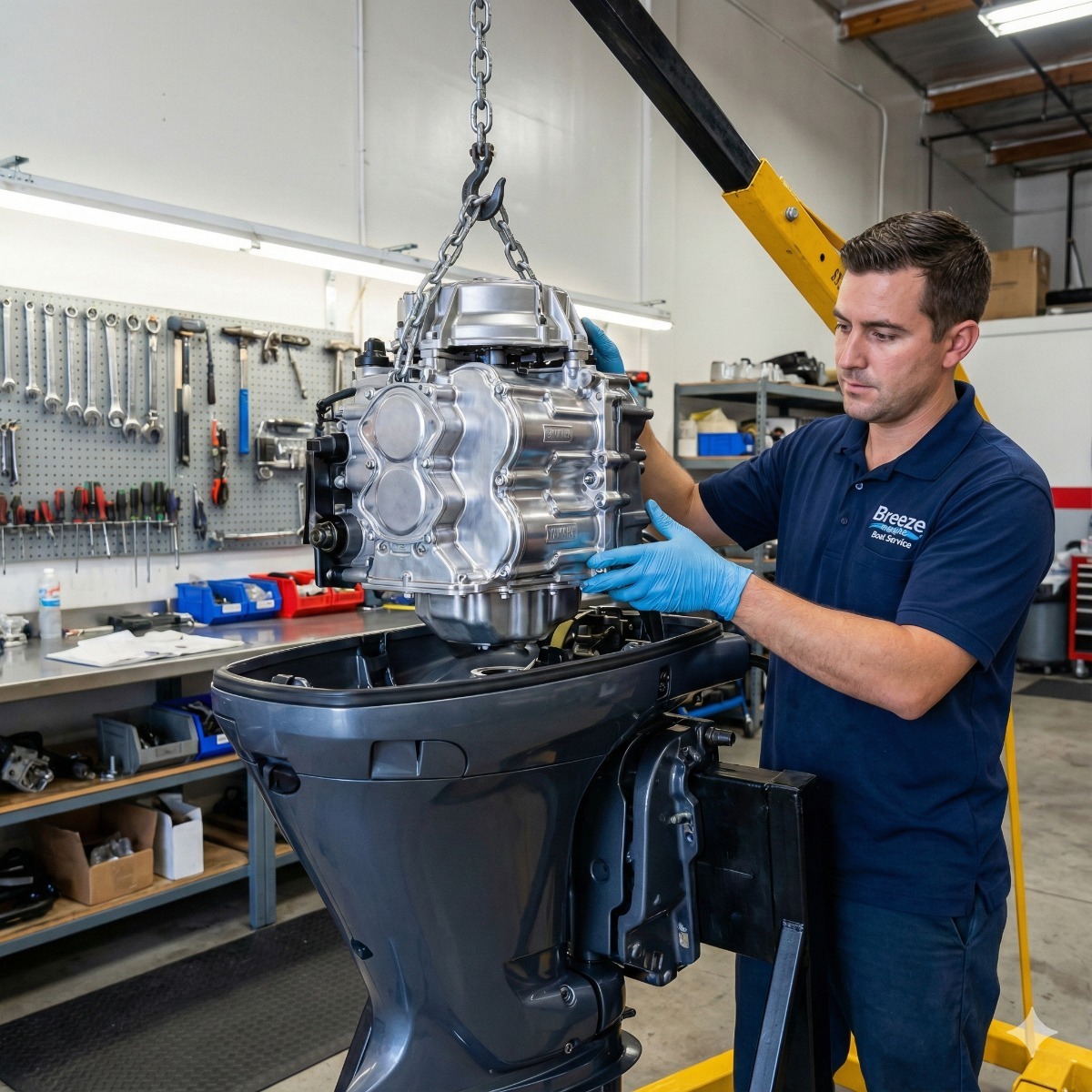
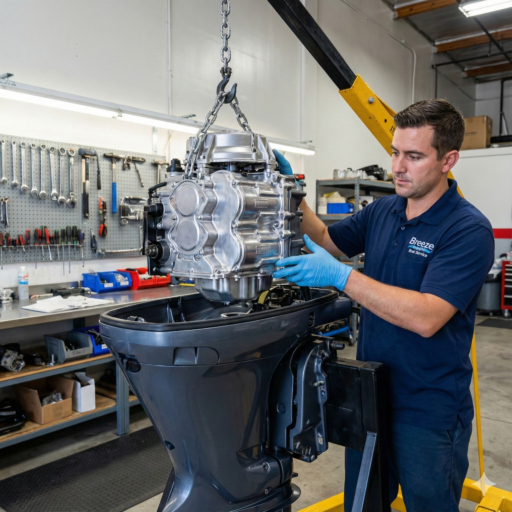
A remanufactured outboard powerhead arrives as a complete assembly that a specialist remanufacturer has already machined and fitted with new wear parts. Your injectors, electronics, starter and cowling are moved across, and the controls and lower unit stay on the boat.
A full outboard repower
A full outboard repower replaces the entire motor. It makes sense when the lower unit, midsection or electronics are also worn, when the engine is very old, or when you want a different horsepower. It is usually the most expensive route, and new engines can take time to arrive.
What the Swap Job Involves
An outboard powerhead swap is more than bolting on a new block. The technician confirms why the old engine failed, removes the cowling, disconnects the fuel, electrical and control connections, unbolts the powerhead and lifts it off the midsection. Every reusable part is stripped, cleaned and inspected, and tired gaskets, seals and sensors are replaced. The new powerhead goes on with a fresh base gasket, is dressed with the transferred components, then primed, checked and test-run. If you are weighing this job, see how we approach an outboard powerhead replacement with a remanufactured block.
Why the Break-In Period Matters
New pistons and rings need time to seat. The outboard break-in procedure in your owner's manual usually calls for varying the rpm, avoiding long runs at wide open throttle and, on many two-strokes, running extra oil during the first hours. Four-strokes often need an early first oil change. Skipping the outboard break-in procedure can leave the rings poorly seated, which shows up later as low compression and high oil consumption.
When to Call a Technician
Call a technician as soon as you hear knocking, see metal in the oil or get one low compression reading. Your options for outboard engine repair narrow quickly once a broken rod or seized piston damages the block, so stopping early keeps more choices open. Have the make, model, hours and a short description of the failure ready, and the diagnosis will go faster.
Outboard Powerhead FAQ
Is a blown outboard engine worth fixing?
Often it is, if the midsection, lower unit and controls are sound. The decision depends on the age of the motor, the extent of the damage and parts availability, and it should follow a proper diagnosis rather than a guess.
Can I keep running an outboard that has started knocking?
Only as long as it takes to get out of danger at low speed. A knock usually means a bearing, rod or piston problem, and every extra minute of running can spread the damage to the crankshaft and block.
How long does the break-in period last?
It varies by manufacturer, but many outboards call for varied throttle settings over roughly the first ten hours. Follow the schedule in the owner's manual for your exact engine model.