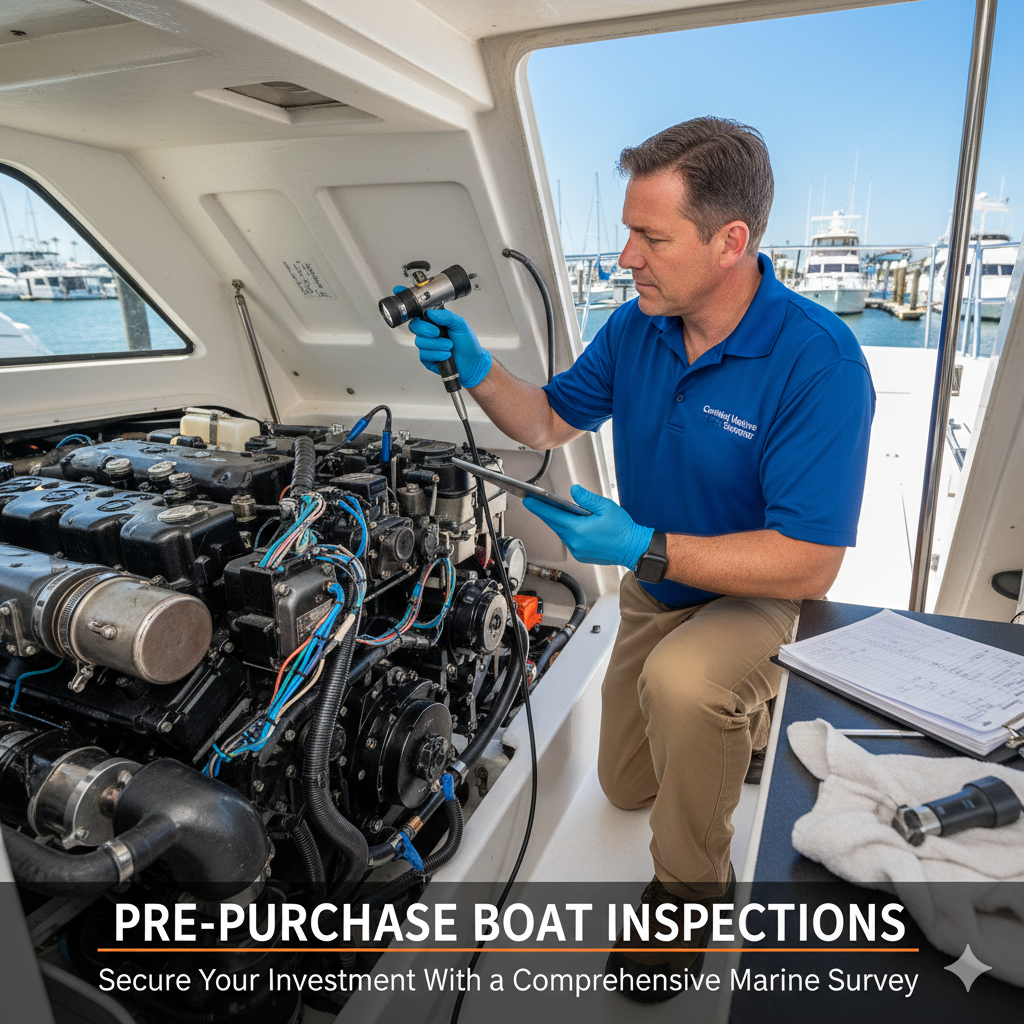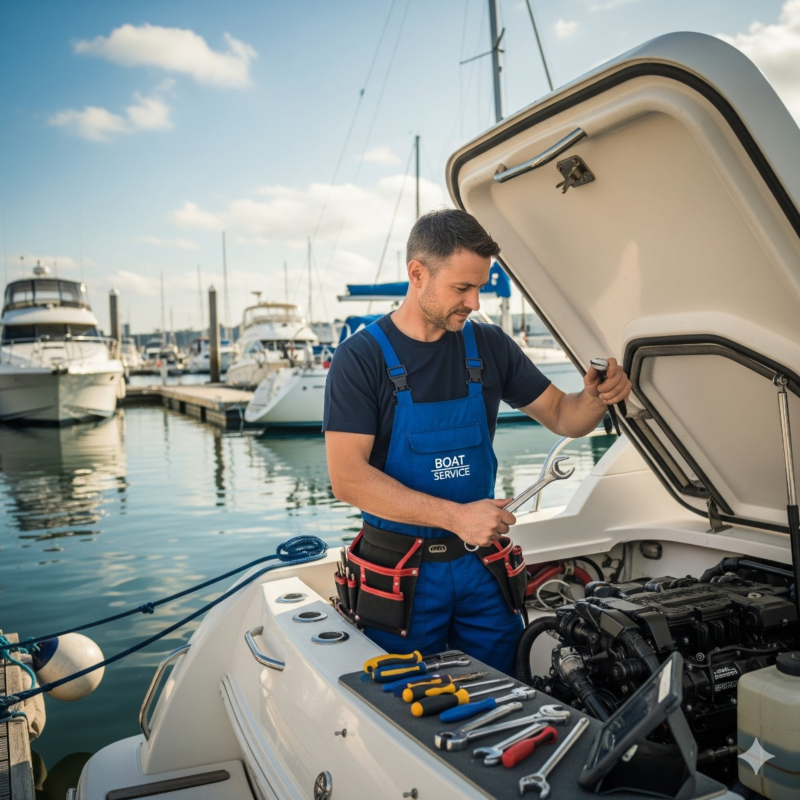
A used boat can look perfect at the dock. Fresh wax, new cushions and a quick run around the harbor hide a lot: soft decks, wet cores, tired engines and wiring that has been modified by several owners. For boat buyers, the inspection report is often the most valuable document in the whole transaction. This guide explains what a thorough pre purchase boat inspection covers, how to prepare, and how to use the findings.
Inspection vs Survey: Know What You Need
The terms are often used interchangeably, but they are not always the same thing. A formal pre purchase marine survey is usually carried out by an accredited marine surveyor and produces a written report, including a valuation, that lenders and insurers may require. A mechanical and systems inspection looks at engines, drives, electrical and plumbing in more depth. Many buyers use both: a surveyor for structure, documentation and value, and a technician for a detailed marine pre purchase inspection of the machinery. Check with your lender and insurer early so you know which reports they expect.
What a Thorough Inspection Covers
Hull and structure
A hull inspection looks for blisters, cracks, previous repairs and impact damage. The inspector sounds the hull and deck with a small hammer and uses a moisture meter to find wet or delaminated core, especially around deck hardware, stanchions and the transom. Stringers, bulkheads and engine beds are checked for rot, cracks and loose tabbing. With the boat hauled out, running gear, through-hulls, bonding and anodes are examined too.
Engines and drives
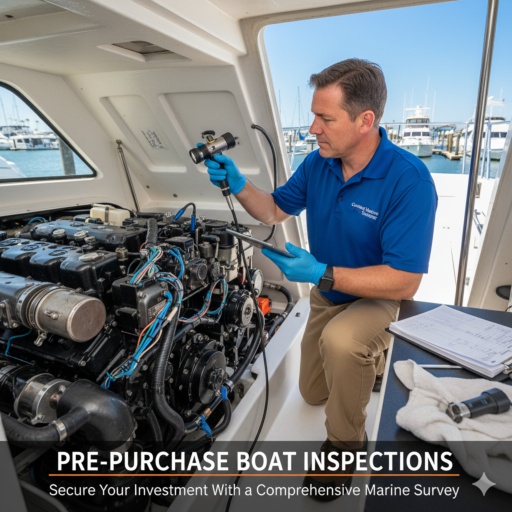
- Cold start behavior, smoke and unusual noises
- Compression testing and, where possible, an oil sample for analysis
- Cooling system condition, exhaust elbows and risers
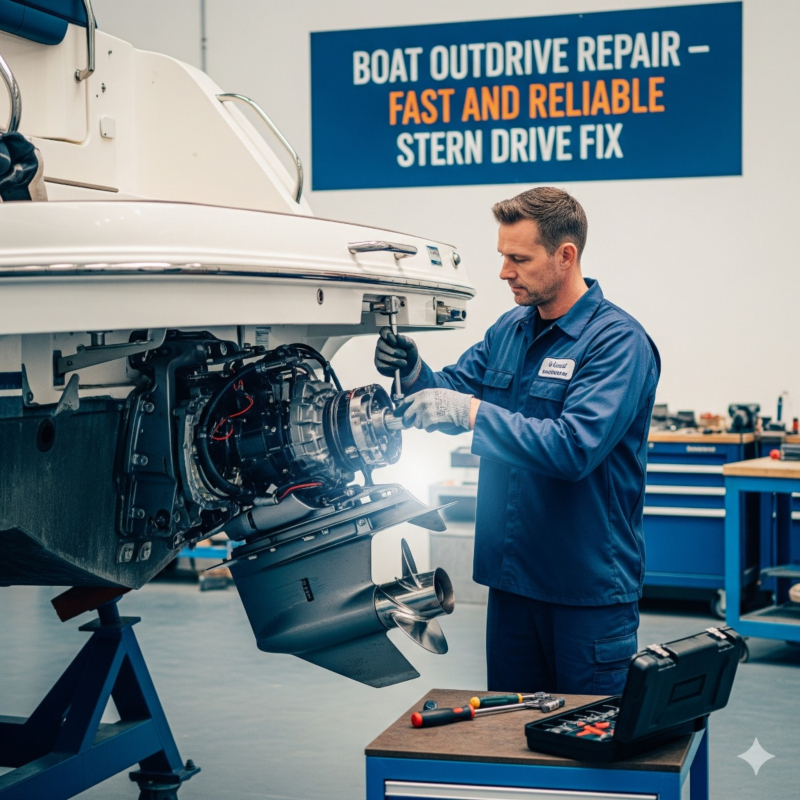
- Stern drive bellows, gimbal bearing, gear oil condition and play in the drive
- Engine hours compared with maintenance records
Electrical and systems
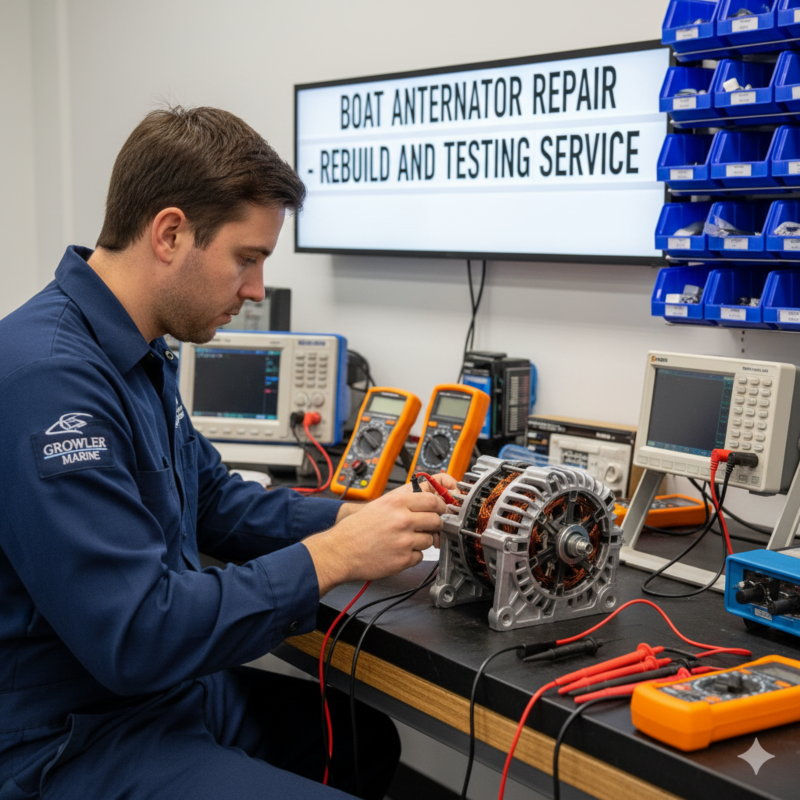
Battery banks, charging, shore power, panels and wiring are checked for overheating, poor connections and amateur modifications. Bilge pumps and float switches, steering, fuel hoses and venting, fresh water, heads, holding tanks, air conditioning and electronics are tested for function.
Safety equipment
Fire extinguishers, carbon monoxide and fume detectors, navigation lights and required safety gear are checked for condition and compliance with current requirements.
Why the Sea Trial Matters
A sea trial shows how the boat behaves under real load. The engines should reach their rated wide open throttle RPM, temperatures and pressures should stay in range, and there should be no unusual vibration, alarms or steering problems. Trim tabs, thrusters, electronics and the generator should all be operated. Problems that only appear when an engine is hot and working hard are exactly the ones a dockside look will miss.
How to Prepare as a Buyer
- Ask the seller for maintenance records, previous survey reports and any warranty paperwork.
- Make sure the boat will be accessible, with fuel on board, batteries charged and keys available.
- Arrange a haul-out if the underwater hull and running gear need to be seen.
- Attend the inspection if you can; you learn a great deal about the boat by watching.
- Make your offer contingent on a satisfactory inspection and trial run.
Using the Findings
Almost every used boat has a list of issues. The goal of a boat condition assessment is not to find a perfect vessel but to separate routine maintenance items from safety problems and expensive structural or mechanical defects. Many buyers use the report to renegotiate the price, ask the seller to complete repairs before closing, or walk away from a boat with serious problems. The report also becomes a practical to-do list for the first season of ownership.
Seller-Side Inspections
Sellers can benefit from the same process. Pre-sale boat inspection services identify issues before listing, which lets the owner fix them or disclose them up front and reduces surprises during negotiation. Regular boat inspections during ownership, such as a spring commissioning check, also make the eventual sale smoother because the records are already in order.
When to Book
Schedule the inspection after your offer is accepted but before the contingency period ends, and leave enough time for a haul-out if needed. For boats in local harbors, our pre-purchase inspection service for buyers covers the mechanical, electrical and hull checks outlined above, so you can make a decision based on facts rather than appearances.
Pre-Purchase Inspection FAQ
Does a nearly new boat need an inspection?
Yes. Even late-model boats can have warranty defects, installation errors or damage from a previous owner. Boat pre-purchase inspections on newer vessels are usually quicker but still worthwhile.
Who pays for the inspection?
By convention the buyer pays for the inspection and any haul-out, and the report belongs to the buyer.
Can an inspection find every problem?
No inspection can see inside sealed structures or predict every future failure, but a thorough one greatly reduces the chance of expensive surprises after the sale.