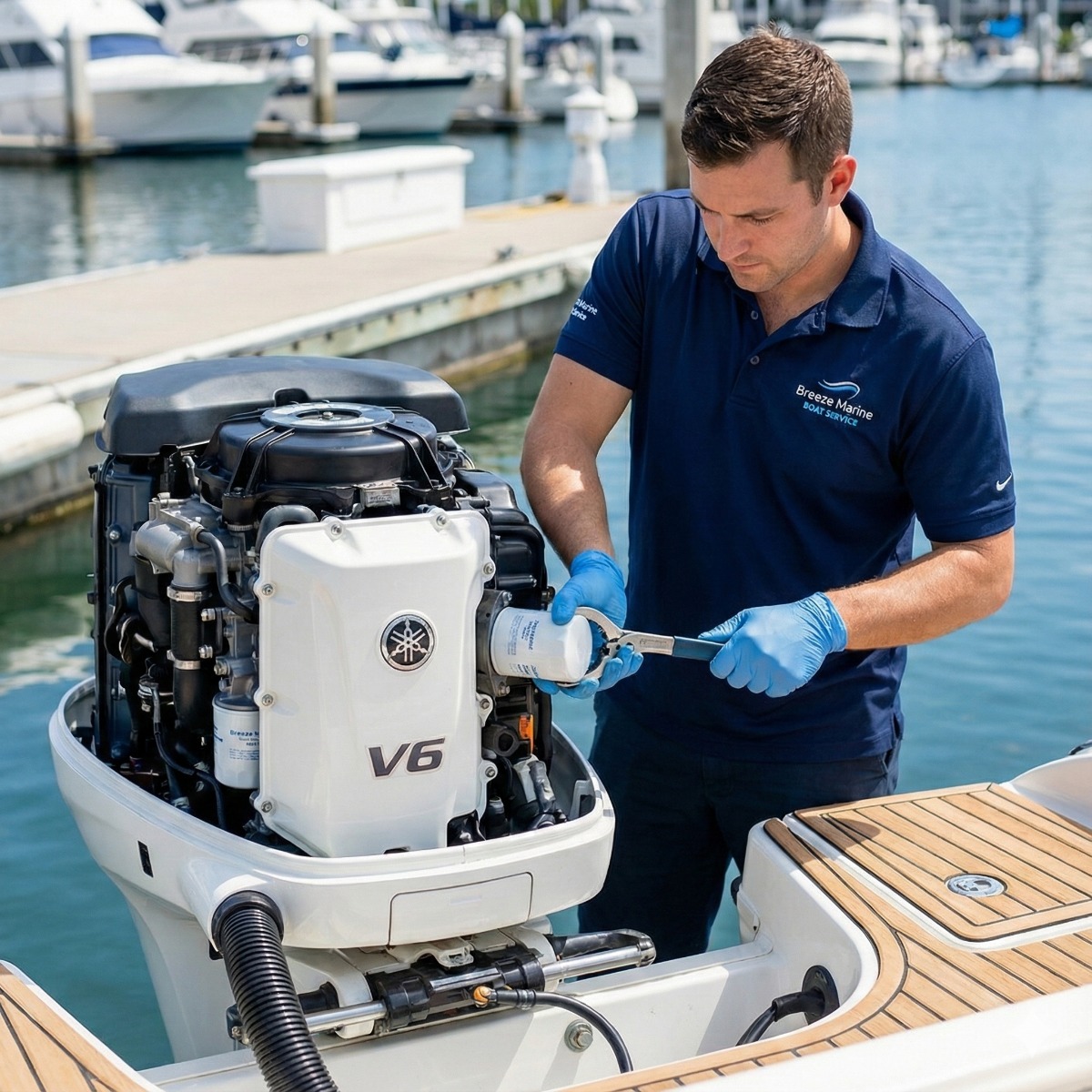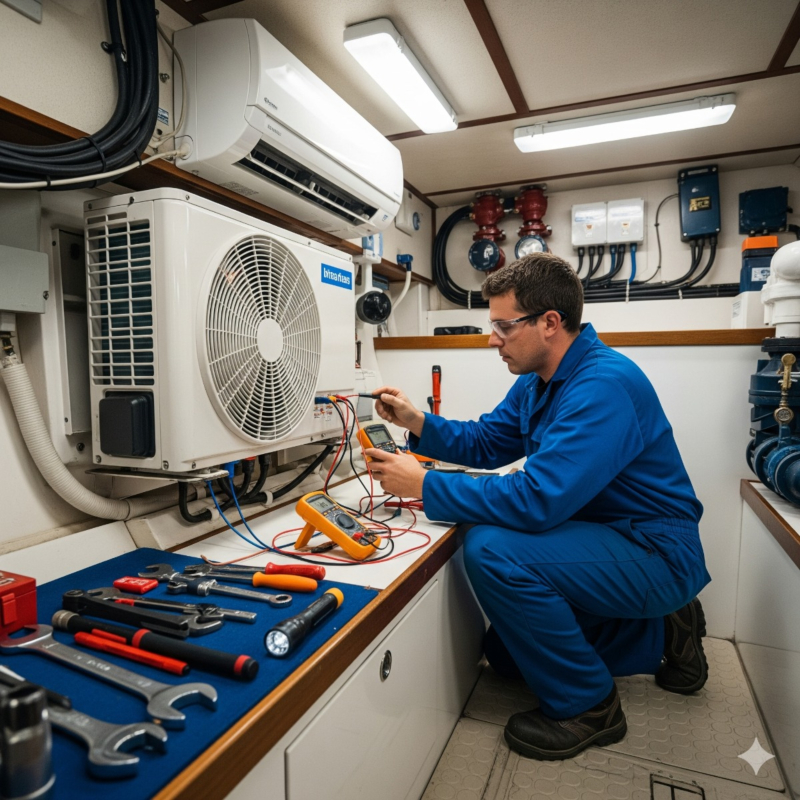

A fishing boat outboard lives a harder life than most engines on the water. It runs long days at trolling speed, idles for hours on the drift, gets hammered by spray and then sits in salt air until the next trip. Owners often start looking for outboard motor repair near me only after something fails, but most of those failures show warning signs weeks earlier. This checklist is brand-neutral and focused on saltwater use, so you can see what routine service covers, what you can do yourself and what points to real repair.
After Every Saltwater Trip
- Freshwater flush. Flush the cooling system with fresh water through the flush port or with muffs, following the manufacturer's method for your engine. Salt crystals left in the passages are what slowly choke a cooling system.
- Tell-tale check. Confirm a strong, steady stream from the cooling indicator while the engine runs. A weak or intermittent stream is the earliest hint of a pump or passage problem.
- Rinse and wipe down. Rinse the cowl, bracket, steering linkage and trim rams, then dry the connections. A light corrosion inhibitor under the cowl helps.
- Fuel check. Look at the water-separating fuel filter bowl if you have one and drain any water.
Seasonal or Hour-Based Service
Most manufacturers set service intervals by hours or by time, whichever comes first. Fishing boats tend to rack up hours at low rpm, which is still wear. Typical items include:
Water pump impeller
The impeller is a rubber part that stiffens and cracks with age and wears quickly if the engine is run in sandy or silty water. Replacing it on schedule is far cheaper than dealing with an overheat. If the tell-tale has weakened or the overheat alarm has chirped even once, have it inspected.
Gearcase lubricant
Drain and replace the lower unit oil. Milky oil means water is getting past a seal, and metal flakes on the drain magnet point to gear or bearing wear. Either one moves the job from service to repair.
Anodes
Sacrificial anodes on the gearcase, trim tab and bracket protect the aluminum housings. Replace them when they are about half gone, and never paint them. Anodes that stay shiny and unused can mean a bonding or grounding issue.
Fuel filters and spark plugs
Replace the engine-mounted and any external fuel filters, and inspect or replace the spark plugs. Plug appearance tells a mechanic a lot about how each cylinder is running.
Thermostat and cooling passages
Thermostats and pressure relief valves can stick with salt and scale. An engine that runs cool at idle and hot at speed, or the reverse, often has a thermostat or passage problem.
Grease points and steering
Grease the swivel bracket, tilt tube and steering linkage, and check for play. Stiff or notchy steering on a fishing boat usually comes from a corroded tilt tube or cable.
Propeller Inspection and Reshaping
Pull the prop at every service, check the hub and the thrust washer, and look for fishing line wrapped around the prop shaft. Line can cut into the seal and let water into the gearcase, which is one of the most common saltwater outboard problems.
Small dings and bent edges hurt holeshot and fuel use and add vibration. Many prop shops offer propeller reshaping services that restore pitch and blade shape on aluminum and stainless props. Reshaping helps when damage is limited to edges and tips; a prop with a spun hub, cracked blades or major missing metal is usually replaced instead.
Signs You Need Repair, Not Routine Service
- Overheat alarm, weak tell-tale or steam from the exhaust.
- Loss of top-end rpm, hesitation or stalling when you throttle up.
- Hard starting when warm, or rough idle that does not clear.
- Milky gear oil, clunking shifts or grinding in gear.
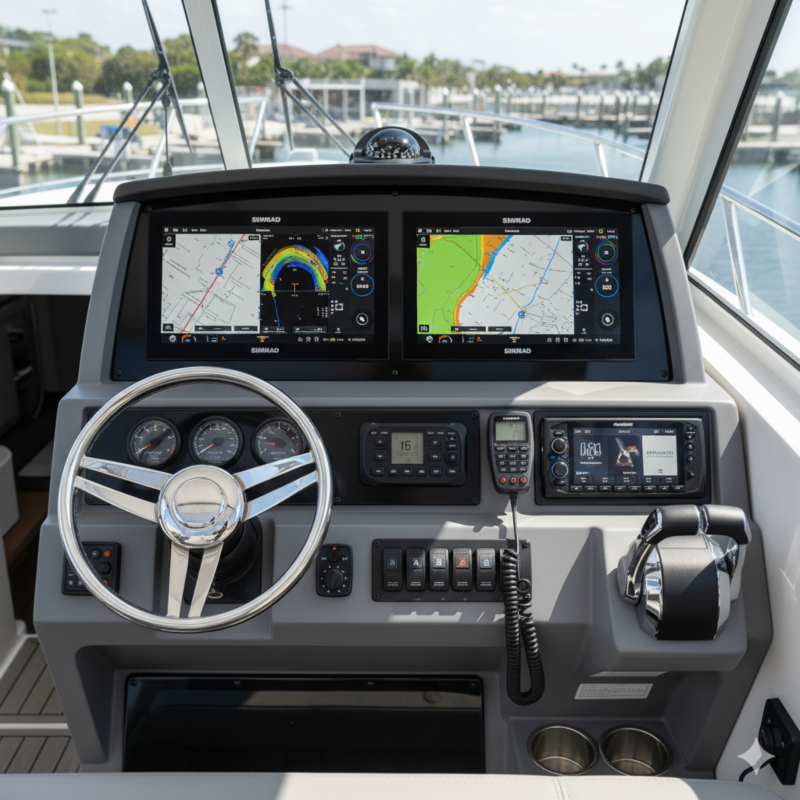
- Fault codes or warning horns on digital gauges.
- Trim that creeps down or will not hold.
- New vibration after hitting something.
Any of these deserves a diagnosis before the next trip. Continuing to run an overheating or water-contaminated engine turns a moderate repair into a major one.
What a Mobile Mechanic Can Do at the Slip
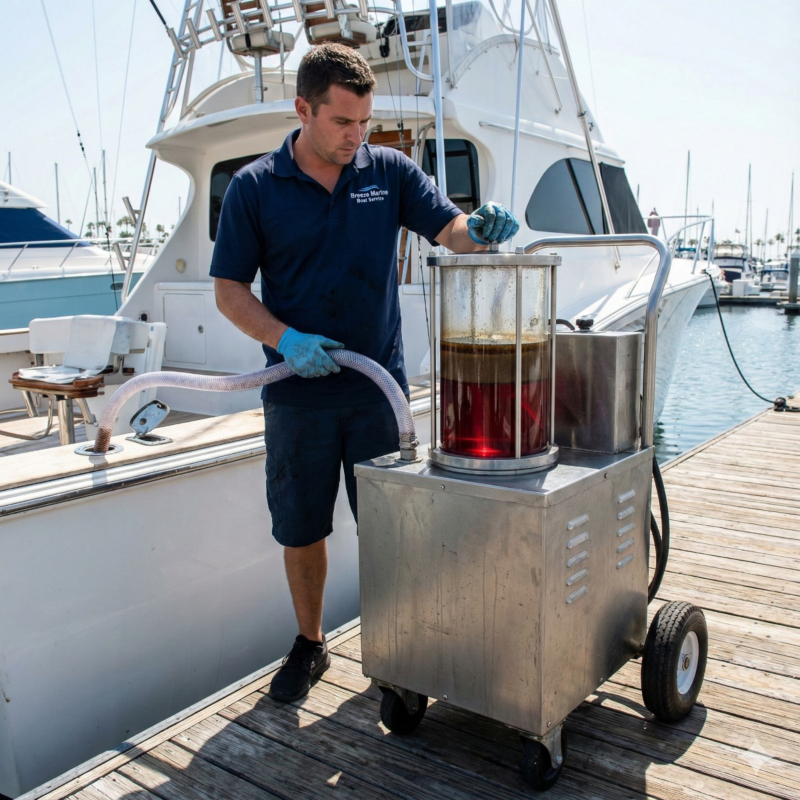
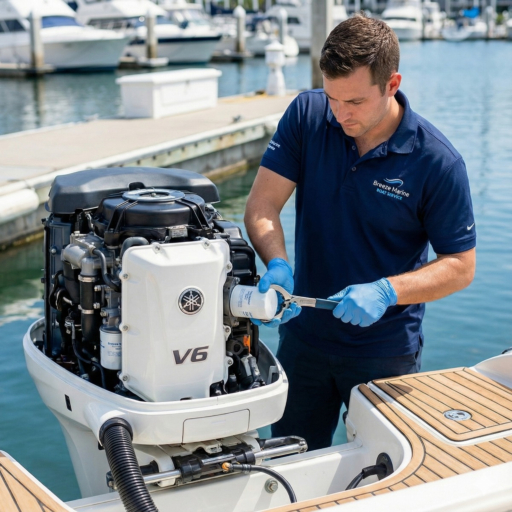
People searching for mobile boat mechanics near me usually want to avoid hauling and trailering for work that can be done in the water. On a boat in a slip or on its trailer in a driveway, a mobile outboard mechanic can typically handle flushing checks, impeller replacement, gear oil changes, anodes, filters, plugs, thermostats, grease points, prop removal and most diagnostics. Jobs like major gearcase rebuilds or powerhead work may need the engine removed or the boat hauled.
If your own search is outboard motor service near me or outboard mechanic near me, check that the mechanic actually works in your area. We are based in San Pedro and work on boats in Long Beach, San Pedro and across LA County. Our 100-hour and annual engine maintenance service covers the routine items on this list, and the same visit is a good time to raise any warning signs you have noticed.
A Simple Record Keeps the Engine Honest
Keep a log of engine hours, dates of impeller and filter changes, gear oil condition and any alarms. It helps a mechanic spot patterns quickly, and it makes the boat easier to sell. When you do need outboard motor repair near me in a hurry, that record shortens the diagnosis.
Outboard Service FAQ
How often should a saltwater fishing outboard be serviced?
Follow the hour and time intervals in your owner's manual, and treat heavy saltwater use as the demanding end of those intervals. Flushing after every trip is not optional in salt water.
Can the water pump impeller be changed with the boat in the water?
Often yes. The lower unit is tilted up or accessed from a dock or dinghy, depending on the boat. It depends on the engine and the slip layout.
Is propeller reshaping worth it?
For minor dings, bent tips and edge damage, it usually restores performance. For cracked blades or a spun hub, replacement is the better call.