
A boat that sat through a long season, whether ashore or in the slip, often starts badly, runs rough or dies at speed the first time it goes out. The engine usually gets the blame, but the real problem is often the fuel or what the fuel left behind. The fix depends on the engine: diesel boats usually need their tank cleaned, while older gasoline engines with carburetors usually need the carb cleaned or rebuilt. If you are torn between searching for fuel polishing near me and looking for a carburetor rebuild, this guide helps you work out which problem you actually have.
What happens to fuel when a boat sits
Diesel: water and microbial growth
Diesel tanks breathe through their vents. As temperatures swing between day and night, humid air enters and water condenses on the tank walls. That water settles at the bottom, and at the boundary between water and fuel, microbes grow. This is often called diesel bug. It forms a dark slime and sludge that clogs filters and can damage injection pumps. Sediment from aging fuel adds to the mess.
Gasoline: ethanol and varnish
Gasoline blended with ethanol absorbs water, and past a certain point the ethanol and water separate out and sink to the bottom of the tank. Meanwhile the lighter parts of the gasoline evaporate, leaving gummy varnish. In a carbureted engine that varnish coats the tiny jets and passages in the carburetor, especially in the float bowl, where fuel sits and slowly evaporates over the lay-up.
Symptoms that point to the tank
- The engine starts and idles, then loses power or dies under load as the filter clogs.
- Primary fuel filters or separators clog repeatedly, sometimes within a few hours of running.
- The filter bowl shows water, dark sludge or stringy black material.
- Problems get worse in rough water, when sediment is stirred up off the tank bottom.
This is the typical case for polishing, especially on a diesel. Owners typing diesel fuel polishing near me have usually already seen the pattern: new filters help for a while, then clog again.
Symptoms that point to the carburetor
- Hard starting, particularly needing lots of choke or priming.
- Rough, uneven idle or stalling when you shift into gear.
- Hesitation or a stumble when you open the throttle.
- Fuel dripping from the carburetor or a flooded smell, often from a stuck float or needle.
- Symptoms that stay the same even with fresh fuel and a new filter.
If fresh fuel and a new filter changed nothing, the carburetor is the likely cause. A cleaning can clear light varnish, while heavy deposits, worn needles and seats, or hardened gaskets call for a full rebuild.
What fuel polishing involves
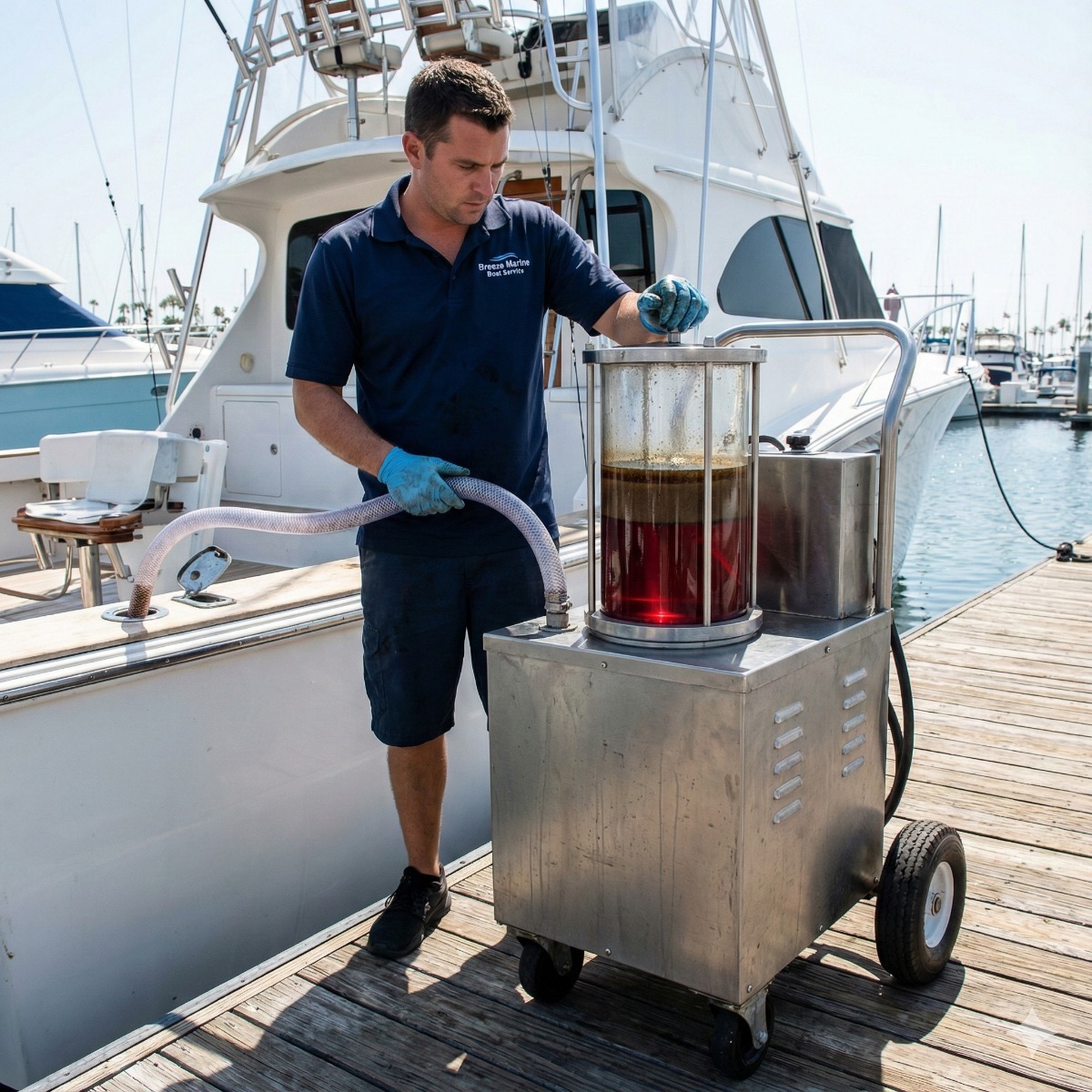
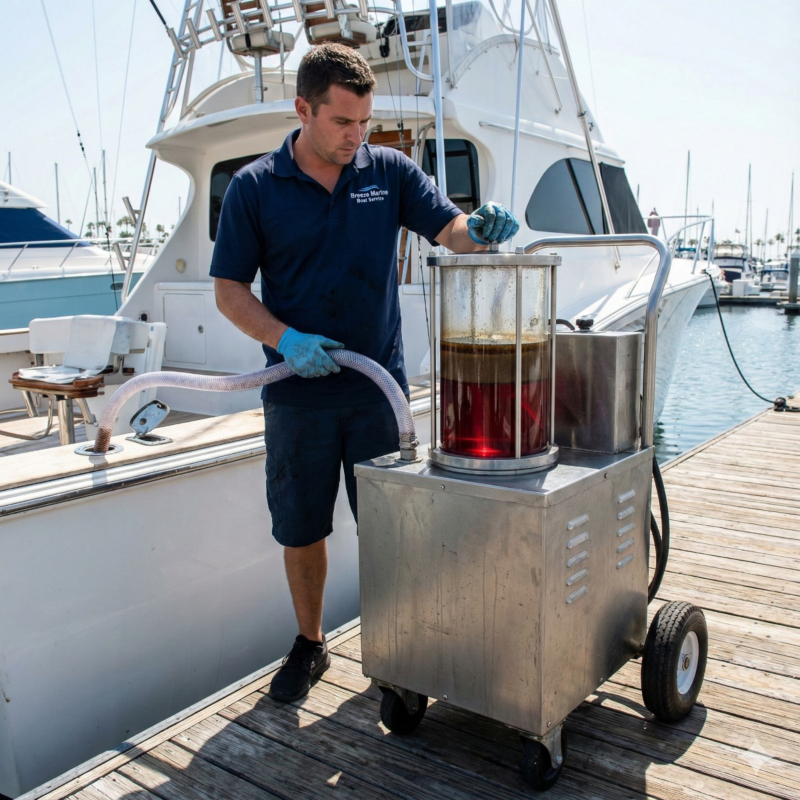
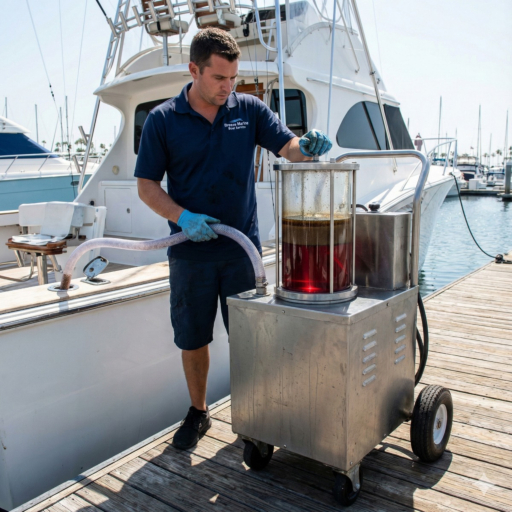
Fuel polishing circulates fuel from the tank through a series of filters and water separators and back again, often with agitation to lift sediment off the bottom. The goal is to remove water, sludge and microbial growth while keeping usable fuel. Depending on how contaminated the tank is, the technician may also suggest a biocide, an inspection through an access plate, or in the worst cases emptying and cleaning the tank. Polishing makes most sense for diesel tanks and can also deal with some water in gasoline tanks, although phase-separated gasoline is usually better removed than filtered. When you search for fuel polishing near me, ask whether the service includes filter changes and a look at the tank pickup and vent.
Order of work: tank first, then engine
If both the tank and the carburetor look suspect, clean the fuel first. Rebuilding a carburetor and then feeding it contaminated fuel means doing the job twice. A sensible order is:
- Inspect the fuel filter and water separator, and look at a fuel sample in a clear jar.
- Deal with the tank: polish it, drain water or remove bad fuel.
- Replace fuel filters and check fuel lines, vents and the anti-siphon valve.
- Clean or rebuild the carburetor, or service the injectors on a diesel.
- Run the engine at the dock and then on the water to confirm the fix.
What a mobile service does at the slip
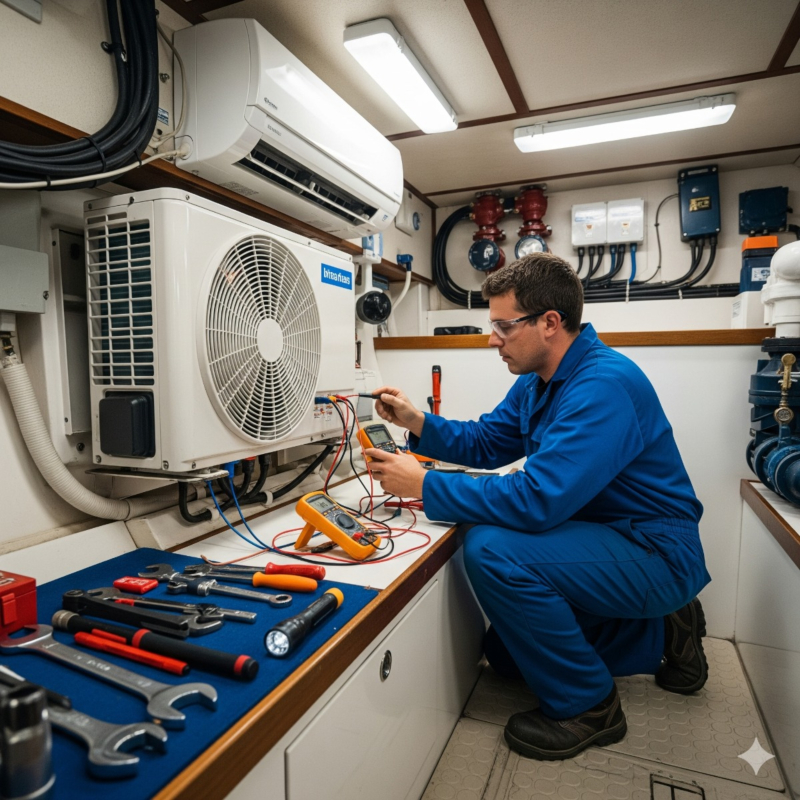
Most of this work can be done without hauling the boat. Breeze Marine Boat Service LLC is a licensed and insured mobile boat repair company based in San Pedro, serving Long Beach, San Pedro and LA County. At the slip we can polish fuel, change filters, and remove, clean and rebuild carburetors. We no longer sell parts, so filters and rebuild kits are supplied by the owner. If your search was fuel polishing services near me, see our fuel tank polishing and filtration service in Long Beach. If it was boat carburetor rebuild near me or marine carburetor rebuild service near me, we handle that work on the boat as well. Owners looking for marine carburetor rebuilders near me often assume the carb has to be shipped away, but many can be rebuilt right at the engine.
Preventing it before the next lay-up
- Keep diesel tanks nearly full during storage to reduce condensation, and consider a biocide if the boat will sit for a long time.
- Add a fuel stabilizer to gasoline and run the engine long enough to get treated fuel into the carburetor.
- On carbureted engines, consider draining the float bowl before long storage, following the engine maker's guidance.
- Replace fuel filters and drain the water separator at the start of each season.
- Check that tank vents are clear and screened and that fill caps seal properly.
Fuel Polishing FAQ
Does a gasoline boat ever need fuel polishing?
Sometimes, if the tank holds water or sediment, but phase-separated ethanol fuel is usually removed rather than polished. Diesel tanks are the more common candidates.
Can a fuel additive replace a carburetor rebuild?
Additives can help with light deposits, but they rarely clear hardened varnish or fix worn needles and seats. Those need cleaning or a rebuild.
How do I know if my tank has diesel bug?
Dark sludge or stringy material in the filter bowl, repeated filter clogging and a sour smell are the typical signs. A fuel sample drawn from the tank bottom confirms it.