
Fiberglass is tough, but it is not indestructible. Docks, pilings, anchors, dropped gear and years of flexing all leave their mark, and many owners are unsure whether a crack is a cosmetic nuisance or the start of a real problem. The good news is that a large share of fiberglass damage above the waterline can be repaired right where the boat is kept, without a haul-out. The key is knowing what you are looking at.
How a Fiberglass Hull Is Built
A typical production hull has two main layers. The outside is gelcoat, a pigmented resin a fraction of an inch thick that gives the shine and color. Behind it is the laminate: layers of glass fiber saturated with resin, sometimes with a core of foam or balsa sandwiched between skins. The gelcoat protects the laminate from water and sunlight; the laminate carries the loads. Damage that stays in the gelcoat is mostly cosmetic. Damage that reaches the laminate or core is structural and needs proper hull repair.
Common Types of Damage
Spider and stress cracks
Fine cracks radiating from a point, or running in lines near hardware, rails and corners, are called stress cracks. They are usually in the gelcoat only, but they tell you that the area underneath is flexing, often because a cleat, stanchion or hinge is not properly backed. Filling the cracks without addressing the flex means they return.
Chips and gouges
Impact from a dock or piling knocks out gelcoat and sometimes exposes fibers. Once glass fibers are visible, water can wick into the laminate, so even small chips below the rub rail deserve attention.
Cracks through the laminate
A crack you can feel move when you press on it, or one that shows on both sides of a panel, has gone through the laminate. This is structural and is a job for a technician with the right materials.
Soft spots and leaks
Decks that flex underfoot, stains weeping from fittings, or water where it should not be usually point to failed bedding around hardware and a wet core. The sooner these are found, the smaller the repair.
What an Owner Can Check
- Tap test: tap around the damage with a plastic mallet or screwdriver handle. A sharp sound is solid; a dull thud suggests delamination or wet core.
- Press test: press firmly around cracks. Any movement means the laminate is involved.
- Look inside: check the back of the damaged panel from lockers or the bilge for matching cracks or dampness.
- Photograph it: clear photos with a coin or ruler for scale help a technician judge the job before arriving. When you ask about boat fiberglass repair, send those photos first.
What a Repair at the Slip Involves
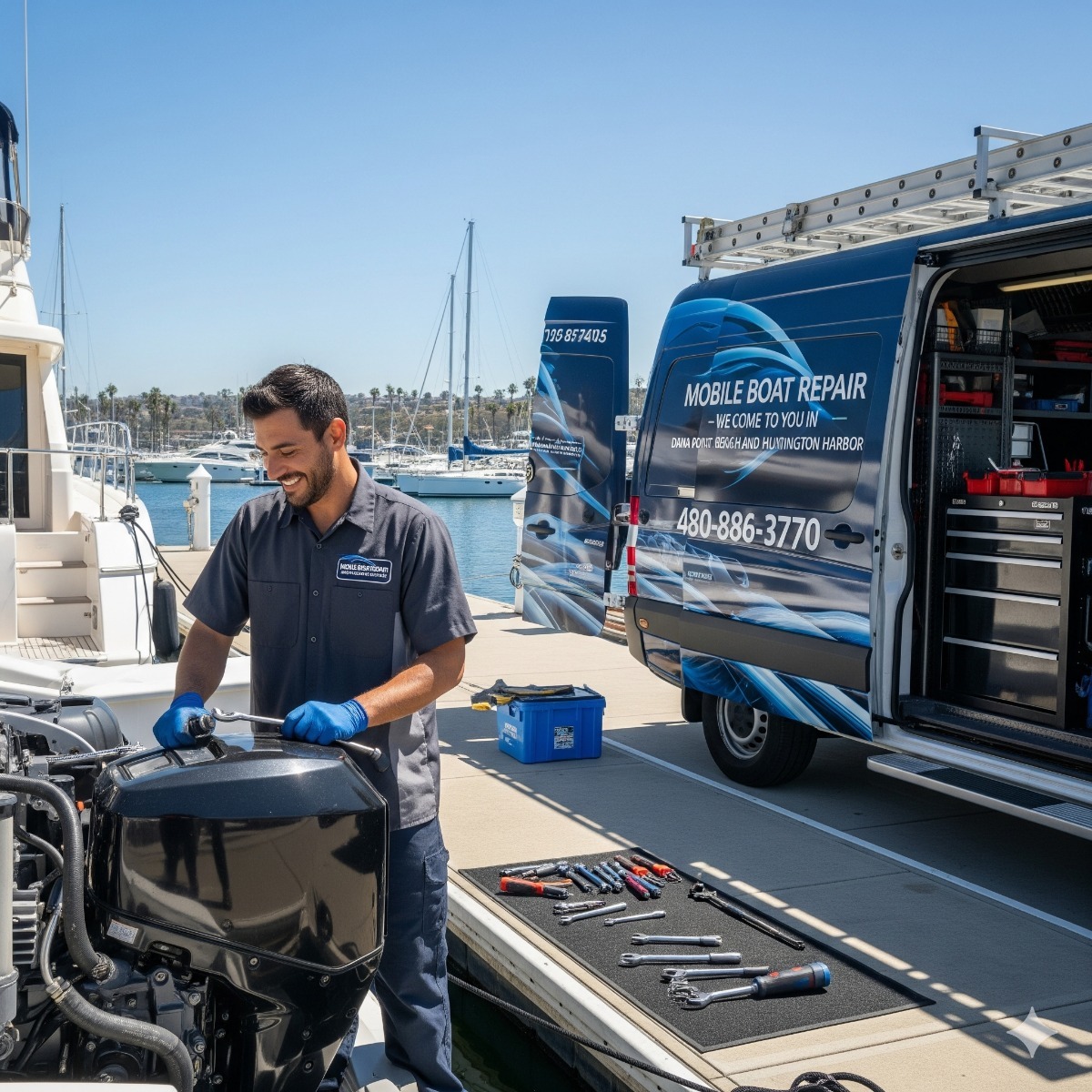
A mobile boat repair visit for fiberglass follows the same principles as a shop repair, scaled to the space and weather. Cosmetic chips and scratches are cleaned, opened into a shallow bevel, filled with color-matched gelcoat, then sanded and polished to blend. Stress cracks are ground out, and if flexing is the cause, the hardware is removed, rebedded and properly backed.
Structural damage above the waterline can often be repaired in place too: the damaged laminate is ground back to sound material with a wide taper, new glass is laid up with marine resin, faired, and then finished with gelcoat. Wet core around deck fittings may be dug out and filled with thickened epoxy. Temperature and humidity matter for resin curing, so outdoor work is scheduled around suitable weather.
Damage below the waterline, large impact damage, and repairs involving wet core over a wide area are usually better handled with the boat out of the water. A good technician will tell you honestly which category your damage falls into.
Fiberglass Care as Preventive Maintenance
Most gelcoat problems develop slowly, which makes preventive maintenance effective. Keep fenders and lines adjusted so the hull does not grind against the dock, rebed leaking hardware before the core gets wet, and fill small chips promptly. Regular polish and detailing is not only cosmetic: a waxed gelcoat sheds UV and salt better and makes new damage easier to spot.
Many owners combine a fiberglass visit with other work such as a battery check or boat engine repair, so one appointment covers several items. The page on mobile fiberglass and engine repair at your slip or dock lists the kinds of jobs that can be done in one trip.
When to Call a Technician
Get professional marine fiberglass repair if a crack moves under pressure, if you find soft or wet areas, if fibers are exposed, or if water is getting in. Quick hull damage repair keeps water out of the laminate, and a dry laminate is far cheaper to fix than a saturated one. For purely cosmetic scratches, owners can decide on timing, but prompt fiberglass boat repair usually gives the best color match and finish.
Fiberglass Repair FAQ
Will a gelcoat repair be visible?
A careful color match and polish can make small repairs very hard to see, although older, faded gelcoat is harder to match exactly than a newer hull.
Can I use a store-bought repair kit?
For small cosmetic chips, a kit can work as a temporary fix. Anything that reaches the laminate or involves cracking from flex should be assessed properly.
Do spider cracks mean the hull is weak?
Not necessarily, but they show that an area is flexing more than it should. Finding and fixing the cause is more important than filling the cracks.