A marine generator has two halves that fail in different ways: a small diesel or gasoline engine, and the generator end that turns rotation into 120V or 240V AC. When the set runs but the panel shows no power, or it stalls the moment the air conditioning kicks on, the fault could be in either half. Sorting out which side is responsible is the core of good boat generator diagnostics, and it is what separates a quick fix from an expensive round of guessing.
Engine Side or Generator Side?
A generator must spin at a precise speed to produce the correct frequency, usually 60 Hz in North America. If the engine cannot hold that speed under load, voltage and frequency sag together. If the engine runs perfectly but the output is missing or wrong, the problem is almost always electrical, in what technicians call the back end.
Common back-end faults
- Failed capacitor on brushless capacitor-excited units, giving low or no voltage
- Faulty diodes or a failed automatic voltage regulator (AVR)
- Damaged rotor or stator windings, often after overheating or water intrusion
- Loose or corroded output connections and a tripped generator breaker
Common engine-side faults
- Fuel starvation from clogged filters, air leaks or a weak lift pump
- Overheat shutdowns from a worn raw water impeller or scaled cooling passages
- Low oil pressure shutdowns and faulty safety switches
- Governor or actuator problems that make the engine hunt or surge
Symptoms and What They Usually Mean
The engine starts, runs smoothly and shows no output: suspect the capacitor, AVR, diodes or windings. The set starts and then stops after a few seconds: often a safety shutdown, where the start circuit holds the engine running until oil pressure builds and a faulty sensor or low oil then shuts it down. Surging lights and a set that hunts up and down: fuel supply or governor trouble. Stalling only when a heavy load such as air conditioning or a water heater comes on: a tired engine, a fuel restriction or an overload beyond the rating.
Wet stacking is a common problem on diesel sets that are run for long periods at very light load. Unburned fuel and soot build up in the exhaust, power drops and the exhaust smokes. Running the set at a healthy share of its rating regularly helps prevent it.
How Professional Diagnostics Work
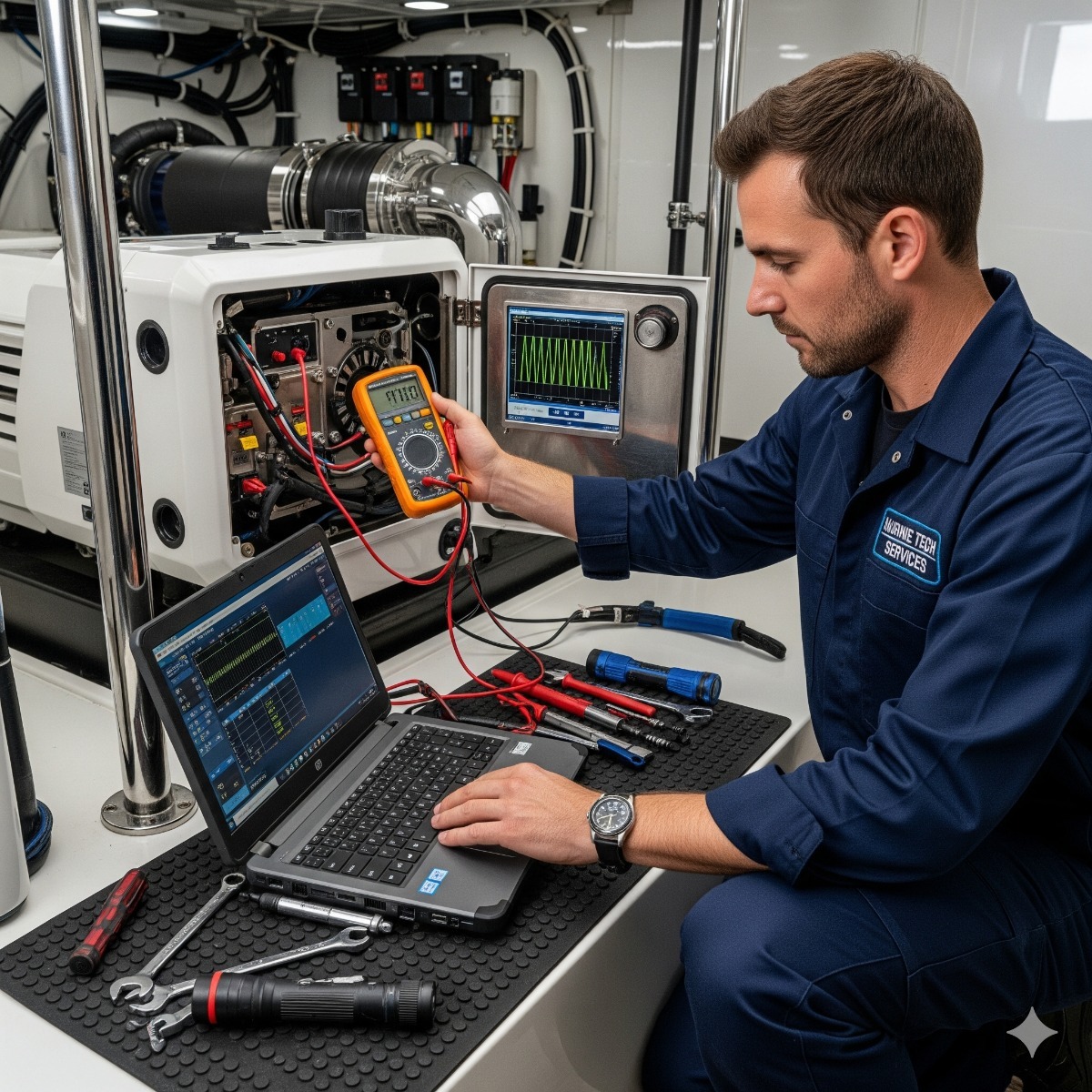
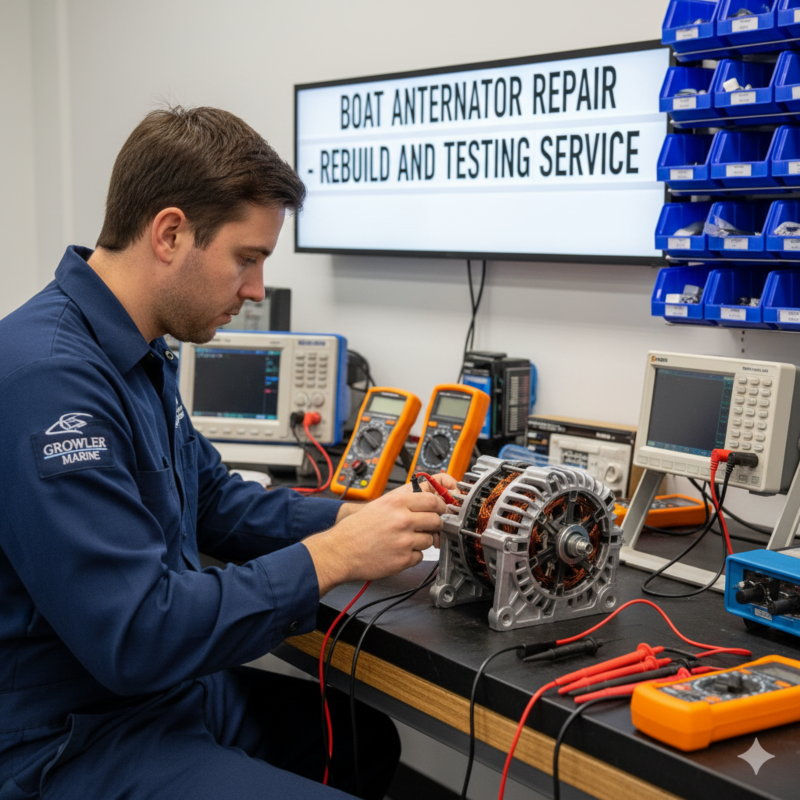
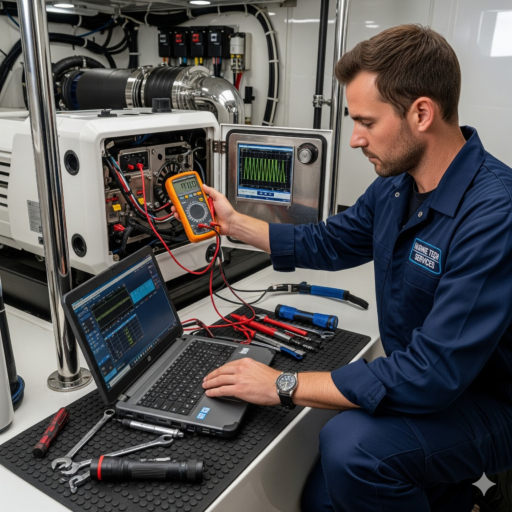
A structured marine generator service call typically starts at the panel, measuring AC voltage and frequency with and without load. Low voltage with correct frequency points to the back end; low frequency points to the engine. The technician then checks the start and stop circuits, safety switches and fuel system on the engine side, and tests capacitors, diodes and winding resistance on the generator side.
A useful step is testing with a load bank, a resistive device that applies a controlled electrical load. It shows whether the set can hold voltage and frequency at full rating without stalling, something you cannot confirm by switching on a few cabin lights. Many problems only appear under load.
Brand Differences Owners Ask About
Owners often search for westerbeke generator repair, kohler marine generator repair or onan marine generator repair because each brand has its own control boards, fault codes and service parts. The fundamentals are the same across brands: clean fuel, good cooling water flow, correct valve adjustment, healthy exhaust and a sound generator end. Having the model and serial number handy speeds up parts lookup and wiring diagrams considerably.
What an Owner Can Check
- Is the generator breaker on the set itself tripped?
- Is cooling water coming out of the exhaust within seconds of starting?
- Is the raw water strainer clean and the seacock open?
- Are oil and coolant levels correct?
- Is the start battery healthy, with clean terminals?
- Is there any fault code or indicator on the control panel?
Write down any fault codes and the sequence of events. That information is valuable to whoever carries out the boat generator repair.
Maintenance That Prevents Most Failures
Regular marine generator maintenance follows running hours. Oil and filter changes, fuel filter changes, impeller replacement, zinc anode checks where fitted, and periodic inspection of the exhaust mixing elbow prevent the majority of breakdowns. Exercising the generator under meaningful load every few weeks, rather than letting it sit, keeps seals supple and fuel moving. Descaling the heat exchanger at intervals matters more in warm Southern California water, where marine growth builds quickly.
When to Call a Technician
Call for marine diesel generator repair if the set overheats, stalls under load, runs without output, smokes heavily or makes a new knocking or grinding noise. Do not keep resetting a safety shutdown; it is protecting the engine. Our marine generator diagnostics and repair service covers boats in San Pedro, Long Beach and throughout Los Angeles County, and a clear description of symptoms helps us arrive with the right parts. Professional marine generator repair is also worth considering before a long summer trip, when losing air conditioning and refrigeration is most inconvenient.
Generator Diagnostics FAQ
Why does my generator shut down after a few seconds?
Usually a safety system is tripping: low oil pressure, high temperature or a faulty sensor. Check oil level and cooling water flow first, then have the switch and sensor tested.
Can a generator run fine but produce no electricity?
Yes. A failed capacitor, AVR, diode or winding can stop output entirely while the engine sounds perfectly healthy.
How often should a marine generator be exercised?
A run under a reasonable load every few weeks is a sensible habit, especially on boats that rely on shore power most of the time.