





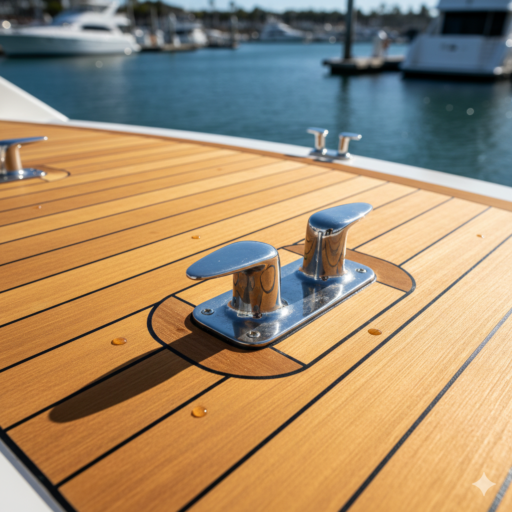
Deck surfaces take more abuse than almost any other part of a boat. They are walked on in wet shoes, baked by the sun, splashed with fish, sunscreen and fuel, and expected to provide grip when the boat is rolling. When the original carpet is stained or the molded non-skid is worn smooth, a new deck covering can change how the boat feels and looks. The choices have grown in recent years, so here is how the main options compare.
The Main Options
EVA foam
EVA foam decking is a closed-cell foam sheet, usually bonded with pressure-sensitive adhesive. It is soft underfoot, comfortable for long days standing, and available in many colors and patterns, including brushed or grooved finishes that look like planks. Because it is closed-cell, it does not absorb water. Lighter colors stay reasonably cool in the sun, while dark shades can get hot.
Synthetic teak
Synthetic teak is a broad term for PVC- or foam-based products shaped and colored to look like laid teak planks with caulked seams. Harder PVC types look closer to real teak and wear well; foam versions are softer and lighter. Both avoid the regular oiling or cleaning routine of real wood.
Real teak
Traditional teak decking has natural oils that resist rot and a grip that improves when wet. Burmese teak has long been prized for its tight grain and oil content. Real teak is beautiful and durable when well maintained, but it is heavier, more expensive and needs periodic cleaning and seam care. It also gets hot in direct sun.
Marine carpet and snap-in carpet
Carpet is inexpensive, comfortable and quiet, but it holds water, sand and stains, and can mildew. Snap-in carpet can be removed for cleaning, which helps, but many owners replace it with a harder-wearing option.
Comparing What Matters
- Grip: good non-skid traction wet and dry is essential. Textured foam and real teak both perform well; worn molded non-skid and wet carpet are the weakest.
- Heat: lighter foam colors are generally the coolest; dark foam and teak can get hot in summer sun.
- Weight: foam is lightest, real teak is heaviest, which matters on smaller boats.
- Maintenance: foam and synthetic products need soap and a soft brush; real teak needs regular gentle cleaning and occasional seam repair.
- Lifespan: depends on sun exposure, traffic and care. Real teak can last many years if not over-scrubbed.
Why Fit Matters as Much as Material
Any boat flooring looks only as good as its fit. Decks are full of curves, hatches, cleats, drains and consoles, and small gaps collect dirt and look unfinished. Modern installers use digital templating, scanning or tracing the deck precisely and cutting panels on a CNC machine, so seams and borders line up with hatches and edges. Traditional paper or plastic templates can also work well in experienced hands.
What the Installation Involves
- Removal: old carpet, glue and hardware are removed.
- Surface prep: the fiberglass is cleaned and sanded so adhesive bonds properly; any soft spots or damage are repaired first.
- Templating and cutting: panels are templated and cut to shape.
- Bonding: panels are bonded with adhesive suited to the material, or for real teak often bedded in epoxy.
- Hardware: hardware is refitted and rebedded with fresh sealant.
Proper surface prep matters because adhesive failure usually starts at edges where water or dirt got under a poorly bonded panel. Drains and hatch gutters need particular care, since standing water at a seam slowly works under the edge and lifts it.
Questions to Ask Before You Choose
Think about how you use the boat. Fishing boats take hooks, blood and heavy traffic; family cruisers need comfort and heat control; sailboats need grip at heel. Ask how the product handles sunscreen, fuel and fish blood, what colors stay coolest, and how repairs are made if a section is damaged. Owners searching for marine decking near me should also ask to see previous installs and how edges and seams are finished.
For a closer look at how marine decking projects are planned and installed, from teak to foam, see custom marine decking and teak flooring.
Boat Decking FAQ
Can foam decking go over existing non-skid?
Often yes, but the surface must be clean and prepared, and very aggressive texture may need to be sanded for a good bond.
Is real teak still worth it?
For owners who love its look and feel and are willing to maintain it, yes. Others prefer synthetic options for lower weight and upkeep.
How do I clean foam decking?
Mild boat soap and a medium brush are usually enough. Avoid harsh solvents that can affect the foam or adhesive.


