Steering problems almost never arrive all at once. A wheel that takes a little more effort each trip, a boat that wanders at cruise speed or an oily smear behind the dash are early warnings that something in the system is wearing out. Because steering is the one system you cannot do without when you are close to a breakwater or another boat, it pays to understand what is going on before the wheel locks up completely.
How Boat Steering Systems Work
Most recreational boats use one of three types of marine steering gear, and each fails in its own way:
- Rotary mechanical cable: a helm at the dash turns a gear that pushes and pulls a long cable running to the engine or outdrive. Common on outboard and sterndrive boats.
- Rack and pinion: an older mechanical design, often found on ski boats, where the helm moves a toothed rack back and forth.
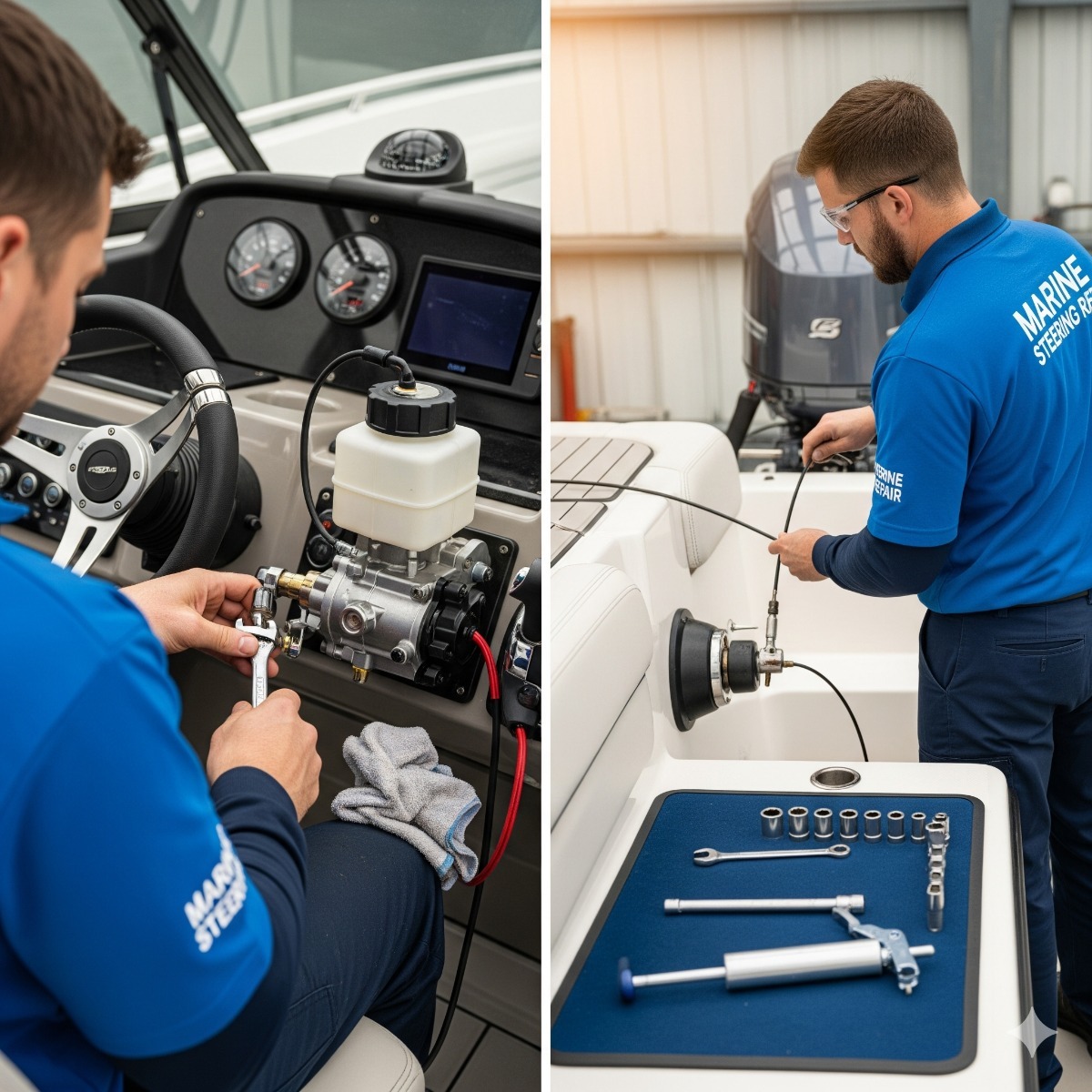
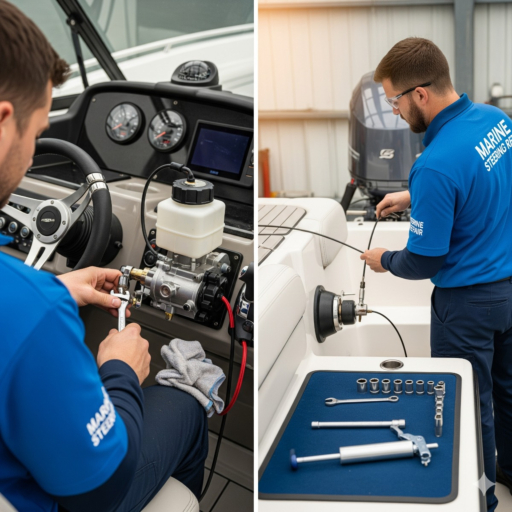
- Hydraulic: the hydraulic helm is a small pump. Turning the wheel pushes fluid through hoses to a cylinder at the engine or rudder, which gives light steering and no feedback from the propeller.
Knowing which system you have is the first thing a technician will ask, and it narrows the list of likely faults straight away.
Symptoms and What They Usually Mean
The wheel gets stiffer over time
On cable systems this is the classic sign of corrosion inside the cable or the engine's tilt tube. Salt water works its way under the cable jacket, rust builds up and the inner rod starts to bind. On outboards, a dry pivot or tilt tube can produce the same feel even when the cable itself is healthy.
The wheel will not turn at all
A seized steering cable is one of the most common reasons a boat is left tied up at the dock. Once the inner core has rusted solid or the plastic liner has broken down, no amount of grease will free it, and boat steering cable replacement is the only lasting fix.
Fluid behind the wheel or on the floor
Hydraulic fluid weeping from behind the steering wheel almost always points to a worn shaft seal in the helm. Turning the wheel thousands of times wears the seal, and once it leaks the system loses fluid and draws in air.
Spongy steering or extra turns lock to lock
On hydraulic systems, air in the lines or a low reservoir makes the wheel feel vague and adds turns. A leaking cylinder seal at the engine end has the same effect and usually leaves traces of fluid on the ram.
Play or clunking in the wheel
Loose helm mounting bolts, worn link arm bushings or a tired rack and pinion gear produce free play before the engine responds. That play grows quickly once it starts.
Simple Checks an Owner Can Do
- Isolate the problem: with the engine off, have someone disconnect the steering link arm at the engine. If the engine swings freely by hand but the wheel is still stiff, the cable or helm is at fault. If the engine is hard to move, the pivot or tilt tube needs attention.
- Check fluid: on hydraulic systems, look at the fill plug on the helm and top up with the fluid the manufacturer specifies.
- Look for leaks: wipe behind the dash, along the hoses and on the cylinder, then check again after a run.
- Turn lock to lock: count the turns and note any tight spots, which help locate a kink or corrosion point.
Do not spray lubricant into the end of a stiff cable and hope for the best. It may loosen things for a day, but it also flushes old grease and does nothing about rust deeper in the cable.
What the Repair Involves
Boat steering system repair depends on what the diagnosis finds. For a seized cable, the old cable is cut at the engine end and the rusted rod is driven out of the tilt tube, which is often the hardest part of the job. The tube is then cleaned, greased with marine waterproof grease, and a new cable is routed through the gunwales, connected to the helm and checked for full travel.
Hydraulic steering repair usually means helm seal repair: the shaft and rear seals of the helm pump are replaced, the system is refilled and bled, and the cylinder is checked for leaks. Specialist boat steering rebuilders can restore many helms rather than replacing them, which is worth asking about when a unit is otherwise in good condition. Owners tired of wheel kick on a cable boat sometimes use the repair as a chance to upgrade to a no-feedback helm or a full hydraulic conversion.
If the wheel is getting harder to turn or you have found fluid behind the dash, the page on cable and hydraulic steering repair explains how the work is carried out at the boat.
When Not to Wait
Call a technician before your next trip if the wheel binds at any point, if the engine does not follow the wheel smoothly, or if hydraulic fluid is visibly low. Steering that fails while you are maneuvering in a crowded harbor is a collision risk, not just an inconvenience.
Boat Steering FAQ
How long does a steering cable last?
It depends on use, salt exposure and how well the tilt tube is greased. Many cables give years of service, but once stiffness appears the cable is usually on its way out.
Can a leaking hydraulic helm be resealed?
Often yes. Replacing the shaft seal and rear seals stops most helm leaks, provided the shaft is not badly scored or corroded.
Is hydraulic steering worth the upgrade?
On larger or higher-horsepower boats it greatly reduces steering effort and wheel kick. On small, light boats a quality no-feedback cable helm may be enough.