

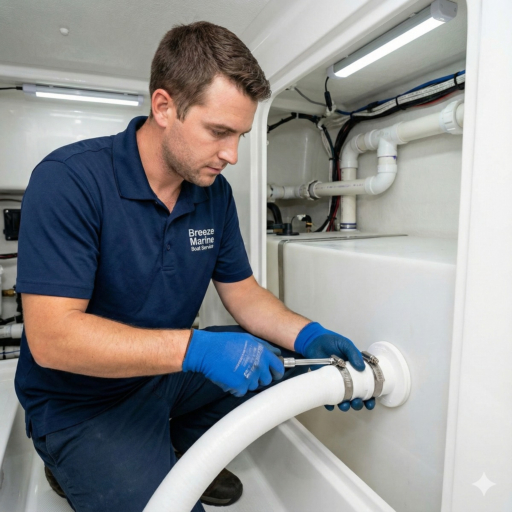
Few things spoil a day aboard like a cabin that smells of the head. Owners often respond by scrubbing the toilet and pouring treatment into the tank, and the smell fades for a day or two before coming back. When that happens, the source is usually not the toilet bowl or the tank contents at all. It is the plumbing, and in particular the hose. Here is how to find the real cause and what fixing it involves.
Where Head Odor Comes From
A marine sanitation system has several places where odor can escape:
- Permeated hose: sanitation hose slowly absorbs waste gases through its walls. Once saturated, the outside of the hose gives off odor constantly.
- Tank vent: a holding tank needs a vent to the outside. If the vent is blocked by insects, salt or a kinked hose, gases build up and escape through fittings, and the tank contents turn anaerobic, which smells much worse.
- Leaking fittings and seals: hose clamps, tank fittings, the toilet base and the joker valve can all leak small amounts.
- Intake water: in some toilets, seawater left in the intake line stagnates and smells like rotten eggs when flushed.
- The tank itself: old plastic or metal tanks can crack or permeate, and deposits inside build up over time.
Try the Damp Cloth Check
The simplest check is the rag test. Wet a clean cloth with warm water, wrap it around a section of hose for a few minutes, or rub it firmly along the outside, then smell the cloth in fresh air. If the rag smells of waste, that section of hose is permeated. Test several points along the run, especially low spots where waste can sit, and near the tank.
A permeated hose cannot be cleaned or treated back to health. The odor is in the rubber or vinyl itself, which is why tank chemicals may mask boat holding tank odor inside the tank but cannot stop a smell coming through hose walls.
Check the Vent
Look at the vent fitting on the hull. It should be clear of insect nests and salt build-up. The vent hose should run without dips or kinks that can trap water. A holding tank vent filter, usually filled with activated charcoal, sits in the vent line and scrubs odor from the air leaving the tank. Filters wear out, and a saturated filter can restrict airflow as well.
Why Hose Type Matters
Older boats and hoses tend to age together, and many boats were built with standard white or clear vinyl hose that begins to permeate within a few years. Modern sanitation hoses use dense rubber or specialized compounds designed to resist permeation far longer. Products such as trident 101 hose and Shields Poly-X hose are examples of premium sanitation hoses used for this job. They are thicker and stiffer, which makes them harder to route, but they last much longer before odor returns.
What Marine Sanitation Hose Replacement Involves
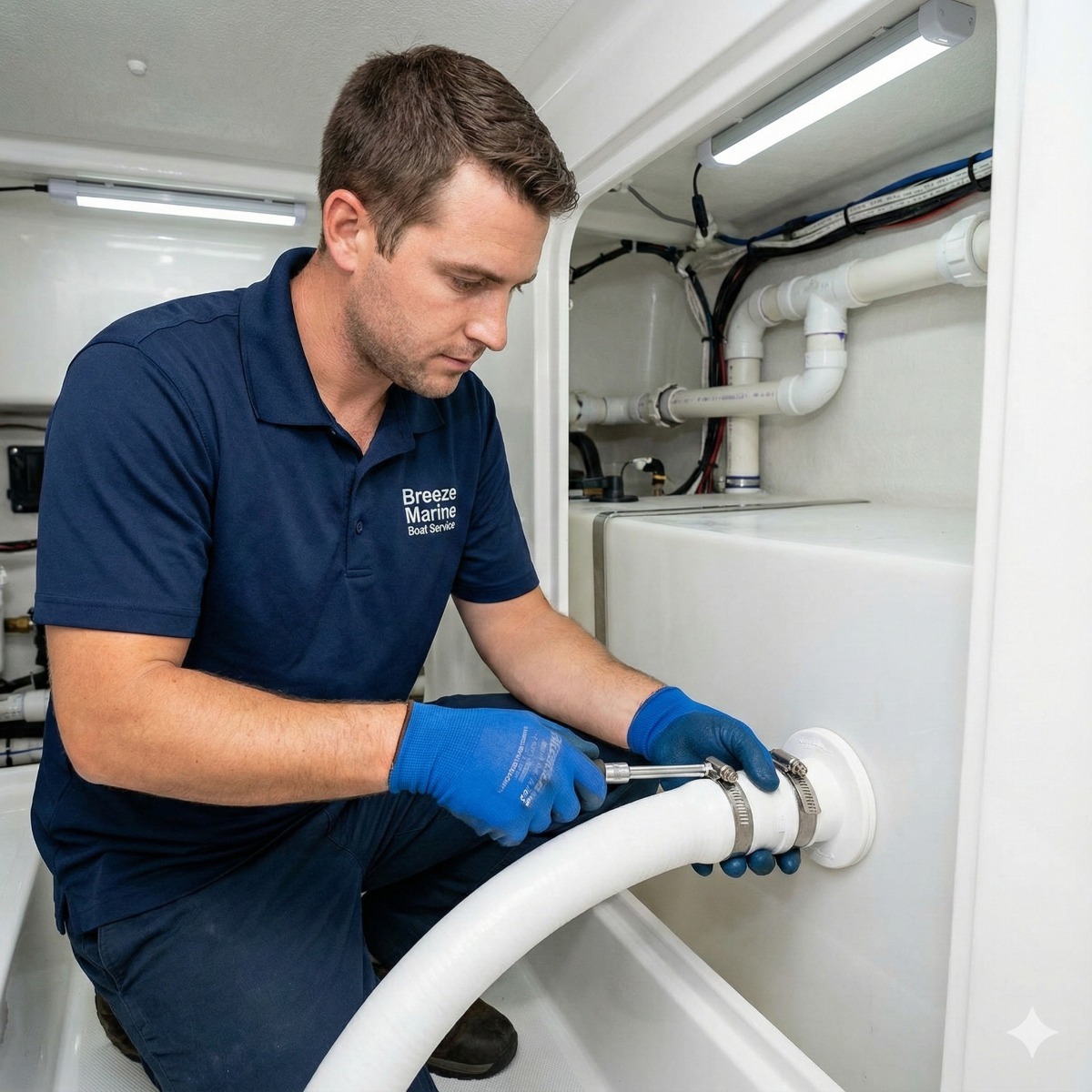
Replacing sanitation hose is not a glamorous job, but done properly it usually solves a persistent boat head smell for years. The process typically includes:
- Pump-out and flush: the tank is emptied and the system flushed with fresh water before any hose is opened.
- Inspection: the full run of the discharge hose, intake and vent line is inspected and tested for permeation.
- Removal: old hoses are cut out. On older boats they are often stiff and seized to fittings, and may pass through bulkheads.
- Routing: new hose is routed with as few low spots as possible and generous bends, using heat and lubricant to seat it on fittings without kinks.
- Clamping: all-stainless clamps, doubled where practical.
- Vent service: the vent line is cleared and a fresh filter fitted.
The page on holding tank odor control and sanitation hose replacement describes how this retrofit is carried out on board.
Ongoing Holding Tank Odor Control
- Pump out regularly rather than letting waste sit for weeks.
- Flush with plenty of water so waste does not rest in the hose.
- Use only toilet paper designed for marine systems, in small amounts.
- Replace the vent filter on the maker's schedule.
- Repeat the damp cloth check once a season.
When to Call a Technician
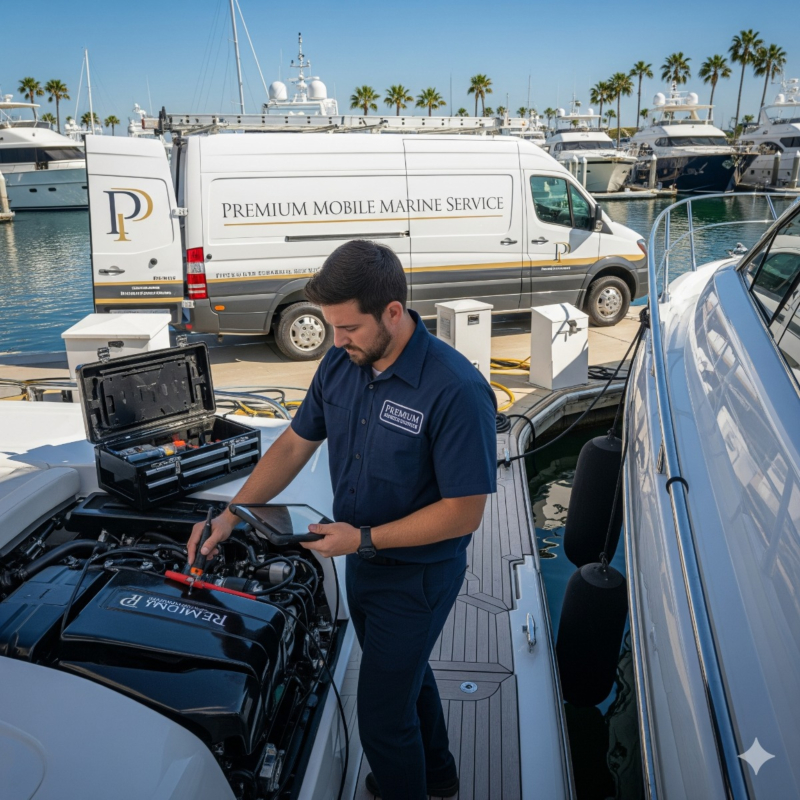
Call for help if the rag test is positive, if the smell persists after a pump-out and flush, if you find leaks at fittings, or if the tank vent is inaccessible. Working on sanitation lines calls for proper cleaning, protective gear and correct disposal of waste and old hoses.
Head Odor FAQ
How long does sanitation hose last?
Standard vinyl hose often permeates within a few years. Premium rubber sanitation hose typically lasts much longer before odor comes through.
Do holding tank treatments work?
They help control odor inside the tank, especially enzyme or aerobic products, but they cannot fix hose that is already permeated.
Should I replace all the hoses at once?
If the rag test shows permeation in several places, replacing the whole run is usually more effective than patching one section.