In warm coastal water, a hull without effective protection can pick up slime within days and barnacles within weeks. Growth adds drag, cuts speed, raises fuel use and can clog through-hull fittings and cooling intakes. Antifouling paint is the main defense, but there is no single best product. The right choice depends on how often you run the boat, how fast it goes and whether it lives in the water year-round. This guide compares the two main paint families and explains what a good bottom job involves.
How Antifouling Coatings Work
Most bottom coatings contain biocides, commonly copper-based, that discourage organisms from settling on the hull. The paint releases these gradually. How that release happens is what separates the main types.
Ablative Coatings
Ablative paint wears away slowly as water moves across it, a little like a bar of soap. As the surface erodes, fresh biocide is exposed. Advantages include:
- Consistent performance over the life of the coating.
- Less build-up of old layers, which simplifies future preparation.
- Works well for boats that move at moderate speeds and for boats that sit for stretches.
The trade-off is that ablative coatings wear faster on boats that run often at high speed, and they can be rubbed off by aggressive hull cleaning.
Hard Coatings
Hard bottom paint forms a tough film that holds biocide in a porous matrix. It does not wear away with use, so it suits faster boats and hulls that are scrubbed regularly by divers. Downsides are that the biocide gradually leaches out and cannot be renewed without repainting, many hard paints lose effectiveness if the boat is hauled out for long periods, and layers build up over years, eventually requiring stripping.
Compatibility matters. Some hard paints cannot be applied directly over ablative coatings without preparation, and vice versa. If you do not know what is on the hull now, that is the first question to answer.
Preparation Is Most of the Job
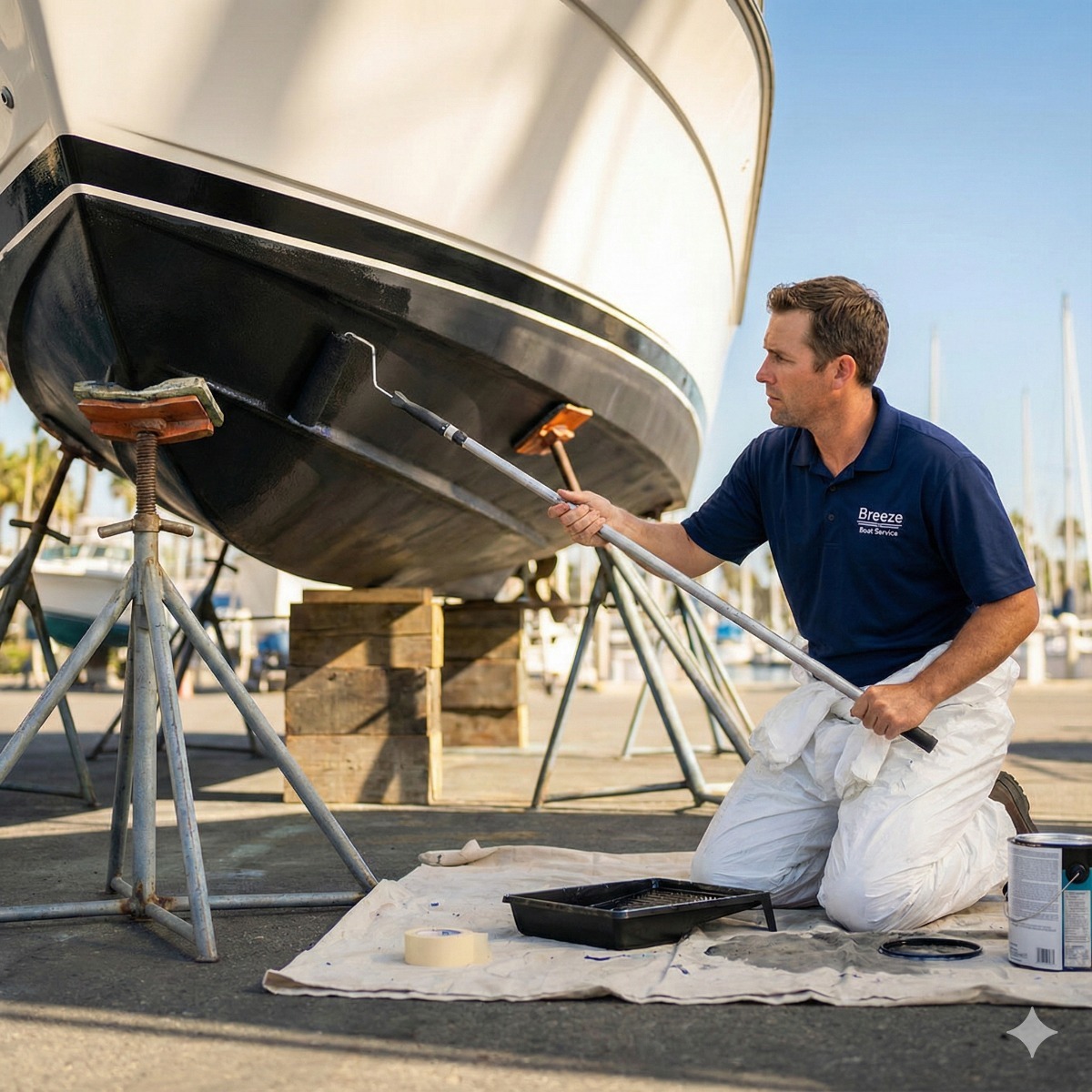
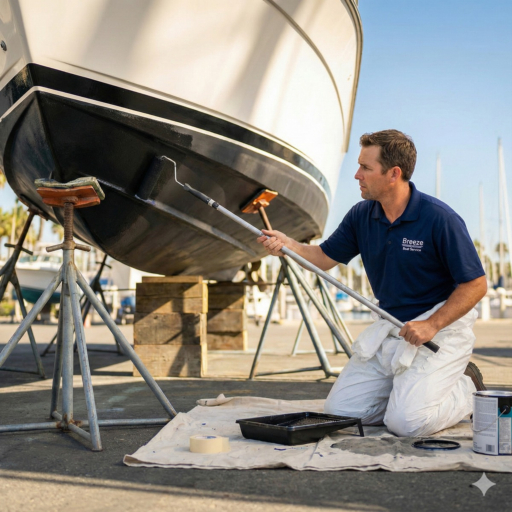
Any paint is only as good as the surface beneath it. Proper hull preparation typically includes pressure washing immediately after haul-out, sanding to remove loose and flaking paint, feathering edges, cleaning with a suitable solvent and masking the waterline accurately. Contractors working in California must also manage dust and runoff responsibly, as paint residue is regulated.
Blisters and sealing the hull
Gelcoat blistering, sometimes called osmotic blistering, happens when water permeates the gelcoat and reacts with components in the laminate, forming fluid-filled bubbles. Blisters in the paint layer alone are a different and usually simpler issue. Where the laminate is affected, the hull may be opened, dried and sealed with an epoxy barrier coat before new antifouling is applied. The same epoxy layer is also often recommended on new or stripped hulls as a preventive step.
Signs Your Boat Needs a New Bottom Job
- Growth returns quickly after a diver cleaning.
- You can see the primer, gelcoat or a contrasting signal coat through the top color.
- Paint is flaking, peeling or blistering.
- Top speed or fuel economy has dropped without an engine explanation.
- Running gear is heavily fouled.
Asking your diver for a short report after each cleaning is an easy way to track paint condition between haul-outs.
Do Not Forget the Running Gear
Propellers, shafts, struts and trim tabs need attention too. Standard copper antifouling should not be applied directly to aluminum parts, as it can cause galvanic corrosion. Specialized coatings exist for metal running gear, and zincs or other anodes should be renewed while the boat is out of the water.
Choosing Between Them
As a rough guide, cruisers and boats that sit for weeks often do well with ablative coatings, while fast boats and those cleaned frequently may suit hard paint. Local water temperature, marina rules and the paint already on the hull narrow the choice further. Many owners searching for boat painting long beach options simply want an honest recommendation for how they use the boat.
When to Call a Technician
Book a haul-out and inspection if you see blistering, bare patches or rapid fouling, or if you are unsure what paint is already on the hull. Our bottom painting and antifouling service covers preparation, sealing coats where needed and paint selection. Professional boat bottom painting starts with understanding the existing coating so the new one bonds and lasts.
Bottom Paint FAQ
How often should a boat bottom be repainted?
It varies with paint type, water temperature and use. Many boats in warm water need attention every one to two years, but inspection is the real guide.
Can I switch from hard to ablative coatings?
Often yes, with the right preparation or a compatible primer. Check the manufacturers' compatibility guidance first.
Are all blisters serious?
No. Paint-layer blisters are often cosmetic, while laminate blisters need assessment. A technician can tell the difference by opening a few.