Boats with a closed-loop cooling system have two pumps working together. One pulls sea water in, and the other circulates coolant through the engine. Owners often know about impellers, but the circulation pump gets less attention until it starts to squeal or leak. Knowing the signs early can prevent an overheated engine and coolant in the bilge.
How closed cooling works
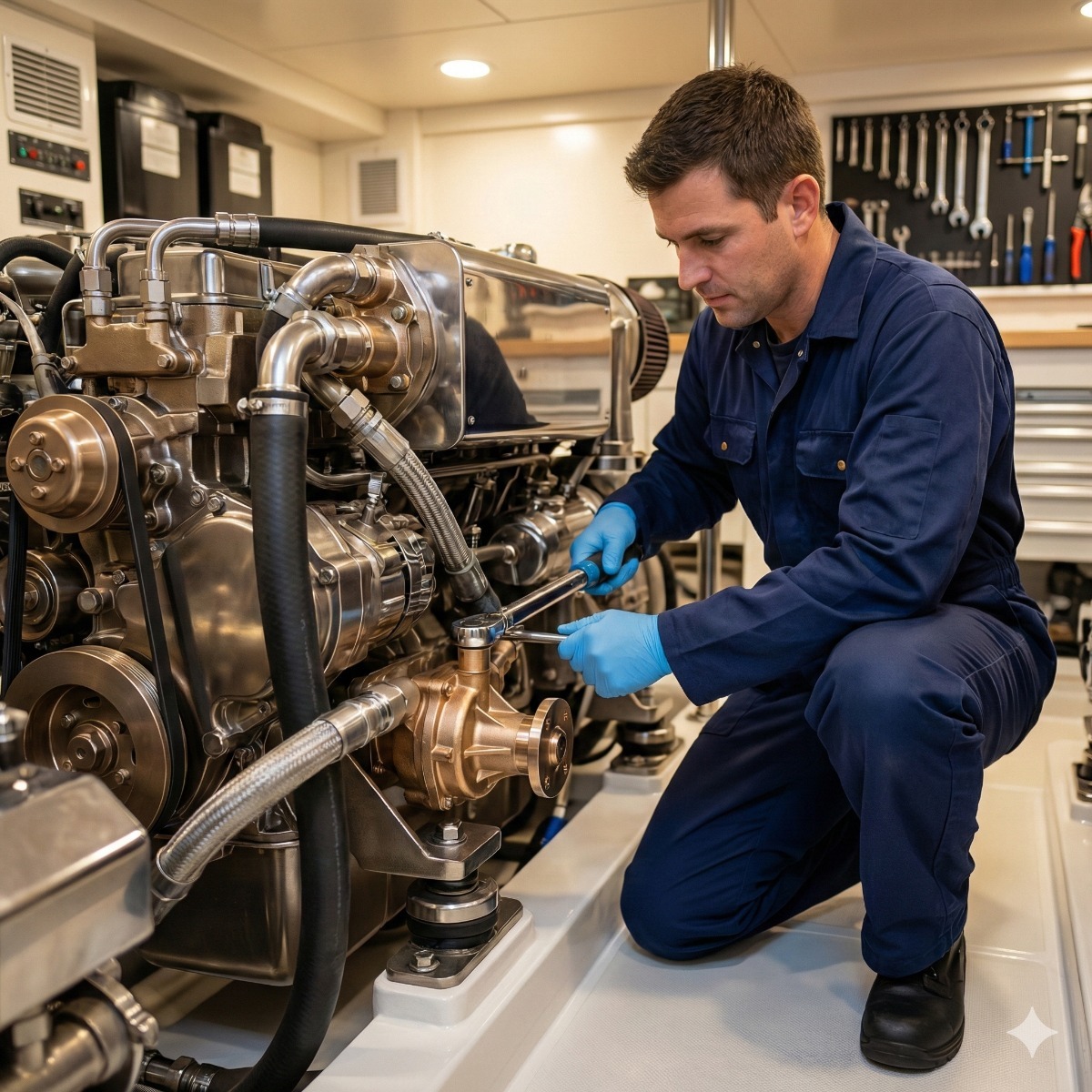
In a closed-loop cooling system, a mixture of water and marine antifreeze circulates through the engine block, heads and manifolds, much like a car. The marine circulation pump, often called the freshwater pump, drives that coolant loop. Instead of a radiator, the coolant passes through a heat exchanger, where sea water pumped by the raw water pump carries the heat away and exits through the exhaust. Keeping salt water out of the engine's internal passages is the main advantage, and it greatly reduces corrosion and scale inside the block.
Raw water pump vs circulation pump
Both are a marine water pump, but they do very different jobs. The raw water pump usually has a rubber impeller and handles sea water, so it wears quickly and needs regular impeller changes. The circulation pump uses a metal or composite impeller in clean coolant and can last many years, but its bearings and shaft seal eventually wear. When they do, the symptoms are different from impeller failure.
Warning signs of a failing circulation pump
- Coolant weeping from the pump's weep hole or gasket. A drip or crusty residue below the pump is an early sign the shaft seal is going.
- A sweet smell in the engine compartment from leaking antifreeze.
- Squealing or grinding from the front of the engine, pointing to worn bearings. A belt can also squeal, so the source needs confirming.
- Wobble in the pulley when the engine is off and the belt is loose.
- Falling coolant level with no visible leak elsewhere.
- Rising temperatures or engine overheating even though raw water flow at the exhaust looks normal.
What owners can check
- With the engine cold, check the coolant level in the expansion tank or heat exchanger.
- Look under the pump for drips, stains or dried coolant.
- Inspect the belt for glazing, cracks and correct tension.
- With the belt removed and the engine off, rock the pump pulley by hand. Any play suggests bearing wear.
Never open a coolant cap on a hot engine. The system is under pressure and can spray scalding coolant.
What circulation pump replacement involves
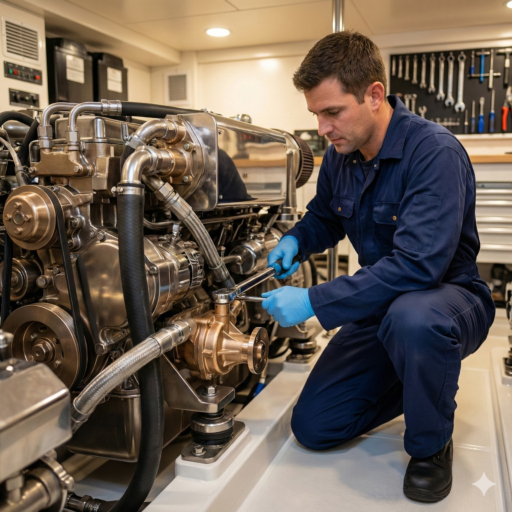
The job starts by draining the coolant into containers so it does not reach the bilge or the water. Belts and the pulley come off, and the pump is unbolted from the engine. The most important step is cleaning the mounting surface: old gasket material has to be removed completely and the surface left flat, or the new pump will leak. The new pump is fitted with fresh gaskets and correct torque, the pulley and belts are reinstalled and tensioned, and the system is refilled with the specified coolant mix.
Bleeding air from the system matters. Trapped air pockets can cause hot spots and false temperature readings, so the engine is run and the coolant topped up until the level stays steady. A final check under load confirms stable temperatures and no leaks.
Replacement parts should be marine-specific. Some automotive pumps look similar but use materials that corrode faster in a damp engine room, or rotate in a different direction. Using parts intended for marine pumps and the specific engine avoids that trouble.
While the pump is off, it is sensible to inspect related parts that share the same labor: the thermostat and its housing, coolant hoses that have gone soft or swollen, the belt tensioner and idler pulleys. Replacing a hardened hose or a noisy tensioner at the same time is usually more economical than opening the system again a few months later.
When to call a technician
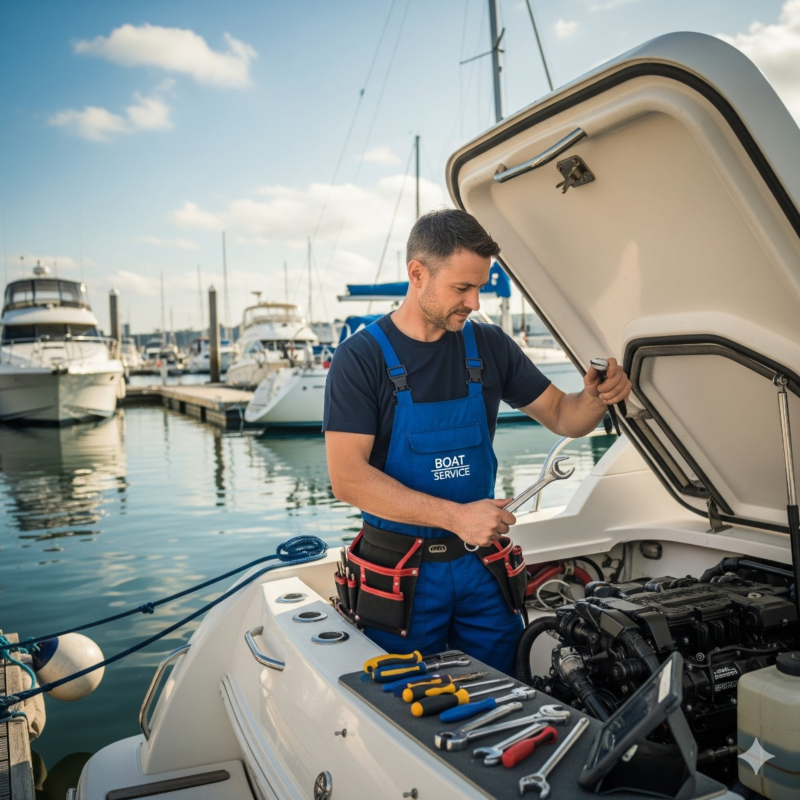
Schedule circulation pump replacement if you see a steady drip from the weep hole, hear bearing noise or lose coolant regularly. Stop running the engine if the temperature climbs or coolant pours out. For details on the job, see marine engine circulation pump replacement from Breeze Marine.
Circulation pump FAQ
How long does a circulation pump last?
Often many years, but it depends on coolant condition, belt tension and engine hours. Old or neglected coolant shortens seal life.
Should I change the coolant when replacing the pump?
Yes, it is a good time to refresh it with the engine maker's specified coolant, since the system is drained anyway.
Can a failing circulation pump cause overheating?
Yes. A worn impeller or a pump that leaks coolant reduces flow through the engine, and temperatures rise even when sea water flow is fine.