
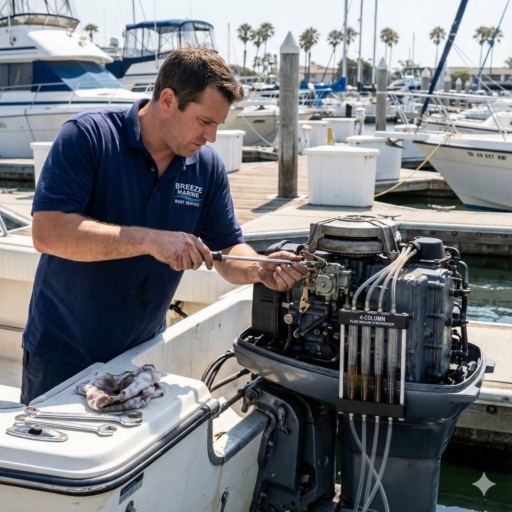
An engine with two, three or four carburetors only runs smoothly when every carburetor delivers the same amount of air and fuel at the same moment. When they drift apart, the cylinders start working against each other. The result is a rough idle, a boat that is awkward to dock at low speed and an engine that never feels as crisp as it should. This guide explains what synchronizing carburetors means, why they drift, the symptoms to watch for and what a proper tuning session involves.
What Carburetor Synchronization Means
On a single-carburetor engine, one throttle plate controls airflow to every cylinder. On twin, triple and four-cylinder two-stroke outboards, inboards with dual four-barrel carburetors, or performance engines with side-draft carburetors, each carburetor feeds its own cylinder or group of cylinders. Carburetor synchronization is the process of adjusting them so they pass equal airflow at idle and open together as the throttle moves. Multi-carb synchronization therefore has two parts: balancing the idle airflow and making sure the linkage keeps every carburetor matched off idle.
Why Carburetors Drift Apart
- Rebuilds and cleaning. Any time a carburetor is removed or disassembled, its idle stop and linkage settings change.
- Linkage wear. Ball joints, pivot bushings and throttle rods wear with use and vibration, adding slack that lets one carburetor lag behind another.
- Corrosion and salt. In a marine environment, sticky throttle shafts and corroded linkage parts can stop a throttle plate from returning to the same position every time.
- Well-meant adjustments. Turning the idle speed screw on one carburetor to cure a stall throws the whole set out of balance.
Symptoms of Carburetors Out of Sync
Carburetors out of sync produce symptoms that look a lot like other engine problems:
- A lumpy, shaking or hunting idle that will not settle at a steady rpm.
- An engine that stalls when put in gear, especially once it is warm.
- Hesitation or a flat spot as you come off idle.
- One cylinder or one bank running cooler or hotter than the others, often visible as one spark plug that looks different from the rest.
- More vibration than usual at trolling speed.
A rough idle on its own does not prove the carburetors are unbalanced. It can also come from a fouled plug, a weak ignition coil, a vacuum leak or a varnished pilot jet. That is why synchronization always starts with a health check.
What an Owner Can Check First
- Pull and read the spark plugs. A plug that is wet or much darker than the others points to a problem in that cylinder.
- With the engine off, move the throttle by hand and watch whether all throttle plates start to open at the same moment.
- Inspect intake boots, hoses and gaskets for cracks that let in unmetered air.
- Make sure the fuel is fresh and the carburetors are clean. Dirty carburetors cannot be synchronized reliably.
Resist the urge to turn screws without instruments. Without gauges, it is easy to make one carburetor compensate for another and lose the baseline altogether.
What a Proper Sync and Tune Involves
Baseline checks
A technician first confirms ignition timing, compression and the absence of vacuum leaks. Tuning around a weak cylinder only hides the real fault.
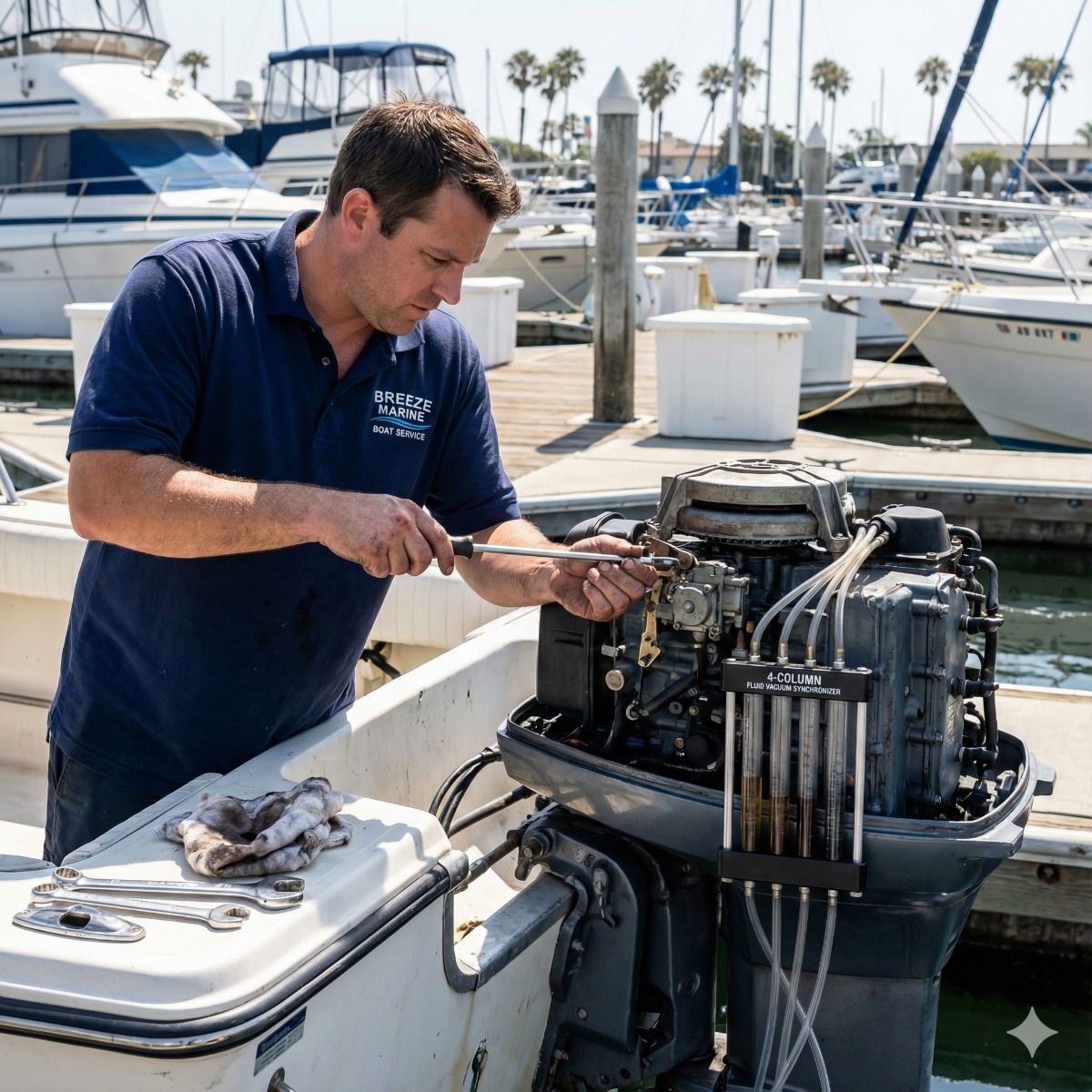
Vacuum balancing with gauges
With the engine at operating temperature, a vacuum gauge or manometer is connected to each carburetor or intake runner, and the idle airflow of each carburetor is adjusted until all gauges read the same.
Throttle linkage adjustment
Next comes throttle linkage adjustment, so the carburetors stay matched as the throttle opens rather than only at idle. This step is what makes the engine answer cleanly when you push the lever forward.
Idle mixture screw adjustment
Finally, idle mixture screw adjustment on each carburetor fine-tunes the air-fuel ratio for the smoothest idle, followed by a last look at the gauges and a run under load.
If your engine shows these symptoms or its carburetors were just rebuilt, our multi-carb synchronization and tuning service uses precision vacuum gauges to bring every carburetor into balance.
Keeping Carburetors Balanced
- Have the set synchronized after every carburetor rebuild, cleaning or linkage repair.
- Lubricate linkage pivots with marine-grade grease and rinse salt off the engine after use.
- Use fresh or stabilized fuel so varnish does not change how each carburetor flows.
- Include a sync check in routine boat engine tuning, or whenever the character of the idle changes.
Carb Sync FAQ
How often should multiple carburetors be synchronized?
There is no fixed interval. Synchronizing is needed after any rebuild, cleaning or linkage repair, and whenever the idle turns uneven.
Can unbalanced carburetors damage an engine?
They usually cause poor running long before damage, but a cylinder that runs lean for long periods can overheat, so it is worth correcting early.
Why does my outboard die when I shift into gear?
Engaging the gear adds load at idle. If the carburetors are unbalanced or the idle is set too low, the engine cannot absorb that load and dies. Correct carburetor synchronization and idle settings usually cure it.