
Many inboard and sterndrive engines that fail early are not ruined by a worn bearing or a tired camshaft. They are ruined by seawater that came back in through the exhaust. The parts standing between the ocean and your cylinders are the exhaust risers and elbows, and because they corrode from the inside, the first obvious symptom is often the last one. This guide explains how the system works, the signs of exhaust riser failure an owner can spot, and when to call a technician.
What Risers and Elbows Actually Do
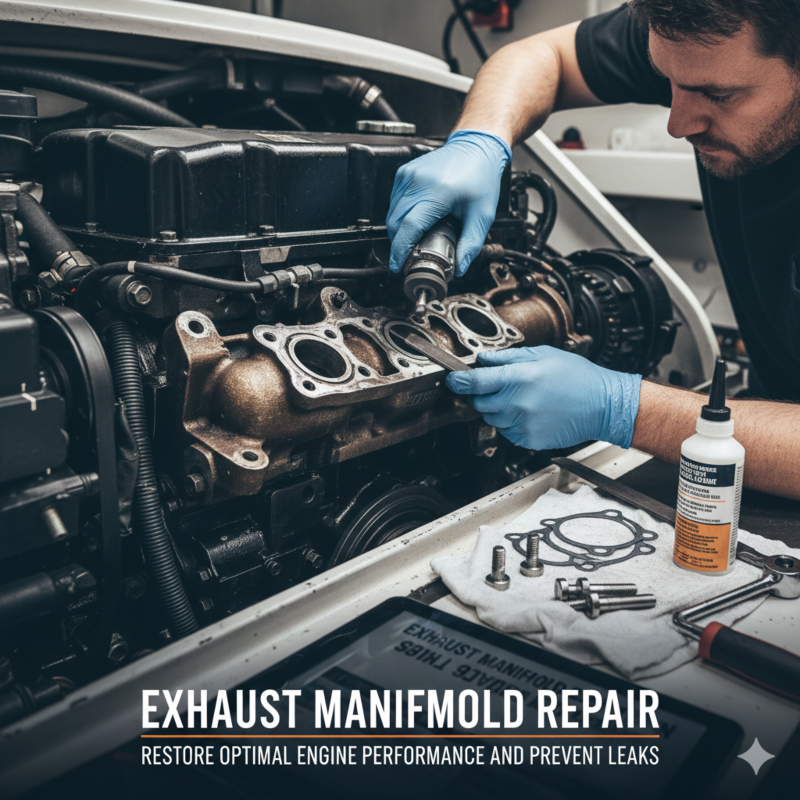
A marine engine pushes hot exhaust gas out through cast iron manifolds bolted to the cylinder head. The riser lifts that exhaust path higher above the waterline, and the elbow turns it back down toward the transom. In that assembly, raw cooling water is injected into the gas stream to cool it before it reaches rubber hoses and mufflers. On diesels this part is usually called the exhaust mixing elbow, while on gasoline sterndrives the riser and elbow are often one casting or two short pieces bolted together.
Even an engine with closed (freshwater) cooling still dumps raw seawater into the exhaust at this point, so every boat running in the ocean has a spot where hot gas and salt water meet.
Why Cast Iron Fails From the Inside
Inside a riser, water passages wrap around the exhaust passage, separated by a thin wall of cast iron. Several things attack that wall at the same time:
- Salt corrosion. Hot, wet, salty iron rusts quickly, and the scale narrows the water passages.
- Restricted flow. As scale builds up, less cooling water gets through, so the casting runs hotter and corrodes even faster.
- Gasket breakdown. The exhaust riser gasket between the manifold and the riser lives through constant heat cycles and salt. Once it lets go, water can seep across the joint.
- Reversion. At shutdown, or in a following sea, water sitting in the exhaust can surge back toward the engine if the riser is too low or the passages are compromised.
When the wall between the water jacket and the exhaust passage finally rusts through, water drips into the exhaust, runs back through whichever exhaust valve happens to be open and collects in a cylinder. Water does not compress, so the next start attempt can bend a connecting rod. Mechanics call this engine hydrolock, and it rarely ends with a simple repair.
Symptoms an Owner Might Notice
A failing marine exhaust elbow seldom announces itself loudly, but there are clues worth watching for:
- Rust streaks or white salt crust weeping from the joint between manifold and riser, or between riser and elbow.
- Milky or grey oil on the dipstick, which suggests water is reaching the crankcase.
- A rough, misfiring start that smooths out after a minute, often a hint that one cylinder had water in it.
- Rusty or wet spark plugs on a gasoline engine.
- Steam or unusual white smoke at the exhaust outlet, or one riser that runs much hotter than the other.
- An engine that will not turn over at all after sitting, especially after a long crank on the previous start.
What an Owner Can Check
A basic walk-around needs no tools. With the engine cool, look closely at every exhaust joint with a flashlight and note any rust trails, flaking paint or crusted salt. Pull the dipstick and check the color of the oil. If you own an infrared thermometer, compare the port and starboard risers after a run; a large difference points to a blocked passage. Keep a note of when the risers were last replaced, because age matters as much as appearance.
What you should not do is keep cranking an engine that will not turn over or that stopped suddenly with a thud. That is the moment for a technician to pull the plugs or injectors and check for water before more damage is done.
What the Replacement Job Involves
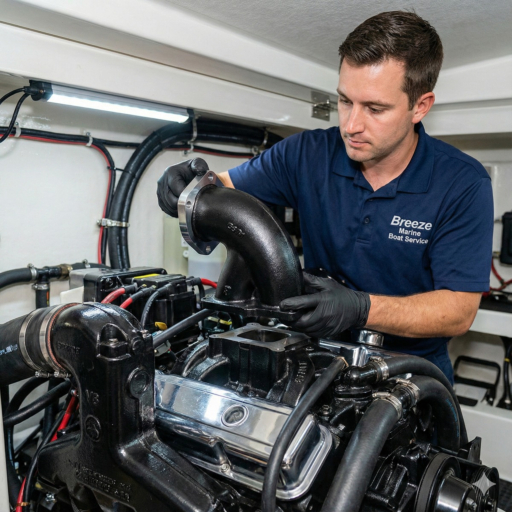
In practice, boat exhaust riser replacement is mostly careful labor. Old bolts are often rusted in place and can snap if forced, so the work goes slowly to protect the manifold threads. Once the old parts are off, the manifold face is checked for flatness and pitting, and the manifold itself is looked over, since a riser that has failed often sits on a tired manifold. New gaskets go on, fasteners are torqued in sequence, hoses and clamps are checked, and the engine is run to confirm water flow and dry joints. If you are seeing any of the warning signs above, book an exhaust riser and elbow replacement before the next trip rather than after it.
Cast Iron or Stainless?
Most engines leave the factory with cast iron parts, and a cast iron Mercruiser exhaust riser or Volvo Penta elbow is the normal replacement on a sterndrive. Stainless steel mixing elbows are a common upgrade on diesels and resist internal corrosion better, though they need correct support and installation. Whatever the material, a regular exhaust riser inspection matters more than the label on the box.
Exhaust Riser FAQ
How often should exhaust risers be replaced?
Owners who ask how often to replace exhaust risers usually hear the same rule of thumb: in salt water, plan on roughly three to five years for cast iron, with a look at them every season. Boats that sit for long periods or run hot may need them sooner.
Can I replace just the gasket?
Sometimes a leaking exhaust riser gasket is the only problem, but the old casting is often the reason the joint failed, so the gasket is usually replaced together with any part that shows internal corrosion.
Does a closed cooling system protect the risers?
Only partly. Freshwater cooling protects the block and usually the manifolds, but raw water is still injected at the outlet, so the exhaust mixing elbow still sees salt water and still wears out.


