A marine gearbox is small, hard-working and very sensitive to heat. On most inboard boats the transmission fluid is kept cool by a compact heat exchanger fed with raw water: the gearbox oil cooler. When that cooler clogs or starts to leak, the symptoms look like a failing transmission, even though the cause is a part not much bigger than a flashlight. Here is how it works, what goes wrong and what you can check yourself.
How a gearbox oil cooler works
Inside the cooler is a bundle of thin tubes, usually copper-nickel, sealed in a shell with removable end caps. Seawater from the raw water pump flows through one side and transmission fluid through the other, so heat moves from the oil into the water and leaves the boat. Two things keep the gearbox healthy: enough water flow to carry the heat away, and a sound wall of metal between seawater and oil. Lose the first and the gearbox runs hot. Lose the second and seawater reaches the oil.
Clogged passages and a gearbox that runs hot
Salt water leaves calcium scale, salt deposits and marine growth inside the narrow passages. The cooler often sits right after the raw water pump, so pieces of a broken impeller also lodge at its inlet. As the passages narrow, less water gets through and the fluid temperature climbs. Boat transmission overheating rarely shows on a gauge, because many boats have no transmission temperature gauge at all. Owners usually notice the effects instead:
- Slow or harsh shifting that gets worse after a long run.
- Transmission slipping under load: the engine revs rise but the boat does not pick up speed as it should.
- A burnt smell, or fluid that is darker than usual on the dipstick.
- Fluid pushed out of the vent, since overheated fluid expands.
Heat does the real damage. Most marine gearboxes shift through wet clutch packs, and fluid that runs too hot stops protecting the friction surfaces. The plates glaze, grip less and slip more, which creates even more heat. Left alone, that cycle ends in boat gearbox repairs that involve new clutch plates, seals and bearings rather than a cooler service.
Transmission fluid contamination: the milkshake problem
The second failure is quieter and often more destructive. Salt water slowly thins the tube walls, and old end caps and gaskets corrode. Once a pinhole opens, water and oil can mix. Depending on which side has the higher pressure, seawater gets into the gearbox, or fluid escapes into the cooling water and leaves with the exhaust. Either way, transmission fluid contamination is serious: water cannot lubricate gears and bearings, and it starts corrosion inside the case.
The classic sign is milky transmission fluid that looks like a pink or tan milkshake on the dipstick. Other clues are a fluid level that rises for no reason or an oily sheen in the exhaust water. If you see milky fluid, stop running the boat. Draining and flushing the gearbox promptly limits the damage, while running it can turn a cooler replacement into full marine transmission repair.
What an owner can check
- Check the fluid level, color and smell regularly, following the method in your gearbox manual.
- Look at the cooler body and end caps for green or white corrosion, weeping at the hose connections and flaking paint.
- Squeeze the raw water hoses and replace soft, swollen or cracked ones.
- After any impeller failure, account for every missing vane. They often end up at the cooler inlet.
- Keep the raw water strainer clean, so less debris reaches the cooler.
What professional marine transmission cooler cleaning involves
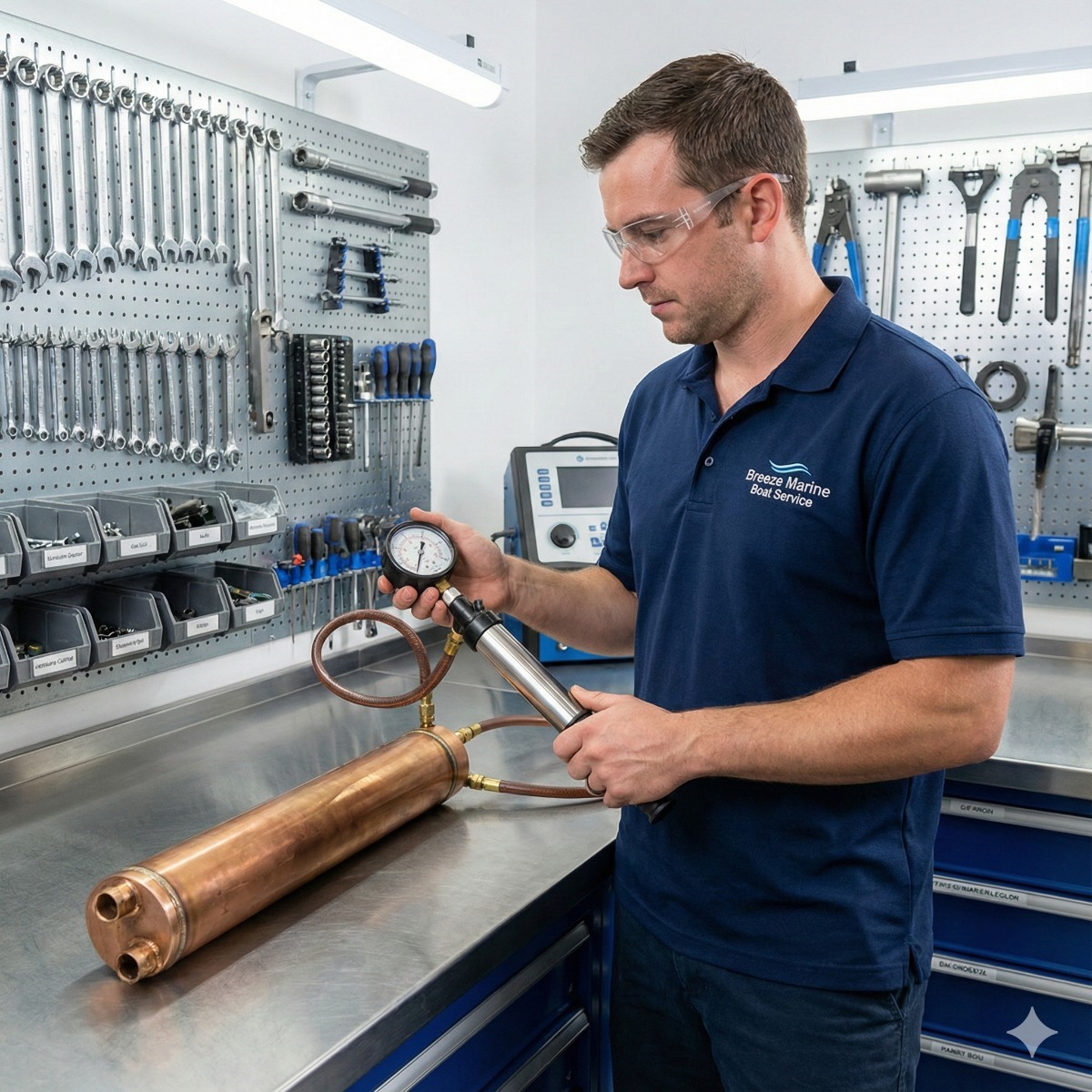
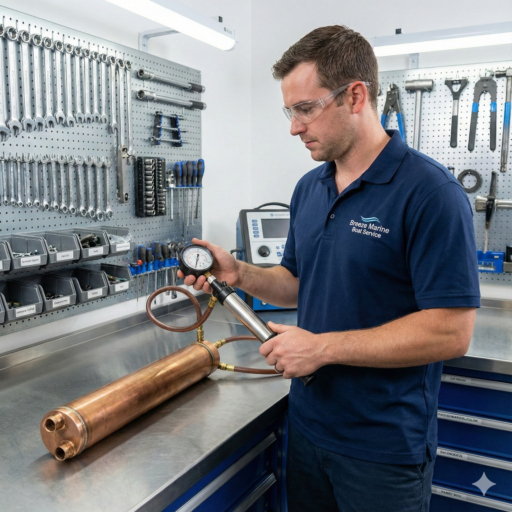
A thorough job is done with the cooler off the engine, not by flushing it in place. The oil lines are capped so the gearbox does not drain, the end caps come off, and the tube bundle is inspected. The water side is cleared and treated with a descaling solution that dissolves calcium and salt. Cleaning restores flow but does not show whether the tubes still separate water from oil. That is the job of a hydrostatic pressure test or an air test with the unit submerged: one side is pressurized and the other is watched for leaks, which reveals pinholes the eye cannot see.
A cooler that passes goes back on with fresh sealing washers and clamps. One that fails is replaced, because patching the only barrier between seawater and gearbox oil is not worth the risk. If your gearbox runs hot or the fluid looks milky, book our gearbox cooler cleaning and pressure test service in Long Beach before the damage spreads.
How often the cooler needs attention
No single interval fits every boat. Boats kept in warm salt water, or left unused for long periods, tend to build scale faster, and many owners have the cooler inspected during annual service or at haul-out. Age matters too: on older inboards with a Velvet Drive gearbox, the velvet drive cooler may be original to the boat and deserves a test even if the gearbox still shifts well.
Gearbox Cooler FAQ
Can a clogged cooler cause transmission slipping?
Yes. Restricted water flow lets the fluid overheat, and hot fluid glazes the clutch plates until they slip. Low fluid, worn clutches or a badly adjusted shift cable can cause the same symptom.
Is milky fluid always a cooler leak?
A leaking gearbox oil cooler is one of the usual suspects, but water can also get in through failed seals or a loose dipstick. A pressure test on the cooler shows whether it is the source.
Should I clean the cooler or replace it?
If the cooler passes a pressure test and the end caps are sound, cleaning brings back full flow. If the tubes are perforated or the shell is badly corroded, replacement is the safe choice.